Artwork
Whitstable, 1934
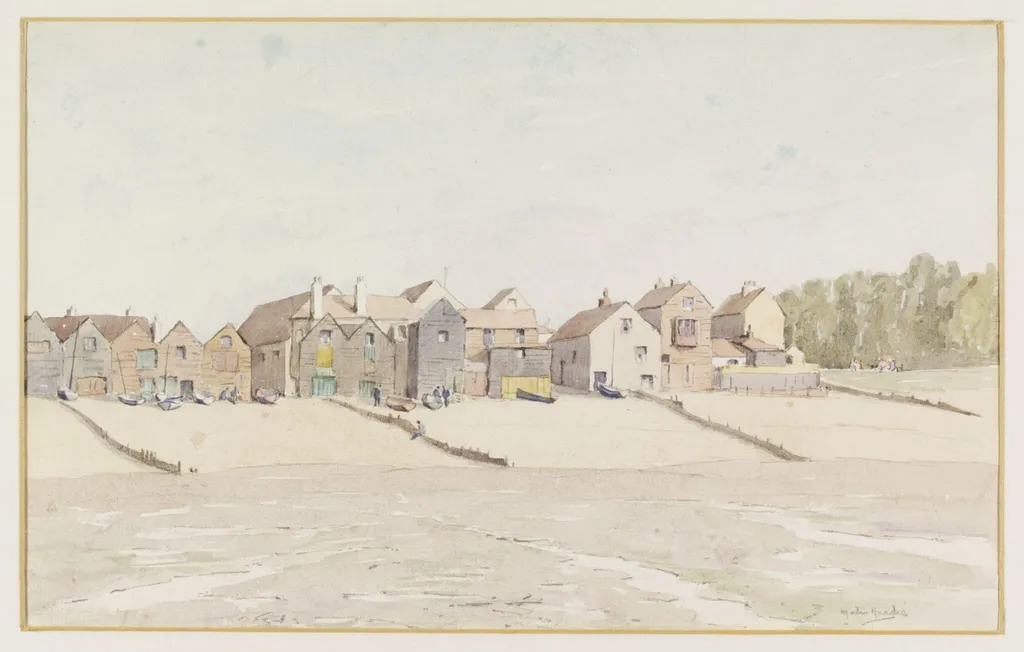
Whitstable, 1934 is a watercolor work on paper by the Impressionist artist Hardie. It dates from 1934 and is held in the collection of the Victoria and Albert Museum.
About this work
Overview
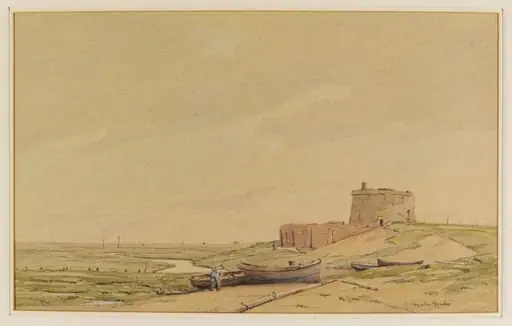
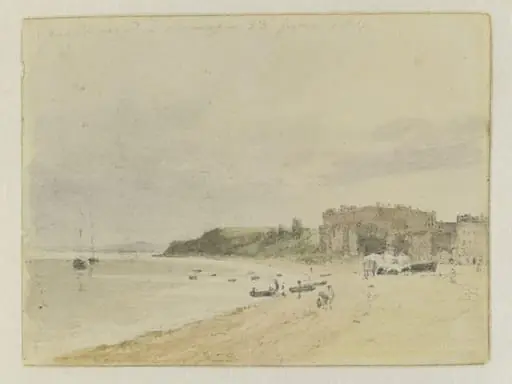
Whitstable, 1934, is a watercolour painting by Hardie, capturing a serene seaside view of Whitstable from the water's perspective, with a focus on fishermen’s huts, groynes, boats, and a row of varied houses on a sandy beach.
Subject & Meaning
The painting documents Whitstable’s traditional seaside landscape, implicitly highlighting the preservation of British cultural and geographical heritage amidst wartime threats, as part of the Recording Britain project.
Technique & Style
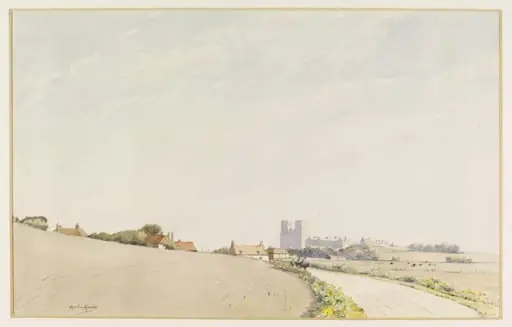
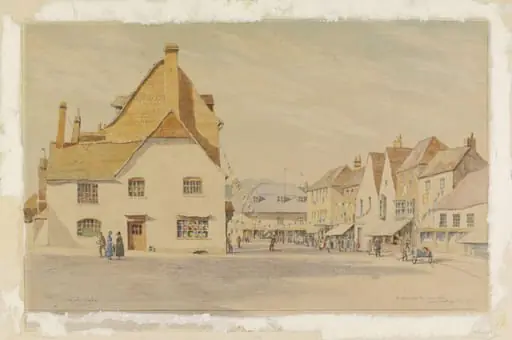
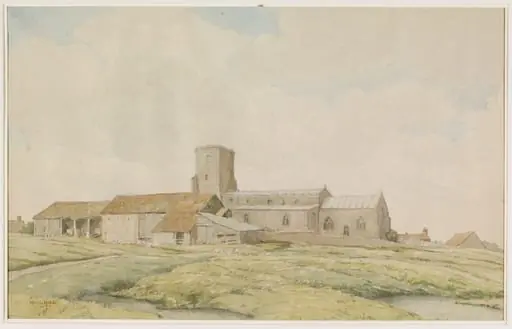
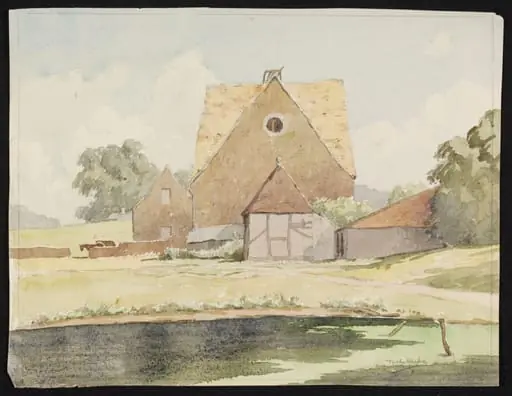
Hardie employs a watercolour technique to convey a light, airy atmosphere, with a muted colour palette (light beige, light brown to dark grey) and attention to textual details (shadows under boats, varied house roofs).
History & Provenance
Commissioned under the Recording Britain initiative (led by Sir Kenneth Clark, funded by the Pilgrim Trust during WWII), the work is part of a broader topographical study series by various artists to record Britain’s changing landscape.
Context
Created during WWII, the piece reflects the era’s concern for preserving national heritage in the face of war and modernization, focusing on everyday, vulnerable aspects of British life.
Legacy
As part of the Recording Britain collection, Whitstable, 1934, contributes to a historical record of mid-20th-century Britain, offering insights into both the artistic response to wartime preservation efforts and the appearance of Whitstable at the time.
Artist & collection
Artist
Hardie painted watercolours of quiet corners in 1930s and 1940s England, usually coastal or village scenes with buildings and daily life.