Artwork
The Creek, West Wittering
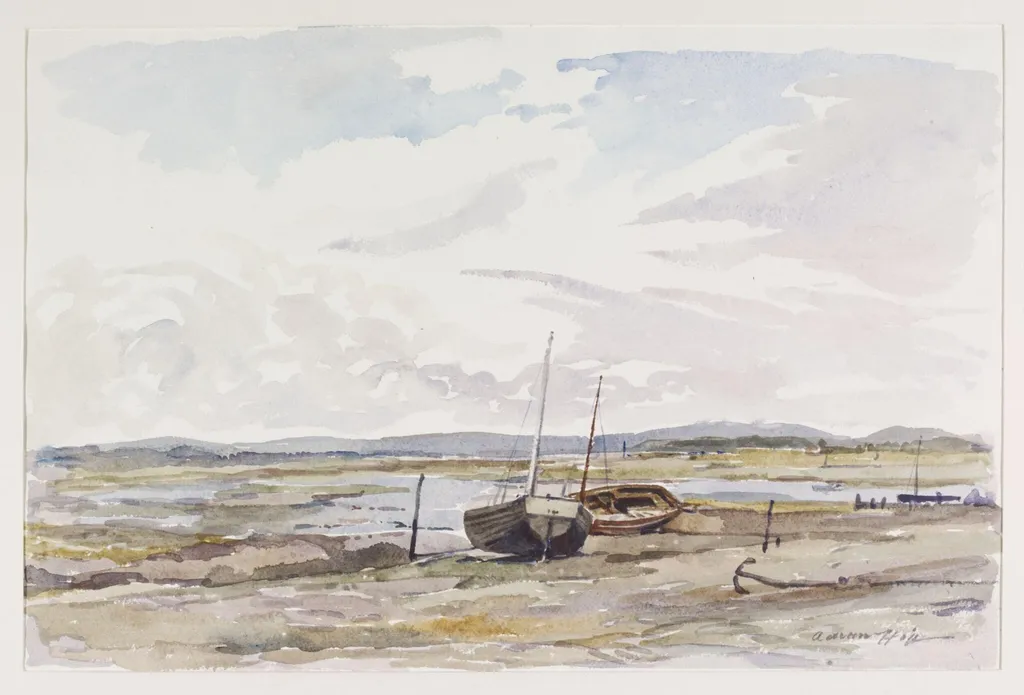
The Creek, West Wittering is a watercolor work on paper by the Impressionist artist Hill. It dates from 1940 and is held in the collection of the Victoria and Albert Museum.
About this work
Overview
This initiative, launched during the Second World War, sought to visually archive vulnerable rural and coastal scenes across the nation.
Painted in 1940, *The Creek, West Wittering* is a watercolour by an artist associated with the *Recording Britain* project. This initiative, launched during the Second World War, sought to visually archive vulnerable rural and coastal scenes across the nation. The work is one of more than 1,500 pieces produced by 97 artists under the sponsorship of the Pilgrim Trust and the direction of Sir Kenneth Clark, aiming to preserve a visual record of places at risk from conflict and modernization.
Subject & Meaning
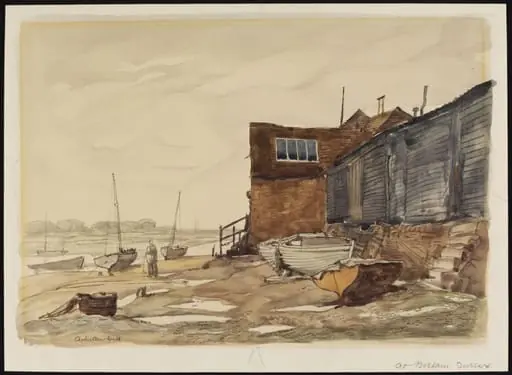
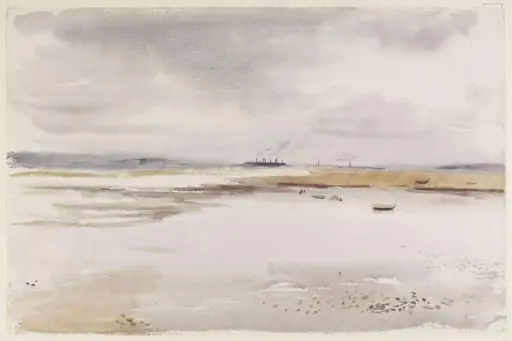
The scene depicts a quiet tidal creek at West Wittering, with two small boats beached on mudflats under a pale, overcast sky. The distant horizon reveals low grasslands and scattered trees, suggesting a tranquil, unchanging landscape. The image conveys stillness and solitude, emphasizing the quiet endurance of coastal vernacular spaces. Rather than dramatizing the war, it quietly affirms the value of ordinary, overlooked places in the British countryside.
Technique & Style
The artist employed loose, transparent watercolour washes to suggest light and atmosphere rather than define form with precision. Delicate brushwork captures the softness of the sky and the reflective sheen of wet mud, while minimal detail in the boats and distant hills reinforces the sense of calm. The medium’s fluidity allows for an impressionistic rendering, prioritizing mood over topographical accuracy, aligning with the project’s emotional rather than documentary aims.
History & Provenance
Created as part of the *Recording Britain* initiative, the work was commissioned to document landscapes deemed vulnerable during wartime. It entered the collection of the Victoria and Albert Museum, where it remains today alongside other works from the project. The initiative’s archives were preserved as a cultural record, and this piece contributes to a broader visual archive of Britain’s rural and coastal heritage during a period of national upheaval.
Context
During the Second World War, Britain faced threats to its physical and cultural landscape from bombing, infrastructure development, and agricultural change. *Recording Britain* responded by mobilizing artists to record scenes that might soon vanish. Though not overtly political, the project subtly reinforced national identity by highlighting the quiet resilience of everyday places, offering the public a sense of continuity amid uncertainty.
Legacy
The *Recording Britain* collection, including this watercolour, endures as a significant historical archive of mid-20th-century British topography. It influenced later efforts to document vernacular landscapes and remains a touchstone for studies of art in wartime. The work’s quiet realism continues to resonate with viewers interested in the intersection of place, memory, and the subtle impact of historical change on the natural environment.
Artist & collection

Artist
A hill is a landform that extends above the surrounding terrain. It often has a distinct summit, and is usually applied to peaks which are above elevation compared to the relative landmass, though not as prominent as…

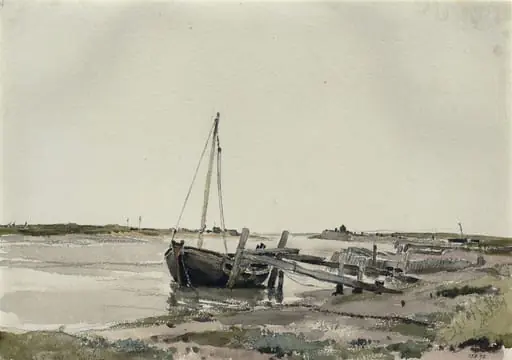 On the Blyth, Suffolk
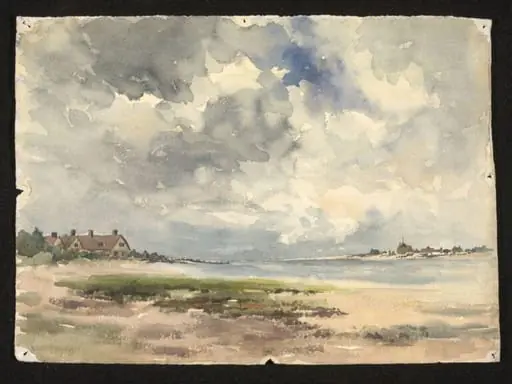 The River Deben and Felixstowe
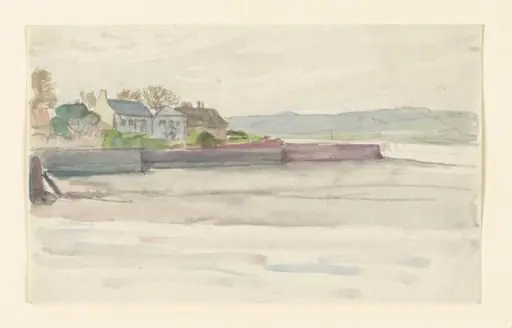 Shaldon, near Teignmouth
 Penclawdd, Gower, Glamorganshire (Recording Britain, Welsh Counties)
 Old Cottages on the Marshes, Winchelsea
 Evening View of Sudbury from the South-west
 Lyminster Church, near Arundel
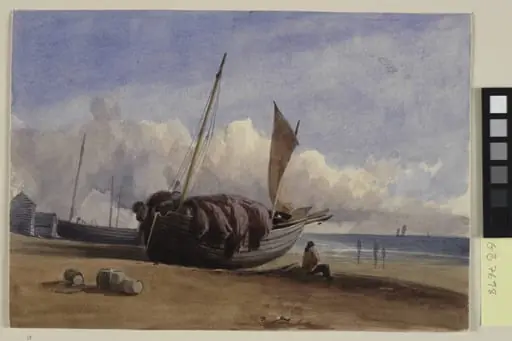 Beached fishing boat with seated fisherman
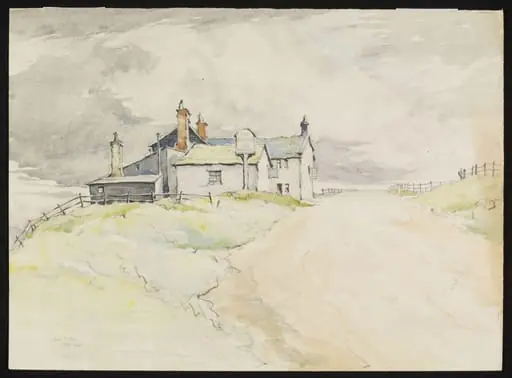 The White House Inn, Blackstone Edge, near Littleborough
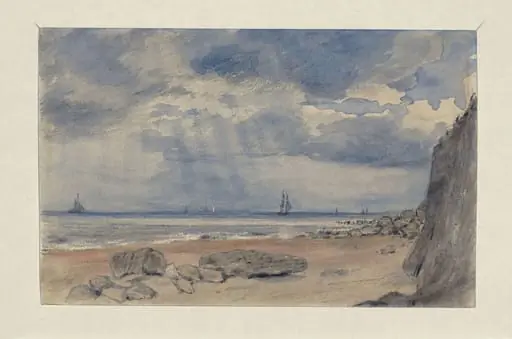 Coast Scene near Brighton