Artwork
The Fox and the Grapes
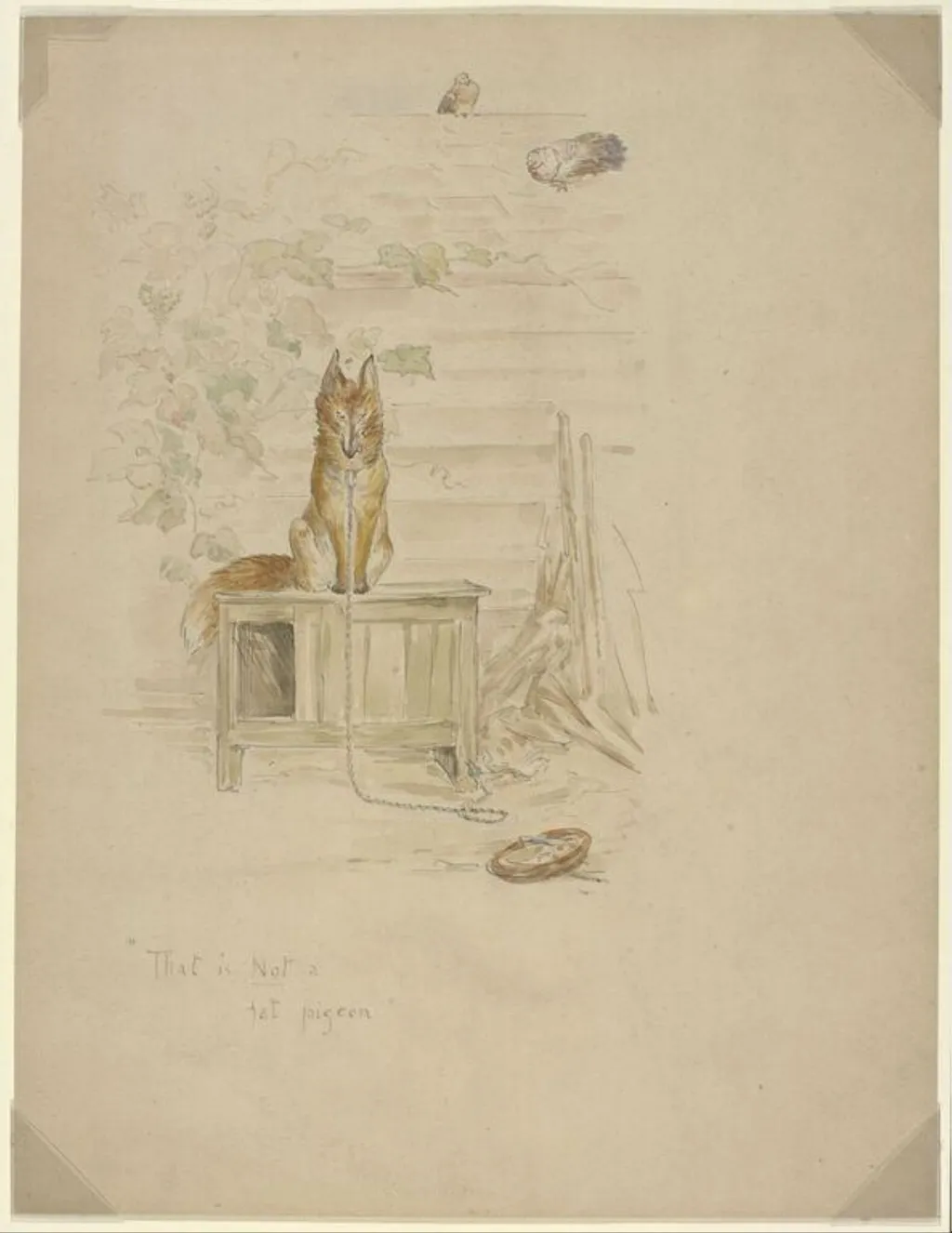
The Fox and the Grapes is a watercolor work on paper by the Impressionist artist Beatrix Potter. It dates from 1895 and is held in the collection of the Victoria and Albert Museum.
About this work
Overview
Rendered in loose, expressive brushwork, the scene centers on a fox seated atop a wooden structure, its posture suggesting anticipation or disappointment.
This watercolour and pen-and-ink work, created by Beatrix Potter in her early career, captures a moment of quiet tension between animal and environment. Rendered in loose, expressive brushwork, the scene centers on a fox seated atop a wooden structure, its posture suggesting anticipation or disappointment. The composition includes domestic and wild elements—pigeons, a grapevine, an empty bowl—layered with subtle narrative detail.
Subject & Meaning
The fox, adorned with a metal chain and fixated on an unseen target, evokes the fable of the fox and the grapes, where desire meets unattainable reward. The gnawed bones and empty bowl imply prior hunger, while the grapes, barely visible in the distance, remain out of reach. The pigeons and small creatures observe passively, reinforcing the fox’s isolation and unfulfilled longing.
Technique & Style
Potter employed watercolour with delicate pen lines over a pencil underdrawing, creating a sense of spontaneity and movement. The brushwork is loose and observational, emphasizing texture in the woodpile, fur, and tiles without overrefinement. The palette is muted, with earth tones and soft reds grounding the scene in a quiet, rural realism that anticipates her later illustrative style.
History & Provenance
Painted before Potter’s rise to fame through children’s literature, this work reflects her early interest in natural history and animal behavior. Likely made during her formative years in the Lake District, it demonstrates her habit of sketching wildlife from life. The piece remained in private hands until acquired by a public collection, where it now serves as evidence of her artistic development.
Context
In late 19th-century Britain, detailed animal studies were common among naturalists and amateur artists. Potter’s work aligns with this tradition, yet her anthropomorphic framing—giving the fox human-like emotion—sets it apart. The scene’s domestic setting and subtle humor reflect a growing interest in narrative illustration, foreshadowing her transition to children’s book art.
Legacy
Though not widely exhibited during her lifetime, this piece reveals the roots of Potter’s distinctive visual language. Her ability to convey personality through posture and environment became central to her later tales. The work stands as a quiet precursor to her published stories, illustrating how her scientific observation evolved into enduring narrative art.
Artist & collection
Artist
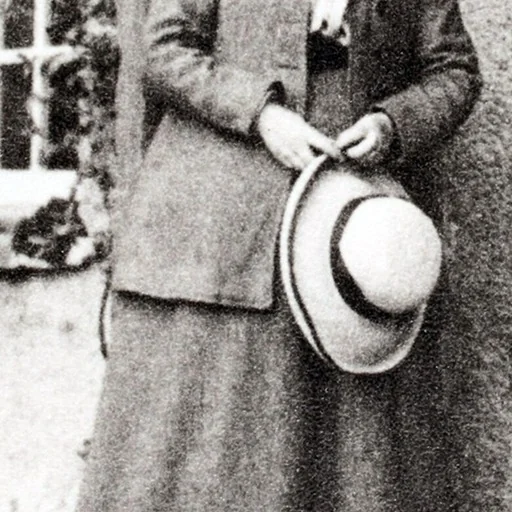
Helen Beatrix Heelis (née Potter; 28 July 1866 – 22 December 1943), usually known as Beatrix Potter ( BEE-ə-triks), was an English writer, illustrator, natural scientist, and conservationist.

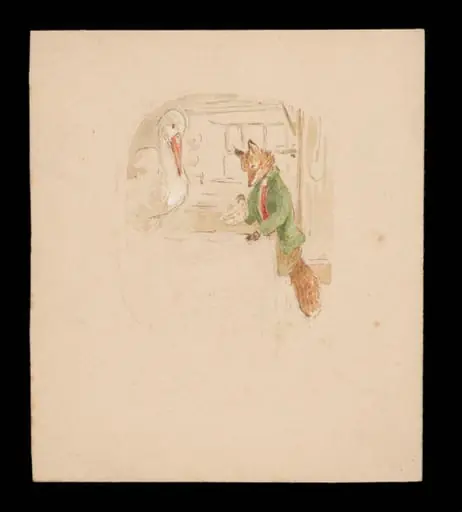 The fox pouring tea
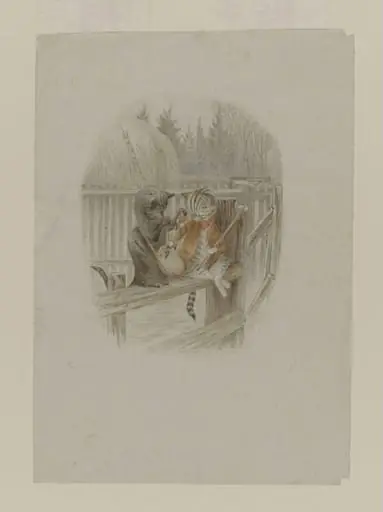 Kittens with game collected for the White Cat's supper
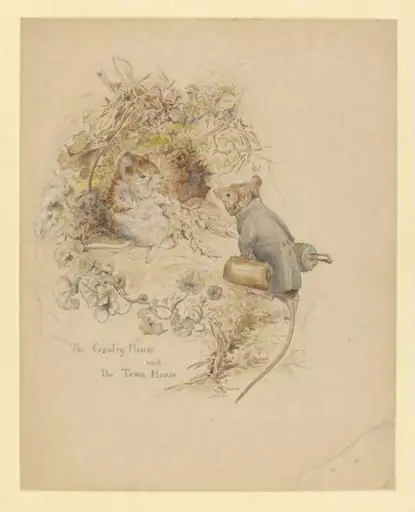 The Country Mouse and the Town Mouse
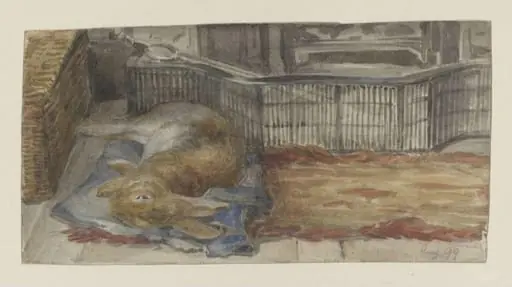 Peter Piper lying on his blue quilt by the fire
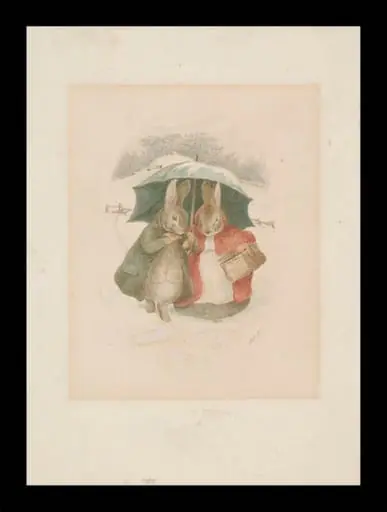
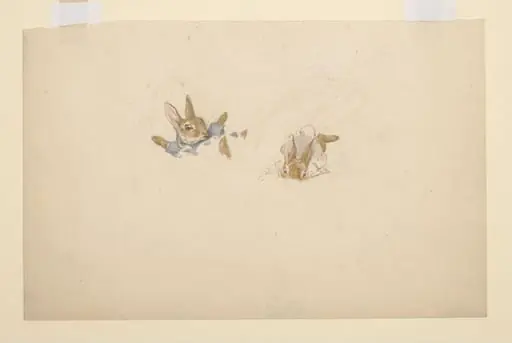 Rabbits falling into snow
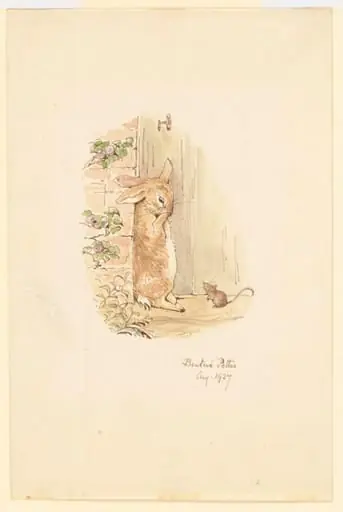 Peter by the door in the wall
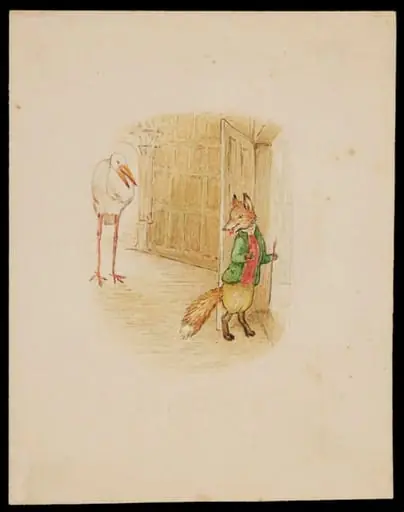 The fox taking leave of the stork
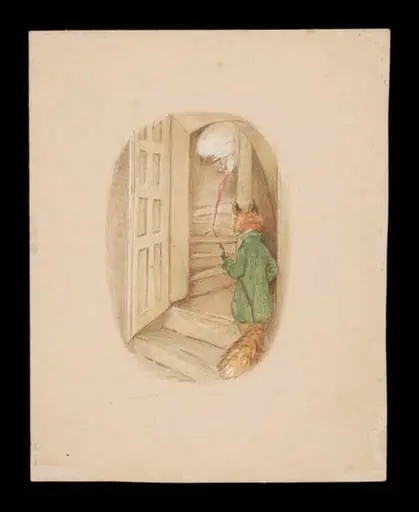 The fox following the stork up a staircase
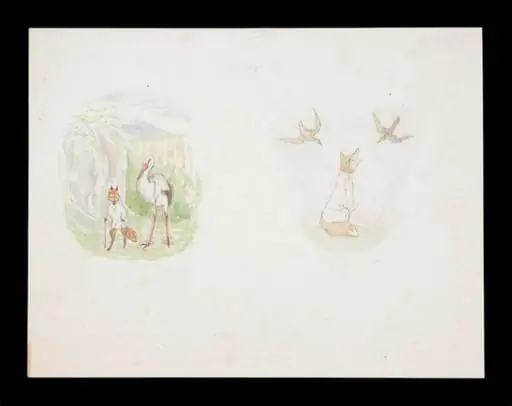 A fox in a glade with a stork; a fox looking up at two birds
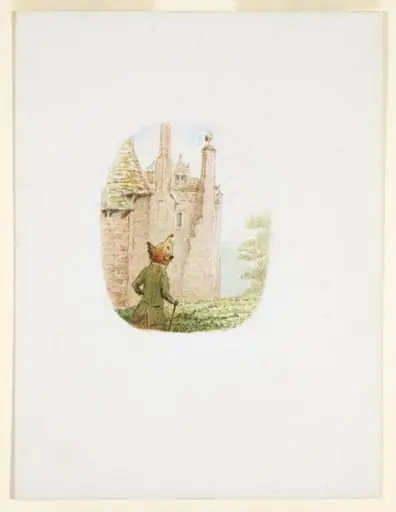 The fox looks up at the stork standing on top of a tower