Artwork
Title page design for 'Three little mice sat down to spin'
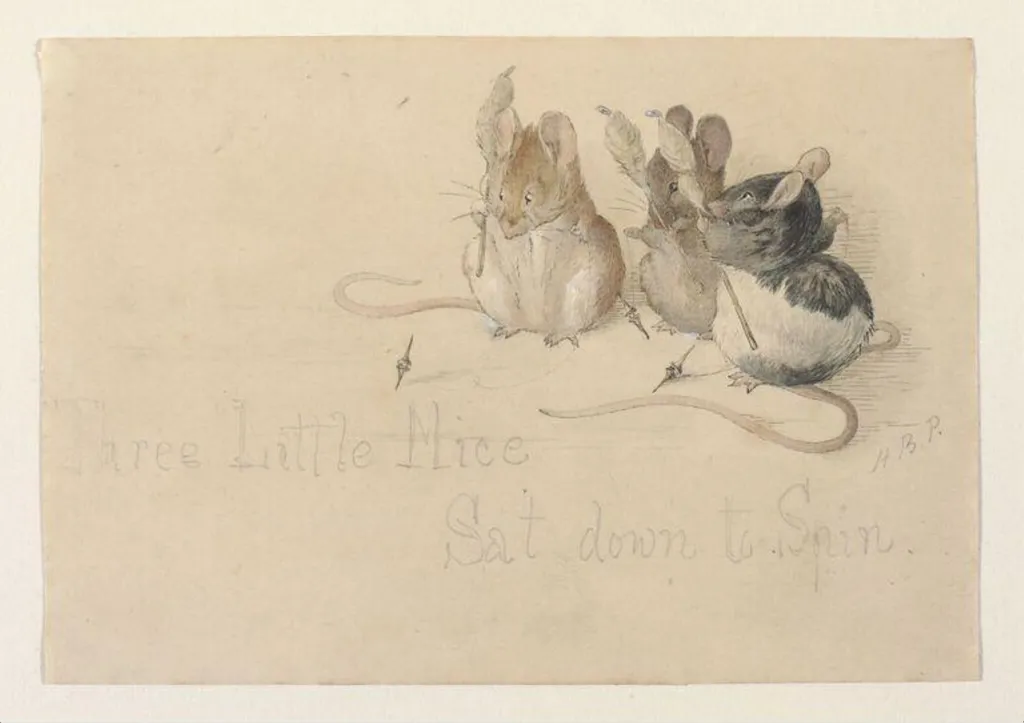
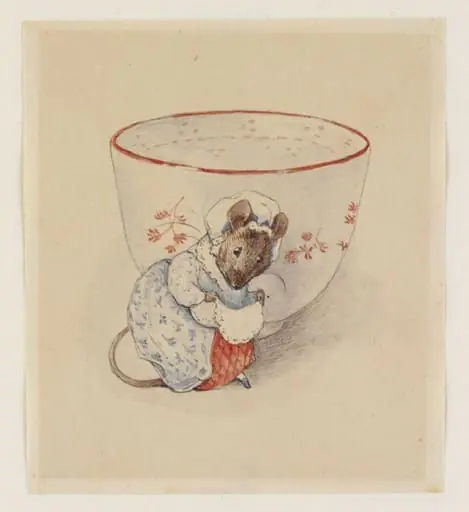
Title page design for 'Three little mice sat down to spin' is a watercolor work on paper by the Impressionist artist Beatrix Potter. It dates from 1892 and is held in the collection of the Victoria and Albert Museum.
About this work
Beatrix Potter created a title page design for 'Three little mice sat down to spin' around 1892.
This work is interesting because it was part of a larger project to illustrate a nursery rhyme.
The project included detailed studies and finished watercolours for each line of the rhyme.
Check out the Victoria and Albert Museum to learn more about this and other works.
Overview
Though fully realized in design, the booklet was never printed, remaining a private artistic experiment that later influenced her published work.
Around 1892, Beatrix Potter developed a series of watercolours and decorative pages for an unpublished illustrated booklet based on the nursery rhyme 'Three little mice sat down to spin.' The project included six finished watercolours, each corresponding to a line of the rhyme, along with a title page and text panels. Though fully realized in design, the booklet was never printed, remaining a private artistic experiment that later influenced her published work.
Subject & Meaning
The rhyme depicts three mice engaged in tailoring, interrupted by a cautious exchange with a cat. Potter’s interpretation emphasizes quiet domesticity and subtle tension, portraying the mice as industrious yet vulnerable. The scene reflects her interest in anthropomorphized animals and the quiet drama of everyday tasks, blending whimsy with a sense of real-world consequence, as seen in the mice’s fear of the cat’s interference.
Technique & Style
Potter employed delicate watercolour washes with precise pen and ink outlines, characteristic of her detailed observational style. The title page features a soft, naturalistic composition with muted tones, framing the rhyme’s title in her distinctive hand-lettering. Her technique balances lyrical atmosphere with botanical and zoological accuracy, revealing her training in natural history and her commitment to visual clarity in narrative illustration.
History & Provenance
Created in 1892, the watercolour series was part of Potter’s early efforts to develop illustrated books independently of publishers. Though the booklet was abandoned, the fourth panel—depicting mice making coats—was later adapted into The Tailor of Gloucester (1903). The original title page and related works remained in her personal collection and eventually entered the Victoria and Albert Museum’s holdings, preserving this unpublished chapter of her creative development.
Context
In the 1890s, Potter was experimenting with narrative illustration outside commercial constraints, drawing from traditional rhymes and folk motifs. Her work during this period reflected broader Victorian interests in childhood literature and the revival of handcrafted book arts. The unfinished project reveals her process of refining visual storytelling before achieving publication, aligning with contemporaries who valued artistic integrity over mass appeal.
Legacy
Though unpublished, the 'Three little mice' series served as a crucial bridge between Potter’s early studies and her later published tales. The adaptation of the tailoring scene into The Tailor of Gloucester demonstrates how her private experiments shaped her public success. The surviving watercolours now offer insight into her methodical approach to illustration, revealing the quiet evolution of one of children’s literature’s most enduring visual voices.
Artist & collection
Artist
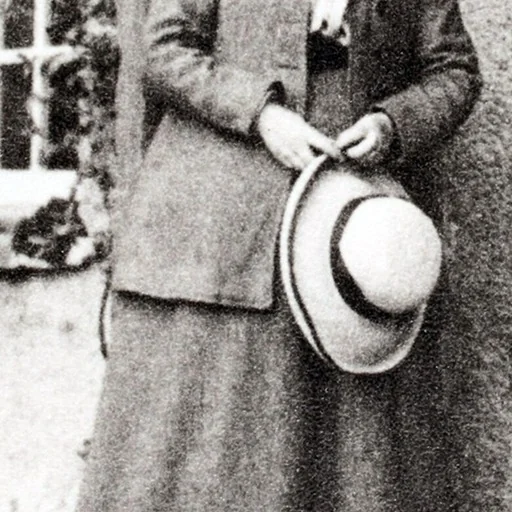
Helen Beatrix Heelis (née Potter; 28 July 1866 – 22 December 1943), usually known as Beatrix Potter ( BEE-ə-triks), was an English writer, illustrator, natural scientist, and conservationist.

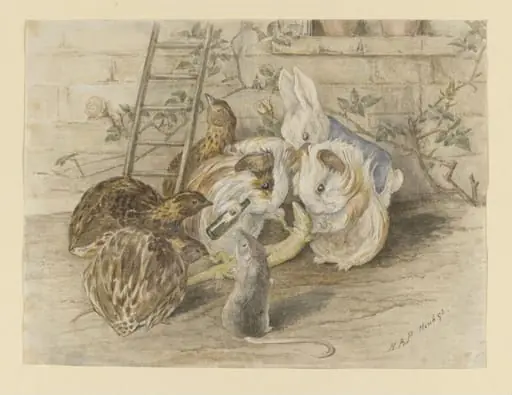
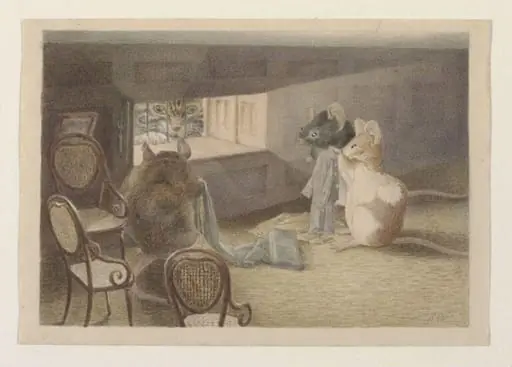 'Making coats for Gentlemen'
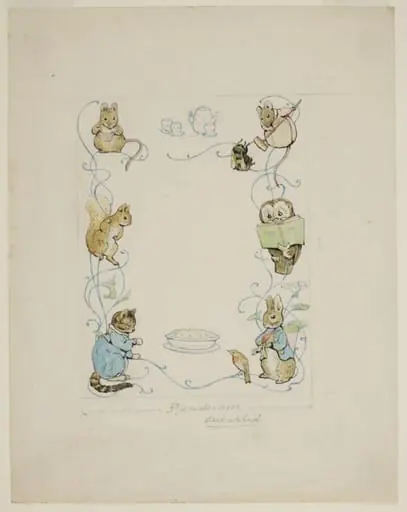 Endpaper design for a foreign translation of the Peter Rabbit books
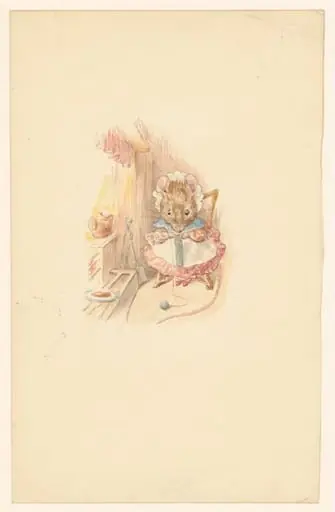 A mouse knitting
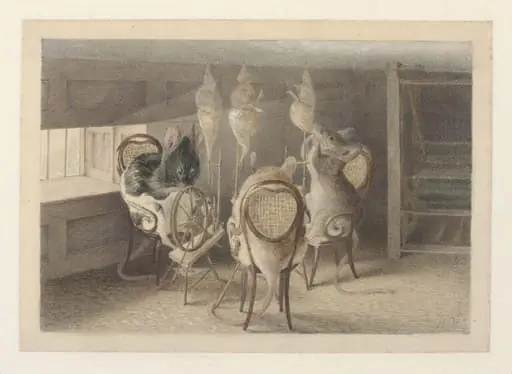 Three little Mice sat down to spin
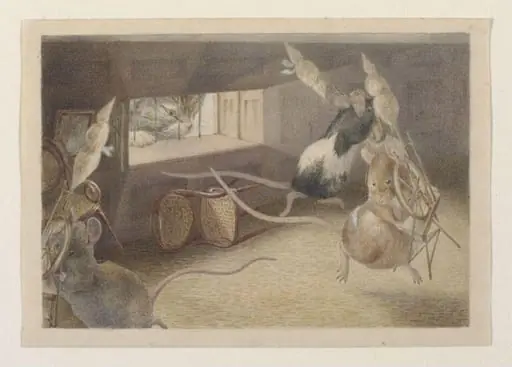 'What are you at, my fine little Men?'
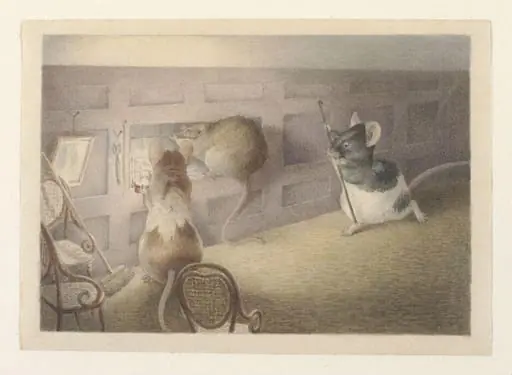 'Oh no! Miss Pussy, you'd bite off our heads'
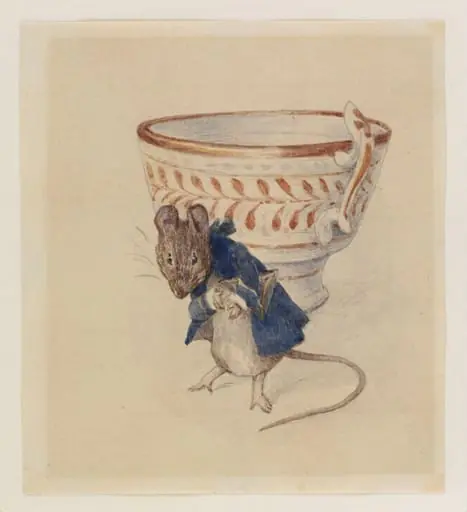 Gentleman mouse bowing beside a teacup
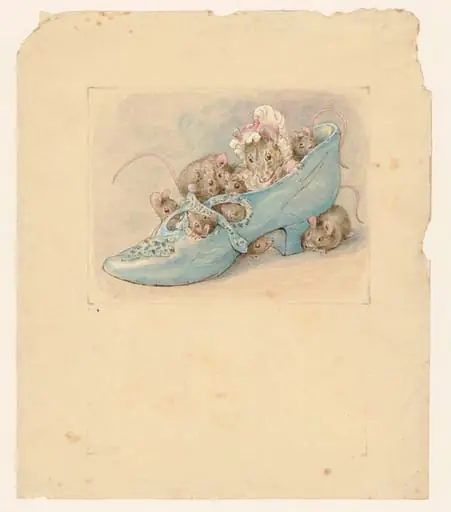 Mice in a shoe
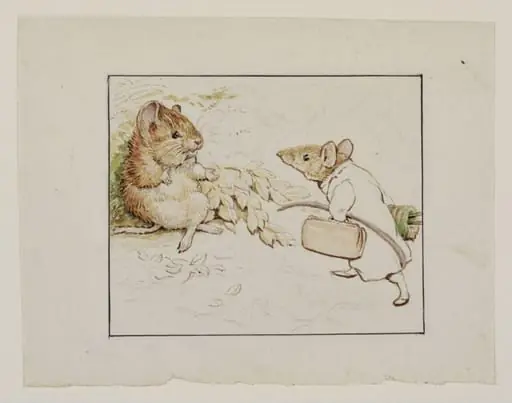 Untitled
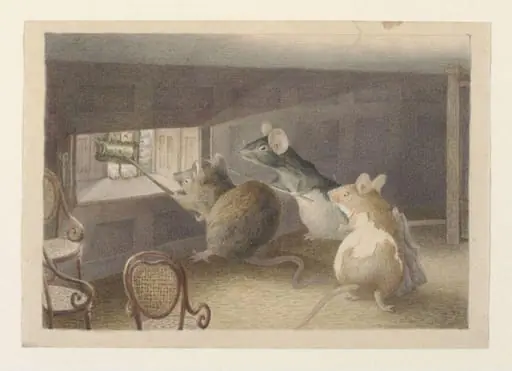 'Shall I come in, and cur off your threads?'
 Lady mouse curtseying beside a tea-cup