Artwork
Castello S. Angelo di Roma [Castel Sant'Angelo in Rome]
![Castello S. Angelo di Roma [Castel Sant'Angelo in Rome], by Nicolas Beatrizet, ink, 1562](https://artifactworldgallery.com/img/nicolas-beatrizet--castello-s-angelo-di-roma-castel-sant-angelo-in-rome--6c77d3bfe127c436-w1024.webp)
Castello S. Angelo di Roma [Castel Sant'Angelo in Rome] is an ink print by the Renaissance artist Nicolas Beatrizet. It dates from 1562 and is held in the collection of the National Gallery of Art.
About this work
Overview
Nicolas Beatrizet’s 1562 engraving presents a detailed view of Rome’s Castel Sant’Angelo. Rendered on a sizable sheet, the composition fills most of the space, focusing on the fortress’s central tower and surrounding fortifications. The perspective is slightly angled, allowing the viewer to see both the height of the tower and the layout of the walls and moat that encircle it.
Subject & Meaning
The print captures the architectural prominence of Castel Sant’Angelo, a former mausoleum turned defensive stronghold. By emphasizing the massive central tower and the enclosing walls, the image underscores the building’s dual role as a symbol of imperial power and a fortified refuge within the urban fabric of Renaissance Rome.
Technique & Style
Beatrizet employs a dense cross‑hatching technique, using fine, intersecting lines to model surfaces and convey depth. This method creates a textured effect that distinguishes stone, shadow, and water in the moat. The meticulous line work reflects the Northern European print tradition that influenced Italian engravers of the mid‑16th century.
History & Provenance
Created in 1562, the engraving was likely produced for a market of collectors interested in architectural views of notable Roman landmarks. While specific ownership records are scarce, prints of this type circulated among scholars and travelers, contributing to the visual documentation of Rome’s monuments during the late Renaissance.
Artist & collection


![Pantheum Romanum [The Roman Pantheon], by Nicolas Beatrizet](https://artifactworldgallery.com/img/nicolas-beatrizet--pantheum-romanum-the-roman-pantheon--8069db7dd8e6f190-w320.webp)
![Forma Partis Templi Divi Petri [Exterior Section of Saint Peter's Basilica], by Italian 16th Century](https://artifactworldgallery.com/img/italian-16th-century--forma-partis-templi-divi-petri-exterior-section-of-saint-pet--37837cc262581d9e-w320.webp) Forma Partis Templi Divi Petri [Exterior Section of Saint Peter's Basilica]
Forma Partis Templi Divi Petri [Exterior Section of Saint Peter's Basilica]![Orthographia Partis Interioris Templi Divi Petri [Interior View of Saint Peter's Basilica], by Étienne Dupérac](https://artifactworldgallery.com/img/etienne-duperac--orthographia-partis-interioris-templi-divi-petri-interior-vi--59b448ec2f3049cc-w320.webp) Orthographia Partis Interioris Templi Divi Petri [Interior View of Saint Peter's Basilica]
Orthographia Partis Interioris Templi Divi Petri [Interior View of Saint Peter's Basilica]![Orthographia Partis Exterioris Templi Divi Petri [Exterior View of Saint Peter's Basilica], by Étienne Dupérac](https://artifactworldgallery.com/img/etienne-duperac--orthographia-partis-exterioris-templi-divi-petri-exterior-vi--97a194b60abe7fac-w320.webp) Orthographia Partis Exterioris Templi Divi Petri [Exterior View of Saint Peter's Basilica]
Orthographia Partis Exterioris Templi Divi Petri [Exterior View of Saint Peter's Basilica]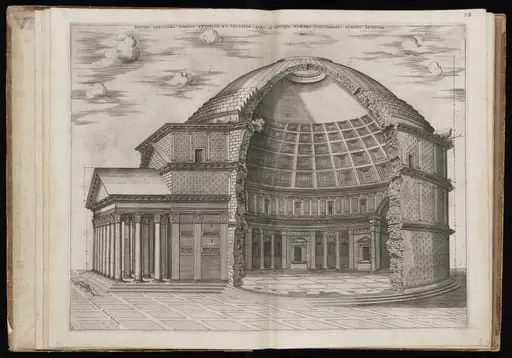 The Pantheon
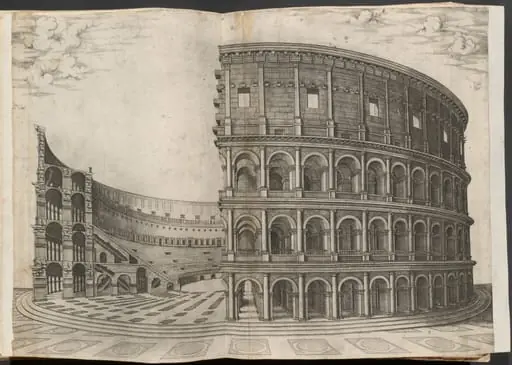 Colosseum
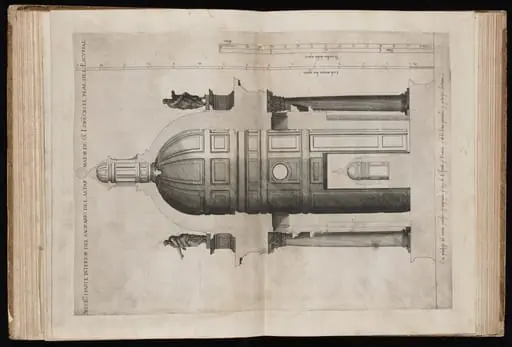 Section and Interior of the Sanctuary of San Lorenzo de El Escorial