Artwork
The Statute of the Nile
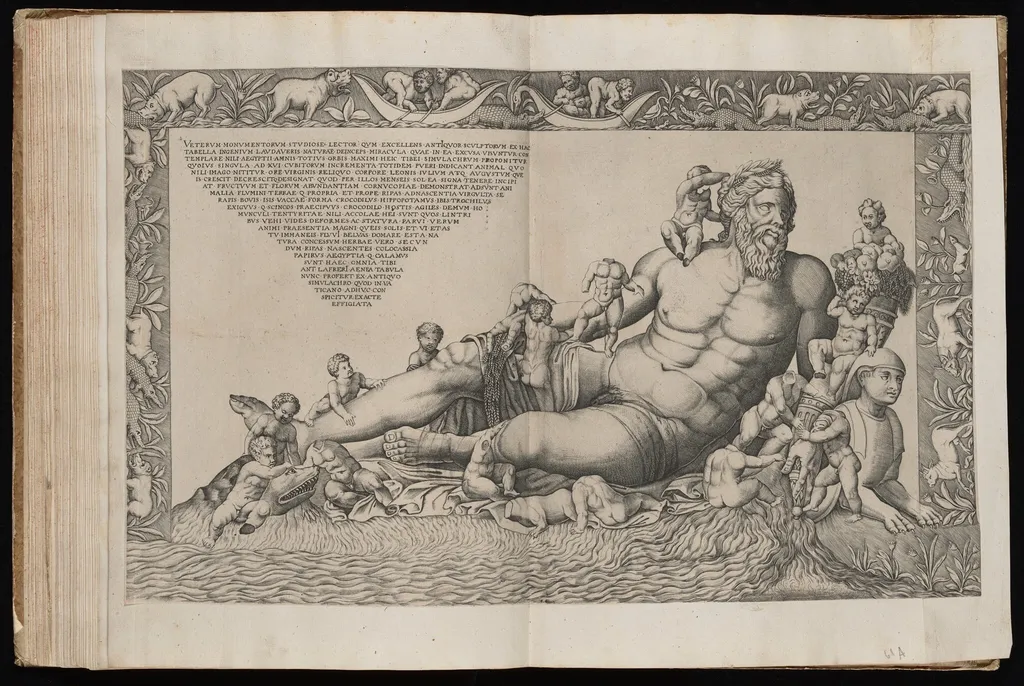
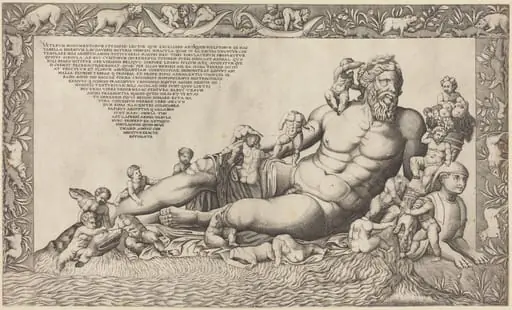
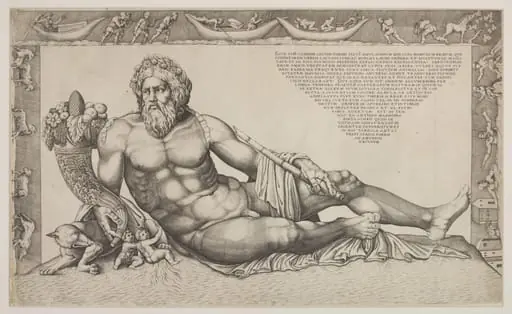
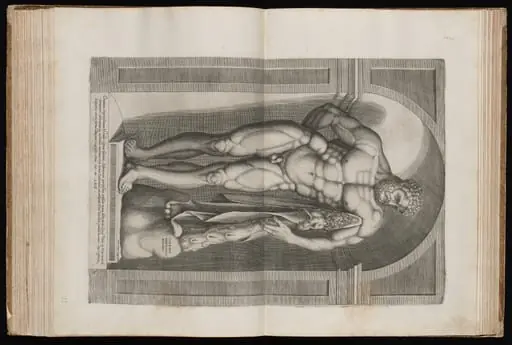
The Statute of the Nile is an ink print by the Renaissance artist Nicolas Beatrizet. It dates from 1544 and is held in the collection of the National Gallery of Art.
About this work
Overview
Rendered in fine linear detail, the composition centers on a robust, bearded man amid a dynamic landscape of smaller figures and natural elements.
Created in 1544 by Nicolas Beatrizet, this black-and-white engraving depicts a seated male figure associated with the Nile River. Rendered in fine linear detail, the composition centers on a robust, bearded man amid a dynamic landscape of smaller figures and natural elements. The work belongs to the tradition of Renaissance printmaking, where mythological and allegorical subjects were commonly reproduced for scholarly and decorative audiences.
Subject & Meaning
The central figure, likely an allegory of the Nile, is surrounded by attendants engaged in river-related activities—fishing, climbing, and play. A large fish at his side and crashing waves reinforce the river’s abundance and power. Latin inscriptions at the top suggest a textual reference, possibly drawn from classical sources, linking the image to ancient Roman or Egyptian river deities as understood in 16th-century humanist circles.
Technique & Style
Beatrizet employed precise, controlled engraving lines to model form and suggest volume. Shading is achieved through cross-hatching and fine parallel strokes, creating a sense of depth despite the monochrome medium. The figures are rendered with anatomical attention, and the rocky terrain and water are differentiated through varied line density, demonstrating technical mastery typical of mid-16th-century Italian printmakers.
History & Provenance
The engraving was produced in Rome during a period when classical themes were widely circulated through prints. Beatrizet, a French artist active in Italy, often adapted ancient sculptures and motifs for print audiences. While no early ownership records are widely documented, similar works by him were collected by European intellectuals and artists, suggesting its circulation among learned circles.
Context
This print emerged during a revival of interest in classical antiquity, when river gods were standard allegorical figures in art and literature. The Nile, as one of the great rivers of the ancient world, was frequently depicted in Roman and Renaissance iconography. Beatrizet’s version reflects contemporary European interpretations of Egyptian geography and mythology, filtered through classical texts and sculptural models.
Legacy
Though not widely exhibited today, the engraving exemplifies the role of print in disseminating mythological imagery across Europe. Beatrizet’s work influenced later illustrators of classical themes and contributed to the visual vocabulary of river deities in Northern Renaissance art. Its survival in institutional collections underscores its value as a document of 16th-century print culture and humanist aesthetics.
Artist & collection


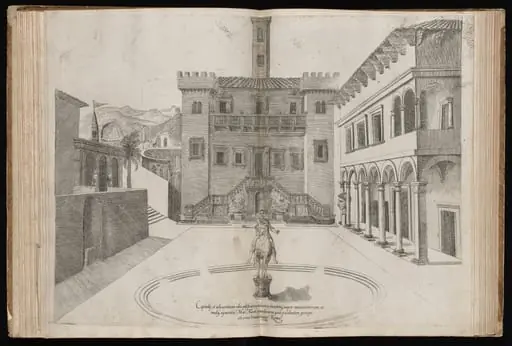
![Castello S. Angelo di Roma [Castel Sant'Angelo in Rome], by Nicolas Beatrizet](https://artifactworldgallery.com/img/nicolas-beatrizet--castello-s-angelo-di-roma-castel-sant-angelo-in-rome--6c77d3bfe127c436-w320.webp)
![Pantheum Romanum [The Roman Pantheon], by Nicolas Beatrizet](https://artifactworldgallery.com/img/nicolas-beatrizet--pantheum-romanum-the-roman-pantheon--8069db7dd8e6f190-w320.webp)
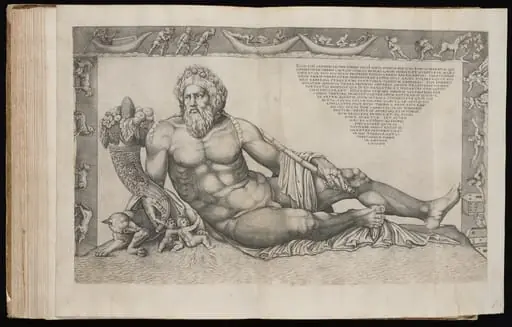
![The Dioscuri [Frontal View], by Italian 16th Century](https://artifactworldgallery.com/img/italian-16th-century--the-dioscuri-frontal-view--240168a96b76ef0b-w320.webp)