Artwork
Man in a Short Cloak
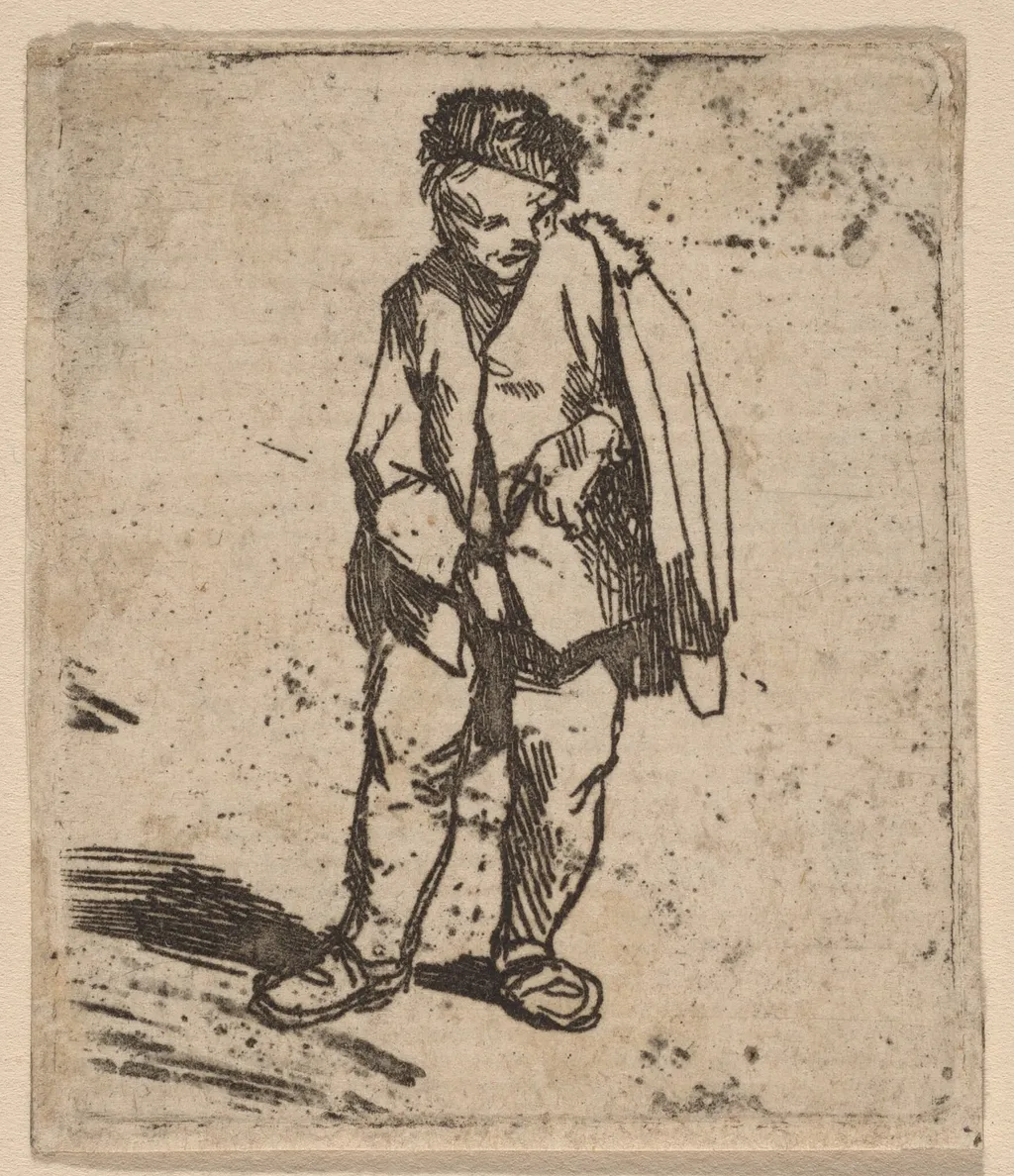
Man in a Short Cloak is an ink print by the Baroque artist Cornelis Pietersz Bega. It dates from 1648 and is held in the collection of the National Gallery of Art.
About this work
Overview
This small-scale work exemplifies his interest in solitary figures, rendered with quiet observation rather than dramatic narrative.
Cornelis Pietersz Bega, a Haarlem-born artist active in the mid-17th century, produced this etching in 1648. Known for intimate genre scenes, Bega worked primarily in printmaking and painting, drawing from everyday life. This small-scale work exemplifies his interest in solitary figures, rendered with quiet observation rather than dramatic narrative. The medium of etching allowed for fine linear detail and tonal variation, aligning with broader Dutch print traditions of the era.
Subject & Meaning
The figure is a lone man, captured mid-stride as he turns his head over his shoulder. His short cloak, loose trousers, and visible footwear suggest modest attire, typical of common Dutch townspeople. The gesture—clenched fist and backward glance—hints at sudden attention or internal reflection, though no clear narrative is given. Bega avoids theatricality, instead emphasizing the psychological presence of an ordinary individual in a fleeting moment.
Technique & Style
Executed in etching, the image relies on incised lines and controlled ink tone to define form. The man’s face is softly rendered, with minimal detail, enhancing a sense of anonymity. The cloak and clothing are suggested through fluid, varied strokes, while the background remains deliberately light and unobtrusive. Bega’s hand shows the influence of his teacher, Adriaen van Ostade, in the economical use of line and focus on texture over idealized form.
History & Provenance
Created in 1648, the etching emerged during Bega’s early career, shortly after his training under van Ostade. Few of his prints survive in large numbers, and this work is among the more recognized examples of his graphic output. Its provenance traces through private collections in the Netherlands and later European holdings, though no major institutional acquisition is documented prior to the 20th century.
Context
In mid-17th century Holland, etching flourished as a medium for artists seeking accessible, reproducible imagery. Bega’s focus on solitary figures aligned with a broader trend in Dutch art that valued quiet, introspective moments over grand historical or religious themes. His work stood apart from the bustling tavern scenes of his peers by isolating the individual, reflecting a growing interest in personal psychology within everyday life.
Legacy
Bega’s etchings, including this one, contributed to the refinement of genre printmaking in the Dutch Golden Age. Though less celebrated than Rembrandt or Hals, his subtle character studies influenced later artists interested in psychological nuance. Today, his prints are held in major print rooms, valued not for their scale or drama, but for their restrained humanity and technical precision.
Artist & collection
Artist
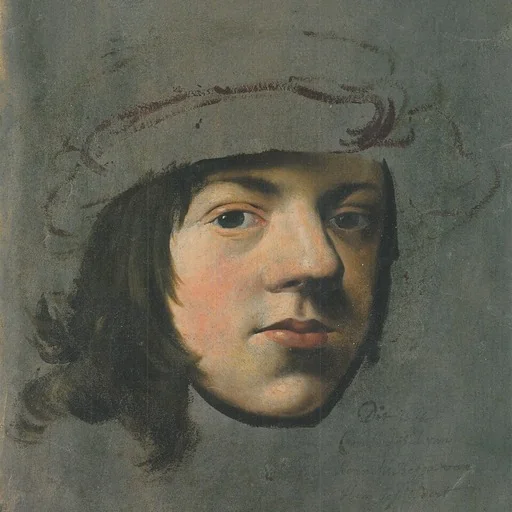
Cornelis Pietersz Bega, or Cornelis Pietersz Begijn (1631/32 – 27 August 1664) was a Dutch Golden Age painter and engraver.

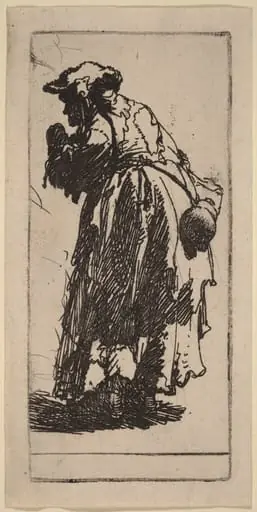 Old Beggar Woman with a Gourd
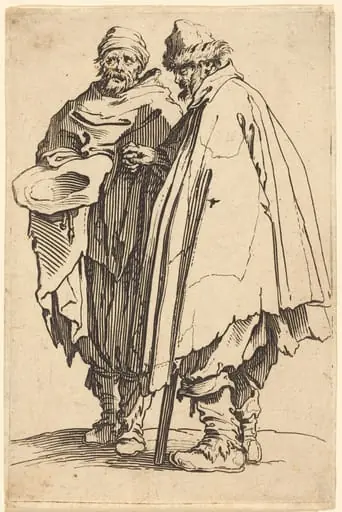 Blind Beggar and Companion
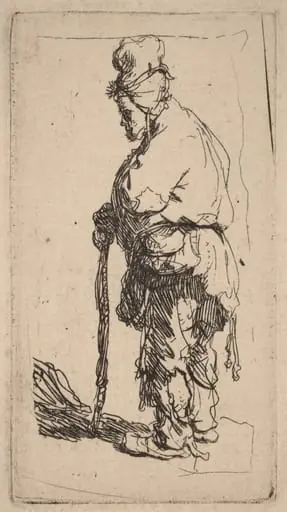 Beggar Leaning on a Stick, Facing Left
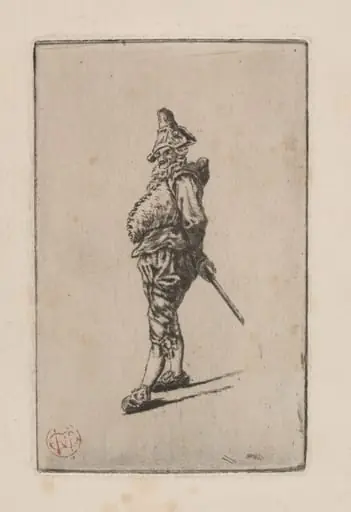 Punchinello, after Meissonier
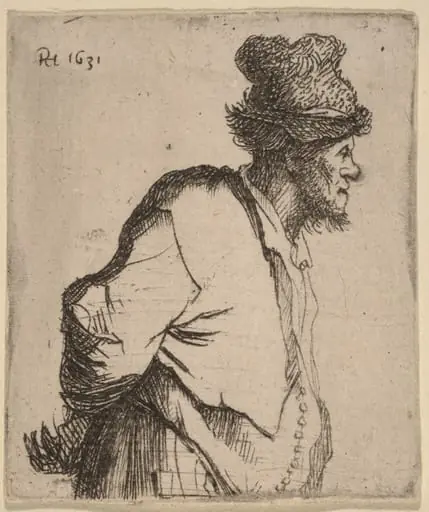 Peasant with His Hands behind His Back
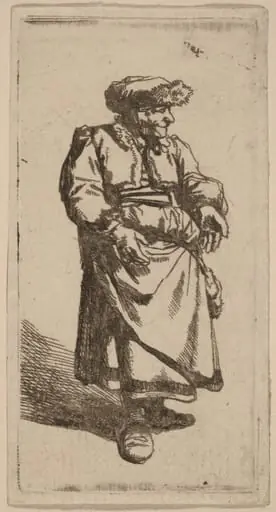 Old Woman Standing
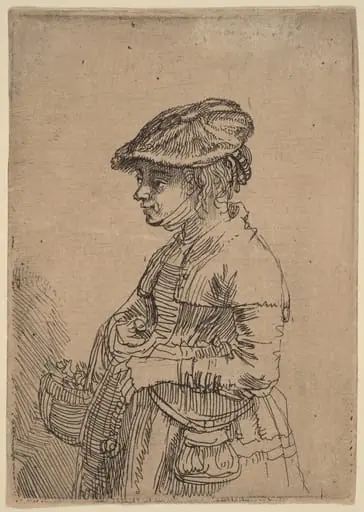 Girl with a Basket
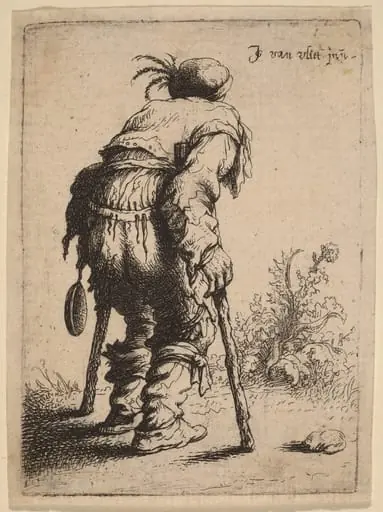 Beggar with Two Crutches
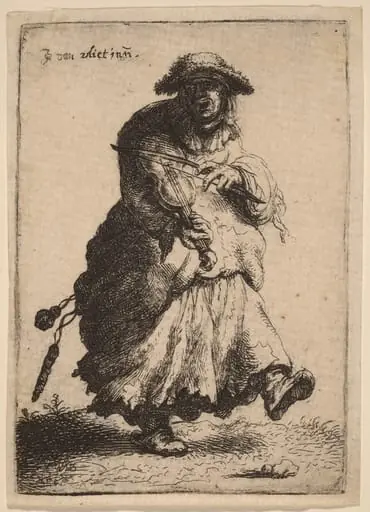 Beggar Woman Playing the Violin
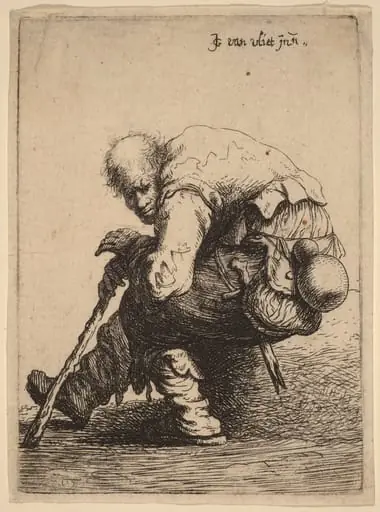 Seated Beggar
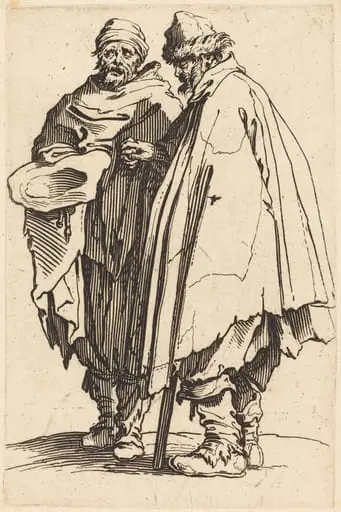 Blind Beggar and Companion
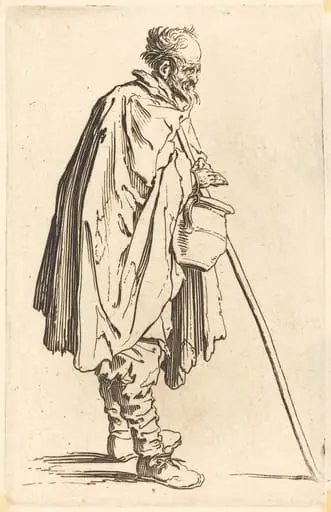 Beggar with Pot