Artwork
Old Woman Standing
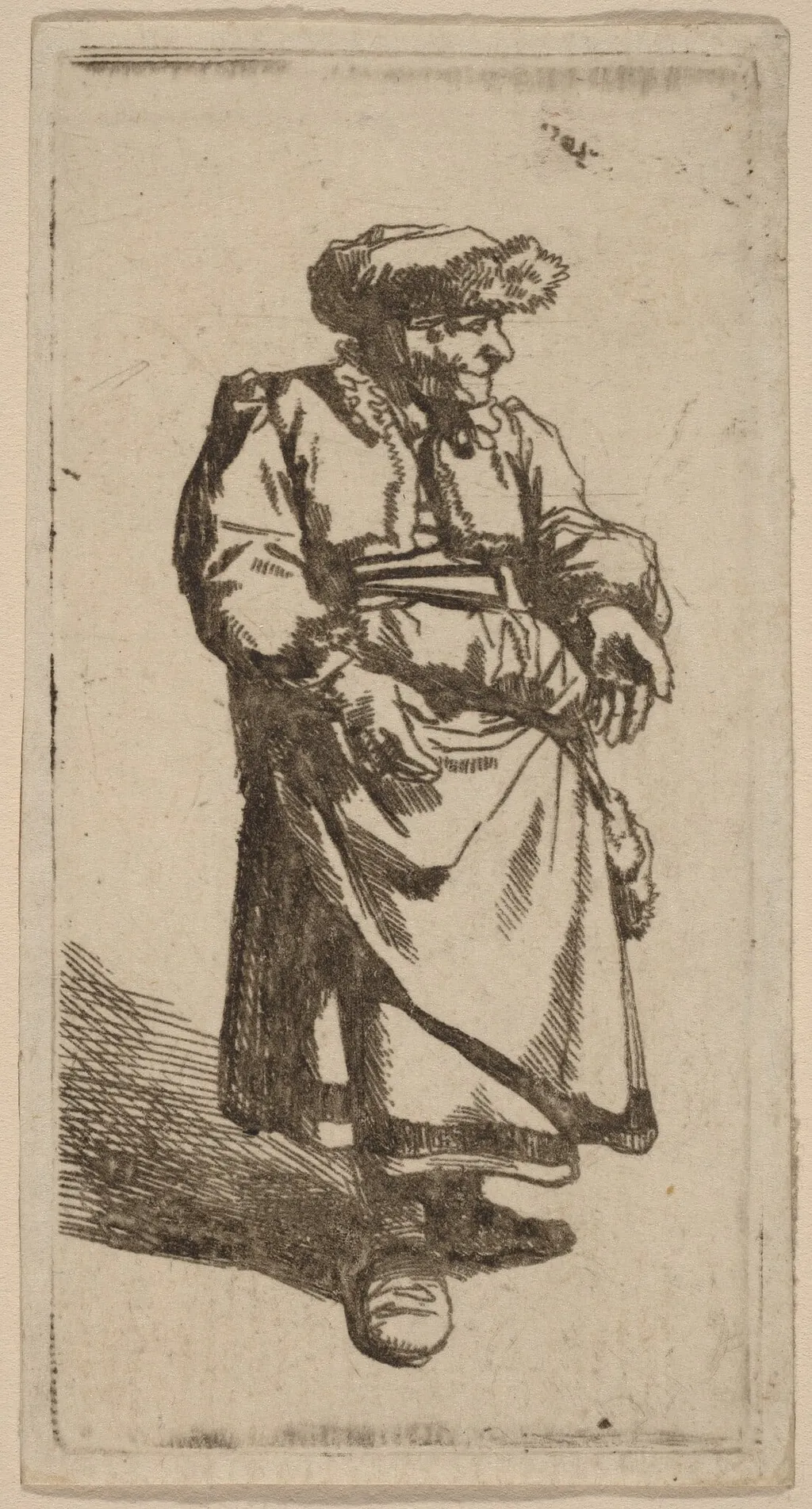
Old Woman Standing is an ink print by the Baroque artist Cornelis Pietersz Bega. It dates from 1648 and is held in the collection of the National Gallery of Art.
About this work
Overview
Cornelis Pietersz Bega, a Haarlem-born artist active in the mid-17th century, produced this etching in 1648.
Cornelis Pietersz Bega, a Haarlem-born artist active in the mid-17th century, produced this etching in 1648. Trained under Adriaen van Ostade, he specialized in intimate genre scenes rendered through printmaking. Unlike painted compositions, this work relies on the direct, linear qualities of etching, capturing a solitary figure with minimal detail and heightened texture. The medium allowed Bega to explore character through gesture and surface rather than color or finish.
Subject & Meaning
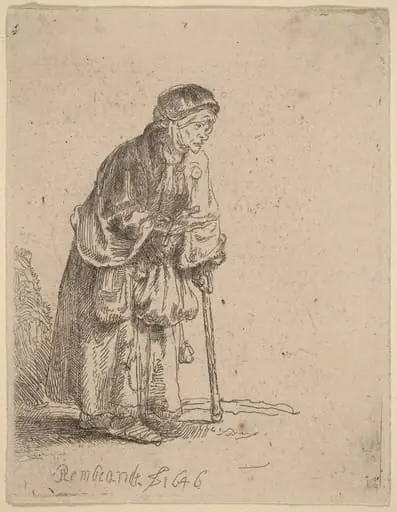
The figure is an elderly woman, standing still with hands clasped before her, dressed in modest, layered clothing typical of rural Dutch laborers. Her posture suggests quiet endurance, not narrative action. The absence of context—no interior, no objects—focuses attention on her presence alone. Bega’s choice to isolate her implies a contemplative dignity in ordinary life, aligning with broader Dutch interest in the moral weight of daily existence.
Technique & Style
Bega employed etching to create a dense network of fine, irregular lines that mimic the texture of fabric and skin. The dark, scratchy marks are not smoothed or blended; they retain the immediacy of the needle’s movement across the plate. This deliberate roughness contrasts with the polished finish of contemporary paintings, emphasizing the tactile, hand-made quality of the print and the artist’s direct engagement with the plate.
History & Provenance
Created in 1648, the etching emerged during Bega’s early career, when he was refining his approach to genre subjects. While few records detail its early ownership, it entered broader circulation through print collections in the Netherlands and later in European museums. Its survival in multiple impressions suggests modest but sustained interest among collectors who valued the emotional resonance of Bega’s quiet scenes.
Context
In 1640s Holland, etching was increasingly used by artists to explore everyday life beyond grand historical or religious themes. Bega’s work fits within a movement that elevated humble figures—peasants, servants, the elderly—as worthy subjects. His approach differed from the theatricality of some contemporaries, favoring stillness and restraint, reflecting a cultural shift toward introspection and domestic realism.
Legacy
Bega’s etchings, including this one, influenced later generations of printmakers drawn to psychological subtlety over spectacle. His use of line to convey character without embellishment became a model for artists seeking authenticity in genre scenes. Though less celebrated than Rembrandt or his teacher van Ostade, his quiet, precise works remain important for their understated humanity and technical discipline.
Artist & collection
Artist
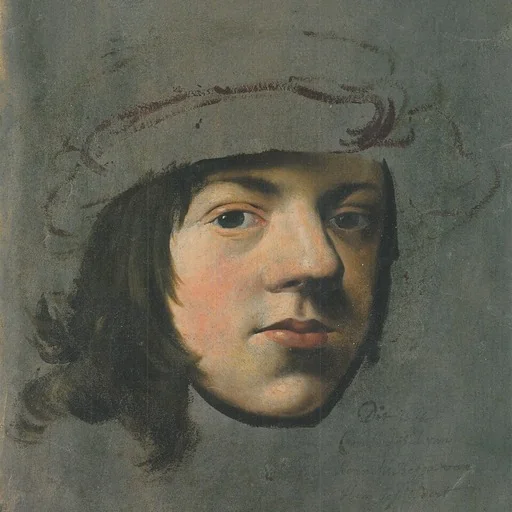
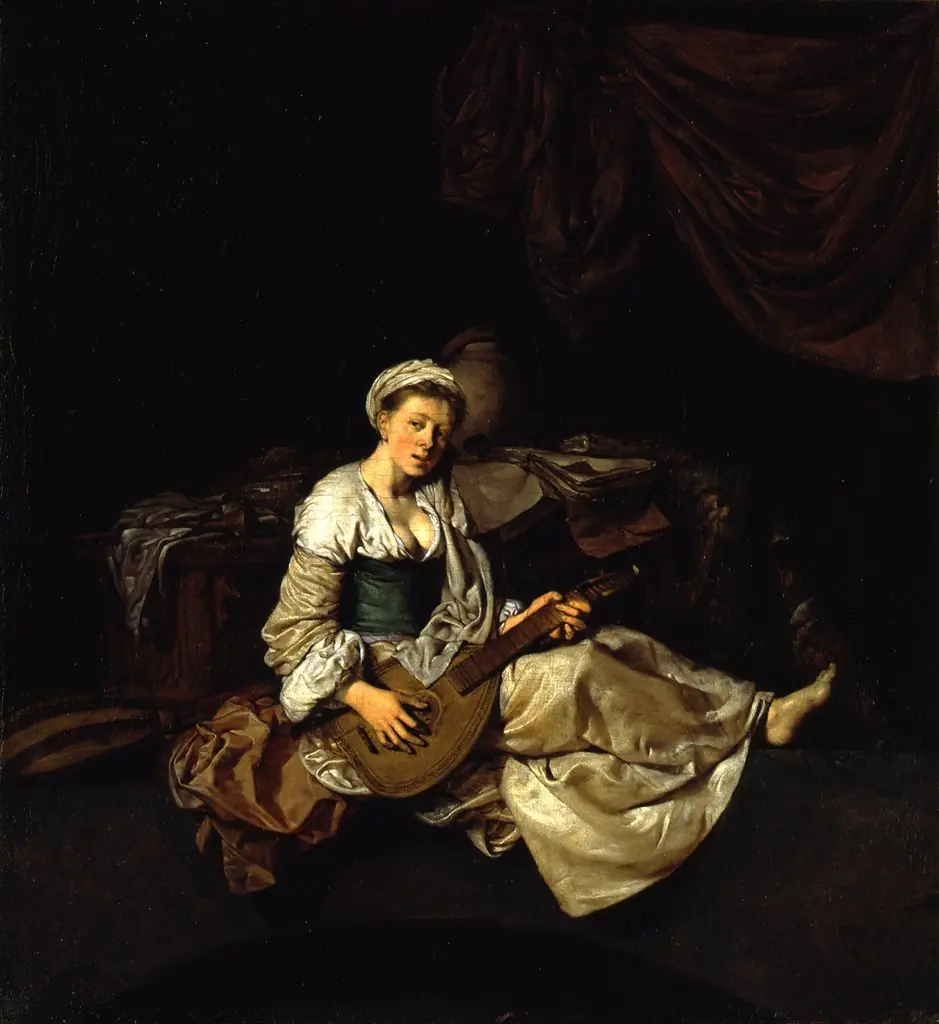
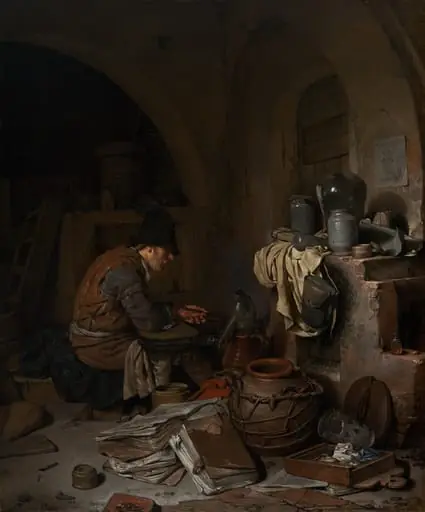
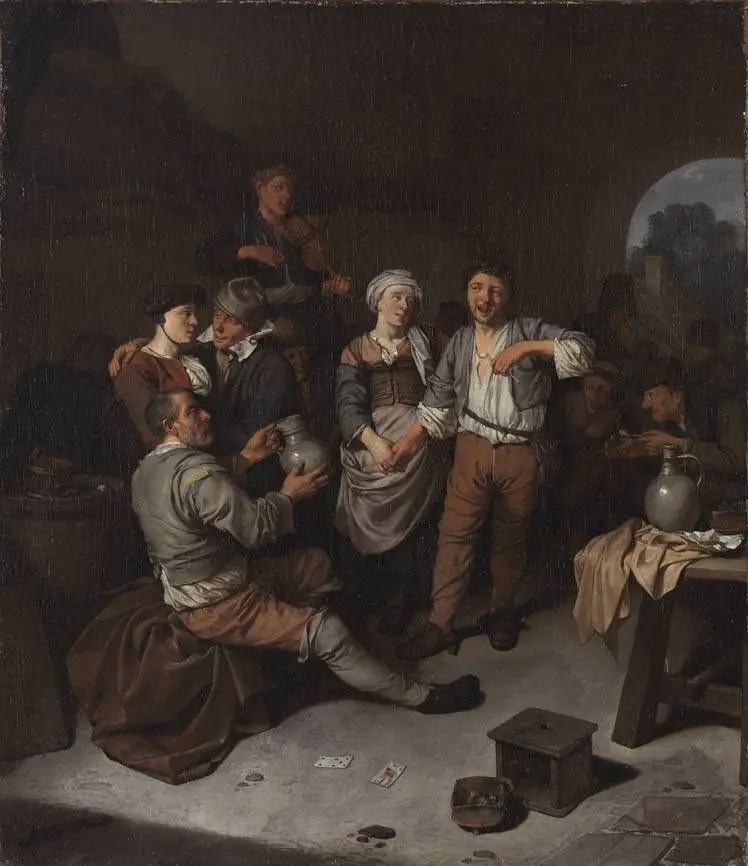
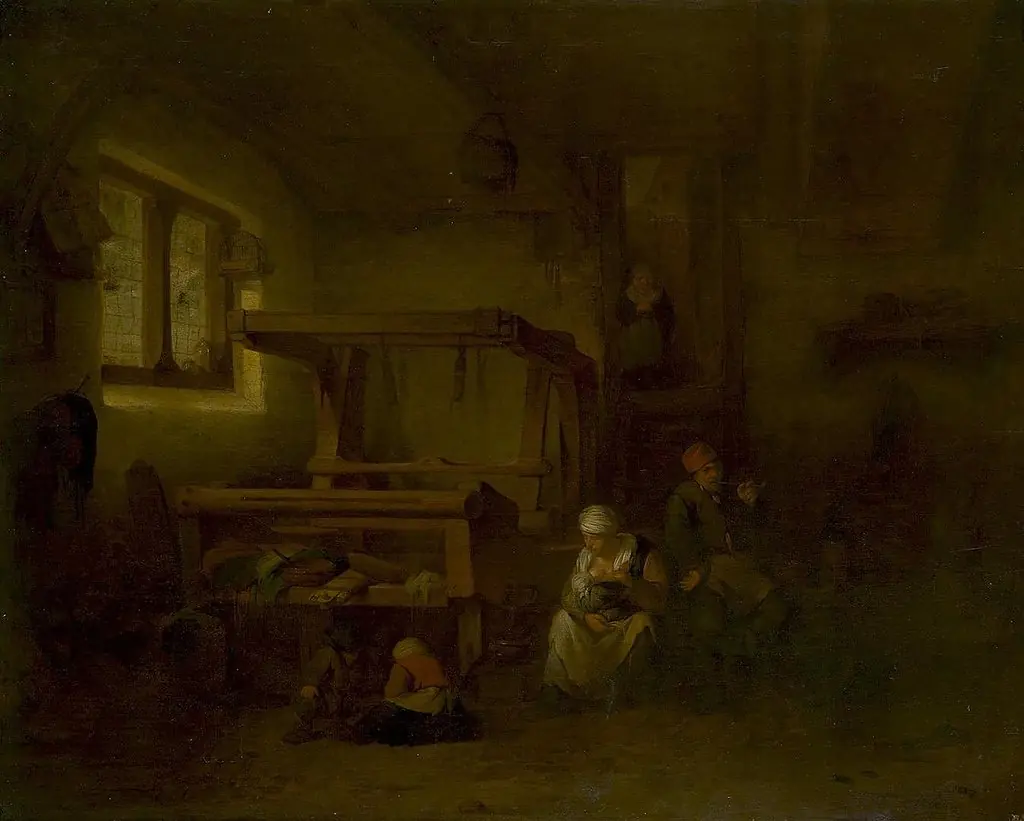
Cornelis Pietersz Bega, or Cornelis Pietersz Begijn (1631/32 – 27 August 1664) was a Dutch Golden Age painter and engraver.

 Beggar Woman Leaning on a Stick
 Beggar with His Left Hand Extended
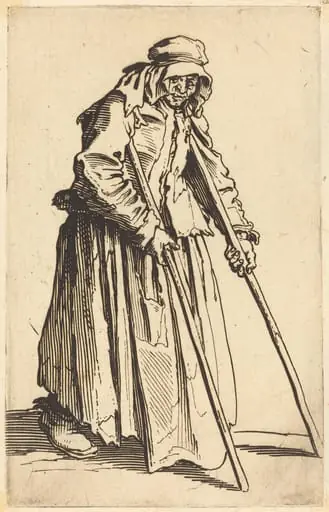 Beggar Woman with Crutches
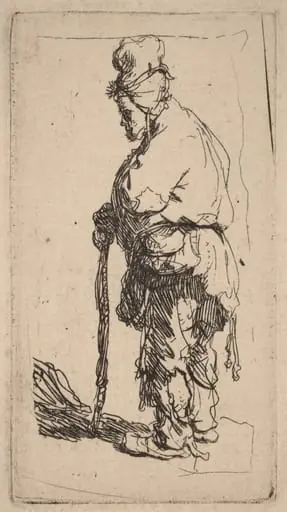 Beggar Leaning on a Stick, Facing Left
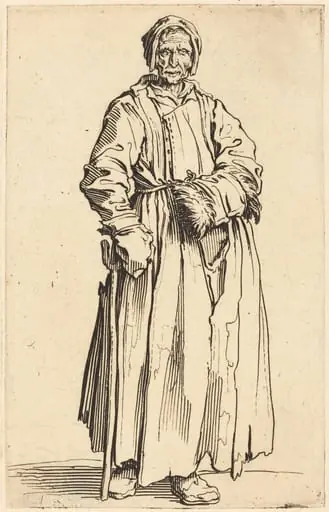 One-Eyed Woman
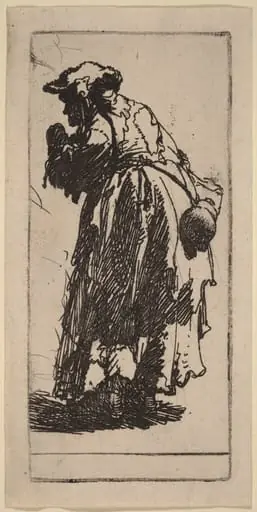 Old Beggar Woman with a Gourd
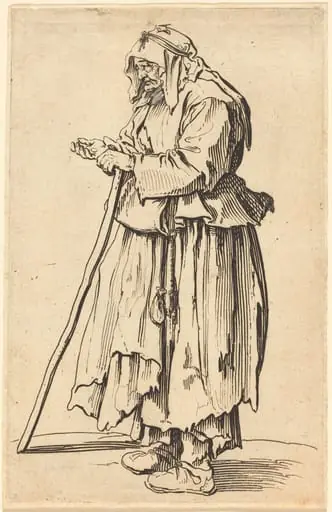 Beggar Woman Receiving Charity
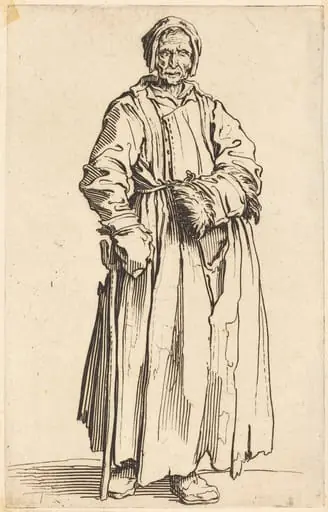 One-Eyed Woman
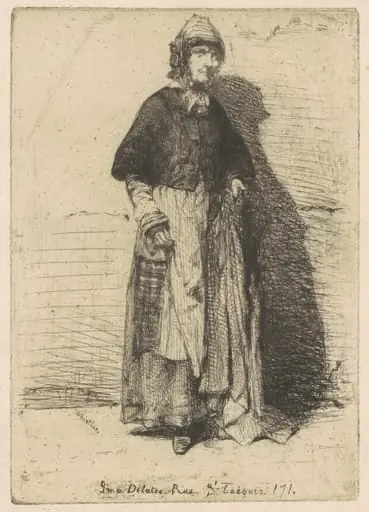 La Mère Gérard
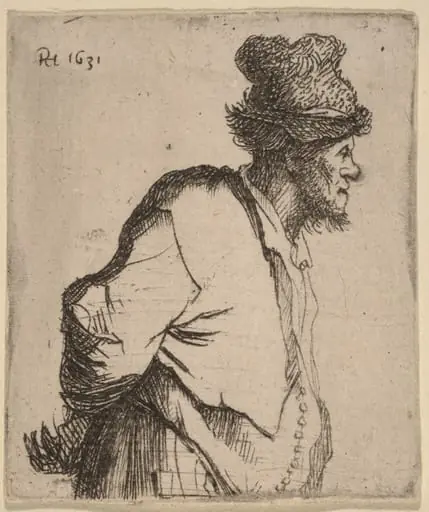 Peasant with His Hands behind His Back
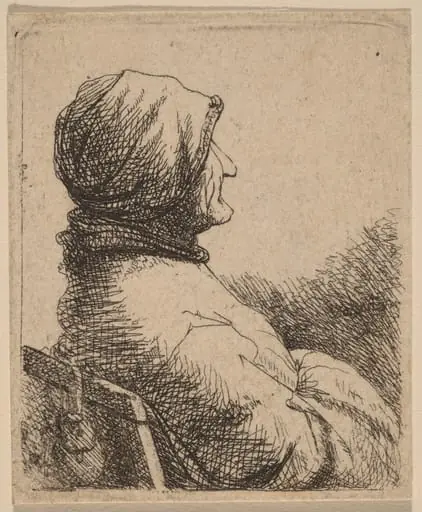 Bust of an Old Woman Turned in Profile to the Right
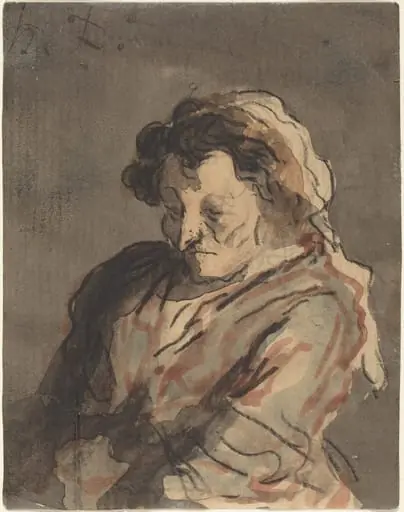 Old Woman Seated