Artwork
King Ferdinand I
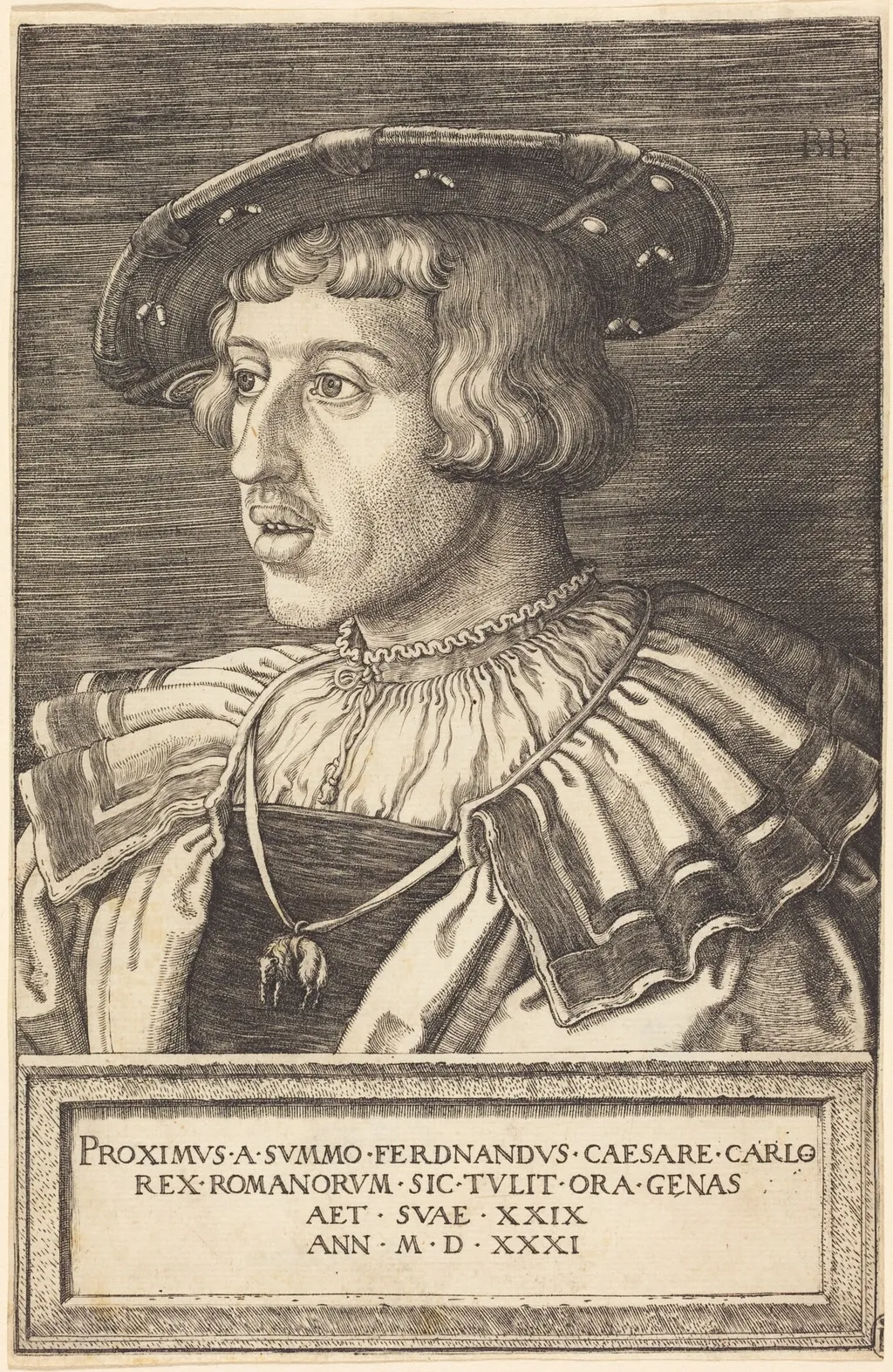
King Ferdinand I is an ink print by the Renaissance artist Barthel Beham. It dates from 1531 and is held in the collection of the National Gallery of Art.
About this work
Overview
Barthel Beham’s 1531 engraving presents a portrait of King Ferdinand I rendered in crisp black‑and‑white lines. The work depicts the monarch with a composed expression, his hair neatly curled and a ruffled collar framing his shoulders. The image is executed on laid paper, a common support for prints of the period.
Subject & Meaning
The figure is identified by a Latin legend beneath the portrait, naming the sitter as King Ferdinand I. The sober demeanor and subtle turn of the head convey a sense of regal authority, while the inclusion of a chain suggests his status and honors.
Technique & Style
Beham employs fine, incised lines to delineate the folds of the ruffled collar, the texture of the hair, and the metallic sheen of the chain. The engraving’s high contrast between dark shadows and bright paper highlights the precision typical of German printmaking in the early sixteenth century.
History & Provenance
Created in 1531, the print reflects the growing demand for portraiture of European rulers during the Reformation era. While the original ownership trail is not fully documented, the work has been catalogued among Beham’s known prints and appears in several early modern print collections.
Context
Barthel Beham, a member of the so‑called “Little Masters,” worked within a tradition of small‑scale, highly detailed engravings that circulated widely among collectors. Portraits of monarchs like Ferdinand I served both as political propaganda and as collectible images for a burgeoning market of print enthusiasts.
Artist & collection

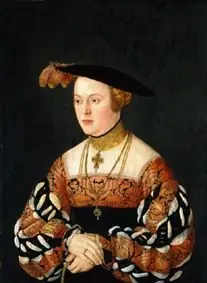 Portrait of Marie of Baden
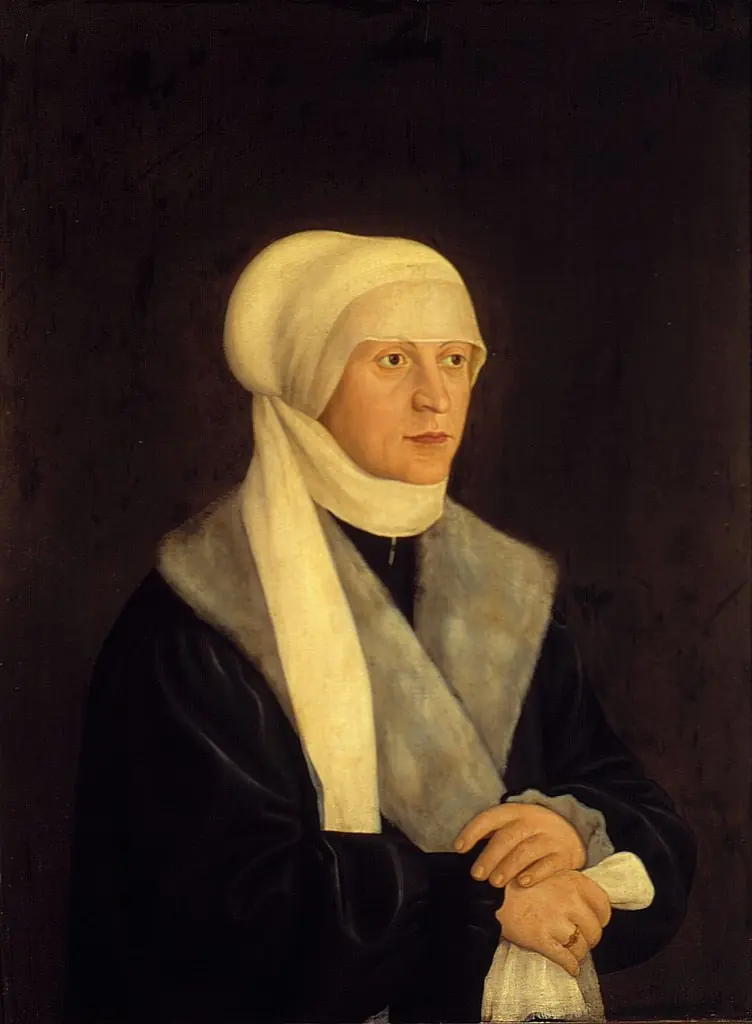 Portrait of Sabina of Bavaria
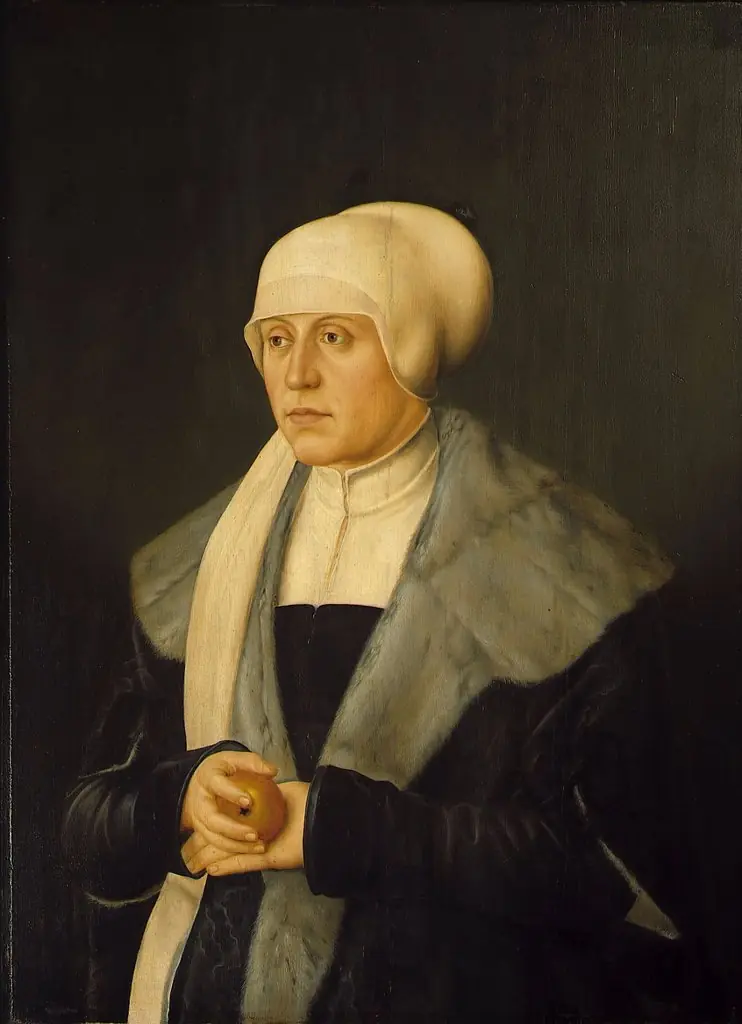 Kunigunde of Austria, wife of Duke Albrecht IV of Bavaria
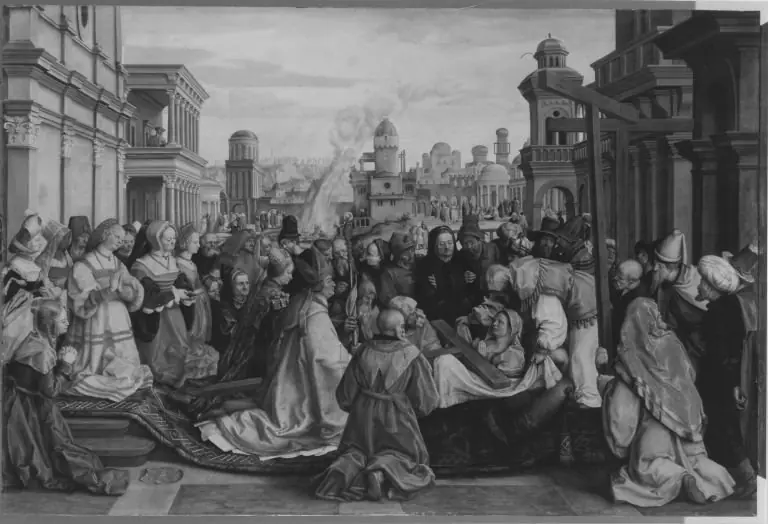 Historienzyklus: Kreuzauffindung der hl. Helena
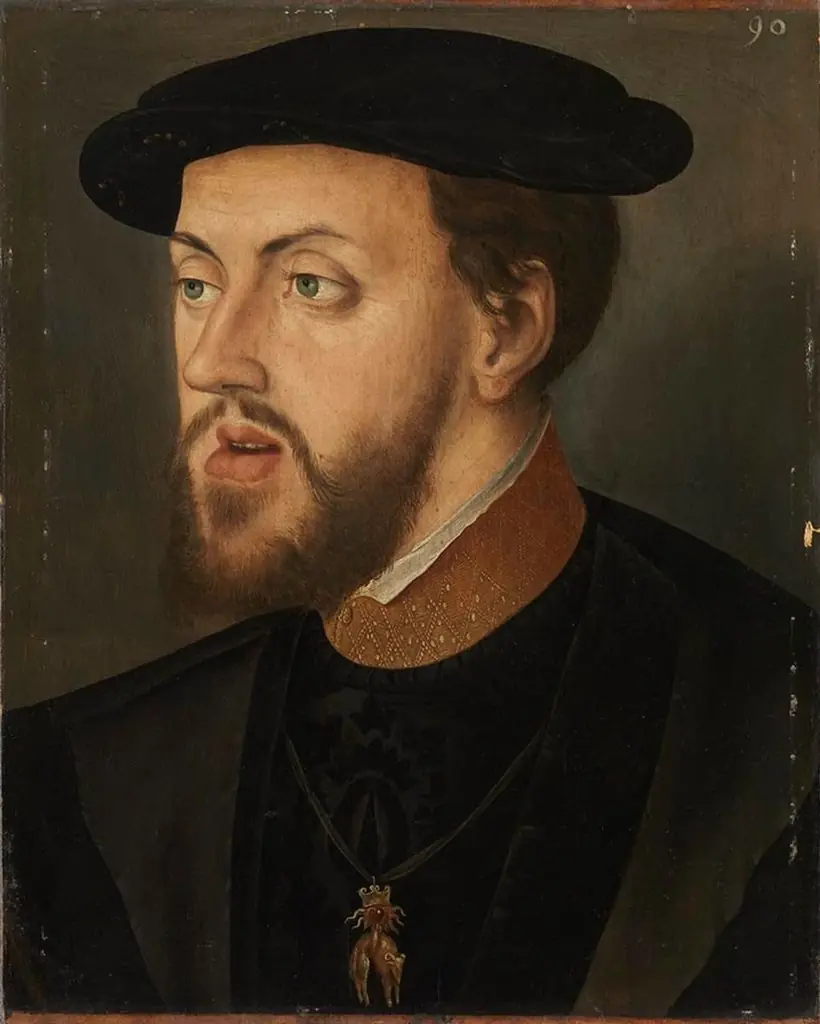 Emperor Charles V
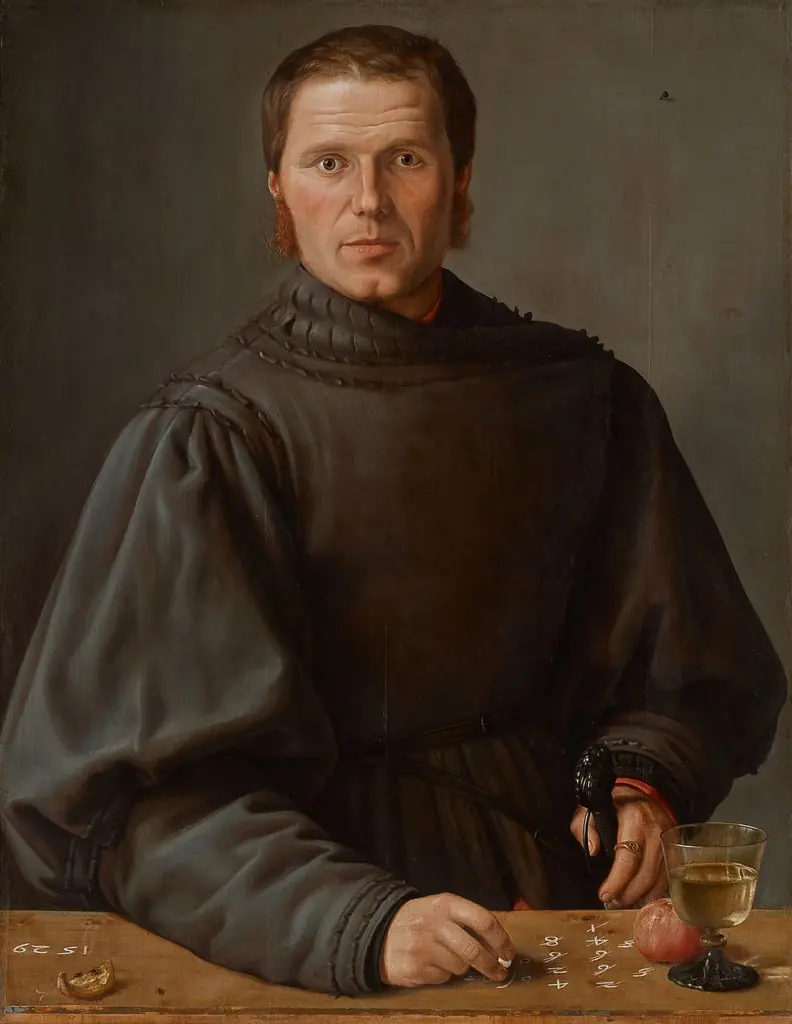 Portrait of a Man
 Susanna von Brandenburg, Gemahlin Ottheinrichs (Seitenverkehrte Kopie nach Inv.-Nr. 2450) (Kopie nach)
 Portrait of Herzog Johann III, Paltzgraf bei Rhein (1488-1538)