Artwork
Saint Christopher
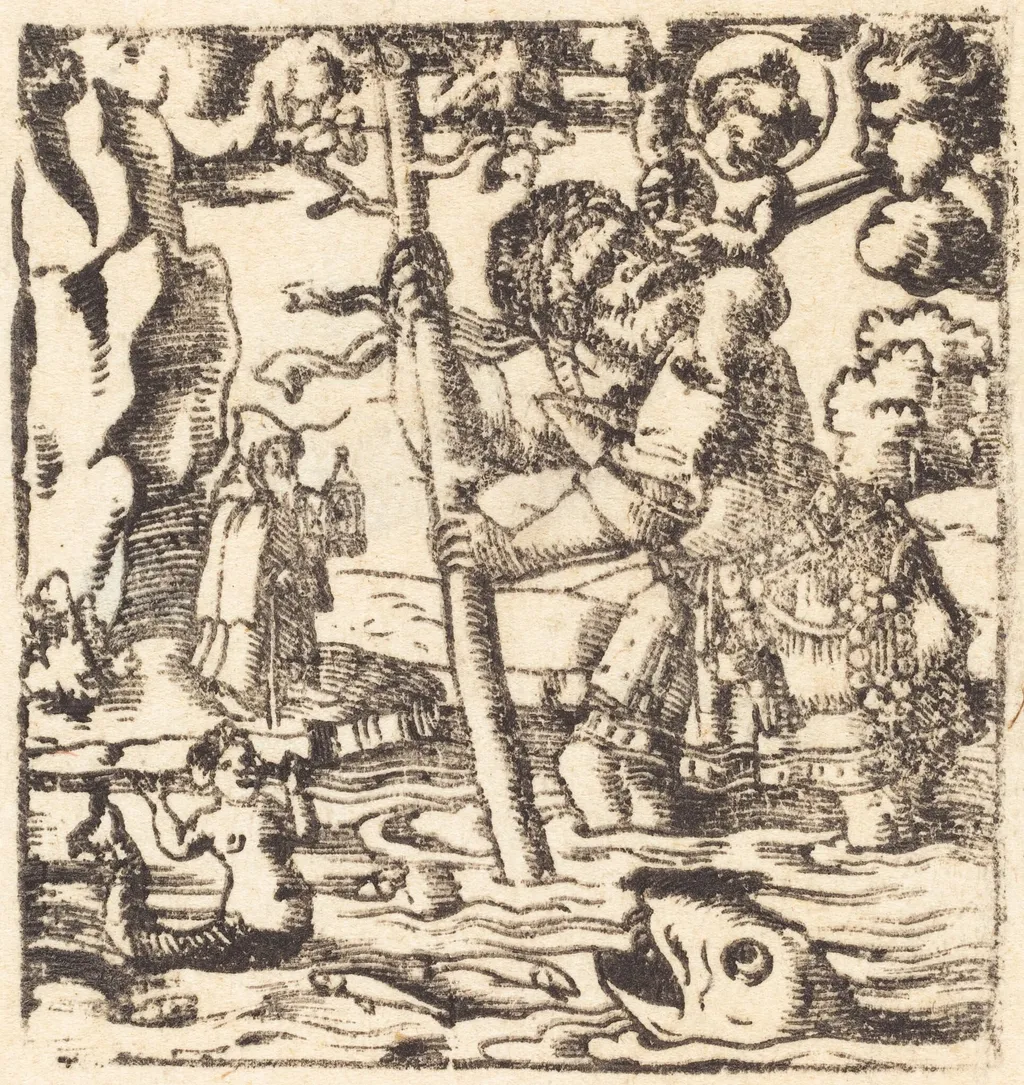
Saint Christopher is an ink print by the Renaissance artist German 19th Century. It dates from 1550 and is held in the collection of the National Gallery of Art.
About this work
Overview
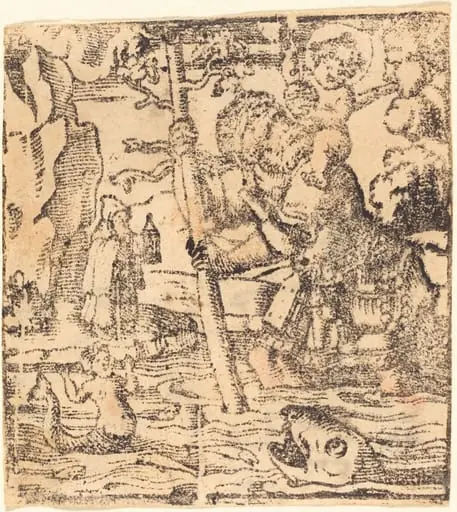
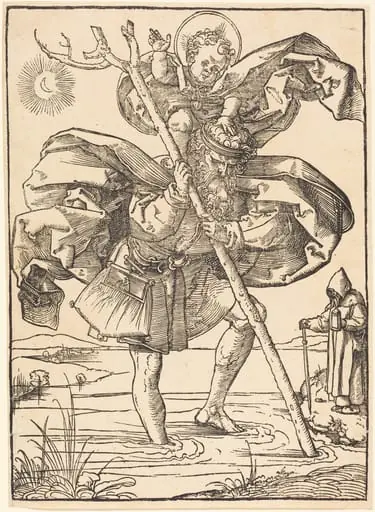
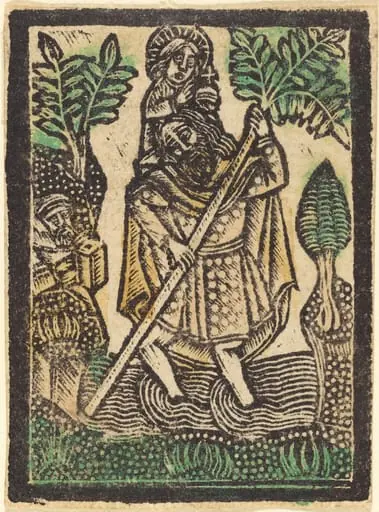
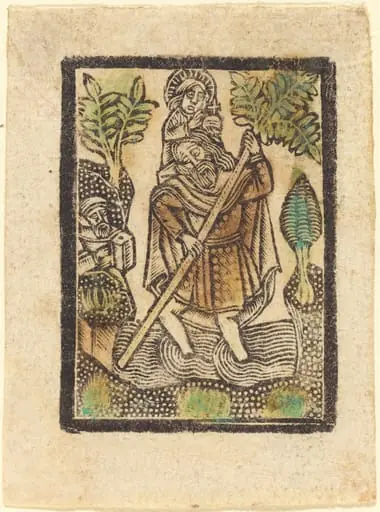
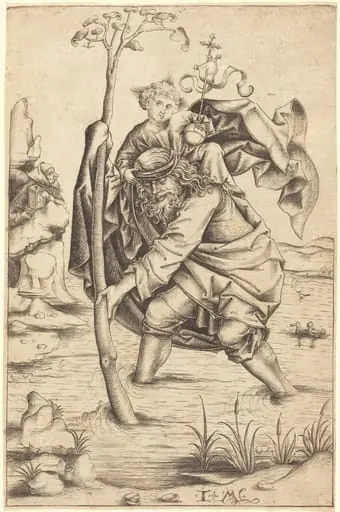
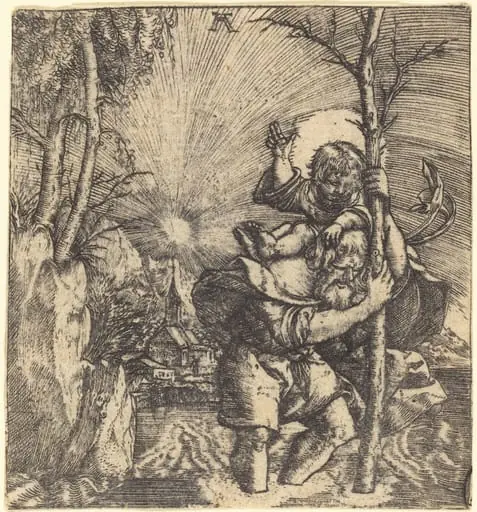
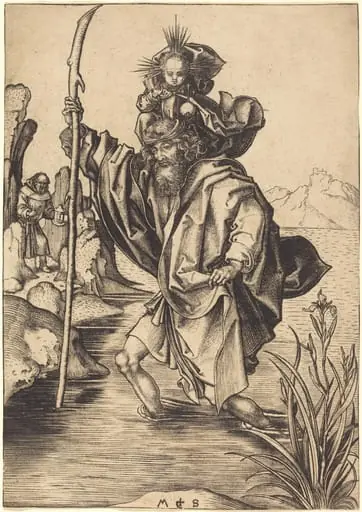
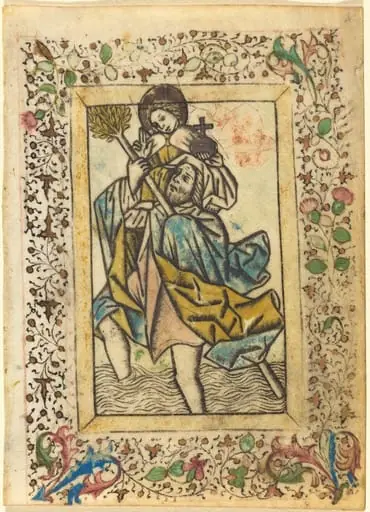
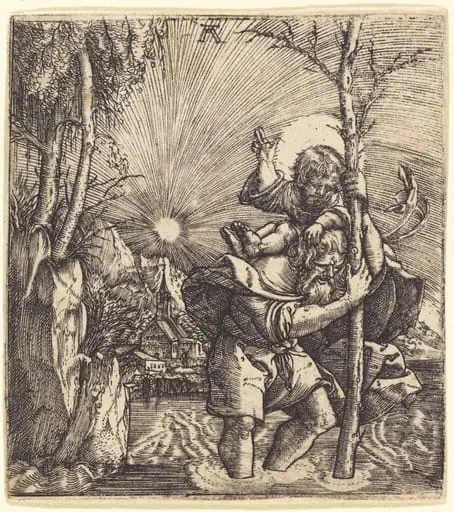
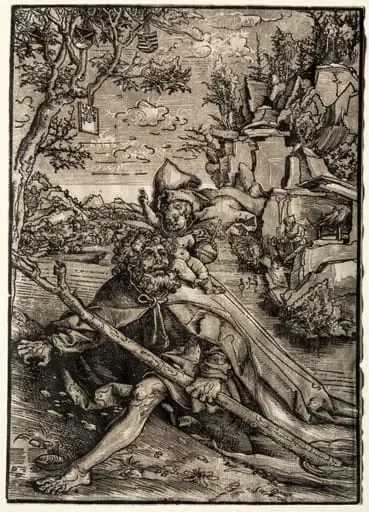
This black-and-white woodcut depicts Saint Christopher, a figure from Christian tradition, wading through water while carrying a child on his shoulders.
This black-and-white woodcut depicts Saint Christopher, a figure from Christian tradition, wading through water while carrying a child on his shoulders. The composition emphasizes physical exertion through the figure’s taut posture and the stark contrast of light and shadow. Sharp, linear carving defines the contours of the body, clothing, and landscape, characteristic of early printmaking techniques that favored clarity over tonal nuance.
Subject & Meaning
Saint Christopher is traditionally venerated as the patron saint of travelers, believed to have carried the Christ child across a river. The child, often interpreted as divine, represents both burden and blessing. The calm expression of the saint contrasts with the strain in his limbs, suggesting spiritual endurance amid physical hardship, a common theme in devotional imagery of the period.
Technique & Style
Executed as a woodcut, the image was created by carving lines into a wooden block, inking the raised surfaces, and pressing paper onto it. The artist used fine, deliberate incisions to render texture in the water, fabric, and foliage, while maintaining a minimalist palette. The absence of color and reliance on line heightens the graphic intensity, typical of Northern European prints from the late medieval or early Renaissance era.
History & Provenance
This woodcut likely originated in the 15th or early 16th century, a period when devotional prints were widely distributed across Europe. Such images were often sold as portable aids to prayer or pilgrimage. Though the specific artist and origin are unrecorded, similar compositions appear in collections from German and Netherlandish workshops, suggesting a shared visual vocabulary among printmakers of the time.
Context
During the late Middle Ages, images of Saint Christopher were commonly placed near doorways or carried by travelers for protection. Woodcuts like this one were affordable alternatives to painted icons, making sacred narratives accessible beyond the clergy and elite. The inclusion of a winding path and distant buildings situates the miracle within an everyday landscape, reinforcing the saint’s role as a guide through both physical and spiritual journeys.
Legacy
This woodcut exemplifies how religious iconography was adapted for mass reproduction, influencing later devotional imagery and the evolution of print culture. Its enduring visual language—clear forms, symbolic weight, and emotional restraint—echoes in subsequent generations of religious prints and even modern graphic design, where simplicity serves narrative clarity.
Artist & collection

Artist
This artist left only tiny, perfect fragments—endpapers and saints, no bigger than a postcard.