Artwork
Saint Christopher
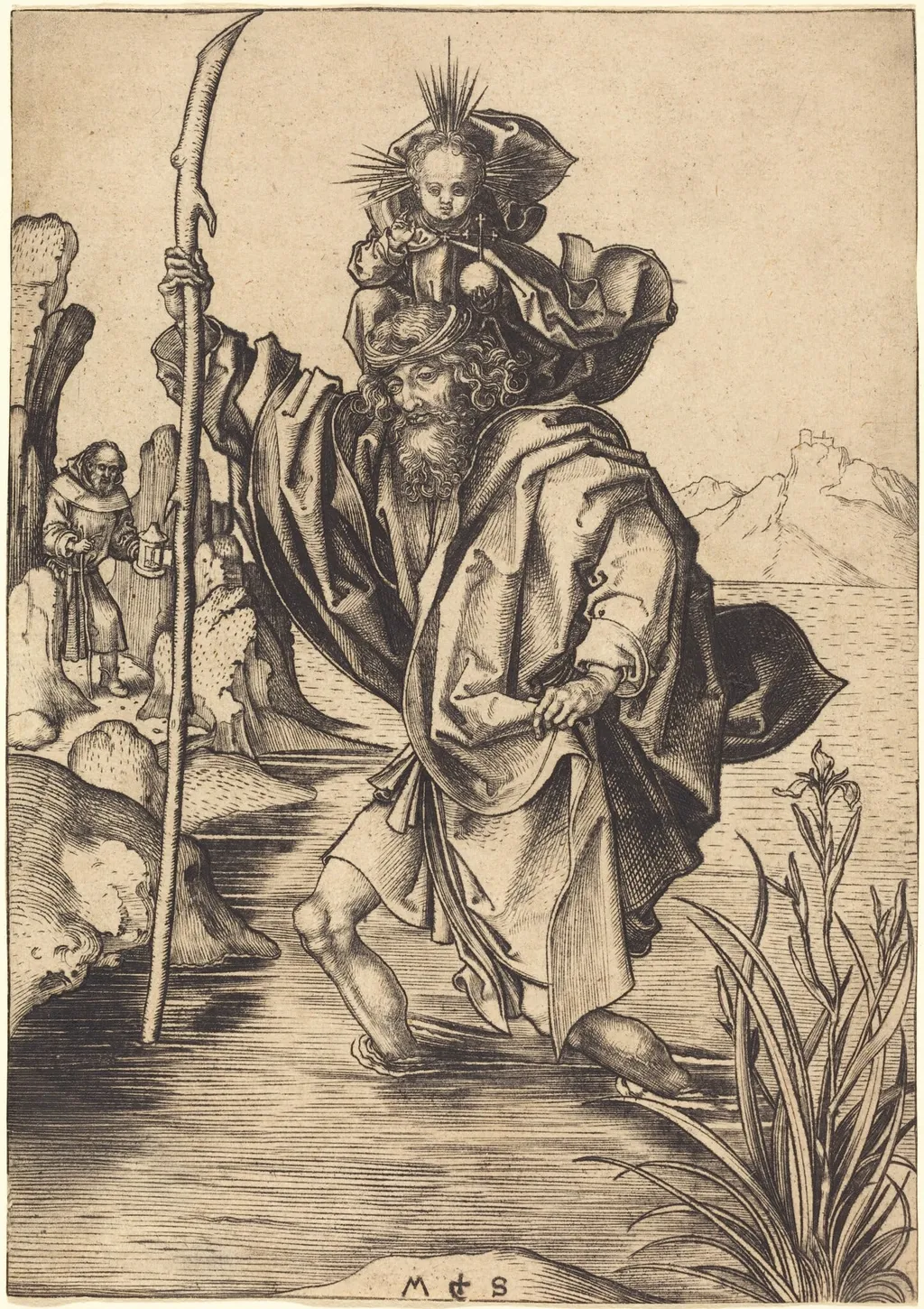
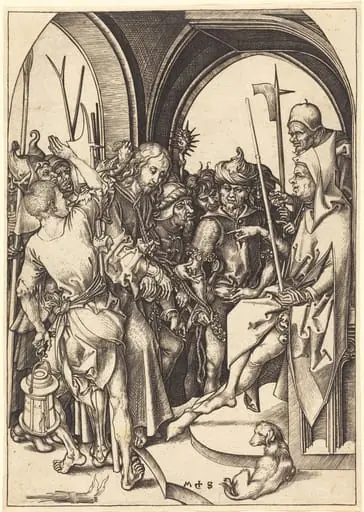
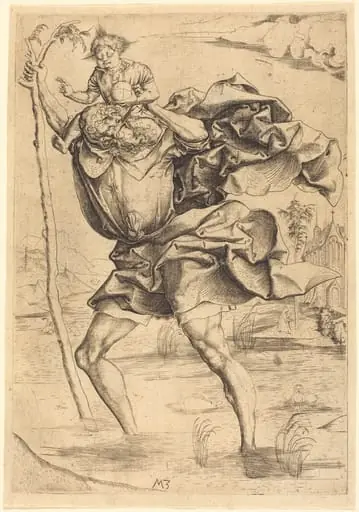
Saint Christopher is an ink print by the Renaissance artist Martin Schongauer. It dates from 1478 and is held in the collection of the National Gallery of Art.
About this work
Overview
Martin Schongauer’s engraving of Saint Christopher, dated around 1478, is a finely detailed work on laid paper that exemplifies the technical sophistication of Northern European printmaking in the late 15th century. As one of the earliest German artists to elevate engraving to a major artistic medium, Schongauer combined craftsmanship with devotional intent, producing images that circulated widely among religious communities and collectors.
Subject & Meaning
The scene draws from hagiographic tradition, reinforcing the theme of faith as a protective force in a dangerous world.
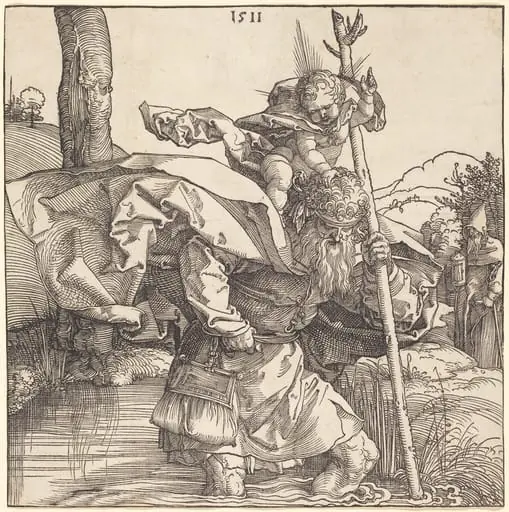
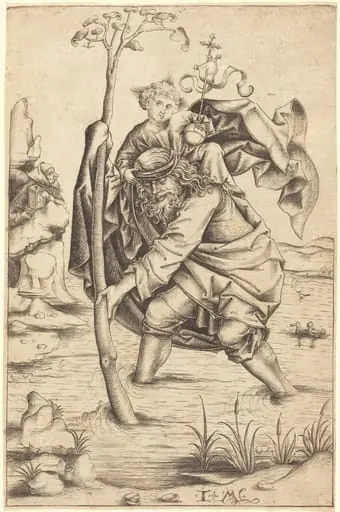
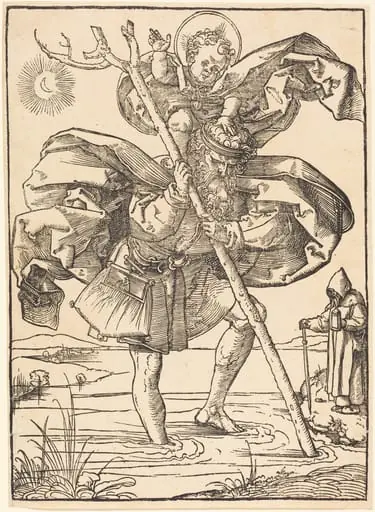
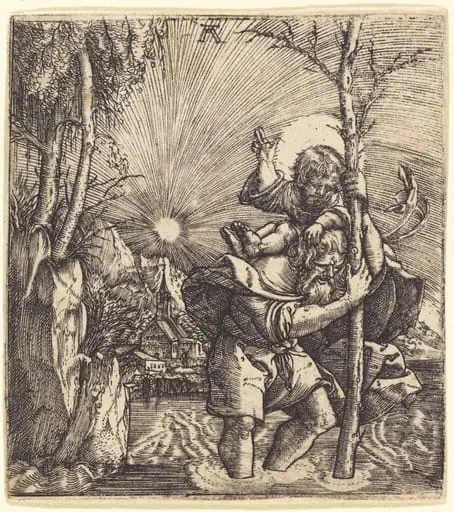
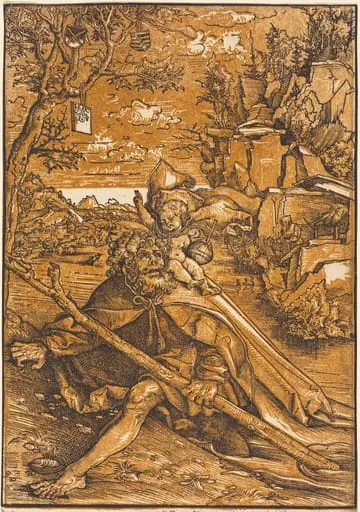
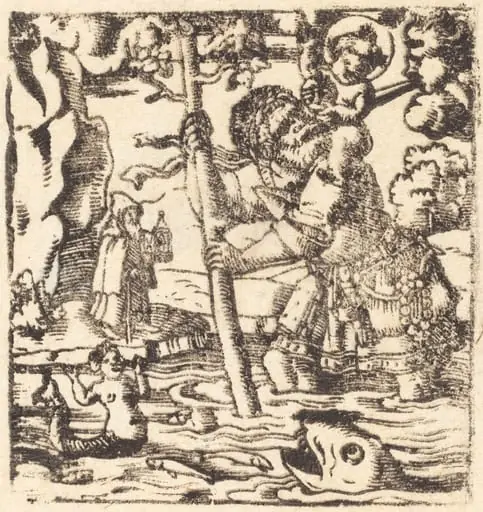
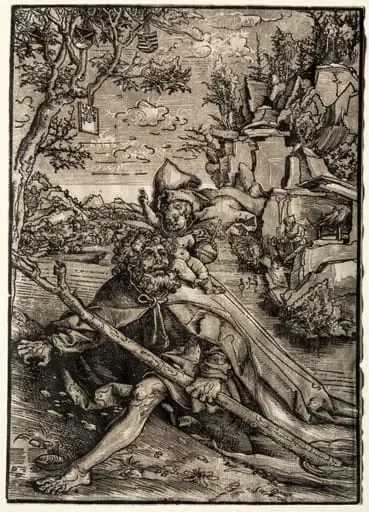
The image portrays Saint Christopher, a legendary martyr, bearing the Christ Child across a turbulent river. The child, marked by a halo and holding a cross, symbolizes divine burden and salvation. A monk in the background holds a lantern, suggesting spiritual guidance through peril. The scene draws from hagiographic tradition, reinforcing the theme of faith as a protective force in a dangerous world.
Technique & Style
Schongauer employed fine, controlled lines and dense cross-hatching to model form and texture with remarkable precision. The water, rocks, and folds of clothing are rendered through layered strokes that create depth without color. The background landscape—mountains and distant horizon—is minimized but carefully suggested, focusing attention on the central figures while maintaining a sense of spatial recession.
History & Provenance
Created in Colmar, where Schongauer maintained a workshop, this engraving was part of a broader output that reached audiences across the Rhineland and beyond. Copies and variants circulated among monasteries and private collectors, contributing to the artist’s reputation. The work survives in multiple impressions, indicating its popularity and the established print trade networks of the period.
Context
In the decades before Dürer’s rise, Schongauer’s engravings filled a demand for portable religious imagery in a time of growing lay piety. His work bridged the late Gothic tradition and early Renaissance naturalism, incorporating detailed observation with symbolic clarity. The popularity of Saint Christopher as a protector against sudden death made this subject especially resonant in a period marked by plague and uncertainty.
Legacy
Schongauer’s technical mastery influenced generations of printmakers, including Albrecht Dürer, who studied his engravings closely. His ability to convey emotional weight and physical presence through line alone set a standard for the medium. Though later overshadowed by Dürer’s fame, Schongauer’s prints remained reference points for artists seeking to balance narrative clarity with intricate craftsmanship.
Artist & collection

Artist
Martin Schongauer, also known as Martin Schön or Hübsch Martin by his contemporaries, was an Alsatian engraver and painter.