Artwork
Capital and Base of a Column
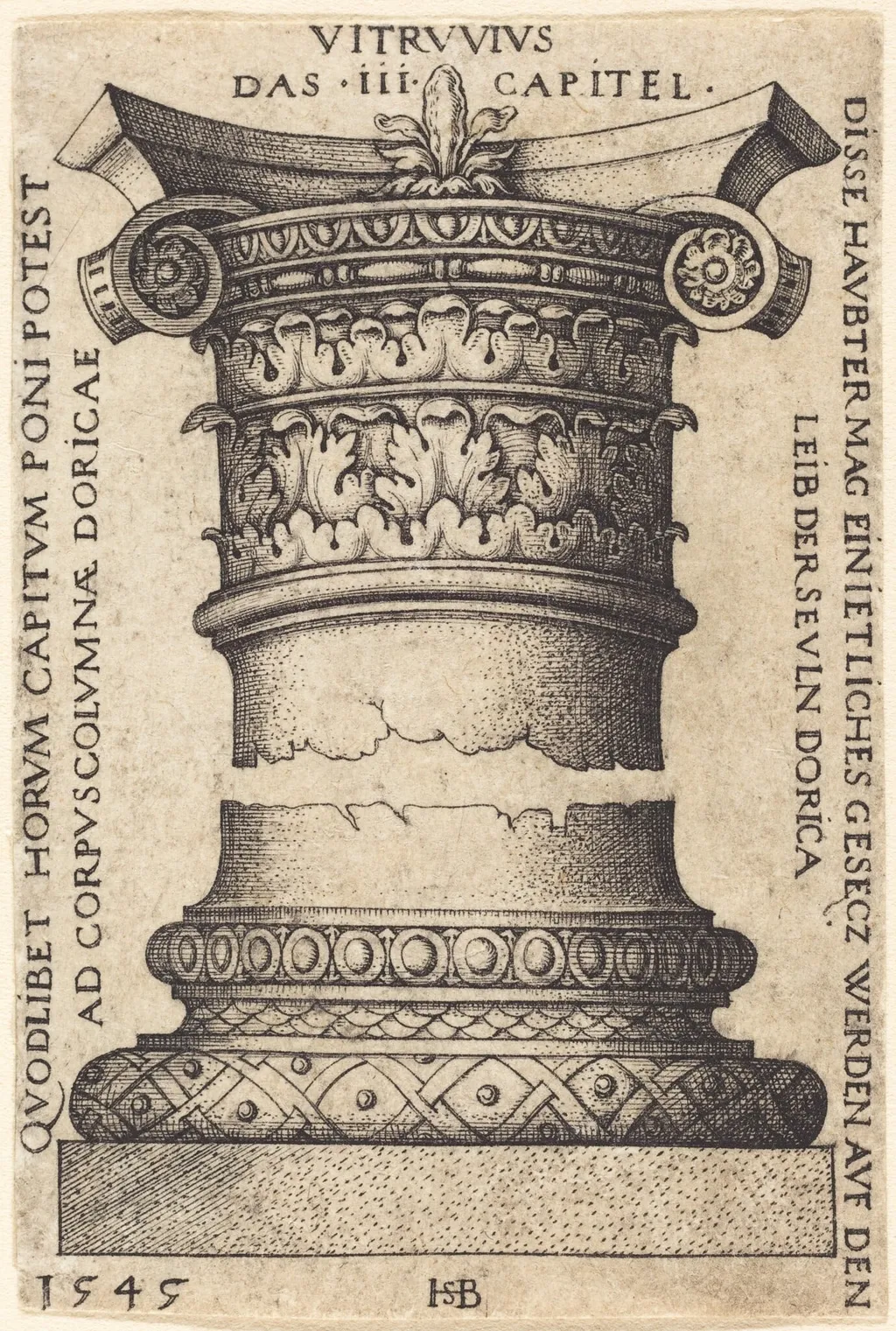
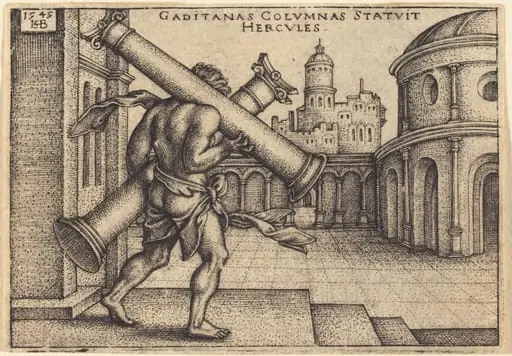
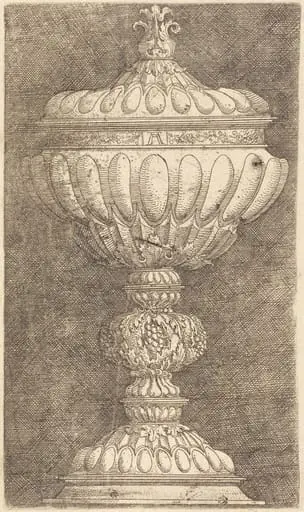
Capital and Base of a Column is an ink print by the Renaissance artist Sebald Beham. It dates from 1545 and is held in the collection of the National Gallery of Art.
About this work
Overview
Sebald Beham’s 1545 engraving *Capital and Base of a Column* presents a detailed study of a classical column’s lower and upper elements placed side by side. Executed in a compact format, the print exemplifies the meticulous, miniature approach characteristic of Beham’s output during his later years in Frankfurt.
Subject & Meaning
The image isolates the architectural components of a column—its base and capital—without narrative figures, offering a purely formal examination of classical form. By rendering the two sections in parallel, the work functions as a visual reference, akin to a schematic illustration of structural ornamentation.
Technique & Style
Beham employs fine cross‑hatching and extremely thin lines to model light and shadow, creating a pronounced contrast between illuminated edges and recessed interiors. The dense network of incised strokes produces a metallic sheen on paper, a hallmark of the high‑resolution engraving practiced by the so‑called “Little Masters.”
History & Provenance
Born in Nuremberg in 1500, Beham moved to Frankfurt later in his career, where he produced this print among a series of small‑scale engravings. The piece survives as one of the few examples where he turned his attention to architectural subjects rather than the mythological or genre scenes that dominate his oeuvre.
Context
Created in the mid‑16th century, the engraving reflects the German printmakers’ fascination with classical antiquity and the diffusion of architectural knowledge through portable images. Its diagrammatic quality aligns with contemporary interests in proportion and design, serving both artistic and instructional purposes.
Artist & collection
Artist
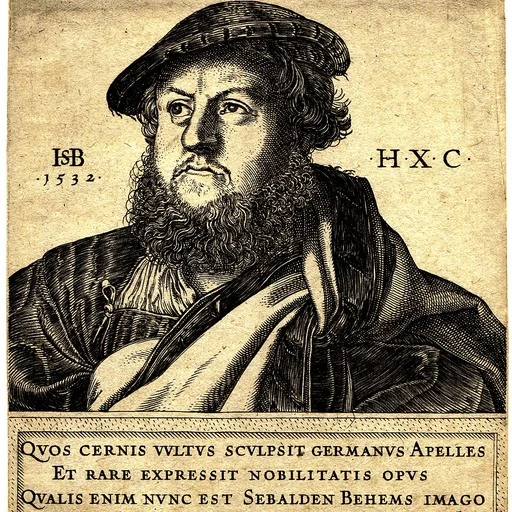
Sebald Beham (1500–1550) was a German painter and printmaker, mainly known for his very small engravings.