Artwork
Christ and the Woman of Samaria
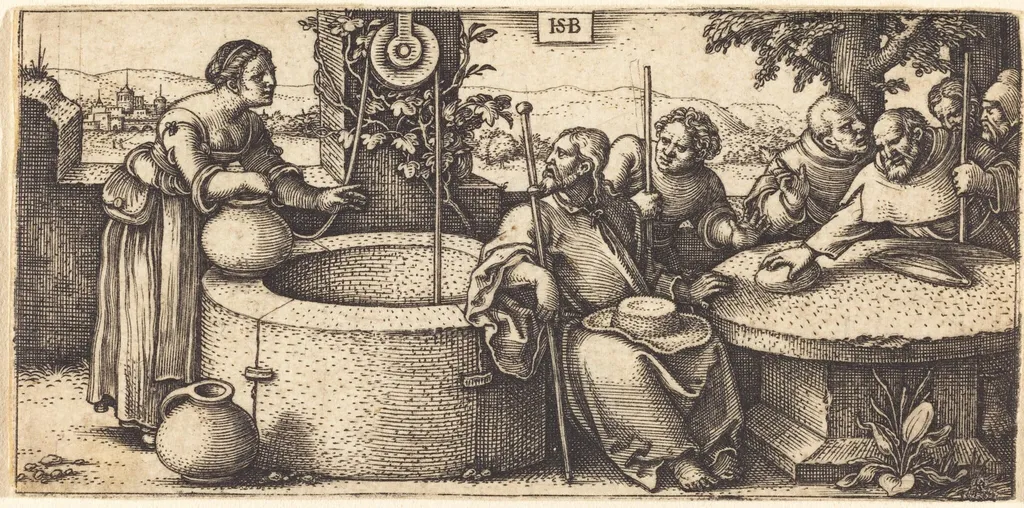
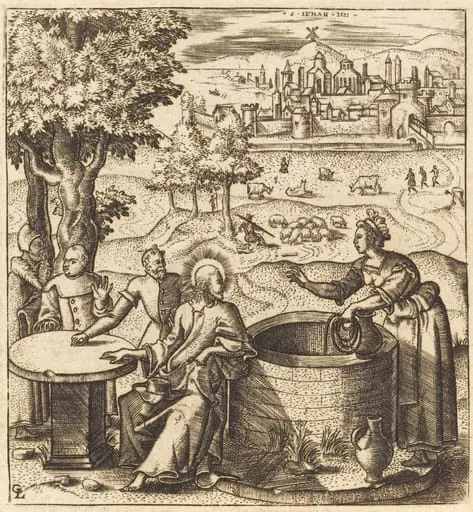
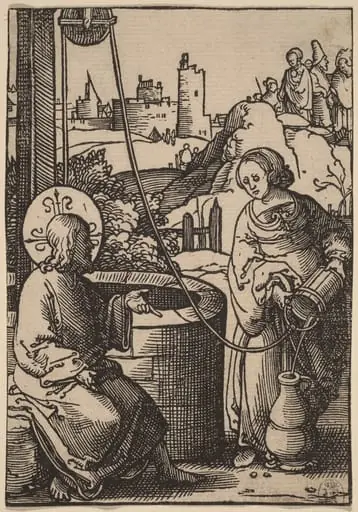
Christ and the Woman of Samaria is an ink print by the Renaissance artist Sebald Beham. It dates from 1539 and is held in the collection of the National Gallery of Art.
About this work
Overview
Sebald Beham’s engraving *Christ and the Woman of Samaria*, executed circa 1539, presents a compact, detailed scene from the Gospel of John. Rendered in the fine line work typical of early‑sixteenth‑century German prints, the image measures only a few inches across yet conveys a complete narrative moment between the Savior and the Samaritan woman.
Subject & Meaning
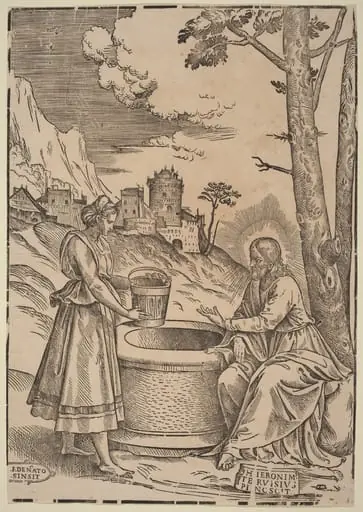
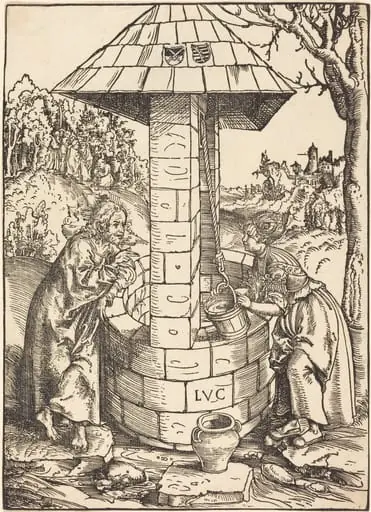
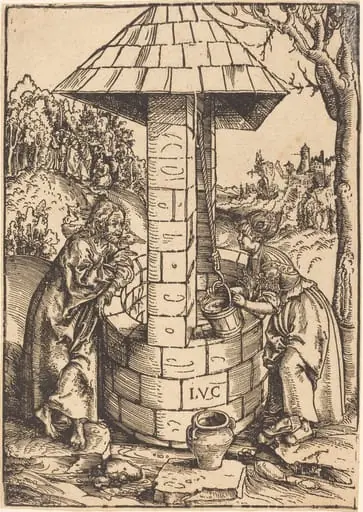
The composition captures the biblical encounter at Jacob’s well: a woman in flowing robes pours water from a jar while a bearded figure, identified as Christ, listens attentively. The woman’s offering gesture and the presence of a staff, a basket of bread, and a stone well underscore themes of spiritual thirst and the exchange of living water.
Technique & Style
Executed by engraving, the work relies on incised lines on a copper plate, allowing Beham to achieve delicate textures—from the woven basket to the worn stones of the well. His miniature scale and intricate detailing align him with the “Little Masters,” a circle of German printmakers who refined Dürer’s precise line work into highly finished, small‑format prints.
History & Provenance
Created during Beham’s mature period, the print reflects his reputation as a leading figure among the Little Masters. While specific ownership records are scarce, the engraving circulated widely in the mid‑16th century, appearing in contemporary print collections and later catalogues of German Renaissance prints.
Context
Beham operated in a milieu dominated by Albrecht Dürer’s legacy, adopting the master’s emphasis on line and proportion while focusing on biblical subjects for a devotional market. The choice of the Samaritan woman narrative reflects the period’s interest in personal piety and the moral instruction offered by New Testament episodes.
Legacy
The engraving exemplifies the technical virtuosity of German printmaking before the rise of larger, oil‑based compositions. It continues to be cited in studies of the Little Masters as a model of how intricate engraving could convey complex theological scenes within a modestly sized format.
Artist & collection
Artist
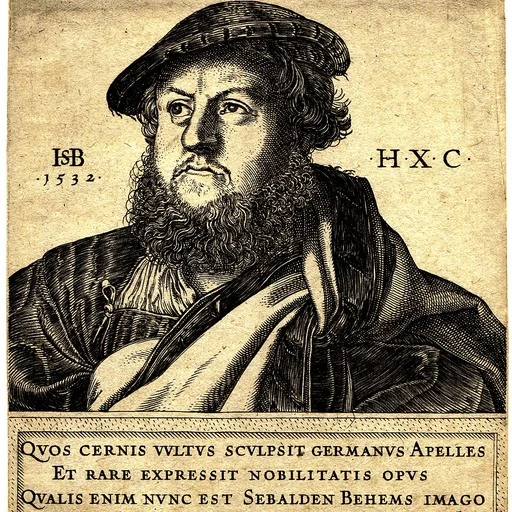
Sebald Beham (1500–1550) was a German painter and printmaker, mainly known for his very small engravings.