Artwork
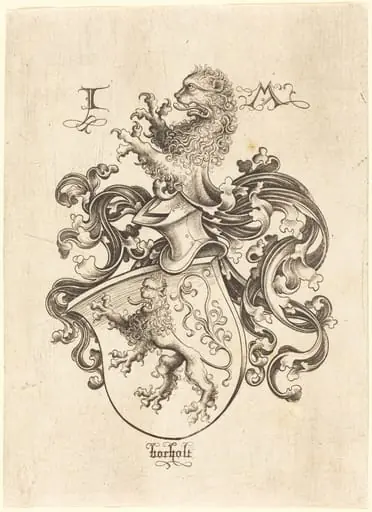
Coat of Arms with a Rampant Lion
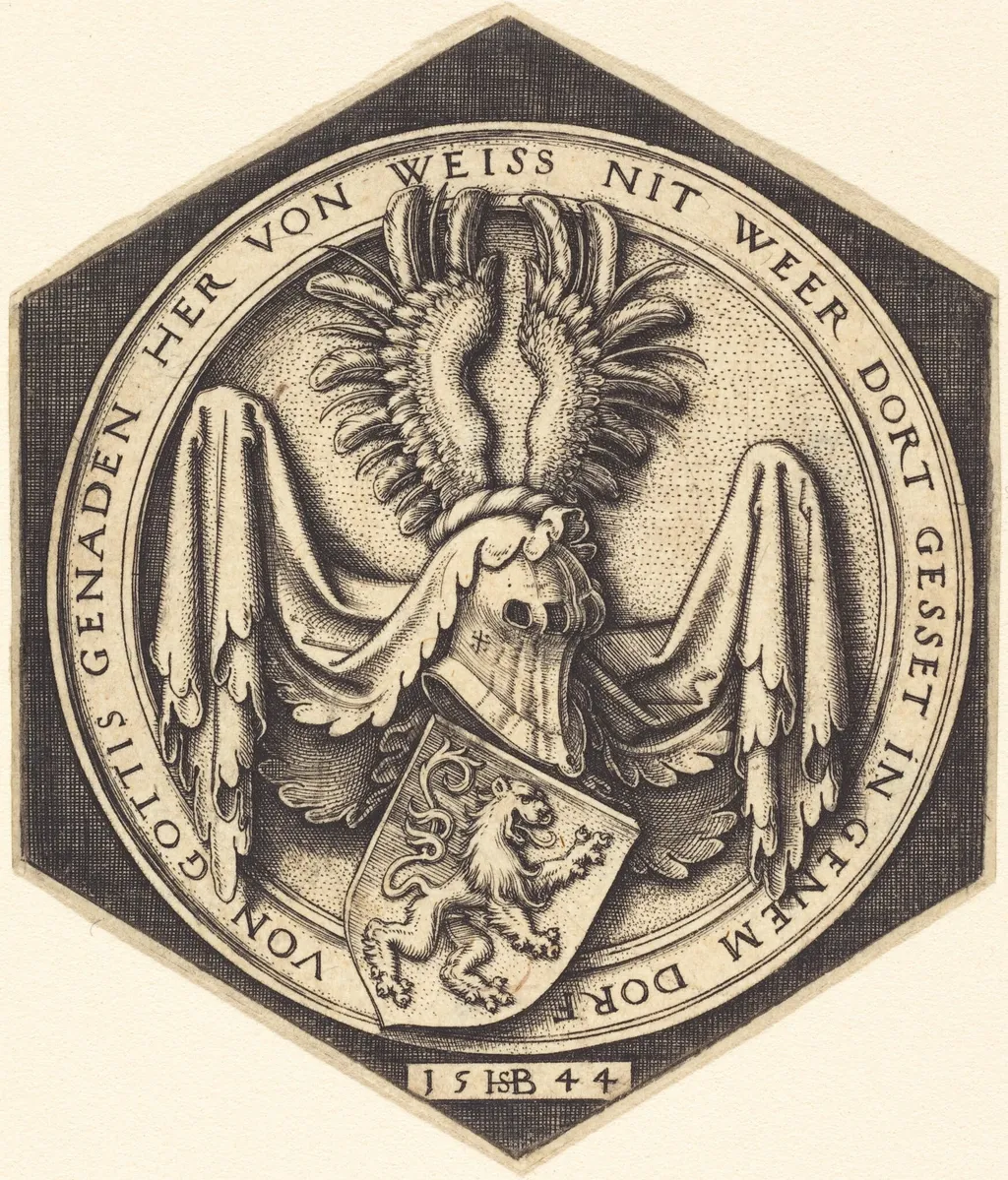
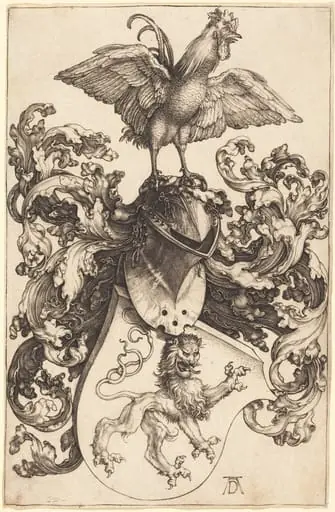
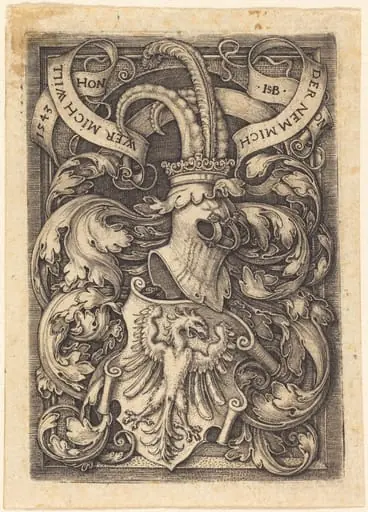
Coat of Arms with a Rampant Lion is an ink print by the Renaissance artist Sebald Beham. It dates from 1544 and is held in the collection of the National Gallery of Art.
About this work
Overview
Created in 1544 by Sebald Beham, this engraving is a small, circular heraldic design executed with precision. Beham, a Nuremberg-based artist known for his miniature prints, employed fine linework to render complex details within a limited space. The work belongs to a series of heraldic studies he produced during his career, reflecting his technical mastery and interest in symbolic imagery.
Subject & Meaning
Above it, a helmet with feathered crest and wings suggests aristocratic rank, possibly indicating a specific family or territorial claim.
At the center lies a shield bearing a rampant lion, a traditional symbol of strength and nobility. Above it, a helmet with feathered crest and wings suggests aristocratic rank, possibly indicating a specific family or territorial claim. The surrounding circular border contains inscribed text, though its content is now indistinct. The composition follows conventional heraldic rules, emphasizing lineage and status through standardized emblems.
Technique & Style
Beham used fine engraving tools to carve delicate lines into a metal plate, relying on cross-hatching to model volume and texture. The dense, controlled strokes create contrast and depth without color, demonstrating his command of monochromatic detail. His style favors compactness and clarity, typical of the 'Little Masters,' who prioritized intricate execution over large-scale composition.
History & Provenance
The print was made during Beham’s active years in Nuremberg, before his later move to Frankfurt. It was likely produced for private collectors or as part of a series of heraldic studies circulated among German elites. No definitive early ownership records survive, but similar works by Beham appear in major European print collections from the late 16th century onward.
Context
In mid-16th century Germany, heraldic imagery remained relevant for identifying noble families and civic institutions. Engravings like this served both decorative and documentary purposes, often used in genealogical records or personal seals. Beham’s output aligned with a broader trend of artists translating heraldic traditions into accessible, reproducible formats for a literate urban audience.
Legacy
Beham’s small-scale engravings influenced later generations of printmakers through their technical rigor and compositional economy. While not widely exhibited today, his heraldic works remain studied for their precision and role in the evolution of print culture. This piece exemplifies how artistic skill could elevate functional symbols into enduring visual artifacts.
Artist & collection
Artist
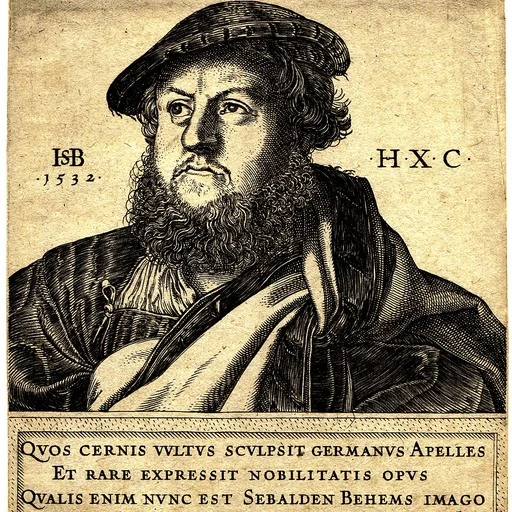
Sebald Beham (1500–1550) was a German painter and printmaker, mainly known for his very small engravings.