Artwork
Departure of the Prodigal Son
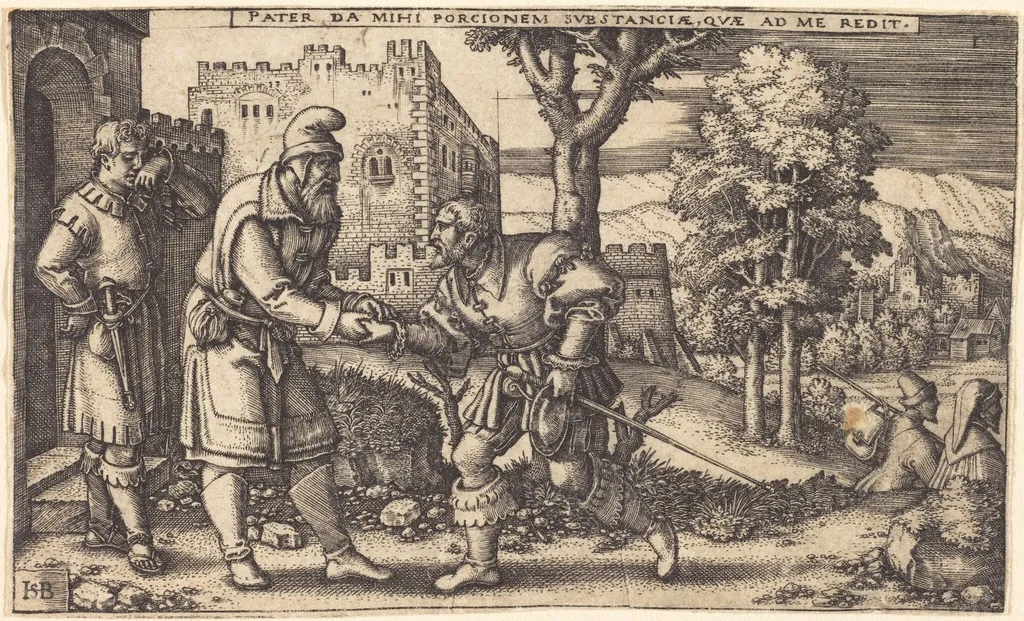
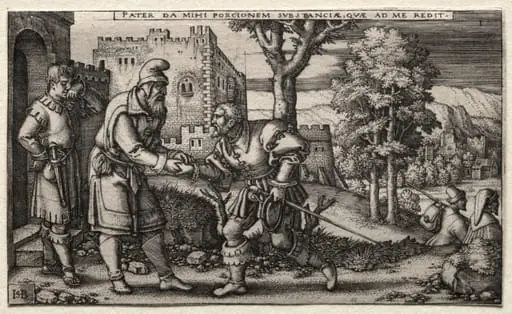
Departure of the Prodigal Son is an ink print by the Renaissance artist Sebald Beham. It dates from 1540 and is held in the collection of the National Gallery of Art.
About this work
Overview
Sebald Beham’s *Departure of the Prodigal Son* is an engraving executed in 1540. Produced in the miniature format typical of the German “Little Masters,” the print measures only a few inches across yet contains a densely packed narrative scene. It exemplifies the high level of technical control that German printmakers achieved in the decades following Albrecht Dürer’s innovations.
Subject & Meaning
A kneeling man, visibly exhausted, receives an outstretched hand from a standing companion, suggesting a moment of reconciliation or assistance.
The image depicts a group of four figures gathered beneath a tree beside a fortified city. A kneeling man, visibly exhausted, receives an outstretched hand from a standing companion, suggesting a moment of reconciliation or assistance. Flanking them, a soldier and a servant observe the exchange, while the distant castle and walls frame the encounter, reinforcing the biblical theme of the prodigal son’s return.
Technique & Style
Beham employed the traditional engraving method, incising lines into a copper plate with a burin to produce fine, precise marks. The print’s minute scale allows for intricate detailing of clothing, foliage, and architectural elements, a hallmark of Beham’s work and of the “Little Masters” aesthetic, which prized meticulous rendering over large format.
History & Provenance
Created during Beham’s most productive period, the engraving is one of roughly 252 prints the artist produced, encompassing engravings, etchings, and woodcuts. While specific ownership records for this particular impression are scarce, the work circulated among collectors of German prints in the mid‑16th century and later entered museum collections that specialize in Renaissance graphic art.
Context
The early 1540s marked a flourishing of German printmaking, with artists building on Dürer’s technical and compositional advances. Beham, operating in Nuremberg, contributed to this vibrant market by supplying small, highly detailed prints that appealed to both private patrons and the burgeoning print‑collecting public.
Legacy
*Departure of the Prodigal Son* illustrates the capacity of the miniature engraving to convey complex narrative and emotional nuance. It remains a reference point for scholars studying the diffusion of biblical subjects in Northern Renaissance prints and the distinctive visual language of the “Little Masters.”
Artist & collection
Artist
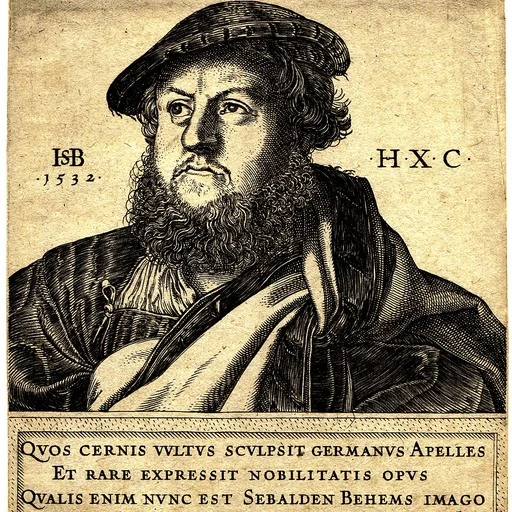
Sebald Beham (1500–1550) was a German painter and printmaker, mainly known for his very small engravings.


 The Prodigal Son
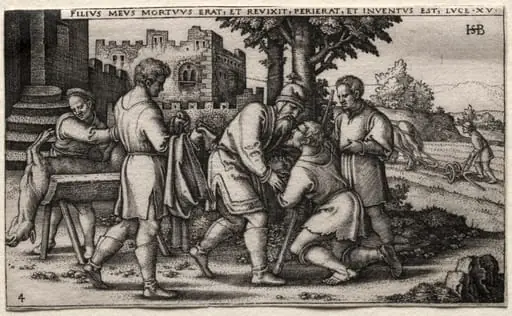 The Prodigal Son: Return of the Prodigal Son
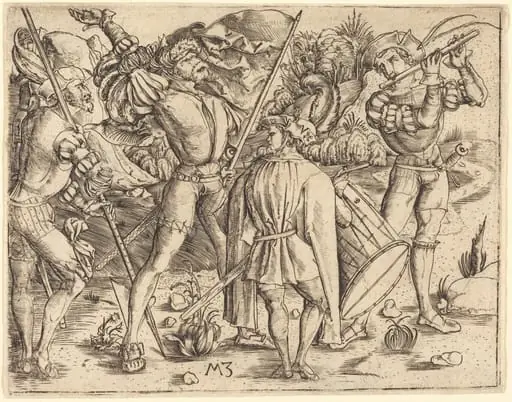 Four Soldiers
 Christ Tells His Disciples of the Last Judgment
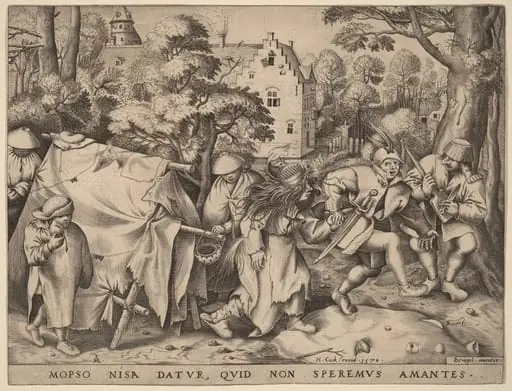 The Wedding of Mopsus and Nisa
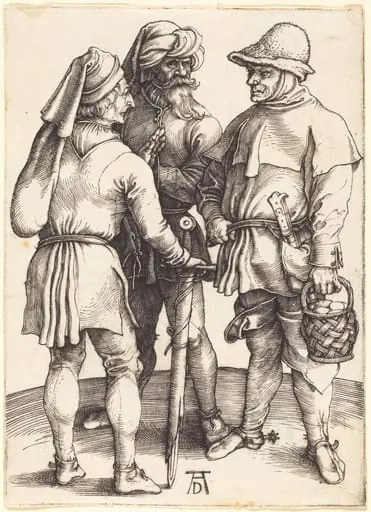 Three Peasants in Conversation
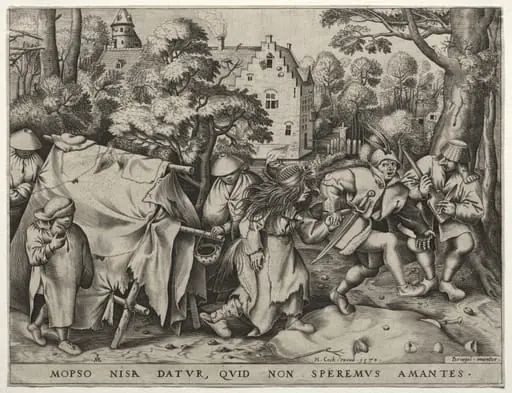 The Wedding of Mopsus and Nisa (The Dirty Bride)
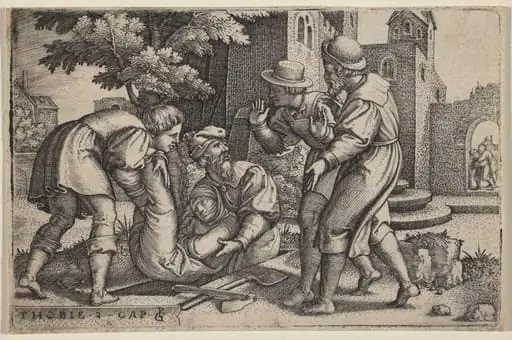 Tobias Burying One of the Children of Israel
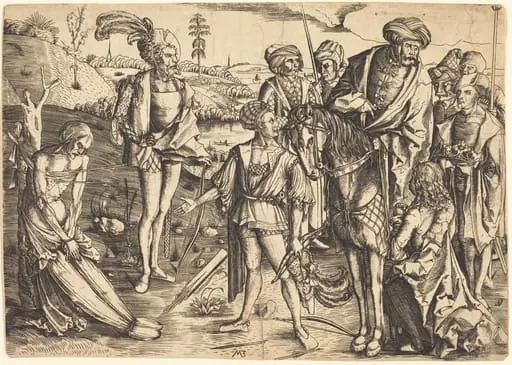 The Testing of the King's Sons