Artwork
Domitia Calvilla
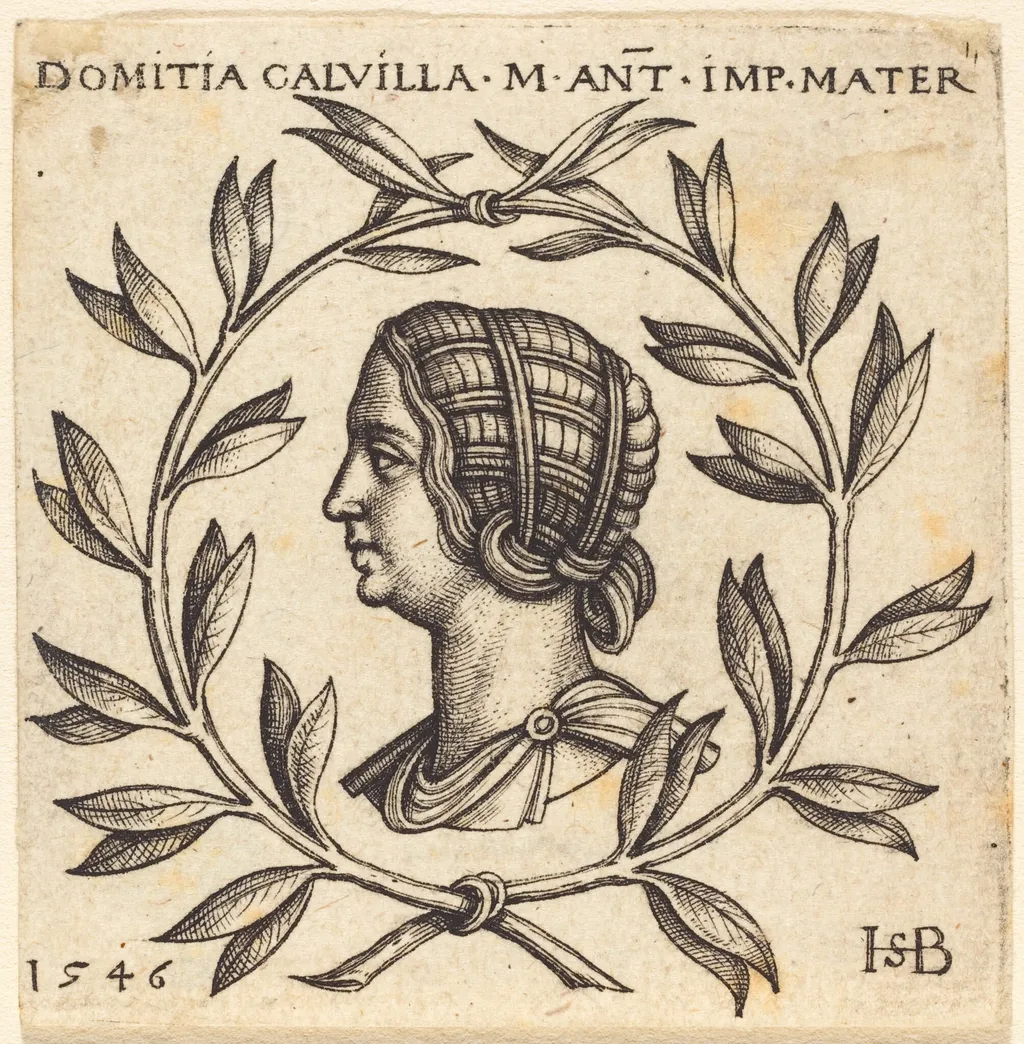
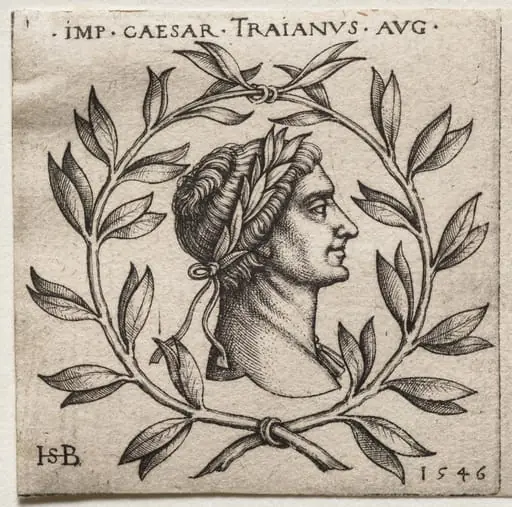
Domitia Calvilla is an ink print by the Renaissance artist Sebald Beham. It dates from 1546 and is held in the collection of the National Gallery of Art.
About this work
Overview
Sebald Beham’s 1546 engraving titled *Domitia Calvilla* presents a finely rendered portrait of a woman in profile. Executed on a modestly sized plate, the image captures the sitter’s head and shoulders, framed by a leafy wreath that encircles her shoulders and is secured with a simple knot at the base. The work exemplifies the precision and intimacy characteristic of Beham’s printmaking.
Subject & Meaning
The figure is depicted wearing a modest headscarf, her hair gathered and concealed, suggesting a portrayal of modesty or perhaps a specific historical or mythological identity. The surrounding foliage, rendered as a naturalistic wreath, may allude to classical virtues or a decorative motif common in Renaissance portraiture, enhancing the sense of dignified refinement.
Technique & Style
Beham employs a dense network of cross‑hatching to model the facial features and the texture of the scarf, creating subtle gradations of tone. The intricate line work defines the leaves of the wreath, giving them a three‑dimensional quality. This meticulous approach reflects the influence of Albrecht Dürer’s engraving methods while maintaining Beham’s own compact, detailed aesthetic.
History & Provenance
Born in Nuremberg and later active in Frankfurt, Beham was a leading member of the so‑called “Little Masters,” a circle of German artists who specialized in small, highly detailed prints. *Domitia Calvilla* is one of roughly 252 engravings attributed to him, illustrating the prolific output that secured his reputation within this influential group.
Context
The portrait’s classical references and refined execution reflect contemporary humanist interests and the market demand for collectible, finely crafted prints.
The mid‑sixteenth century saw a flourishing of print culture in Northern Europe, with engravings serving both decorative and didactic purposes. Beham’s work aligns with this trend, offering a portable image that could be disseminated widely. The portrait’s classical references and refined execution reflect contemporary humanist interests and the market demand for collectible, finely crafted prints.
Artist & collection
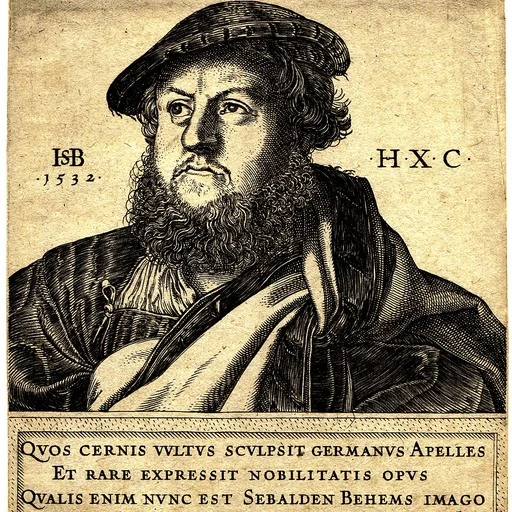
Artist
Sebald Beham (1500–1550) was a German painter and printmaker, mainly known for his very small engravings.