Artwork
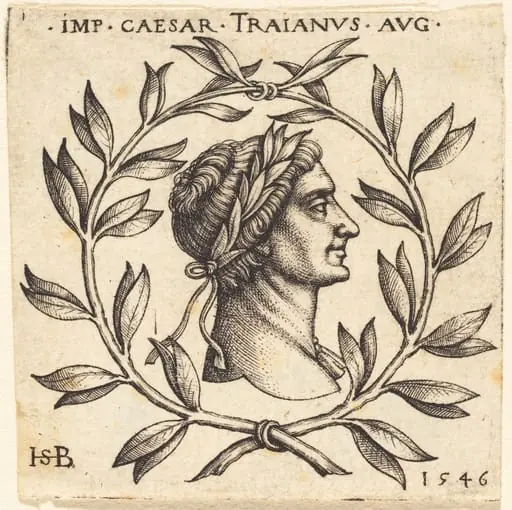
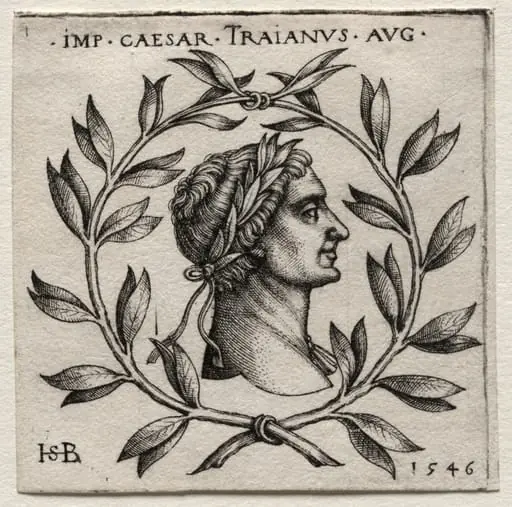
Bust of Emperor Trajan
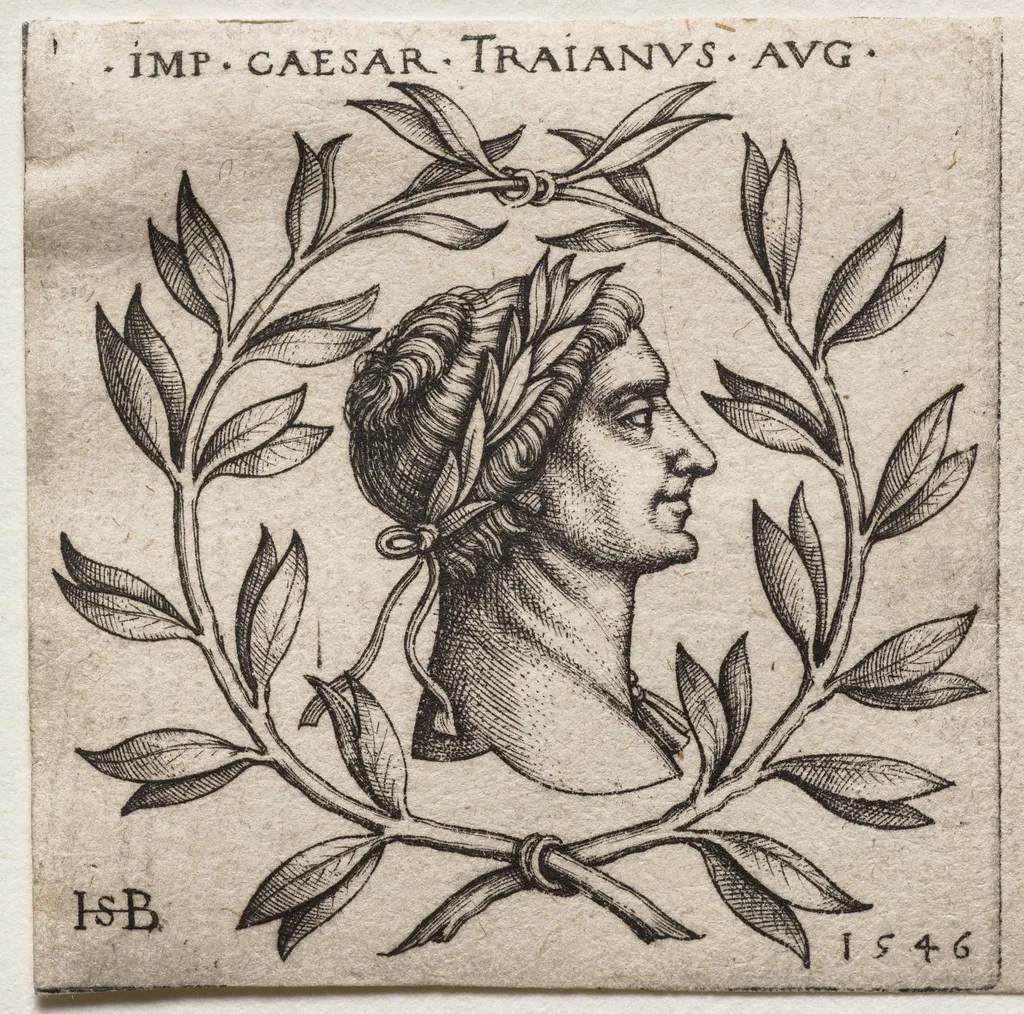
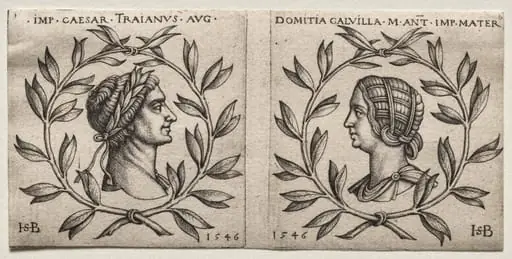
Bust of Emperor Trajan is a print by the Renaissance artist Sebald Beham. It dates from 1546 and is held in the collection of the Cleveland Museum of Art.
About this work
This is a black-and-white drawing of a man’s head wrapped in a laurel leaf crown.
This is a black-and-white drawing of a man’s head wrapped in a laurel leaf crown. The leaves are detailed, curling around his face and neck. The man’s hair is short and wavy, and he has a calm expression.
The laurel crown was often used to show victory or honor in ancient Rome. The artist signed it with the letters "HSB" and added the year 1546.
Look up Renaissance to see how this style shaped art.
Overview
Created in 1546 by Hans Sebald Beham, this black-and-white engraving presents a classical portrait of Emperor Trajan. As a member of the Little Masters, Beham specialized in finely detailed small-format prints. The work reflects his technical precision and interest in antiquity, rendered in the disciplined style characteristic of German Renaissance printmaking. His signature 'HSB' and the date are inscribed on the piece, affirming its authorship and temporal context.
Subject & Meaning
The portrait depicts Trajan, a Roman emperor revered for his military success and public beneficence. The laurel wreath encircling his head signifies victory and imperial authority, drawing on Roman iconographic traditions. His calm, composed expression and restrained features evoke Stoic virtue, aligning with Renaissance ideals of leadership grounded in reason and dignity. The image serves as a tribute to classical antiquity, reinterpreted through early modern humanist values.
Technique & Style
Beham employed fine-line engraving to render intricate details, from the curling laurel leaves to the texture of Trajan’s short, wavy hair. The monochromatic palette emphasizes tonal gradation and linear clarity, hallmarks of his approach. His meticulous cross-hatching and controlled etching reflect the influence of Dürer, while the compact composition suits the intimate scale typical of the Little Masters. The result is a disciplined, almost meditative rendering of form.
History & Provenance
Beham, born in Nuremberg and active in Frankfurt, produced this print during a period of renewed interest in Roman history among German humanists. Though no early ownership records are documented, the work aligns with the broader circulation of classical portraits in print form during the mid-16th century. Its survival reflects the demand for portable, reproducible images of antiquity among educated collectors and artists.
Context
In the 1540s, German artists increasingly turned to Roman emperors as models of governance and virtue amid religious and political upheaval. Beham’s Trajan fits within this trend, channeling classical authority through the medium of print. The Renaissance revival of antiquity was not merely aesthetic but ideological—this engraving functioned as both artistic study and moral exemplar, bridging ancient Rome and Reformation-era Europe.
Legacy
Beham’s engraving contributed to the dissemination of classical imagery in Northern Europe, influencing later generations of printmakers. While not widely exhibited today, it remains a representative example of how Renaissance artists used small-scale prints to engage with antiquity. Its enduring presence in collections underscores the role of print culture in shaping historical consciousness during the early modern period.
Artist & collection
Artist
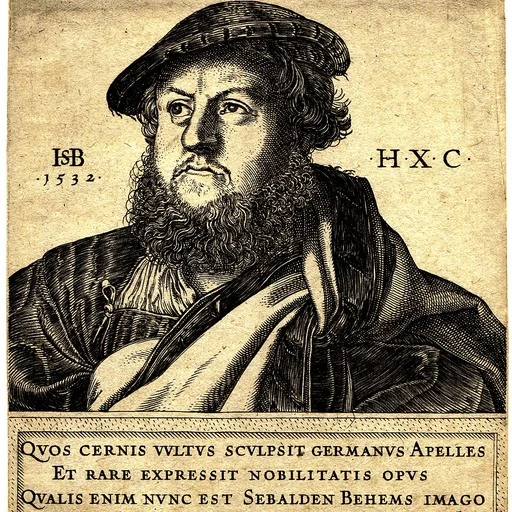
Sebald Beham (1500–1550) was a German painter and printmaker, mainly known for his very small engravings.