Artwork
Saint Anthony the Hermit
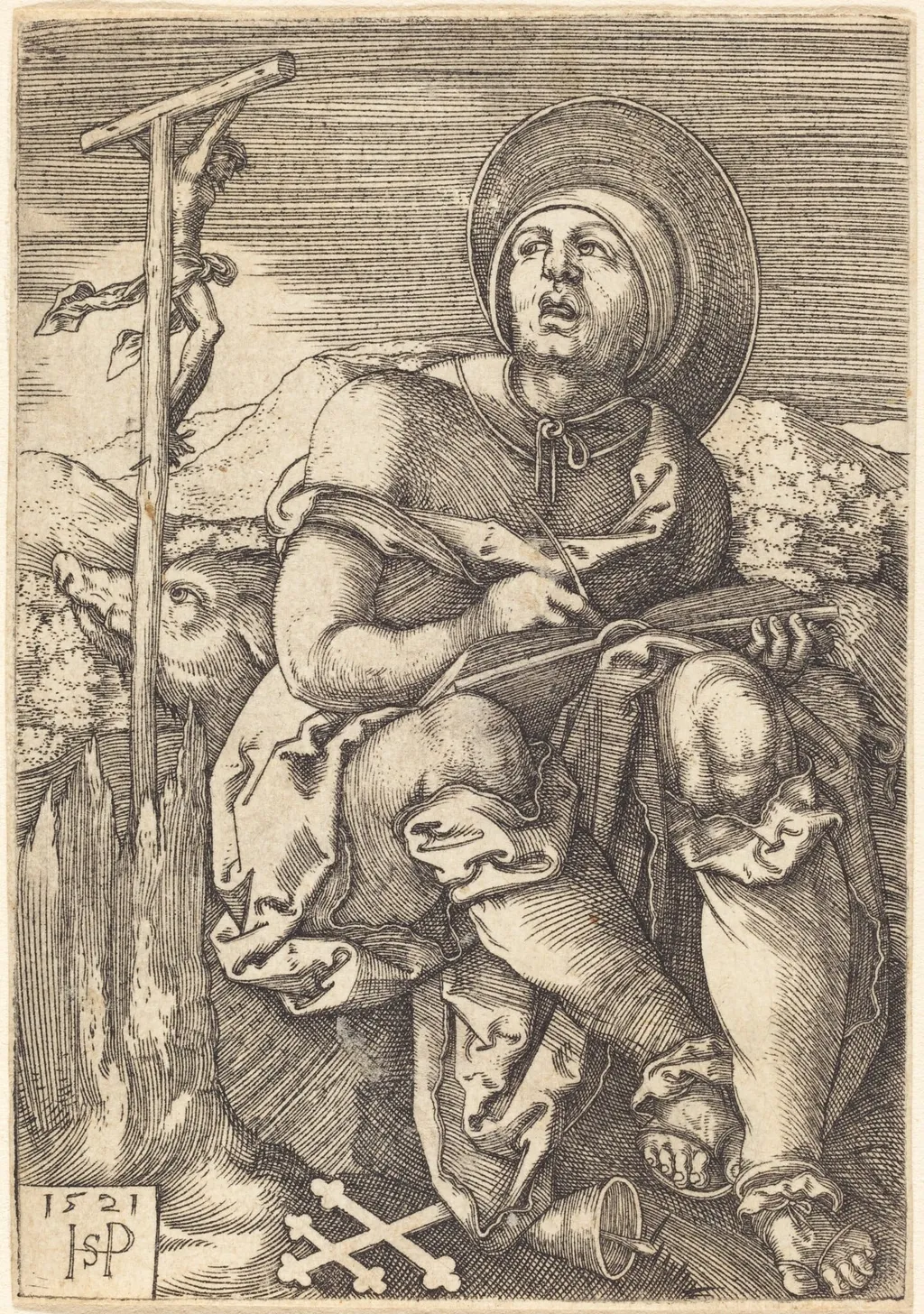
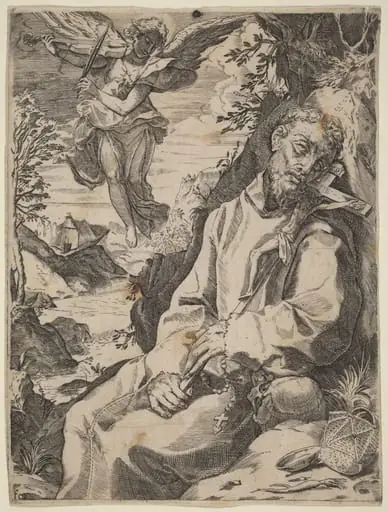
Saint Anthony the Hermit is an ink print by the Renaissance artist Sebald Beham. It dates from 1521 and is held in the collection of the National Gallery of Art.
About this work
Overview
Sebald Beham’s 1521 engraving presents Saint Anthony the Hermit in a compact, highly detailed composition typical of the German “Little Masters.” Executed on a modest plate, the print measures only a few inches across, yet it conveys a dramatic scene of the saint’s suffering amid a rugged, wooded setting.
Subject & Meaning
The work portrays the ascetic saint kneeling with a halo, his torso twisted in anguish as one hand grasps his abdomen and the other gestures upward. A diminutive figure crouches at his feet, while a cross rests on the ground, alluding to Anthony’s spiritual trials and his role as a model of penitential devotion in early‑modern Christianity.
Technique & Style
Beham employs fine cross‑hatching, layering countless parallel lines to model shadows and texture across rock, foliage, and flesh. This meticulous line work creates a tactile sense of rough terrain and heightened drama, while the overall miniature scale reflects the artist’s reputation for precision in small‑format prints.
History & Provenance
Created while Beham was active in Nuremberg, the engraving was part of his prolific output of hundreds of prints that circulated widely among collectors and patrons. The piece later entered the Frankfurt market after the artist’s relocation, where it was reproduced in contemporary catalogues of devotional imagery.
Context
Saint Anthony was a frequent subject for Northern Renaissance artists, symbolizing the virtues of hermitic life and the triumph over temptation. Beham’s rendition aligns with the period’s interest in intimate, didactic religious scenes that could be owned and viewed in private devotional settings.
Artist & collection
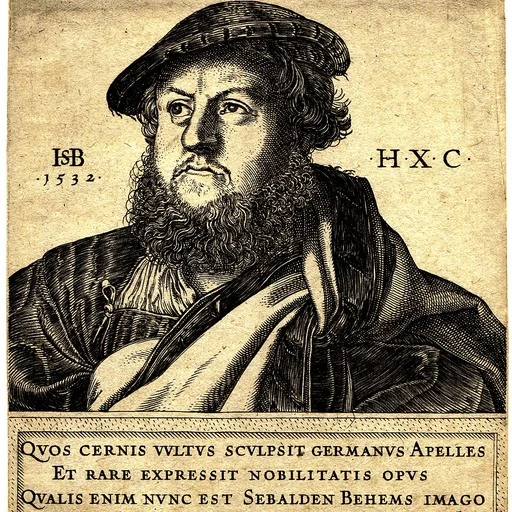
Artist
Sebald Beham (1500–1550) was a German painter and printmaker, mainly known for his very small engravings.


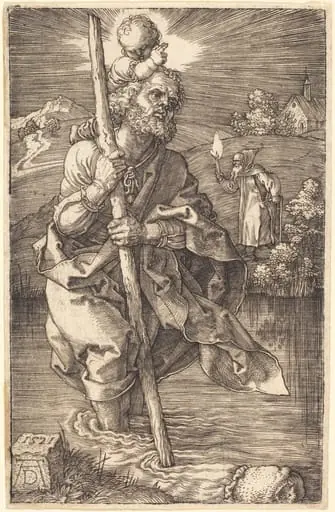 Saint Christopher Facing Right
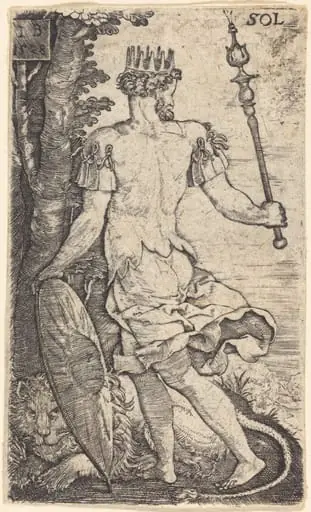 Sol (The Sun)
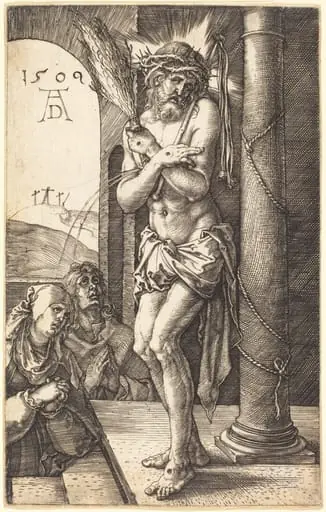 The Man of Sorrows Standing by the Column
 Saint Christopher Facing Left
 The Shepherd and the Old Warrior
 Saint John
 The Power of Women: Samson and Delilah
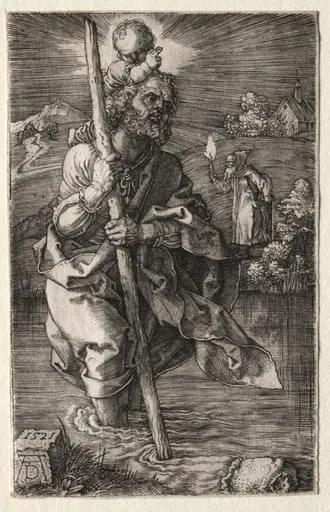 St. Christopher, Facing Right
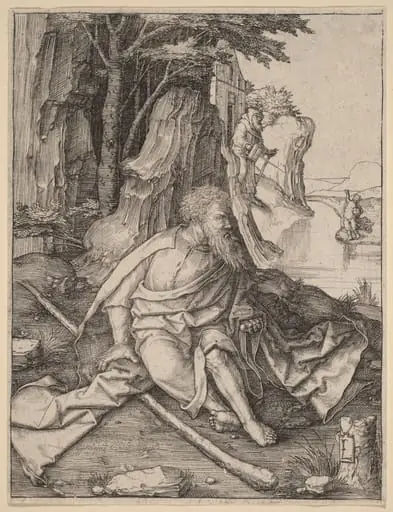 Saint Christopher at the Border of a River
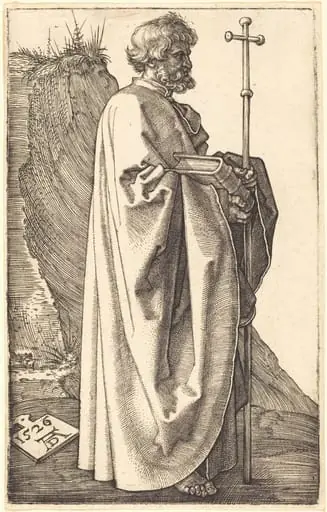 Saint Philip
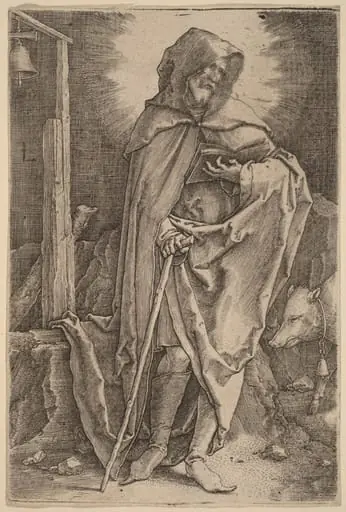 Saint Anthony
 Saint Francis Consoled by the Musical Angel