Artwork
Standard Bearer
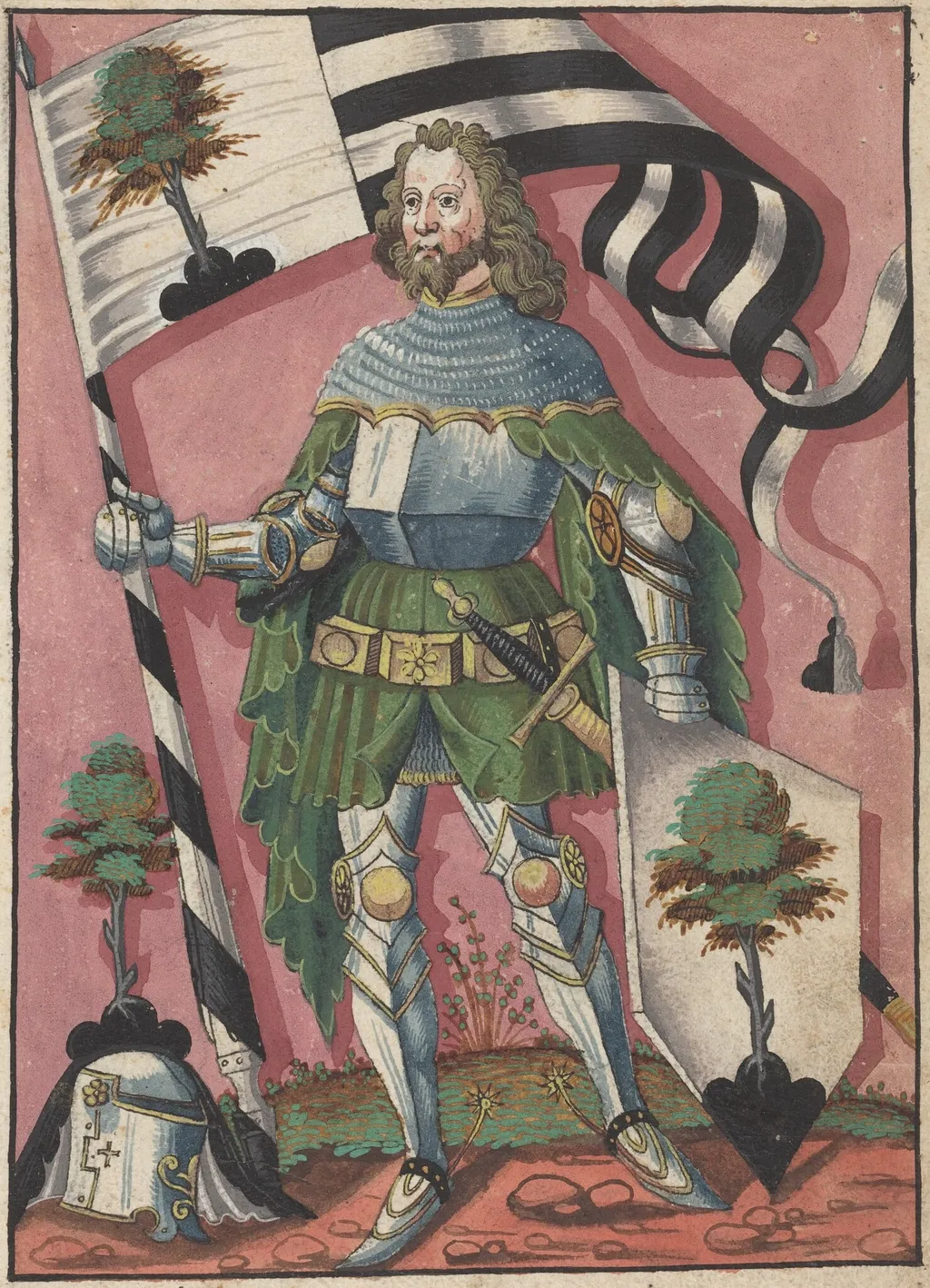
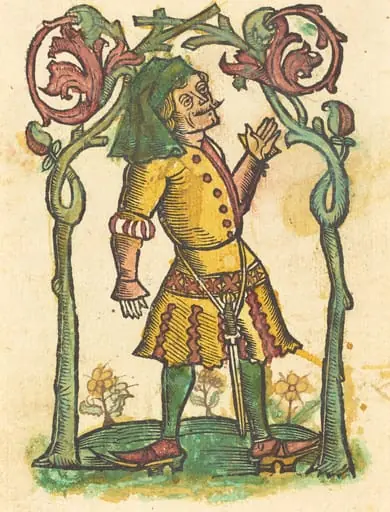
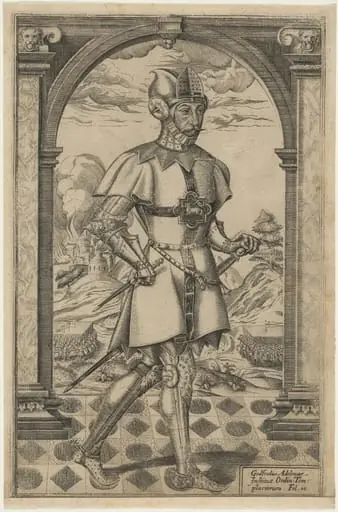
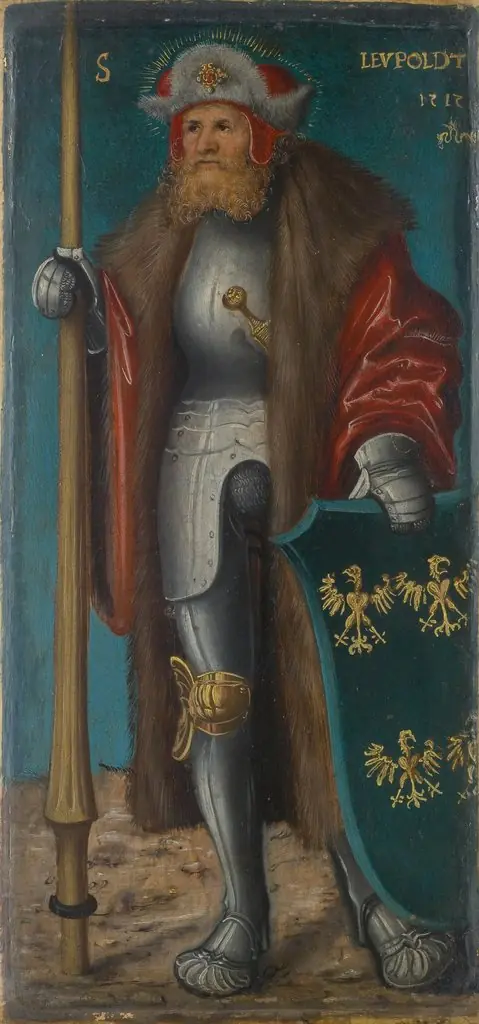
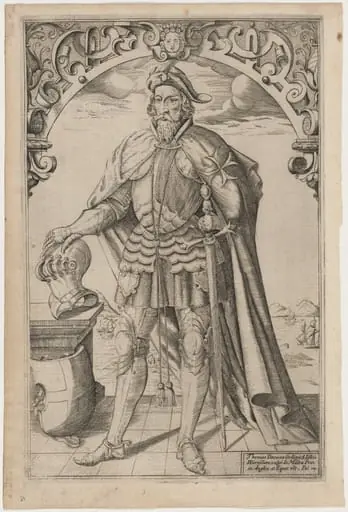
Standard Bearer is an ink drawing by the Renaissance artist German 16th Century. It dates from 1501 and is held in the collection of the National Gallery of Art. This drawing depicts a fully armored figure holding a standard bearing a black cross on a white field.
About this work
Overview
Rendered in pen, ink, gouache, and watercolor, the work combines precise line work with areas of flat, vivid color.
This drawing depicts a fully armored figure holding a standard bearing a black cross on a white field. Rendered in pen, ink, gouache, and watercolor, the work combines precise line work with areas of flat, vivid color. The figure stands alone on a red ground dotted with small flowers, flanked by two slender trees. A helmet and shield rest nearby, suggesting a pause in duty rather than active combat.
Subject & Meaning
The figure, clad in ornate green, white, and gold armor, embodies a sense of solemn responsibility. The banner’s simple heraldic design points to religious or chivalric affiliation, while the absence of battle or crowd emphasizes introspection. His direct gaze and still posture convey leadership grounded in duty, not spectacle, reflecting ideals of honor tied to medieval and early Renaissance military culture.
Technique & Style
The artist employs fine pen lines to define armor details and facial structure, while gouache and watercolor add opaque and translucent layers of color. Bright greens and golds contrast with the muted background, drawing focus to the figure. The red ground and delicate floral motifs suggest a symbolic landscape, not a literal one, aligning with the stylized conventions of late medieval manuscript illumination.
History & Provenance
The work likely originates from the late 15th or early 16th century, a period when such drawings served as preparatory studies or standalone devotional images. Its materials and composition resemble those found in Northern European courtly art, possibly linked to a workshop producing heraldic or ceremonial imagery. No documented provenance is recorded, but its style aligns with regional traditions of illustrated military iconography.
Context
Created during a transition from medieval to Renaissance visual culture, the piece reflects lingering medieval values—chivalry, religious symbolism, and heraldic identity—while adopting emerging naturalistic touches in form and color. Armor was no longer purely functional but carried social and spiritual weight, and drawings like this helped codify ideals of leadership in an era of changing warfare and political structure.
Legacy
Though not widely known, the drawing contributes to a broader corpus of non-elite visual records that preserved the imagery of armored figures outside grand portraiture. It offers insight into how symbolic identity was constructed in private or semi-public contexts, influencing later depictions of military virtue in both religious and secular art of the early modern period.
Artist & collection

Artist
A German artist from the late 1500s drew lively scenes of knights clashing in parades and mock battles.

![Abraham Entertaining the Angels [verso], by German 16th Century](https://artifactworldgallery.com/img/german-16th-century--abraham-entertaining-the-angels-verso--69d1b25f4eba0a53-w320.webp)