Artwork
The Return of the Prodigal Son
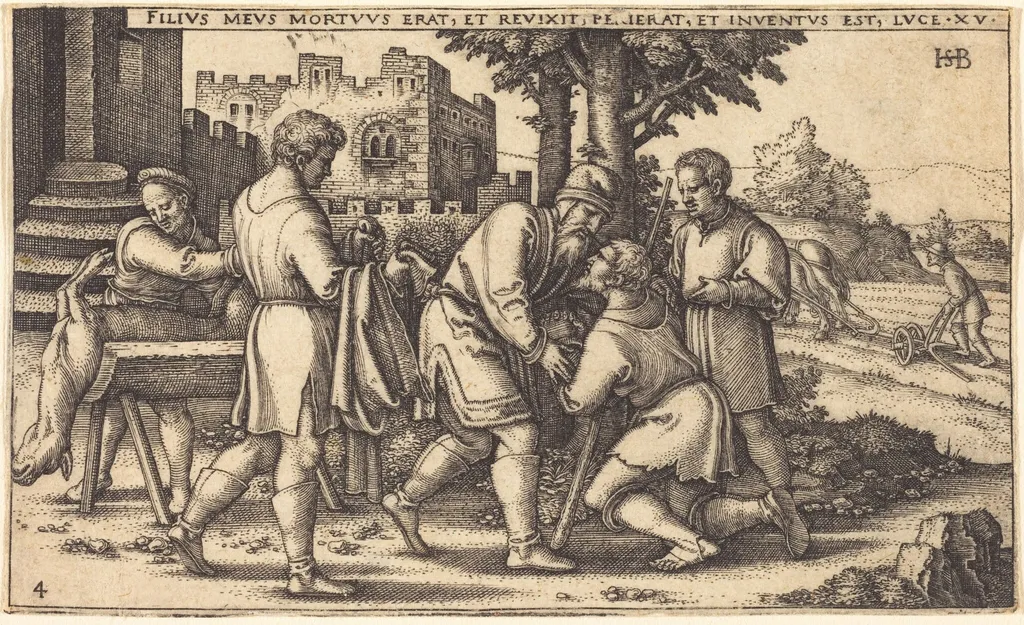
The Return of the Prodigal Son is an ink print by the Renaissance artist Sebald Beham. It dates from 1540 and is held in the collection of the National Gallery of Art.
About this work
Overview
Its compact size and intricate composition reflect the technical mastery characteristic of Nuremberg printmakers of the era.
Created in 1540 by Sebald Beham, this engraving depicts a moment from the biblical parable of the prodigal son. As a member of the Little Masters, Beham specialized in small-scale, finely detailed prints. The work is rendered in black ink on paper, showcasing the precision possible with metalplate engraving. Its compact size and intricate composition reflect the technical mastery characteristic of Nuremberg printmakers of the era.
Subject & Meaning
The scene captures the prodigal son’s return, collapsed before his father, who kneels in compassion. A servant holds a cloth, perhaps to clean or cover him, while a woman in the background tends to a child, suggesting domestic renewal. The Latin inscription, 'My son was dead and has come to life again,' underscores themes of repentance and reconciliation. The setting blends interior and exterior spaces, symbolizing the transition from exile to homecoming.
Technique & Style
Beham employed fine, controlled lines to model form and texture across figures and landscape. The engraving’s density of detail—seen in the folds of clothing, the bark of the tree, and the distant town—demonstrates his skill in rendering complexity on a small scale. The tonal range is achieved through cross-hatching and varied line weight, typical of the medium. The composition is tightly framed, focusing attention on the emotional core of the moment.
History & Provenance
Beham, active in Nuremberg and later Frankfurt, produced hundreds of prints during the mid-16th century. This engraving was made during a period when he was prolific in religious and moral subjects. While its early ownership is undocumented, it aligns with the broader circulation of Protestant-themed prints in German-speaking regions, where biblical narratives were widely disseminated through print.
Context
In the decades following the Reformation, biblical stories became common subjects in Northern European printmaking, serving both devotional and educational purposes. Beham’s work reflects this trend, translating scripture into intimate, human-scale scenes. His style, influenced by Dürer, maintained a focus on precision and narrative clarity, catering to an audience increasingly literate and engaged with printed imagery.
Legacy
Beham’s engravings, including this one, contributed to the standardization of visual narratives in Protestant Europe. Though less celebrated than Dürer, his output helped shape the aesthetic of small-format prints for decades. The technical discipline of his work influenced later generations of printmakers, particularly in the use of line to convey emotion and narrative economy within confined spaces.
Artist & collection
Artist
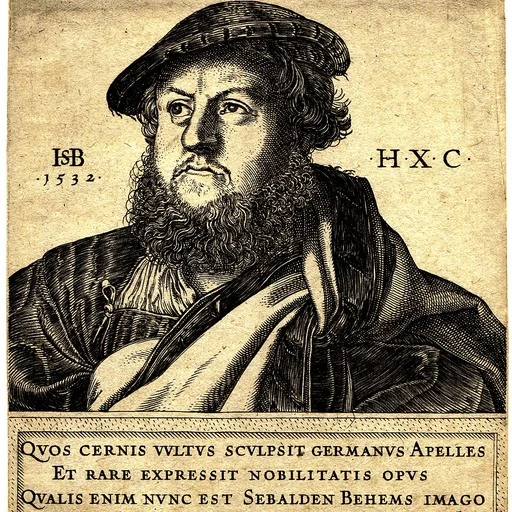
Sebald Beham (1500–1550) was a German painter and printmaker, mainly known for his very small engravings.


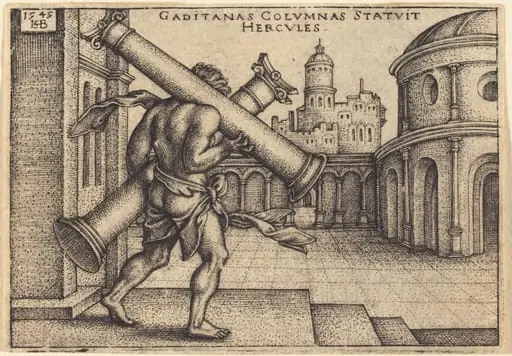
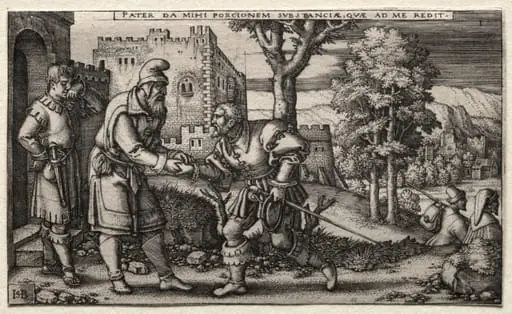 The Prodigal Son
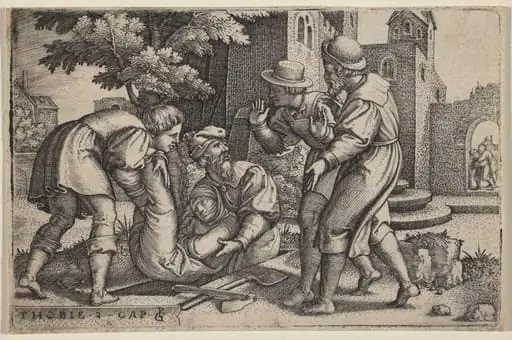 Tobias Burying One of the Children of Israel
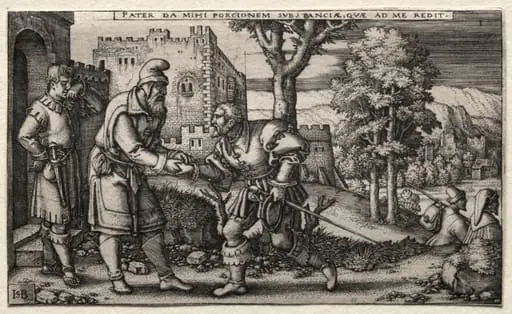 The Prodigal Son: Departure of the Prodigal Son
 To Bury the Dead
 The Meeting of Joachim and Anna at the Golden Gate
 Christ Nailed to the Cross
 Life of the Virgin: Joachim and Anna Embracing under the Golden Gate
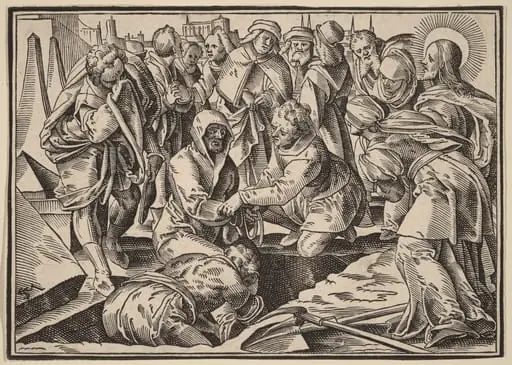 Christ Tells His Disciples of the Last Judgment
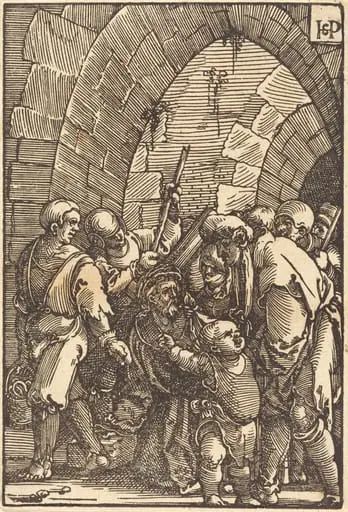 Christ Bearing the Cross