Artwork
Three Women in a Bathroom
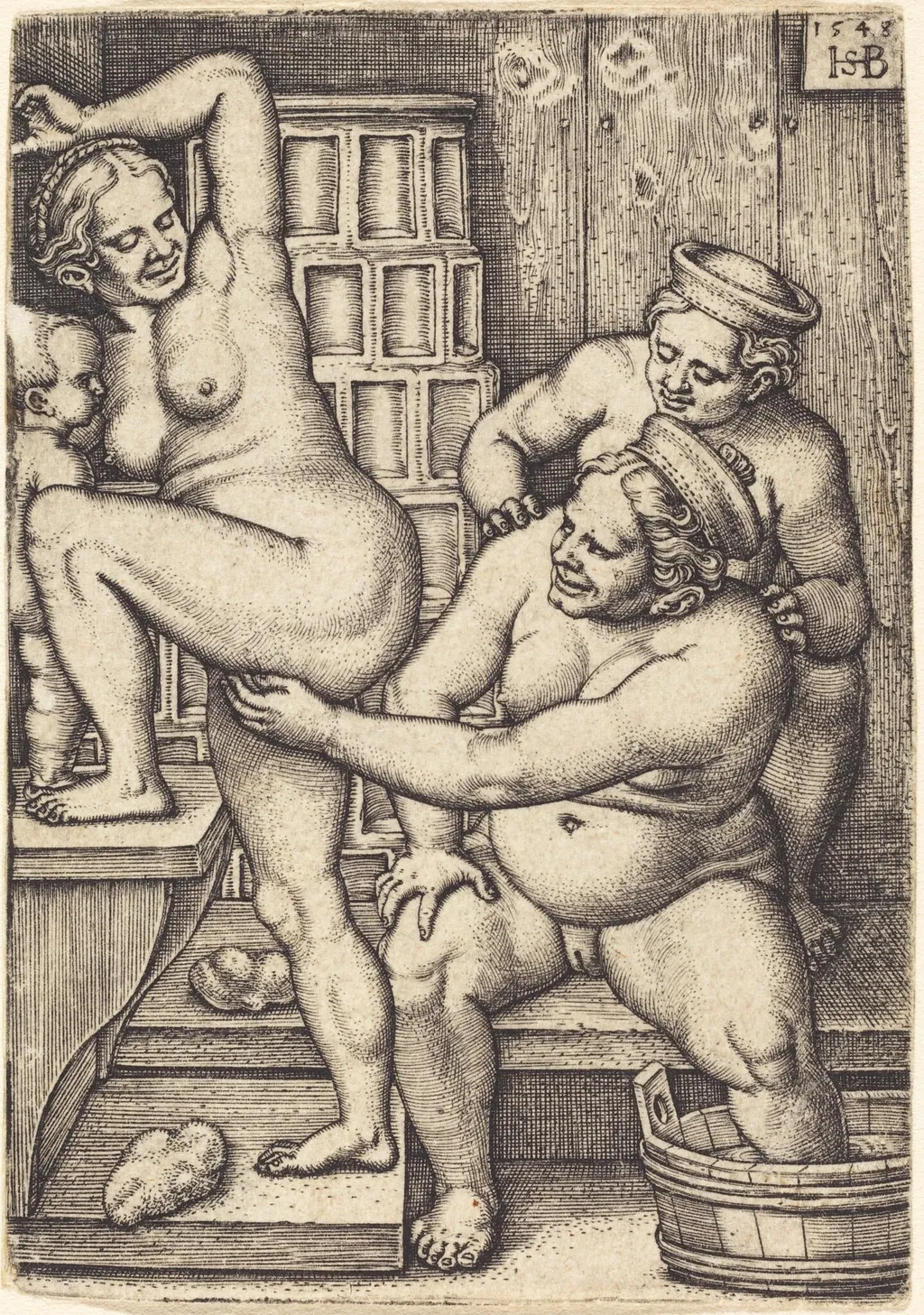
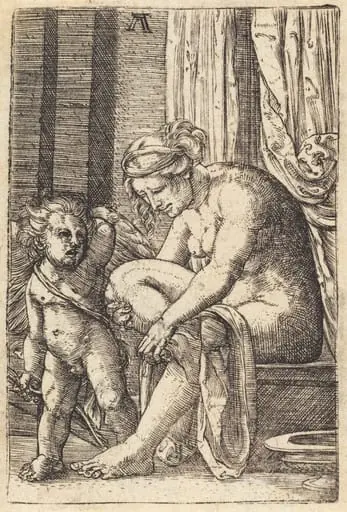
Three Women in a Bathroom is an ink print by the Renaissance artist Sebald Beham. It dates from 1548 and is held in the collection of the National Gallery of Art.
About this work
Overview
His work emerged during a vibrant period of German printmaking, following the influence of Albrecht Dürer but focusing on smaller, more personal compositions.
Created in 1548 by the German artist Sebald Beham, this engraving depicts a quiet domestic scene of three women in a bathroom. As part of a group known as the 'Little Masters,' Beham specialized in small, finely detailed prints that catered to collectors interested in intimate, everyday subjects. His work emerged during a vibrant period of German printmaking, following the influence of Albrecht Dürer but focusing on smaller, more personal compositions.
Subject & Meaning
The scene captures three women engaged in private grooming: one stands drying herself, another sits scrubbing her leg, and a third leans forward with a bowl, perhaps to pour water. The setting is unadorned, suggesting a modest, functional space. Rather than mythological or religious themes, the subject reflects a shift toward secular, observational imagery, common in Northern Renaissance print culture, where daily life became a legitimate focus for artistic attention.
Technique & Style
Beham employed fine, controlled engraving lines to render textures of skin, fabric, and wet surfaces with precision. The small panes of the windows and the smoothness of the tiled floor are suggested through delicate hatching, while the figures’ postures and gestures are rendered with subtle anatomical accuracy. The composition’s intimacy is heightened by the close cropping and the steamy atmosphere implied by the figures’ proximity and the humid setting.
History & Provenance
The print was produced during the height of Beham’s career, when he was actively creating small-scale engravings for a market of educated, affluent collectors. Though no specific early ownership records are widely documented, such works circulated among humanist circles in German-speaking regions. The print survives in multiple museum collections, indicating its continued recognition among scholars of Northern Renaissance graphic arts.
Context
In mid-16th-century Germany, printmaking thrived as a medium for disseminating images beyond religious iconography. Beham’s focus on domestic interiors aligned with broader trends in Northern art that valued observation of ordinary life. Unlike Italian Renaissance ideals of grandeur, German artists often emphasized detail and realism, making scenes like this one accessible and relatable to viewers familiar with similar domestic spaces.
Legacy
Beham’s engravings, including this one, helped establish a tradition of intimate, finely detailed printmaking that influenced later generations of Northern European artists. While not widely known to the general public today, his work remains studied for its technical precision and its role in expanding the thematic range of Renaissance prints beyond sacred or heroic subjects to include quiet, unidealized moments of daily existence.
Artist & collection
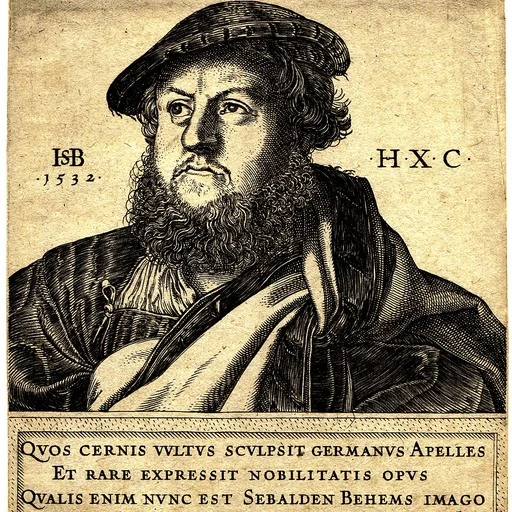
Artist
Sebald Beham (1500–1550) was a German painter and printmaker, mainly known for his very small engravings.