Artwork
Ornament print
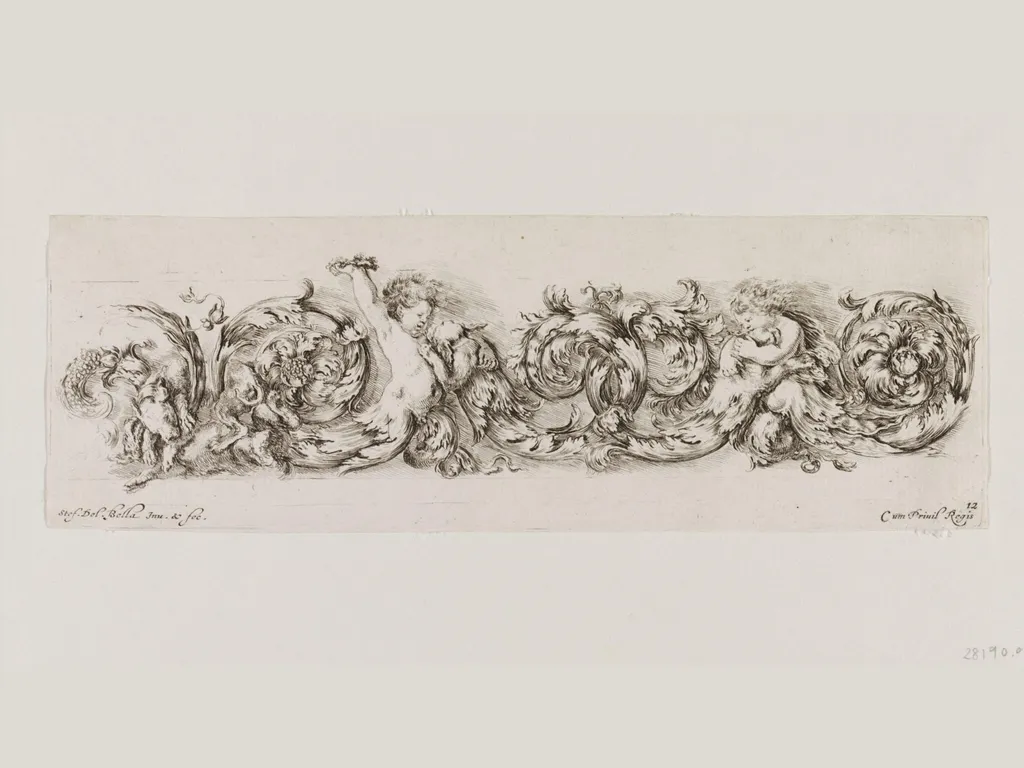
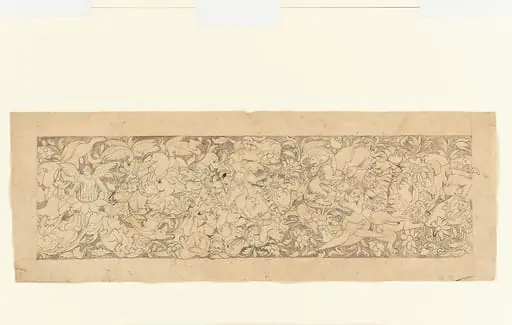
Ornament print is a print by the Baroque artist Stefano della Bella. It dates from 1650 and is held in the collection of the Victoria and Albert Museum.
About this work
Overview
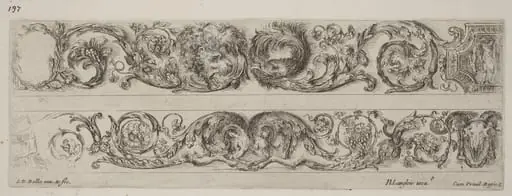
This etching by Stefano Della Bella is part of a series titled Ornamenti di Fregi et fogliami, which compiles decorative motifs drawn from classical antiquity.
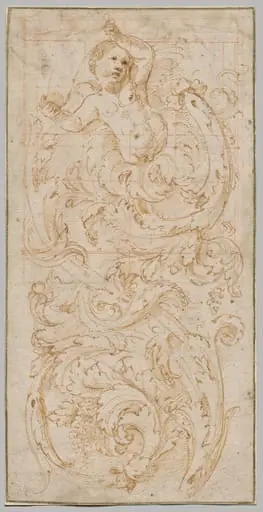
This etching by Stefano Della Bella is part of a series titled Ornamenti di Fregi et fogliami, which compiles decorative motifs drawn from classical antiquity. Executed in fine linear detail, the print isolates a continuous acanthus scroll, a form widely used in Roman architectural friezes. Such prints served as reference tools rather than standalone artworks, circulating among craftsmen who translated these patterns into woodwork, stucco, and metalwork.
Subject & Meaning
The subject is a stylized acanthus vine, its leaves curling in an unbroken rhythm that evokes natural growth while maintaining geometric order. Rooted in ancient Roman design, the motif symbolized endurance and vitality. In the Renaissance, its revival reflected a broader return to classical ideals, and Della Bella’s rendering preserved its formal elegance for practical use, stripping away context to emphasize pure ornament.
Technique & Style
Della Bella employed etching to achieve precise, fluid lines that capture the delicate undulations of the acanthus foliage. The composition is tightly framed, eliminating background or architectural setting to focus solely on the pattern. The inked lines are clean and controlled, suggesting the print was made for reproduction—its clarity ensured accurate transfer to other media by artisans unfamiliar with classical models.
History & Provenance
Created in the mid-17th century, the print belongs to a published series intended as a working resource for designers and builders. Its circulation across Europe helped standardize decorative vocabulary in Baroque interiors and façades. While no specific original owner is documented, similar prints were held in the workshops of architects and guilds, where they were traced, scaled, and adapted for local materials and tastes.
Context
During the 17th century, printed ornament books became essential tools in the transmission of classical design across disciplines. Della Bella’s work emerged amid a surge of interest in antiquity, fueled by archaeological discoveries and humanist scholarship. These prints bridged scholarly study and artisanal practice, allowing Renaissance and Baroque builders to access refined classical forms without direct access to ancient ruins.
Legacy
Della Bella’s ornament prints influenced decorative arts well into the 18th century, shaping the visual language of European interiors and furnishings. Their systematic presentation of motifs contributed to the codification of stylistic repertoires used in architecture and design. Though later movements moved beyond classical ornament, these prints remain valuable records of how ancient forms were preserved, adapted, and disseminated through print culture.
Artist & collection
Artist
Stefano della Bella kept a tiny studio in Florence where he sketched soldiers as if they were actors on a stage—ink and paper were his quick-change costumes.

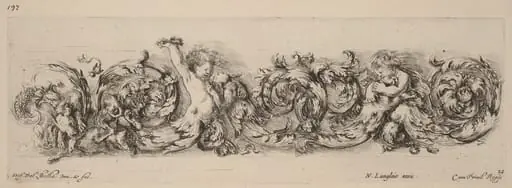 Ornamental Frieze with Children and Dogs
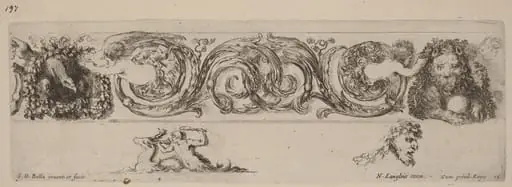 Ornamental Frieze with Eagle and Lion Engarlanded by Children
 Two Ornamental Bands with Facing Heads of Lion and Eagle, and Two Rams
 An Architectural Study with an Atlantid
 Collection of Various Caprices and New Designs of Cartouches and Ornaments: No 16
 Studies for Dorchester House
 Untitled