Artwork
# 3 from " Livre second essais de Gravjre " Second book of Engraved Designs
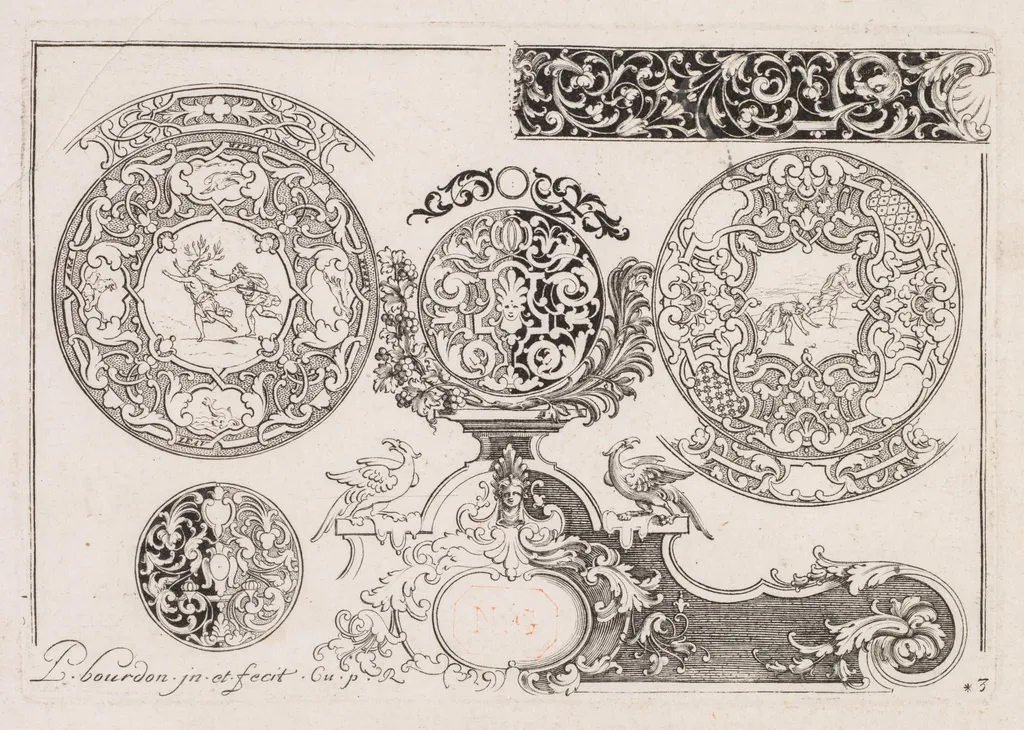
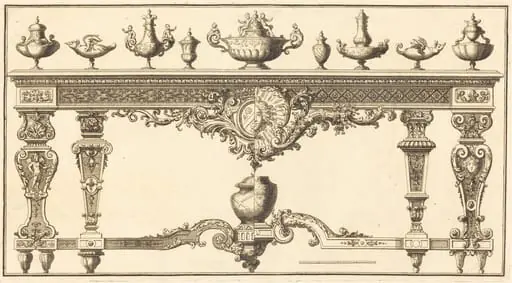
# 3 from " Livre second essais de Gravjre " Second book of Engraved Designs is a print by the Baroque artist Pierre Bourdon. It dates from 1703 and is held in the collection of the Cleveland Museum of Art.
About this work
It’s one of 50 prints made for craftsmen like goldsmiths and engravers who needed fresh ornament ideas.
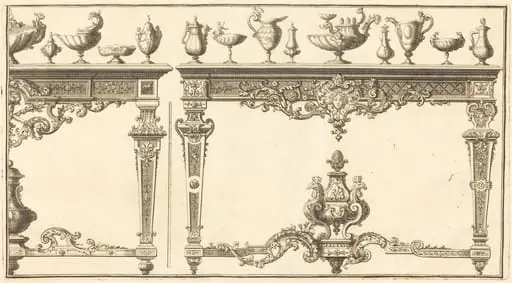
This is an etching from a 1703 set of decorative patterns. Thin lines carve swirls and flourishes across the page. It’s one of 50 prints made for craftsmen like goldsmiths and engravers who needed fresh ornament ideas.
These pattern books were popular in 18th-century France. Wealthy collectors bought them too, just to keep up with stylish trends. Bourdon’s designs helped shape everyday objects like snuffboxes and mirrors.
Look up Pierre Bourdon (French) next.
Overview
The work is an etching numbered three in the second volume of Pierre Bourdon’s *Livre second essais de Gravure*, a collection of fifty decorative designs published in 1703. Executed as a print, the image consists of delicate, interlacing swirls and ornamental flourishes that fill the sheet, offering a repertoire of motifs for ornamental artisans.
Subject & Meaning
The plate presents a series of abstract ornamental elements rather than a narrative scene. Its purpose is instructional, providing a visual catalogue of patterns that craftsmen could adapt for objects such as snuffboxes, mirrors, or clock faces. The designs serve as a visual vocabulary for embellishment, reflecting contemporary tastes for intricate surface decoration.
Technique & Style
Created with a fine etching needle, the print relies on thin, continuous lines to render its swirling motifs, giving the composition a light, airy quality. The style aligns with early‑18th‑century French ornamental trends, emphasizing symmetrical scrollwork and vegetal arabesques that balance elegance with the practical needs of metalworkers and engravers.
History & Provenance
Issued as part of a printed pattern book intended for professional makers, the etching was circulated among goldsmiths, clockmakers, and other artisans who consulted such manuals for fresh ideas. Surviving copies are found in several European libraries and private collections, indicating the work’s wide distribution shortly after its 1703 publication.
Context
Pattern books like Bourdon’s were popular in France during the early Enlightenment, serving both tradespeople and affluent patrons interested in the latest decorative fashions. While primarily a tool for craftsmen, the volumes also appealed to aristocratic collectors who used them to stay informed about contemporary artistic trends and to guide commissions for luxury objects.
Artist & collection

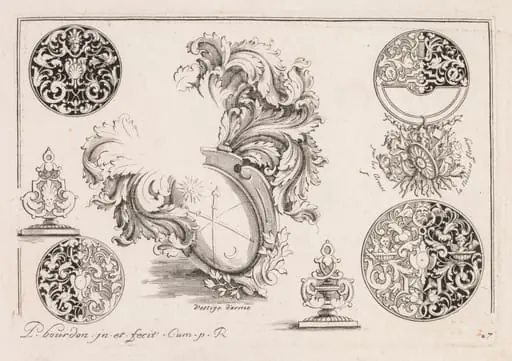 # 7from " Livre second essais de gravjre " Second book of Engraved Designs
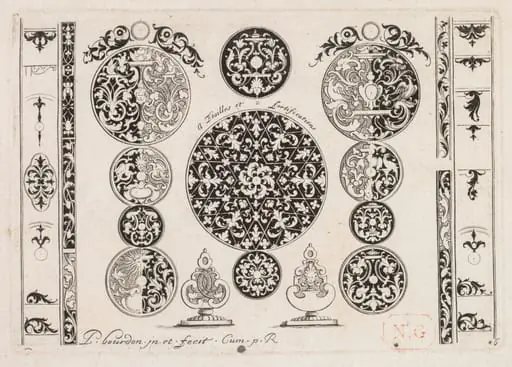 # 6 from " Livre second essais de gravjre " second book of Engraved Designs
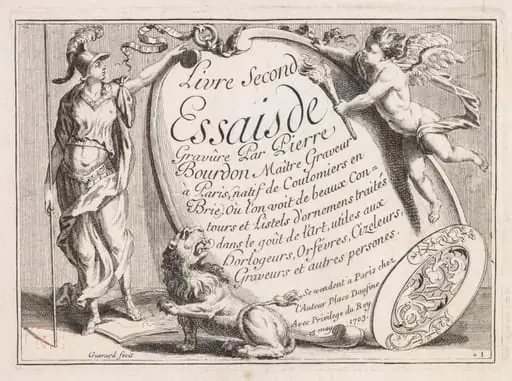 Goldsmith Design
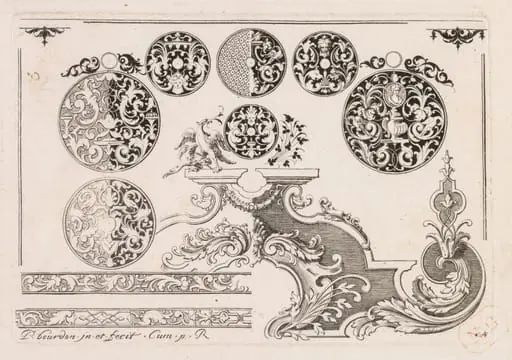 # 5 from " Livre second essais de gravjre " second book of Engraved Designs
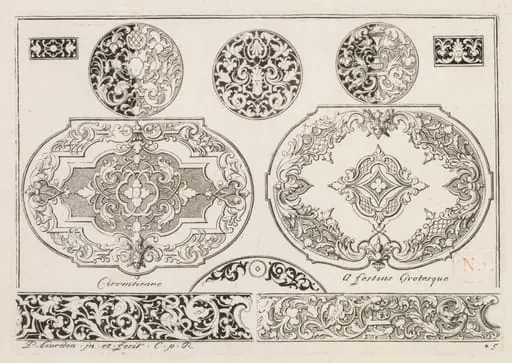 # 4 From " Livre sencond essais de gravjre " second book of Engraved designs
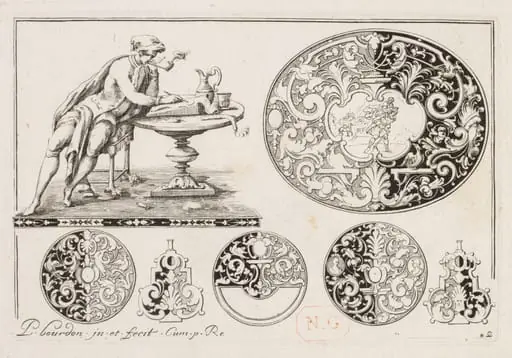 # 2 From " Livre second Cesais de Graubre "
Second book of Engraved Design
# 2 From " Livre second Cesais de Graubre "
Second book of Engraved Design