Artwork
Social Vignettes
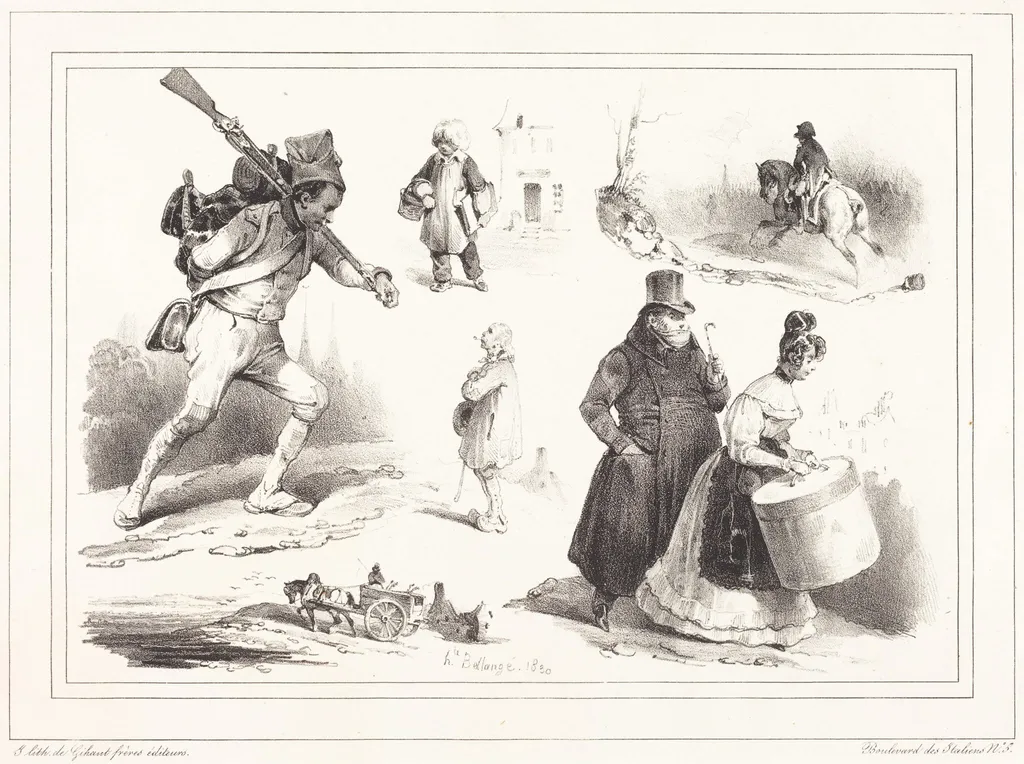
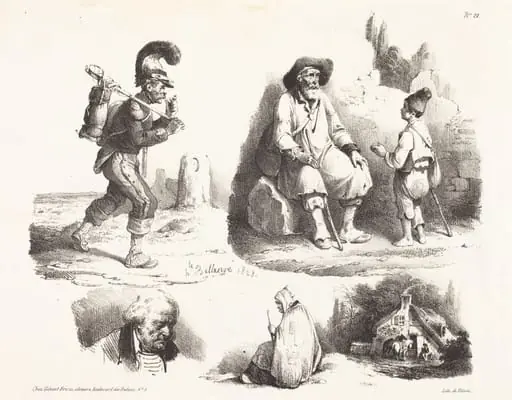
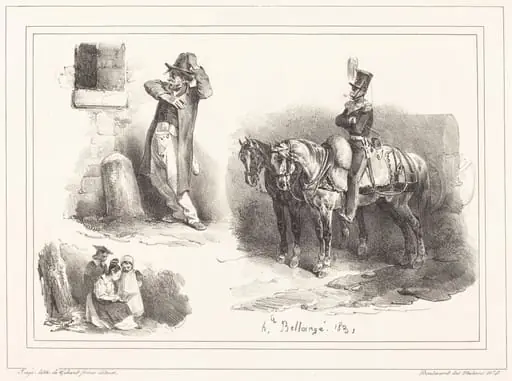
Social Vignettes is an ink print by the Romanticist artist Hippolyte Bellangé. It dates from 1830 and is held in the collection of the National Gallery of Art.
About this work
Overview
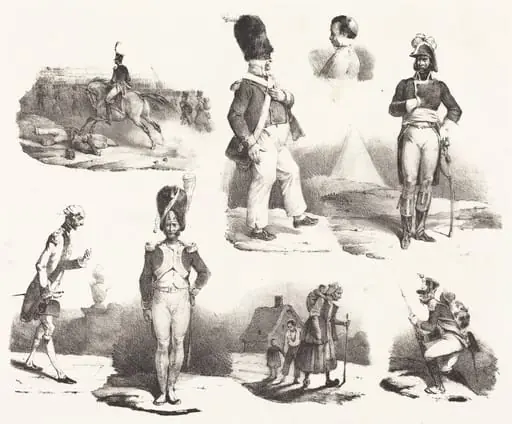
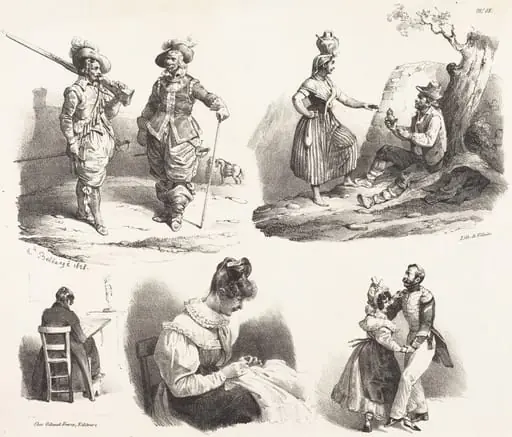
Social Vignettes, a lithograph by Hippolyte Bellangé from 1830, presents a compact composition of five concurrent street scenes within a single frame, capturing the dynamism of everyday urban life.
Subject & Meaning
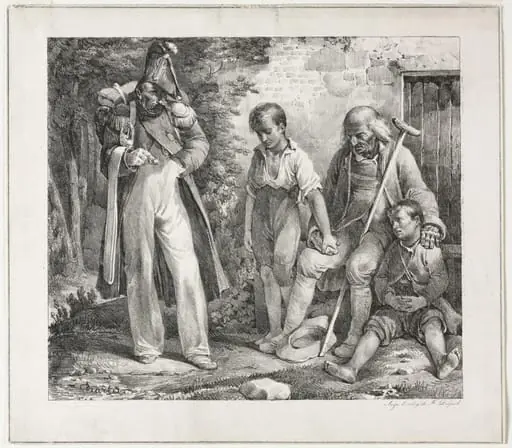
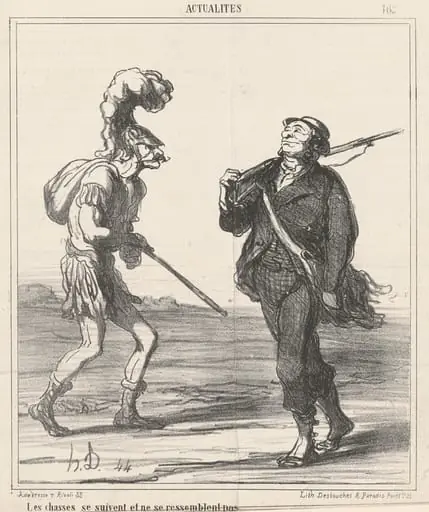
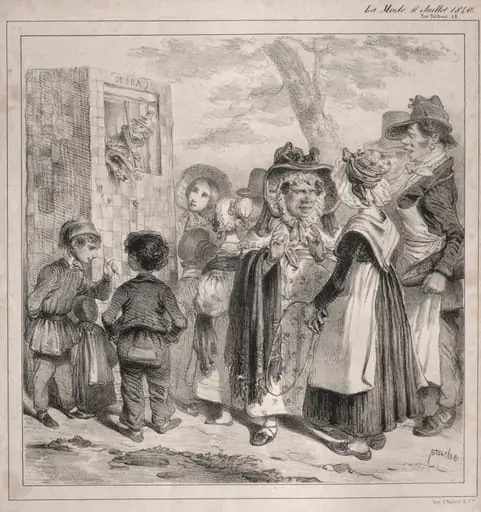
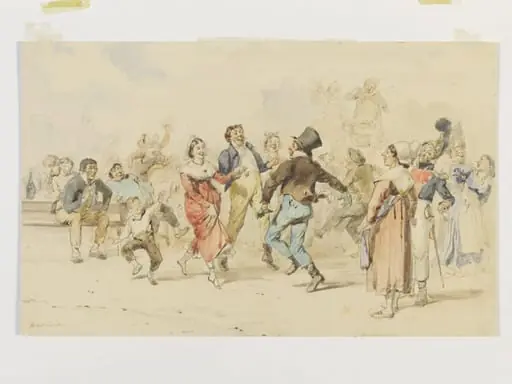
The print depicts a cross-section of society in quotidian activities: a hastening soldier, a woman tending to a task with a bystander, a boy with a basket, a horse-drawn cart, and a lone rider, collectively conveying the hustle and bustle of city streets.
Technique & Style
Characterized by swift, expressive lines, the work suggests rapid execution, akin to on-site sketches. This stylistic choice effectively communicates movement and the frenetic pace of daily life, leveraging the lithographic process to amplify the sense of immediacy.
History & Provenance
Created in 1830 by Hippolyte Bellangé, specific details regarding its creation context, ownership history, or exhibition record are not provided in the available information.
Context
Emerging in the early 19th century, Social Vignettes reflects the growing interest in depicting ordinary life and the urban experience, a theme common among artists of the period who sought to capture the changing fabric of society.
Legacy
While specific influences or direct artistic legacies of Social Vignettes are not detailed, it contributes to the broader tradition of 19th-century printmaking focused on social observation and the depiction of everyday urban scenes.
Artist & collection