Artwork
Three Vignettes
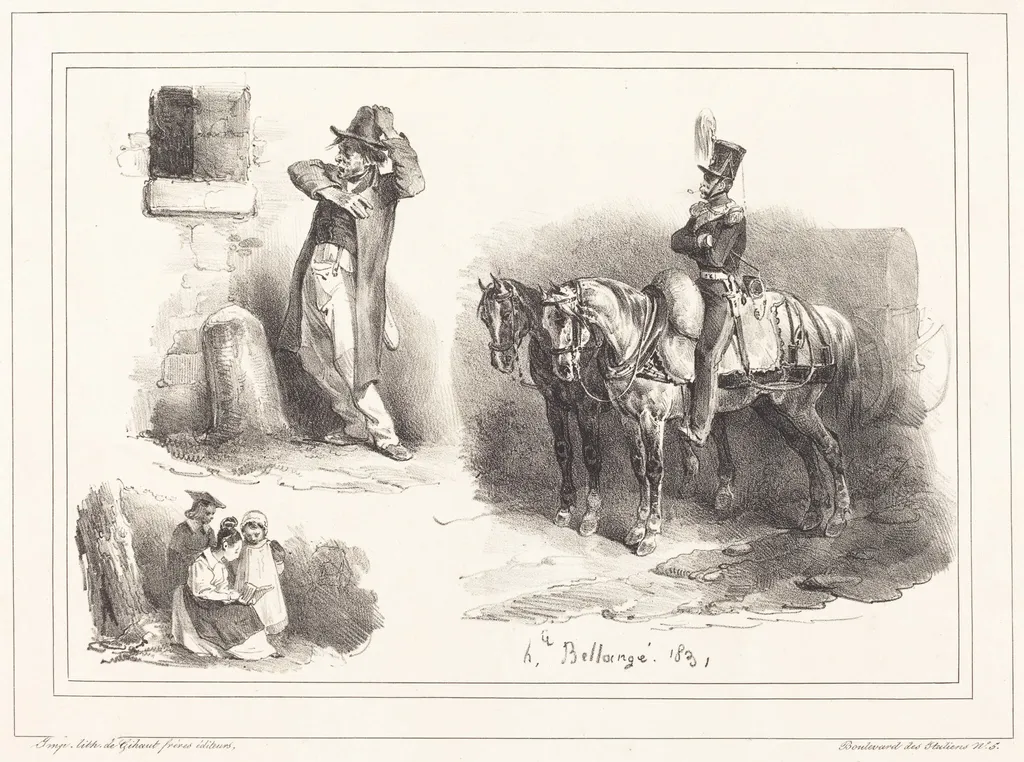
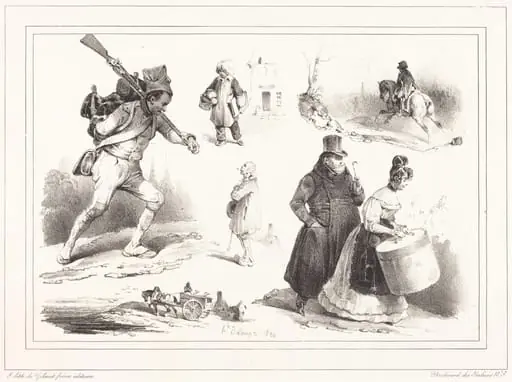
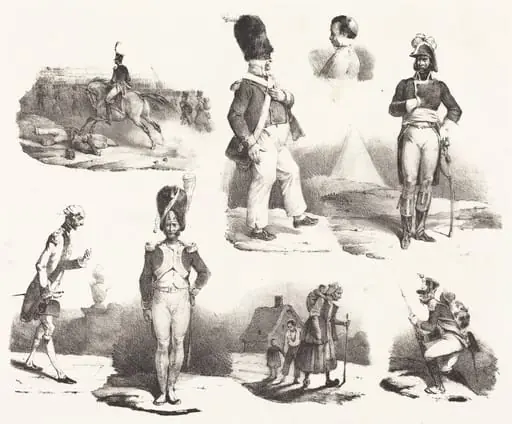
Three Vignettes is an ink print by the Romanticist artist Hippolyte Bellangé. It dates from 1830 and is held in the collection of the National Gallery of Art.
About this work
Overview
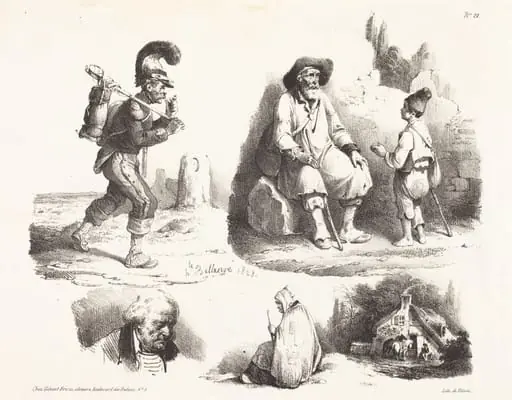
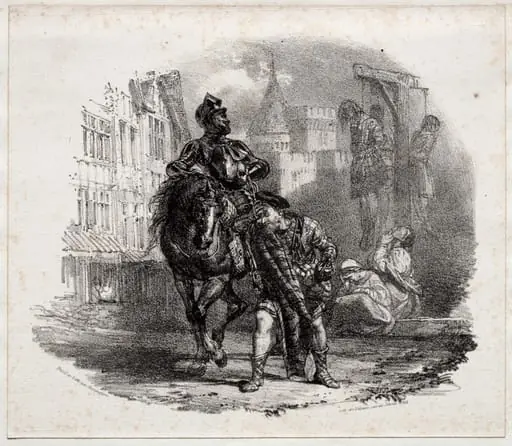
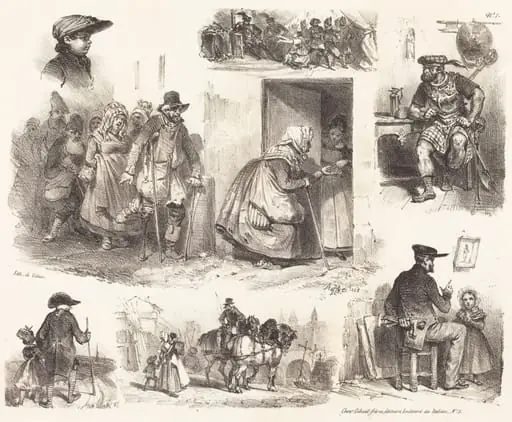
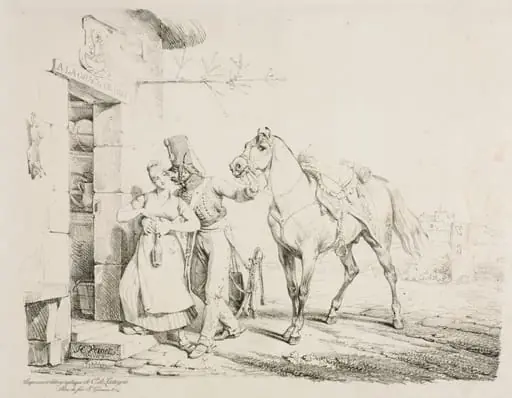
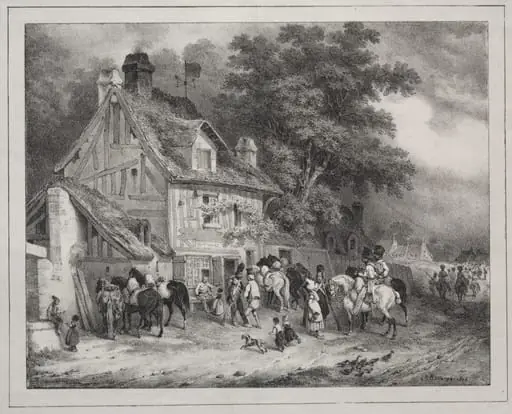
Three Vignettes is a black‑and‑white lithographic print executed by French artist Hippolyte Bellangé in 1830. The work comprises three separate, loosely connected scenes arranged within a single sheet, each rendered in a sketch‑like manner that emphasizes gesture and immediacy.
Subject & Meaning
In the lower left, two figures sit close together, engaged in reading or quiet conversation, offering a glimpse of intimate, everyday interaction.
The left vignette presents a gentleman in a hat and coat, his hands clasped behind his back as he gazes upward at an architectural element, suggesting contemplation or anticipation. The central image captures a soldier astride a horse, upright and holding the reins, evoking a moment of readiness or surveillance. In the lower left, two figures sit close together, engaged in reading or quiet conversation, offering a glimpse of intimate, everyday interaction.
Technique & Style
Bellangé employed the lithographic process, using swift, gestural lines that convey motion and emotion with minimal detail. The monochrome palette reinforces the sketchbook quality of the work, allowing the viewer to focus on the composition and narrative gestures rather than on coloristic effects.
History & Provenance
Created in the early nineteenth century, the print reflects Bellangé’s interest in documenting contemporary life through a series of vignettes. While specific ownership records are scarce, the piece is representative of the artist’s broader output during a period when lithography was gaining popularity as a means of rapid visual communication.
Context
In the 1830s, lithography emerged as a favored medium for artists seeking to reproduce images quickly and affordably. Bellangé, known primarily for his military subjects, applied this technique here to capture fleeting moments of civilian and martial life, aligning with the era’s growing fascination with realism and everyday scenes.
Artist & collection