Artwork
Five Vignettes
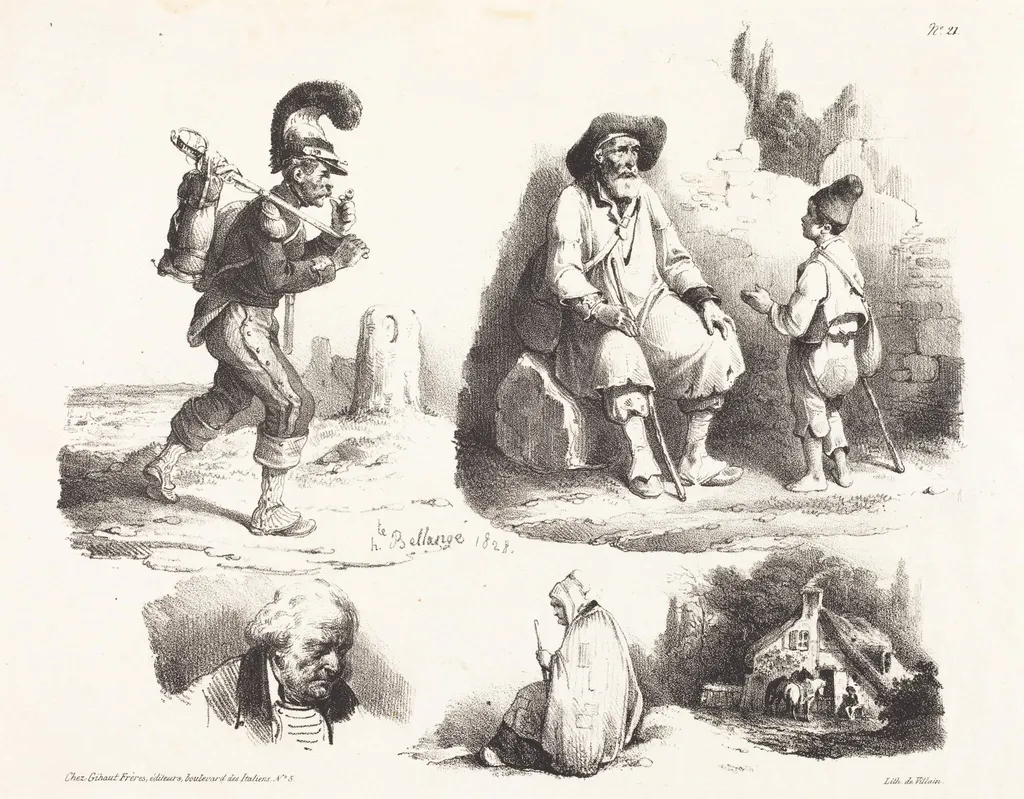
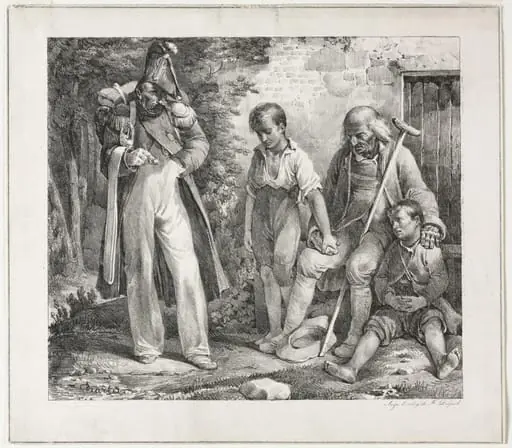
Five Vignettes is an ink print by the Romanticist artist Hippolyte Bellangé. It dates from 1830 and is held in the collection of the National Gallery of Art.
About this work
Overview
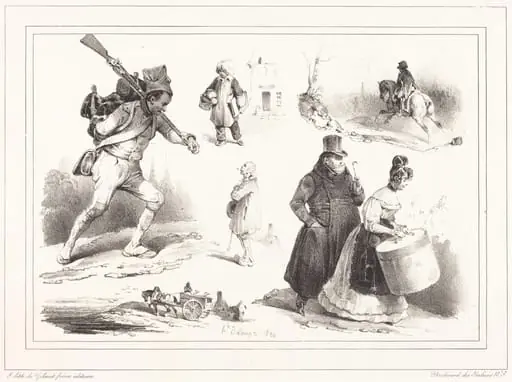
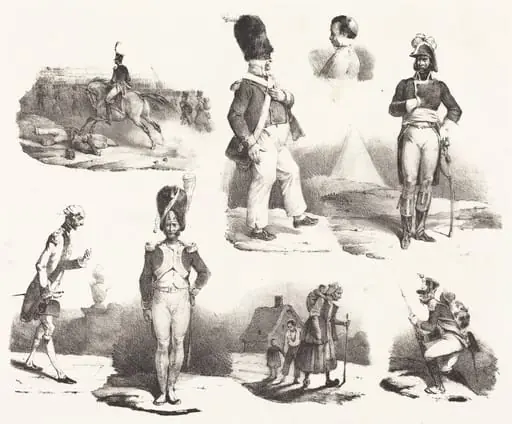
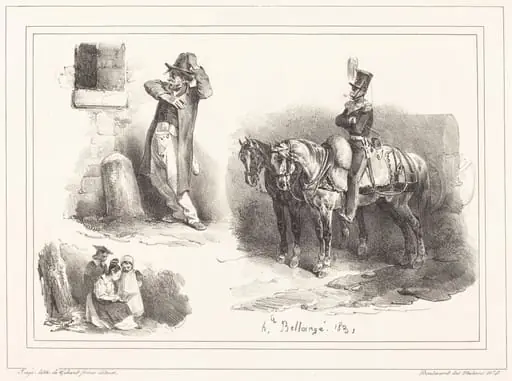
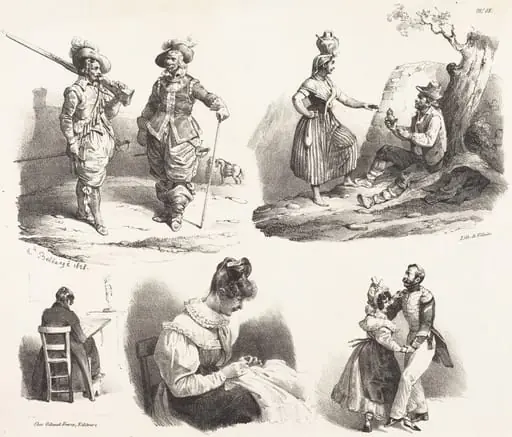
Five Vignettes is a black‑and‑white lithographic print executed on wove paper by French artist Hippolyte Bellangé in 1830. The work comprises five compact, sequential scenes that together form a narrative tableau, each rendered with the characteristic immediacy of a sketch.
Subject & Meaning
The juxtaposition of military formality, age, youth, and domesticity suggests a commentary on social strata and daily life in early‑19th‑century France.
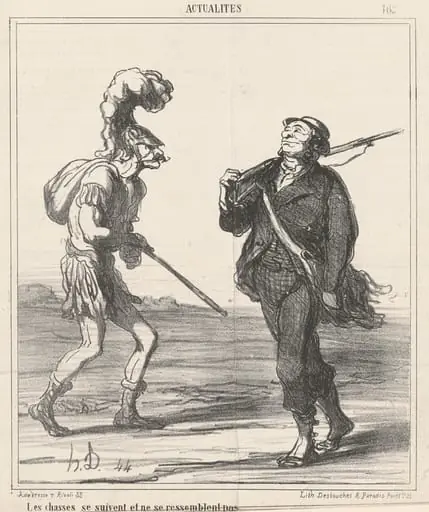
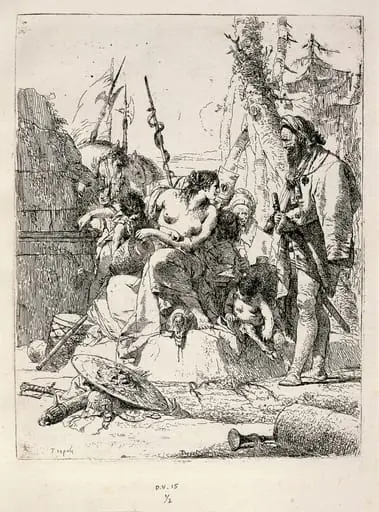
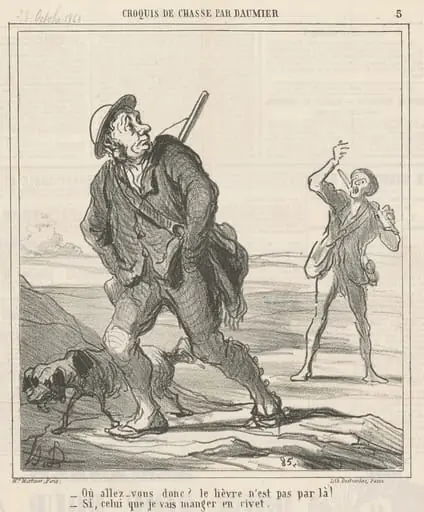
The individual vignettes depict a variety of everyday figures: a soldier in ornate boots marching with a cane, an elderly man in a wide‑brimmed hat seated on a rock clutching a bag, a cap‑clad boy observing the soldier, and a hooded woman positioned beside a modest house from which smoke rises. The juxtaposition of military formality, age, youth, and domesticity suggests a commentary on social strata and daily life in early‑19th‑century France.
Technique & Style
Bellangé employed the lithographic process to achieve rapid, gestural lines that convey motion and character. The sketch‑like quality of the strokes gives the soldier a rigid, staged posture, while the older man’s slouch and facial lines are rendered with a softer, more naturalistic touch, highlighting the artist’s ability to differentiate personalities within a single medium.
Context
Created during the post‑Napoleonic period, the print reflects contemporary interest in genre scenes that document ordinary people and their environments. Lithography, then a relatively new technology, allowed artists like Bellangé to produce multiple copies quickly, making such depictions accessible to a broader audience.
Legacy
While not as widely reproduced as Bellangé’s larger historical works, Five Vignettes exemplifies his skill in capturing fleeting moments through lithography. The piece remains a useful reference for studying early 19th‑century printmaking techniques and the visual culture of everyday French life.
Artist & collection