Artwork
Eight Vignettes
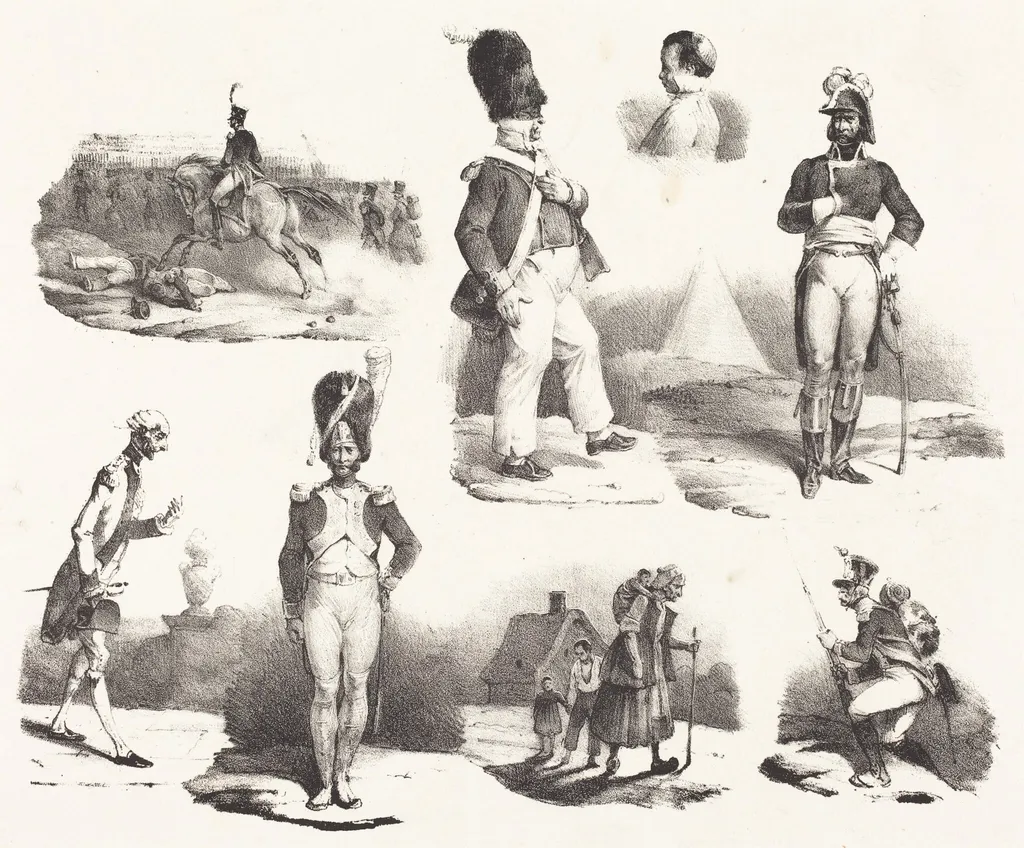
Eight Vignettes is an ink print by the Romanticist artist Hippolyte Bellangé. It dates from 1830 and is held in the collection of the National Gallery of Art.
About this work
Overview
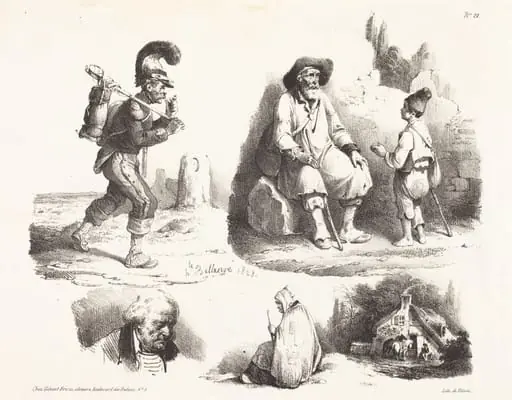
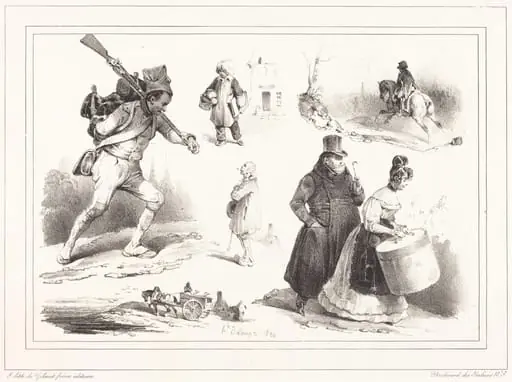
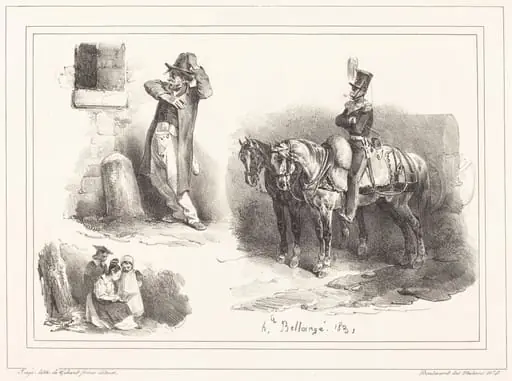
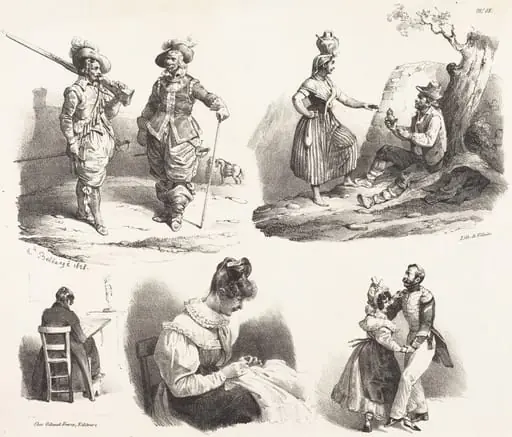
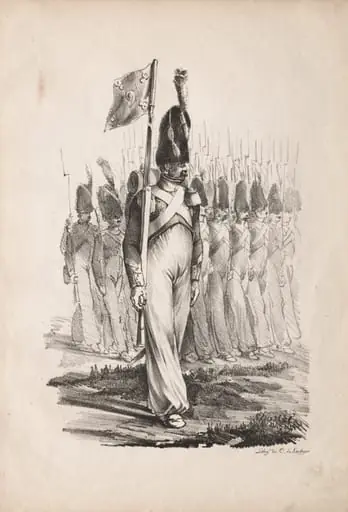
Eight Vignettes is a lithographic print produced in 1830 by French artist Hippolyte Bellangé. The work consists of a series of eight compact scenes, each depicting figures in military dress. Together the panels form a cohesive study of soldiers in various postures, ranging from upright stances to kneeling and resting positions, and include a horse lying on the ground in one corner.
Subject & Meaning
The print presents a cross‑section of military life, juxtaposing formal uniformed figures with more informal, everyday gestures.
The print presents a cross‑section of military life, juxtaposing formal uniformed figures with more informal, everyday gestures. Some characters appear ready for march, while others seem to pause or recover, suggesting a narrative of movement, fatigue, and camaraderie within a regimented setting. The inclusion of a fallen horse adds a note of vulnerability, hinting at the physical toll of military service.
Technique & Style
Bellangé employed the lithographic process to render quick, sketch‑like lines that convey immediacy and dynamism. The figures are outlined with fluid strokes that emphasize motion, while the detailing of uniforms and equipment remains recognizable yet slightly stylized. This blend of realistic attire with exaggerated poses creates a lively, almost spontaneous atmosphere across the eight vignettes.
History & Provenance
Created in the early years of Bellangé’s career, the lithograph reflects his interest in military subjects that would later define much of his oeuvre. While specific ownership records are sparse, the work is documented as part of 19th‑century French print collections and has been referenced in catalogues of Bellangé’s graphic output.
Artist & collection