Artwork
Woodstock Road, Woodstock, New York
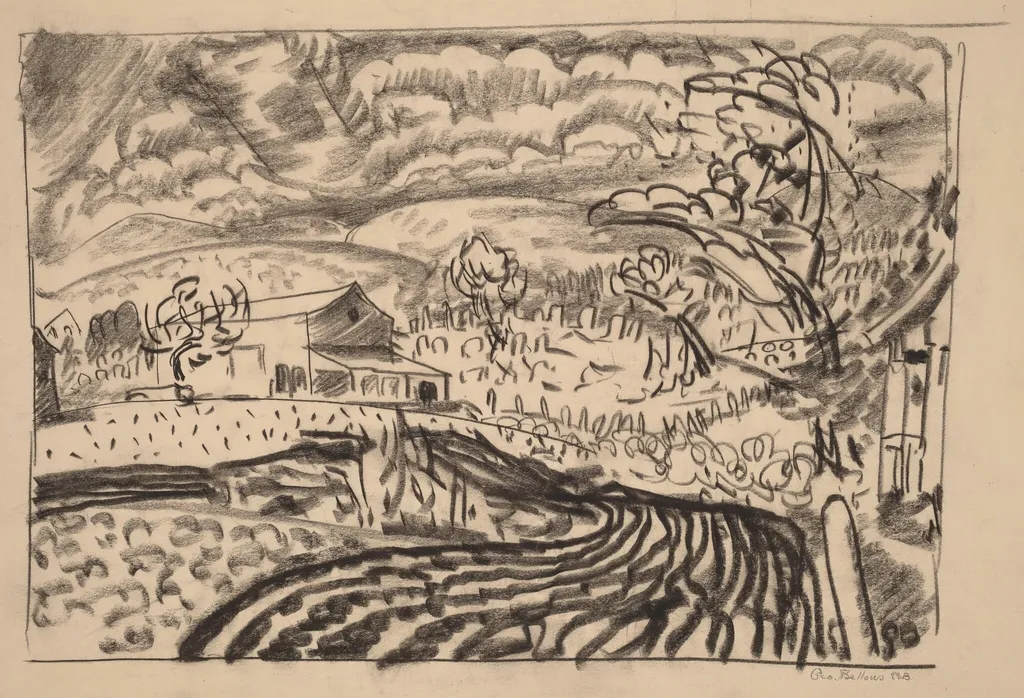
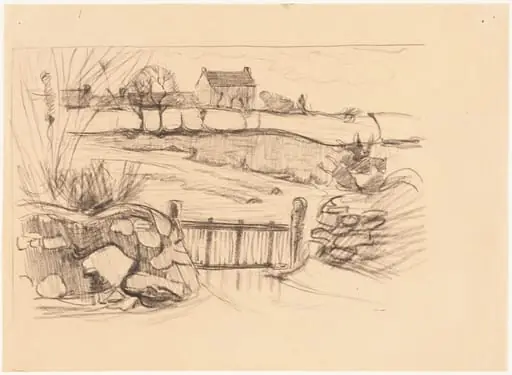
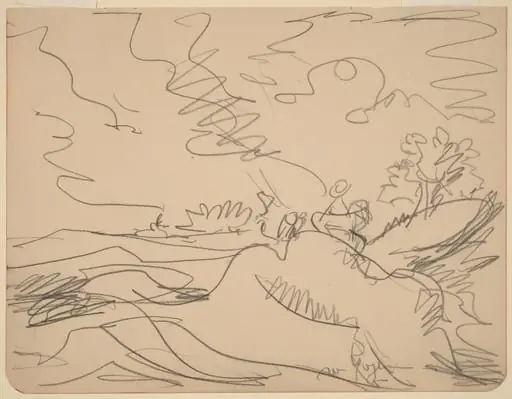
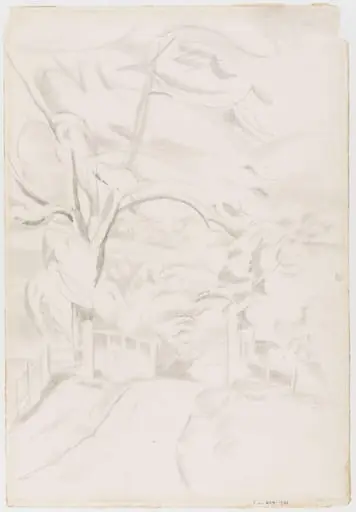
Woodstock Road, Woodstock, New York is a crayon drawing by George Bellows. It dates from 1924 and is held in the collection of the National Gallery of Art.
About this work
Overview
George Bellows’ 1924 drawing titled “Woodstock Road, Woodstock, New York” is executed in black crayon on wove paper. The work captures a rural lane that curves through a tranquil landscape, rendered with swift, gestural marks that suggest immediacy rather than detailed finish.
Subject & Meaning
The composition presents a meandering road bordered by gnarled trees, leading the eye toward a modest structure set among a grouping of additional forms that may represent houses or barns. The sky is populated with soft, billowing clouds, creating a sense of openness and quietude within the scene.
Technique & Style
Bellows employs loose, rapid strokes of crayon, allowing the texture of the paper to show through and giving the drawing a sketch‑like quality. The line work conveys movement in the foliage and road, while the limited monochrome palette emphasizes tonal contrast and atmospheric depth.
History & Provenance
Created in 1924, the piece reflects Bellows’ interest in American landscapes during the early 1920s, a period when he turned away from his earlier urban subjects. The drawing has remained in private collections before entering its current institutional setting, though specific ownership details are not publicly recorded.
Context
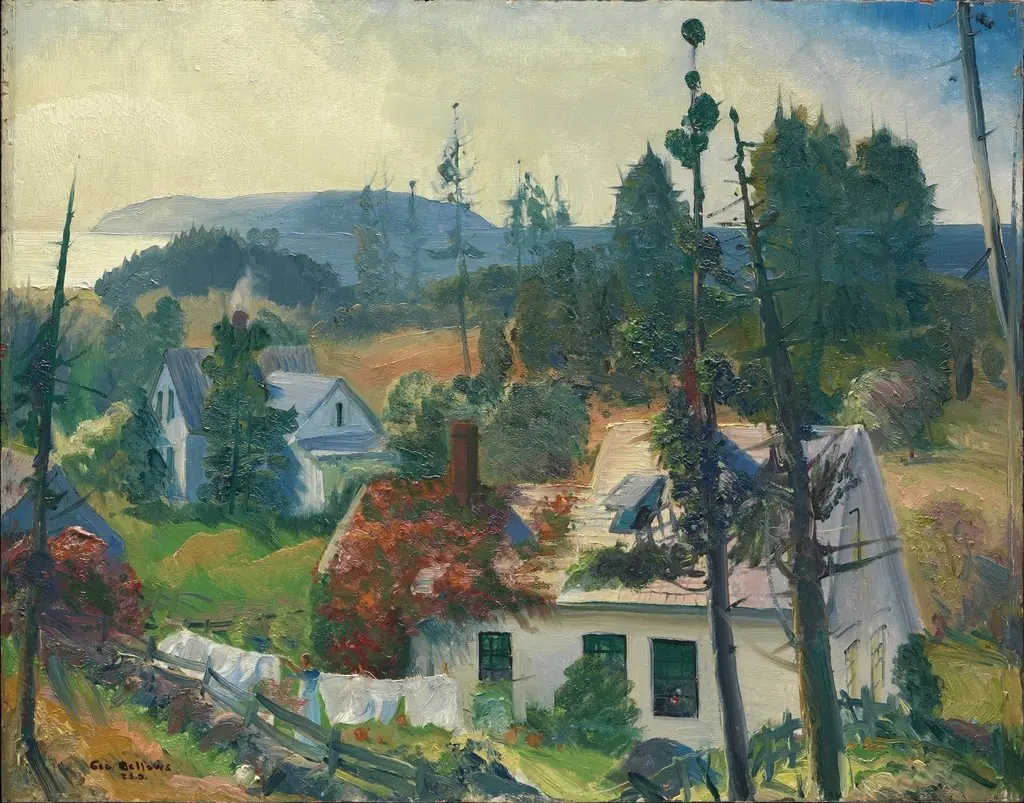
At the time of its creation, Woodstock, New York, was an emerging artist colony that attracted many modernist painters. Bellows’ visit to the area resulted in several works that document the region’s bucolic character, situating this drawing within a broader series of rural studies.
Own this work as a print
Artist & collection

Artist
George Wesley Bellows (August 12 or August 19, 1882 – January 8, 1925) was an American realist painter, known for his bold depictions of urban life in New York City.