Artwork
Countryside near Brezins, between Grenoble and Vienne
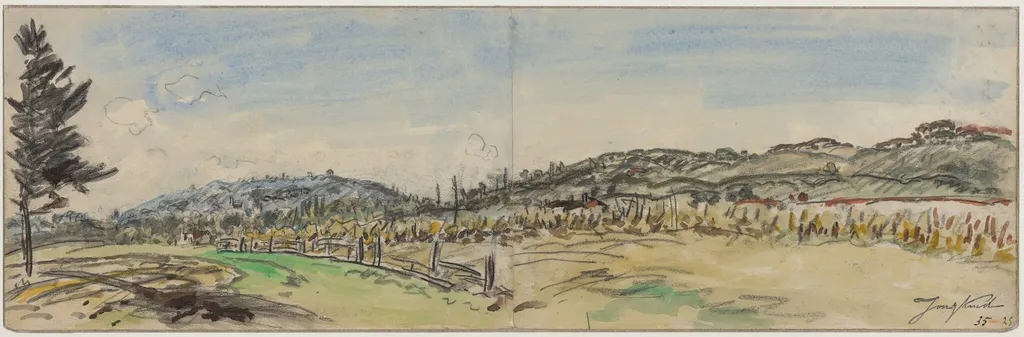
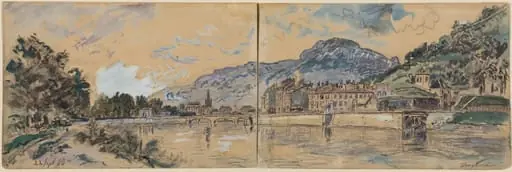
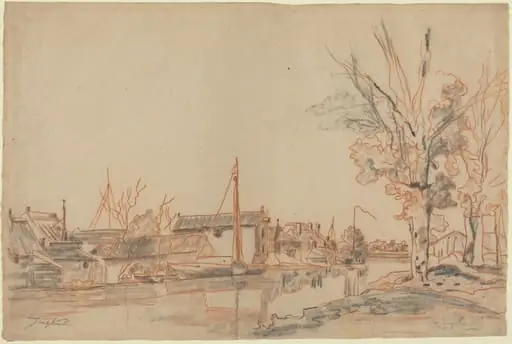
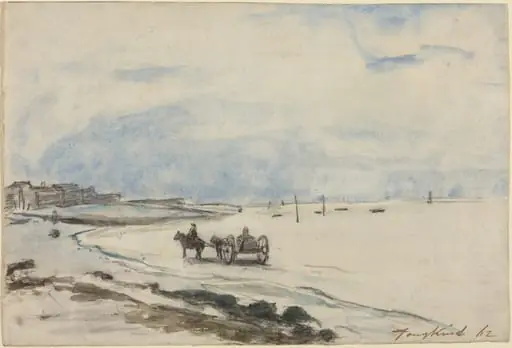
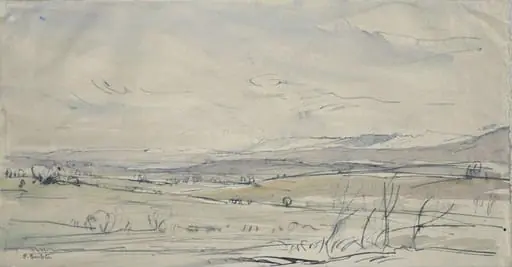
Countryside near Brezins, between Grenoble and Vienne is a chalk drawing by the Impressionist artist Johan Barthold Jongkind. It dates from 1884 and is held in the collection of the National Gallery of Art.
About this work
Overview
Created around 1884, this drawing by Johan Barthold Jongkind captures a rural landscape near Brezins, situated between Grenoble and Vienne.
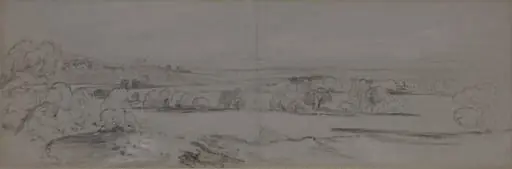
Created around 1884, this drawing by Johan Barthold Jongkind captures a rural landscape near Brezins, situated between Grenoble and Vienne. Executed in black chalk and watercolor on two joined sheets of wove paper, the work reflects Jongkind’s interest in transient natural effects and quiet, unidealized scenery. Its modest scale and intimate composition suggest a study made en plein air, rather than a finished exhibition piece.
Subject & Meaning
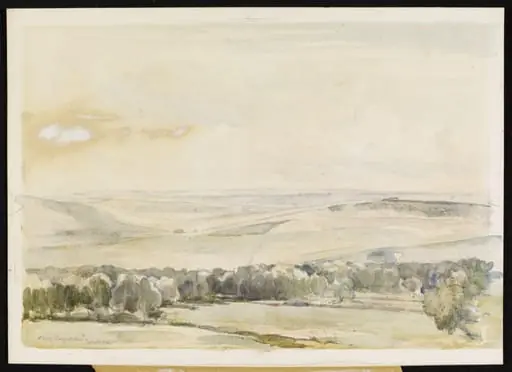
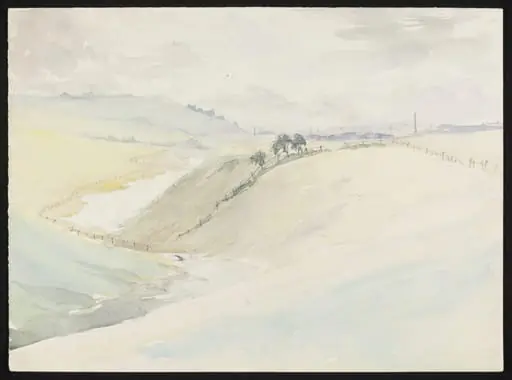
The scene depicts a gentle stretch of countryside—rolling fields, scattered trees, and distant hills—without human figures or architectural landmarks. The absence of narrative or dramatic elements emphasizes observation over storytelling. Jongkind’s focus on ordinary terrain underscores his commitment to recording the subtle rhythms of the natural world as experienced in daily life.
Technique & Style
Jongkind employed black chalk for delicate linear contours and tonal modeling, layered with translucent watercolor washes to suggest atmospheric depth and shifting light. The joining of two paper sheets allowed for a broader view without compromising the spontaneity of the medium. His brushwork is restrained, avoiding bold strokes in favor of muted gradations that evoke quiet, overcast conditions.
History & Provenance
The drawing likely originated from Jongkind’s travels in southeastern France during the 1880s, a period when he frequently moved between the Rhône Valley and the Alps. It remained in private hands after his death, eventually entering a public collection through acquisition or bequest, though its exact provenance prior to institutional ownership is not fully documented.
Context
In the 1880s, Jongkind was increasingly recognized for his landscape studies, which prefigured Impressionist approaches to light and atmosphere. Though not formally aligned with the Impressionist group, his direct observation of nature and rejection of academic conventions placed him in dialogue with contemporaries like Monet and Pissarro, who similarly sought to capture fleeting environmental conditions.
Legacy
This drawing exemplifies Jongkind’s role as a bridge between 19th-century Romantic landscape traditions and the emerging modern emphasis on sensory immediacy. While less widely known than his French peers, his quiet, observational works influenced later generations of artists who valued sincerity over spectacle in landscape representation.
Artist & collection