Artwork
Village Road
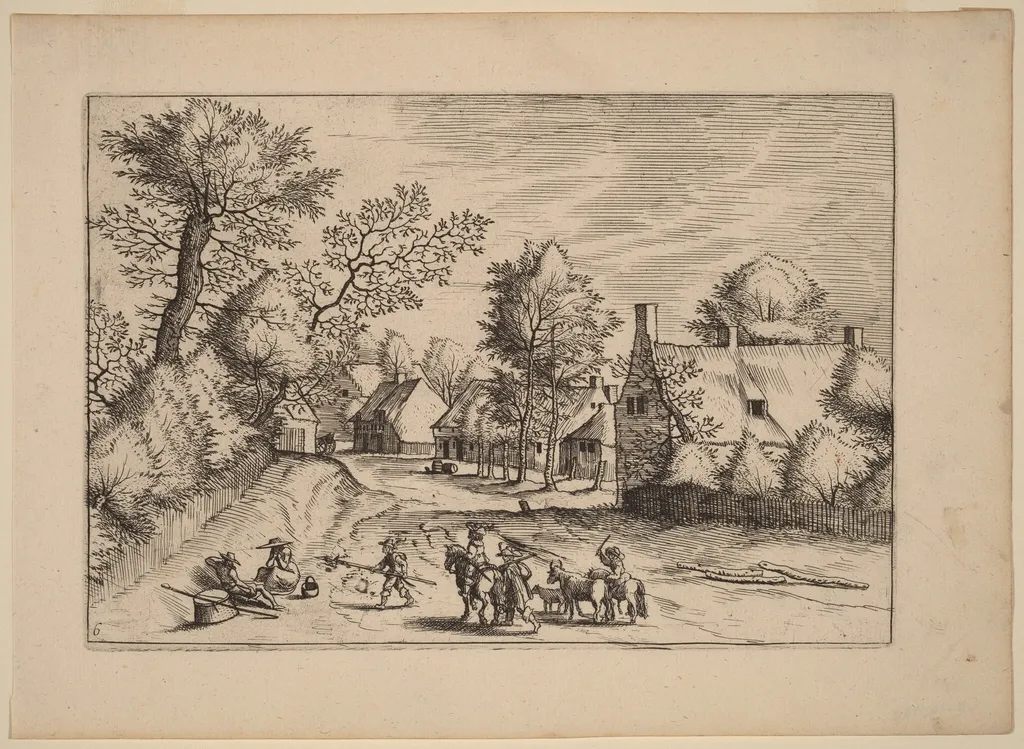
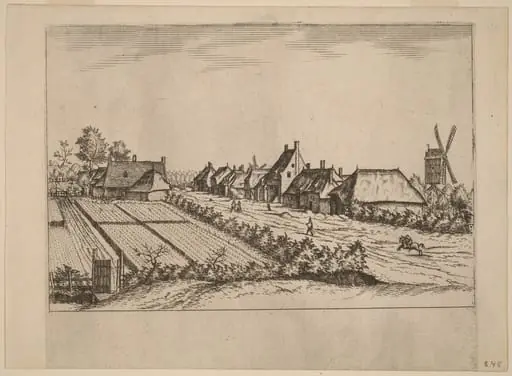
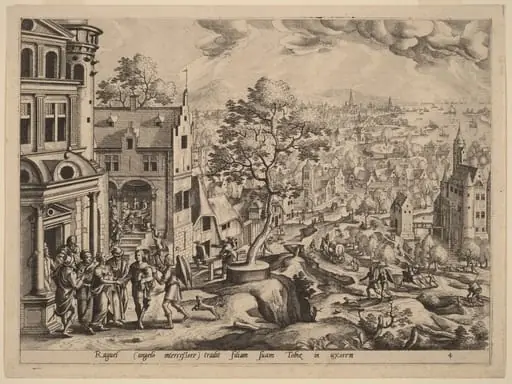
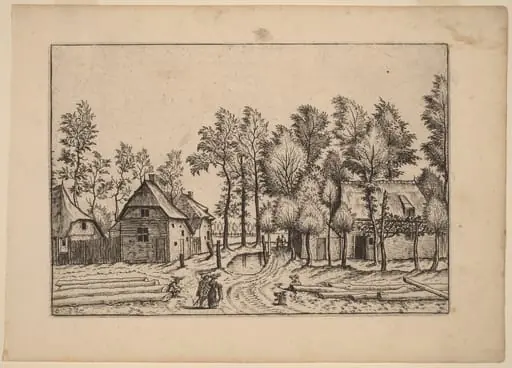
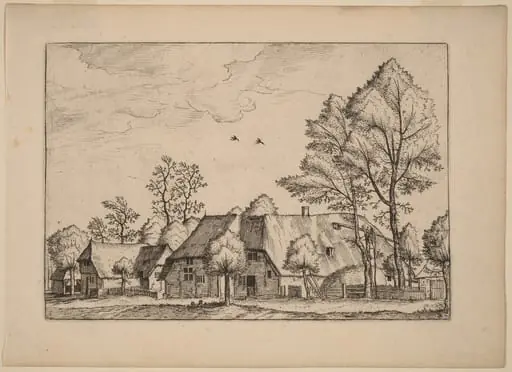
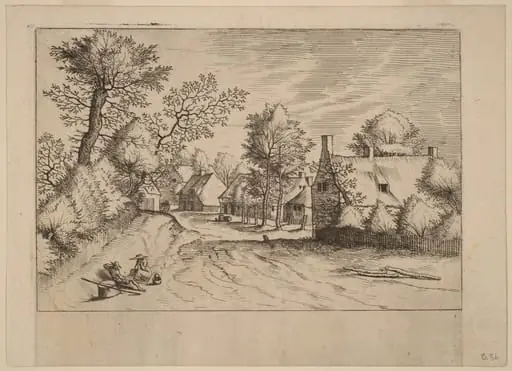
Village Road is an ink print by the Baroque artist Johannes van Doetechum the Elder. It is held in the collection of the National Gallery of Art.
About this work
Overview
Created in 1676 by Johannes van Doetecum the Elder, *Village Road* is a print made through etching with additional engraving details.
Created in 1676 by Johannes van Doetecum the Elder, *Village Road* is a print made through etching with additional engraving details. A Dutch artist active in Haarlem from the late 16th century, van Doetecum specialized in reproductive prints and cartography. This work exemplifies his practice of translating earlier genre scenes into detailed graphic form, often in collaboration with family members who also worked in printmaking.
Subject & Meaning
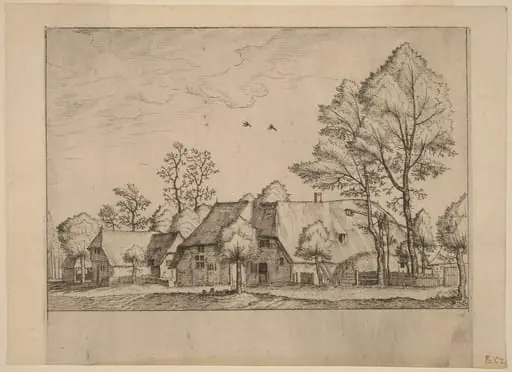
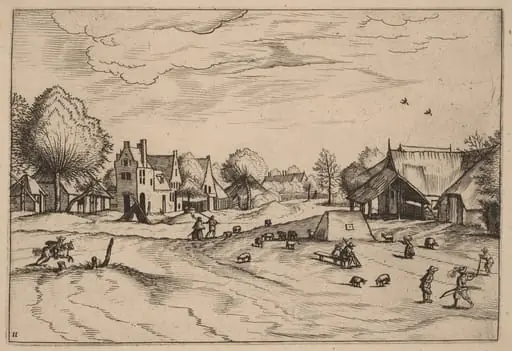
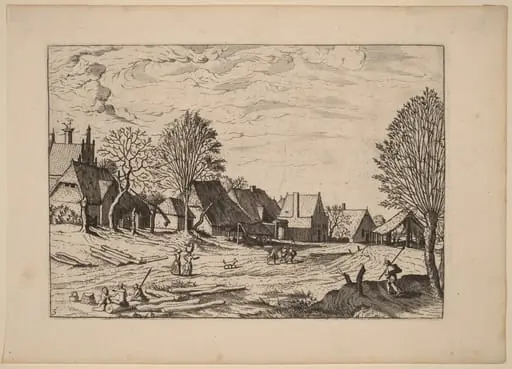
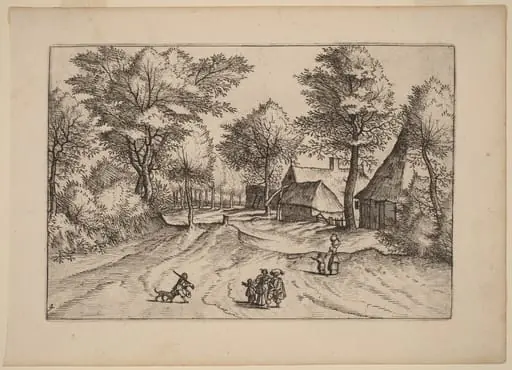
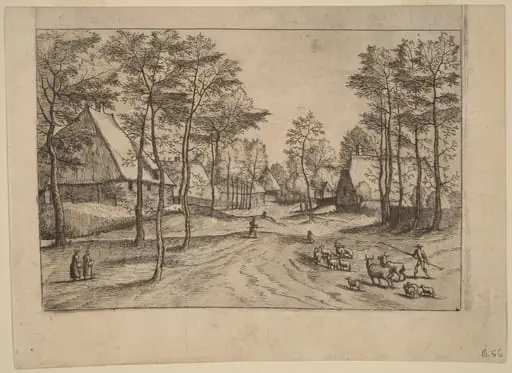
The scene depicts a modest rural pathway, lined with simple dwellings and bare trees, suggesting late autumn or early winter. A few figures move along the road—some on foot, others on horseback—while a solitary individual rests on a stool by the path. The quiet, uneventful atmosphere reflects everyday rural life, avoiding grand narrative in favor of observed detail, characteristic of Northern European genre traditions.
Technique & Style
Van Doetecum employed etching to lay down the initial composition, using acid to bite lines into a metal plate. He then enhanced the image with engraving, adding finer, more controlled strokes to define textures like tree bark, fabric folds, and roofing tiles. The result is a delicate interplay of soft, fluid lines and sharper, incised details, typical of his meticulous approach to reproducing visual narratives.
History & Provenance
Johannes van Doetecum the Elder worked in Haarlem from 1578 until his death, running a family workshop that included his brother Lucas and several sons. *Village Road* likely emerged from this collaborative environment, where designs were often adapted from earlier paintings, particularly those of Pieter Bruegel the Elder. The print’s date places it late in his career, reflecting decades of experience in reproductive printmaking.
Context
In late 16th- and early 17th-century Netherlands, printmaking flourished as a medium for disseminating images beyond elite circles. Van Doetecum’s work contributed to this trend, translating popular genre scenes into accessible formats. His focus on rural life aligned with broader cultural interest in domestic and agricultural subjects, distinct from religious or mythological themes dominant elsewhere in Europe.
Legacy
Though less celebrated than his contemporaries, van Doetecum’s prints preserved and circulated visual motifs from Bruegel’s oeuvre, influencing how later audiences perceived Northern European peasant life. His family’s workshop helped sustain printmaking as a commercial and artistic enterprise, ensuring the endurance of detailed, small-scale imagery in the Dutch visual tradition.
Artist & collection

Artist
Johannes van Doetechum the Elder
Joannes van Doetecum the Elder (1530 – 1605) was a Dutch engraver-cartographer known for his etched works after genre scenes by Pieter Bruegel the Elder and maps of various cities in the Netherlands.