Artwork
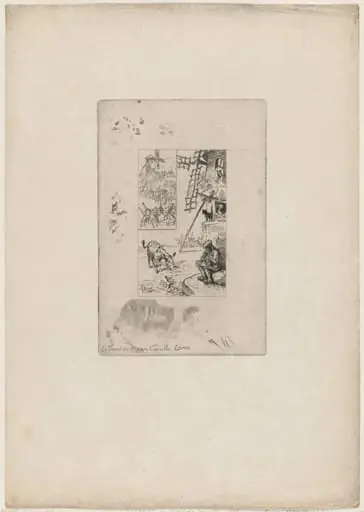
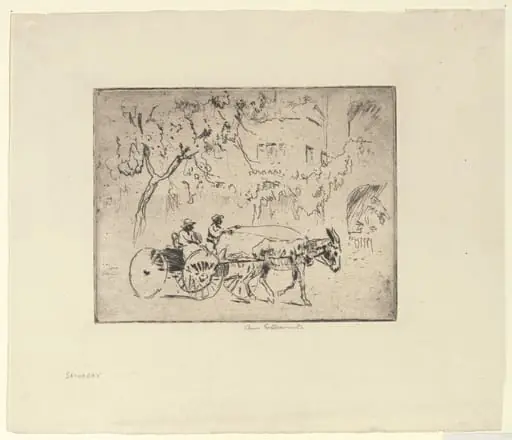
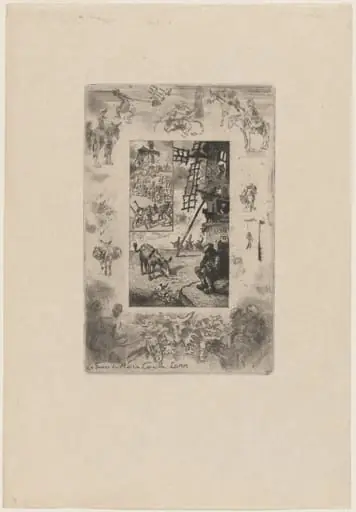
Lombard Farmhouse (above); Saddled Donkey Standing in Front of a Shop (below)
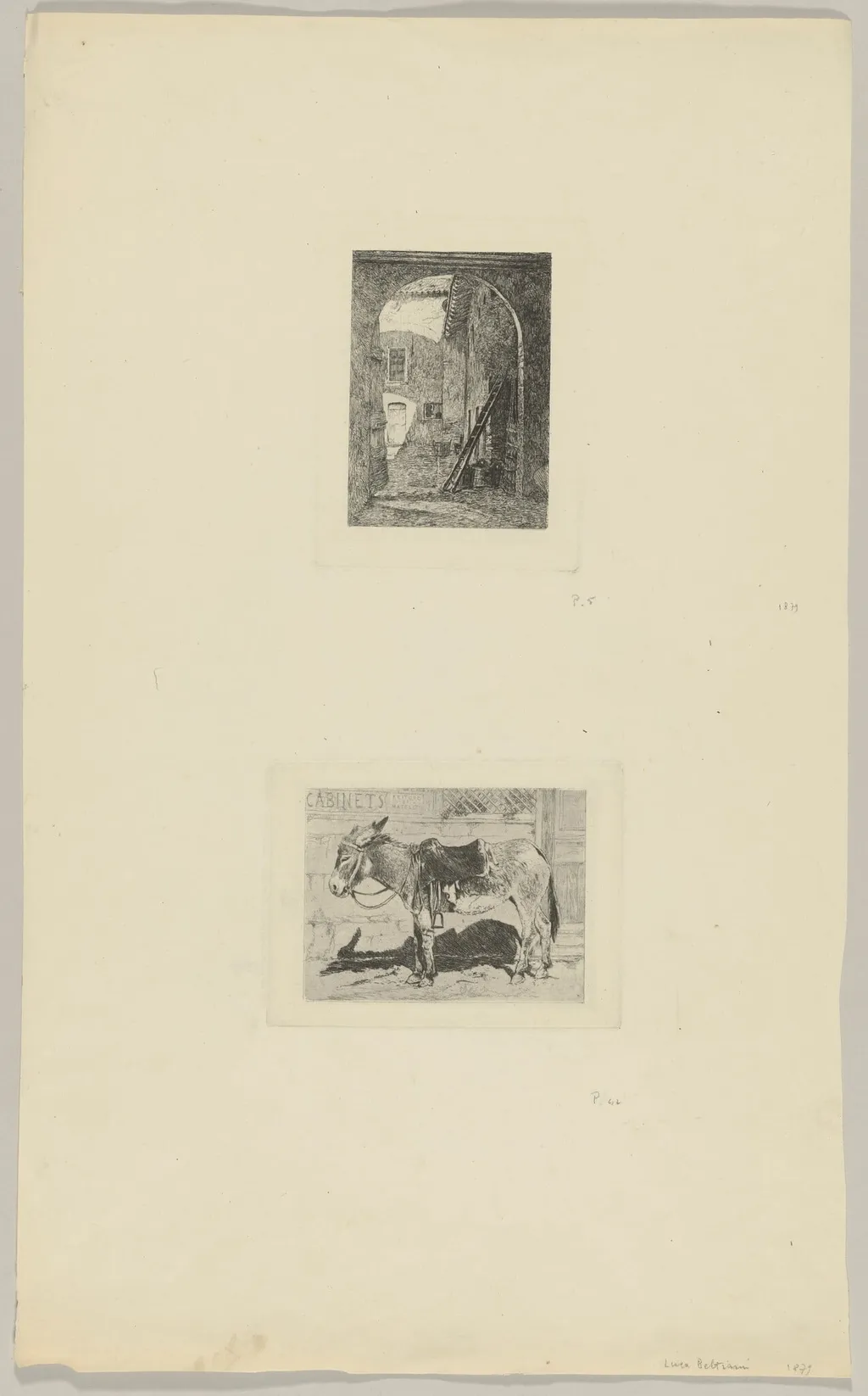
Lombard Farmhouse (above); Saddled Donkey Standing in Front of a Shop (below) is an ink print by the Impressionist artist Luca Beltrami. It dates from 1877 and is held in the collection of the National Gallery of Art. Two small etchings, printed side by side on a single sheet of wove paper, depict rural and urban scenes from late 19th-century Lombardy.
About this work
Overview
Two small etchings, printed side by side on a single sheet of wove paper, depict rural and urban scenes from late 19th-century Lombardy.
Two small etchings, printed side by side on a single sheet of wove paper, depict rural and urban scenes from late 19th-century Lombardy. Created around 1877 by Luca Beltrami, the works capture modest, everyday environments: a farmhouse with a ladder and well, and a donkey tethered before a shop bearing the sign 'CABINETS.' The prints are held in the National Gallery of Art, Washington, as part of a collection documenting regional life through printmaking.
Subject & Meaning
The upper scene portrays a quiet farmhouse, suggesting domestic labor and self-sufficiency, with a ladder and covered well indicating routine chores. The lower image shows a donkey, a common working animal, paused before a small business, its sign hinting at local craftsmanship. Together, the images reflect a society still reliant on manual labor and animal-powered transport, offering a quiet record of ordinary life rather than grand narrative.
Technique & Style
Beltrami employed fine, precise etching lines to render texture and form with clarity. The contrast between the solid masses of the farmhouse and the delicate contours of the donkey’s form demonstrates control over the medium. The compositions are unadorned, avoiding dramatic lighting or perspective, favoring direct observation. The sharp, clean lines suit the documentary tone, emphasizing structure and detail over emotional expression.
History & Provenance
The print was made around 1877, during Beltrami’s early career as an architect and artist documenting Lombard vernacular architecture. It entered the National Gallery of Art’s collection through its print department, likely acquired as part of a broader effort to preserve European graphic works depicting regional life. Its survival in good condition reflects careful handling and its modest scale, which made it suitable for private collections.
Context
In the 1870s, Italy was undergoing rapid modernization, yet many rural and small-town communities retained pre-industrial rhythms. Beltrami’s etchings align with a broader interest among artists and intellectuals in recording vanishing ways of life. Unlike romanticized depictions, his work avoids sentimentality, instead offering precise, unembellished views that serve as visual ethnography of Lombard daily existence.
Legacy
Though not widely exhibited, these etchings contribute to the understanding of 19th-century Italian graphic art as a tool for regional documentation. Beltrami’s focus on ordinary subjects influenced later artists interested in social realism. The print remains a quiet example of how printmaking could preserve the texture of everyday life, offering insight into a transitional period in Italian society without overt commentary.
Artist & collection

Artist
Luca Beltrami was an Italian architect and architectural historian, known particularly for restoration projects.

 Le Secret du Maîtres Cornille
 Untitled
 Le Secret du Maîtres Cornille
 Untitled
 Thomas Le Hardouaye
 Untitled
 Title Page
 St. George and the Dragon (2)
 Hüssener, Auguste: Andruckbogen mit vier Gemäldereproduktionen
 St. George and the Dragon (1)
 Gardeuse d'Anes Merchant (The Donkey Herder)
 Départ pour le sabbat (Departure for the Sabbath)