Artwork
St. George and the Dragon (2)
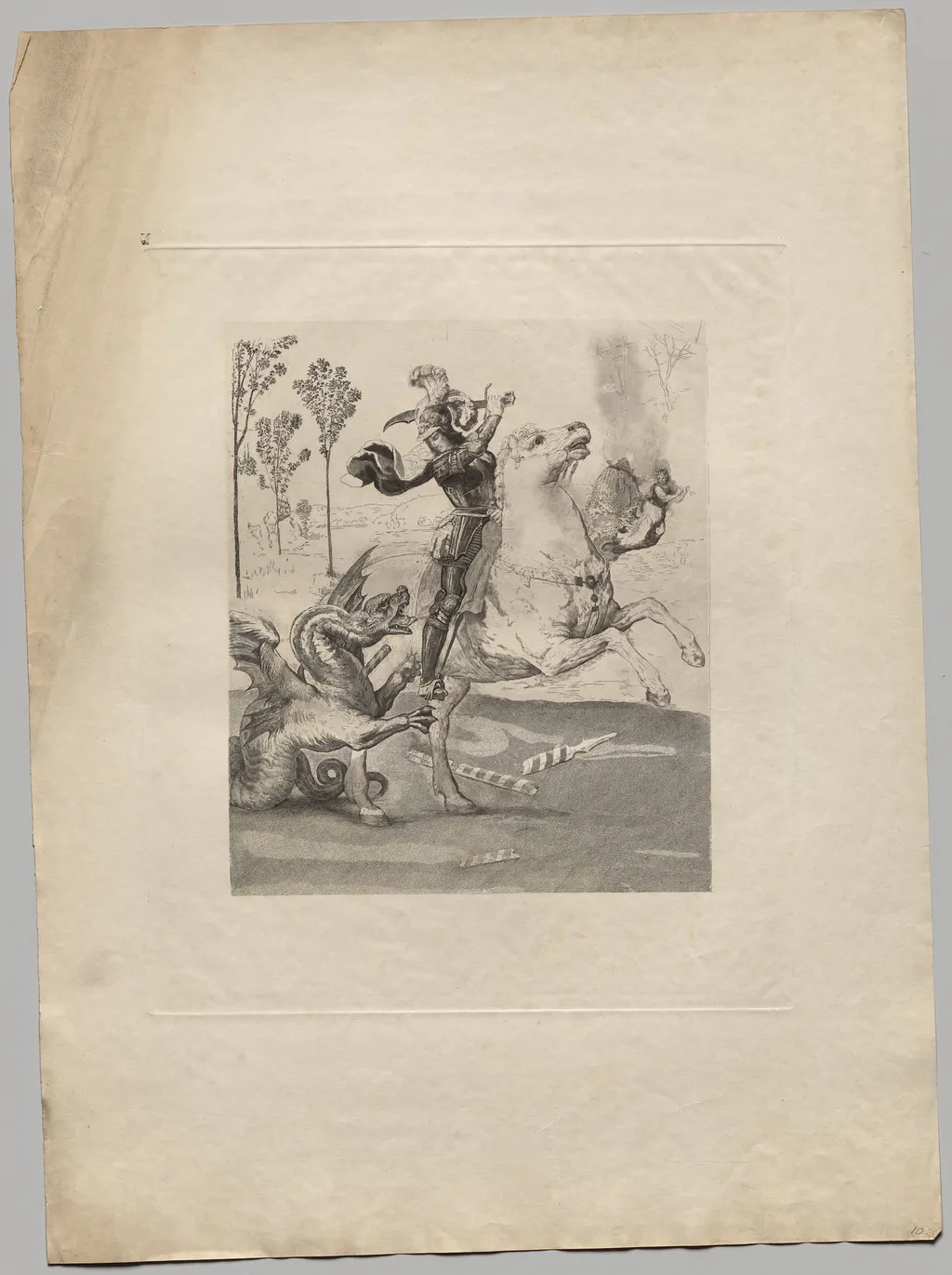
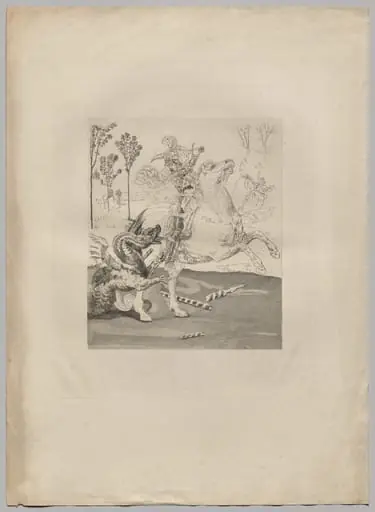
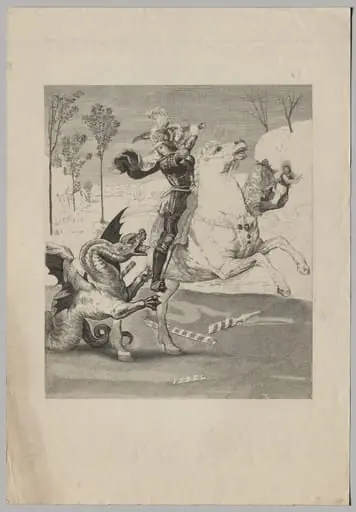
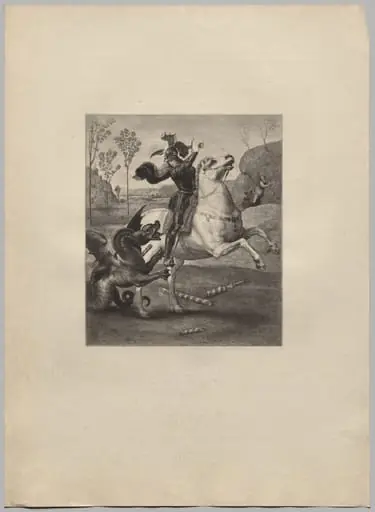
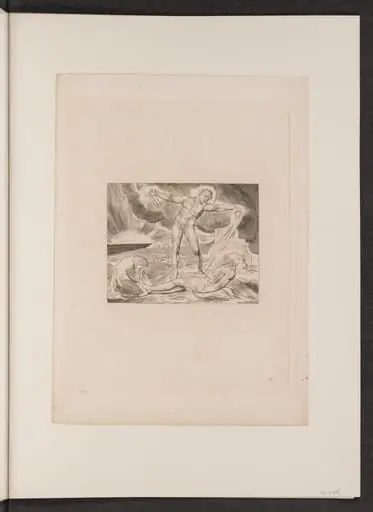
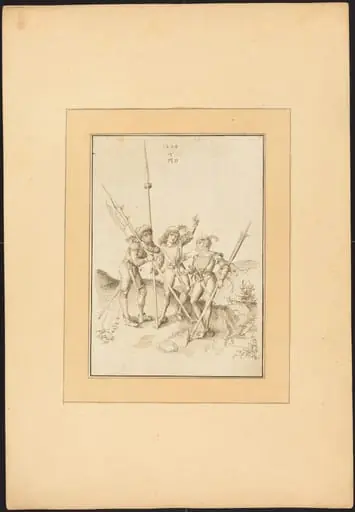
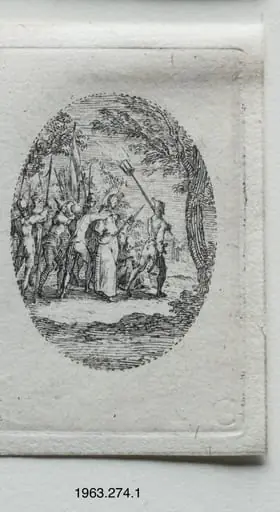
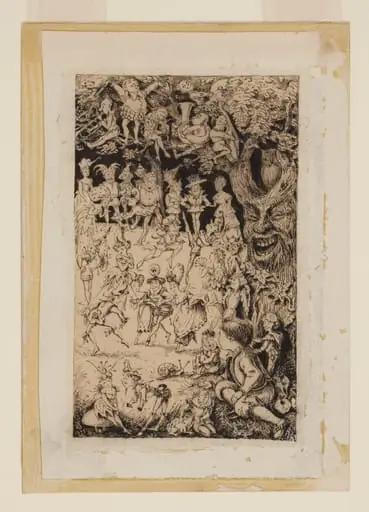
St. George and the Dragon (2) is a print by the Impressionist artist Claude-Ferdinand Gaillard. It dates from 1885 and is held in the collection of the Cleveland Museum of Art.
About this work
Overview
Created in 1885 by French artist Claude-Ferdinand Gaillard, this engraving portrays the legendary moment of Saint George defeating the dragon. Produced in Paris, where Gaillard lived and worked, the piece reflects his specialization in detailed printmaking. It is now part of the Cleveland Museum of Art’s collection, preserved as an example of late 19th-century narrative engraving.
Subject & Meaning
The scene illustrates the medieval legend of Saint George, a Christian knight who rescues a village by slaying a dragon. Gaillard captures the instant of triumph: the knight stands victorious atop the fallen beast, sword raised. The composition emphasizes moral victory over chaos, aligning with traditional iconography that framed the saint as a symbol of courage and divine justice.
Technique & Style
The background, rendered with delicate hatching, recedes into a calm horizon, balancing the drama of the central action.
Gaillard employed fine-line engraving to render texture and form, using precise incisions to suggest the sheen of armor, the scale of the dragon, and the softness of the landscape. Strong contrasts between light and shadow define the figures, enhancing their three-dimensionality. The background, rendered with delicate hatching, recedes into a calm horizon, balancing the drama of the central action.
History & Provenance
The print was made during a period when historical and mythological subjects remained popular in French print culture. Gaillard, active in Parisian artistic circles, produced numerous engravings for illustrated publications and private collectors. The work entered the Cleveland Museum of Art’s collection through documented acquisition, though its earlier ownership prior to the 20th century is not publicly detailed.
Context
In late 19th-century France, engraving was both a commercial and fine art practice, often used to reproduce paintings or illustrate literary and religious themes. Gaillard’s work reflects this tradition, drawing from medieval legends that continued to inspire visual culture even as modernist movements emerged. His style bridges academic precision with romanticized narrative, common among illustrators of the era.
Legacy
Though Gaillard is not widely known today, his engravings contribute to the understanding of how traditional myths were sustained in print form during the industrial age. This piece remains a representative example of skilled draftsmanship in a medium increasingly overshadowed by photography. Its preservation in a major museum underscores its value as a historical artifact of 19th-century graphic art.
Artist & collection
Artist
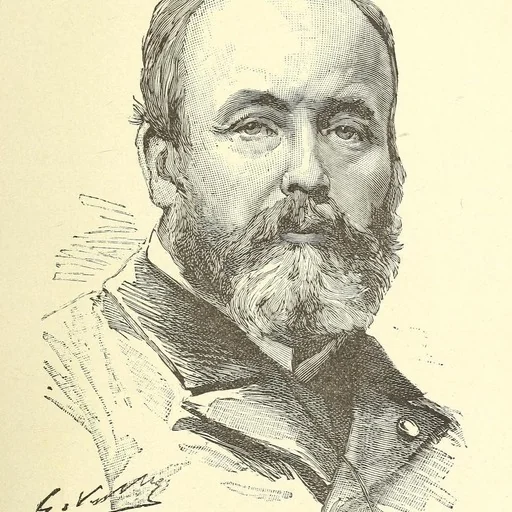
Claude Ferdinand Gaillard (7 January 1834 – 19 January 1887) was a French engraver and painter, who had been born and died in Paris.