Artwork
Hüssener, Auguste: Andruckbogen mit vier Gemäldereproduktionen
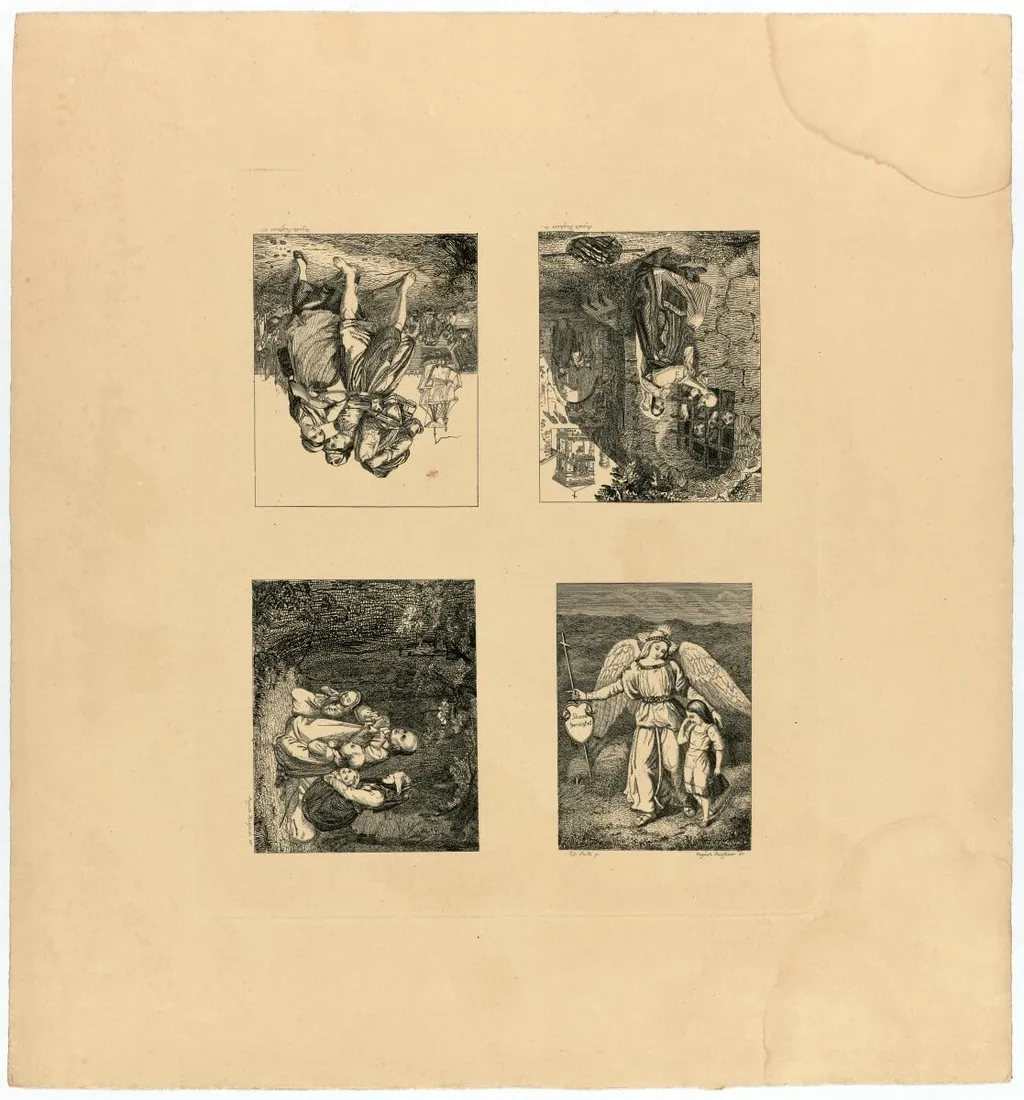
Hüssener, Auguste: Andruckbogen mit vier Gemäldereproduktionen is a drawing by Unknown. It dates from 1840 and is held in the collection of the City Museum Berlin. The sheet presents a quartet of miniature paintings reproduced on a single page, each rendered in fine detail and preserved uncut.
About this work
Overview
The sheet presents a quartet of miniature paintings reproduced on a single page, each rendered in fine detail and preserved uncut. The collection appears to have served as an illustrative plate for a printed work, likely a paperback, given its compact format and the presence of a full marginal inscription.
Subject & Meaning
The four images portray distinct narratives: an Italian scene of a mother with her child observed by two men behind a prison lattice; a fisherman’s return from sea; a devout family gathered in a forest for prayer; and an angel offering solace to a young girl. Together they suggest themes of domesticity, labor, piety, and compassionate aid.
Technique & Style
Executed with delicate cross‑hatching and precise line work, the reproductions convey depth and texture despite their small scale. The style aligns with mid‑19th‑century German illustration, balancing realism in the figures with a modest, almost didactic composition suitable for book illustration.
History & Provenance
The sheet originates from the estate of Eduard Ratti, brother‑in‑law of the artist Auguste Hüssener (1789‑1877). In 1912 Viktor Ratti donated the piece to the Märkisches Museum. The angel of mercy image bears a separate attribution to Eduard Ratti, while the second picture is identified as a copy after Rudolf Jordan’s 1844 work “Das des Fischers.”
Context
One of the four panels reproduces Jordan’s popular scene of a fisherman’s homecoming, which also appeared in the 1844 Berliner Taschenalender and was later adapted for porcelain pipe heads. This reflects the 19th‑century practice of circulating popular motifs across media, from print to decorative arts.
Artist & collection
 Domestic Scene
 Giacomo and Cardinal Marco, investing Andrea, Abbot of San Zeno, with his Benefice
 The Nymph of Fontainebleau
 Portrait of a Woman
 Madonna and Child with Saints in the Enclosed Garden
 Venus and Minerva
 Family Group of Four on Sofa
 Wall painting from Room H of the Villa of P. Fannius Synistor at Boscoreale
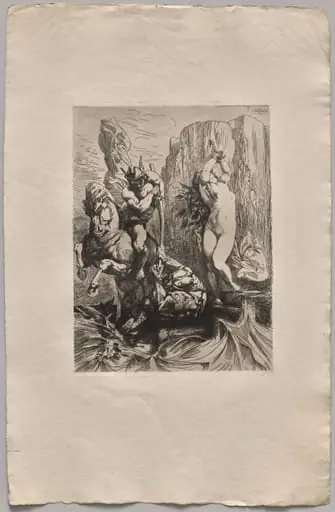 Perseus and Andromeda
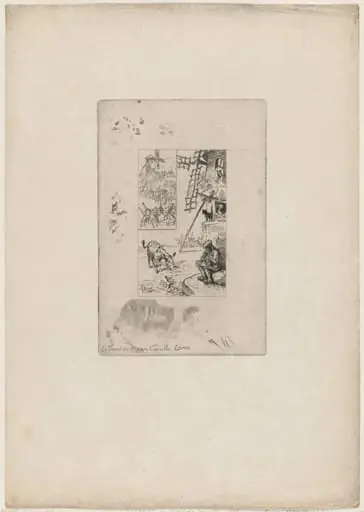 Le Secret du Maîtres Cornille
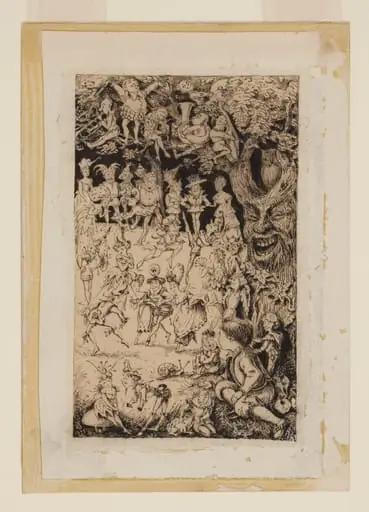 Untitled
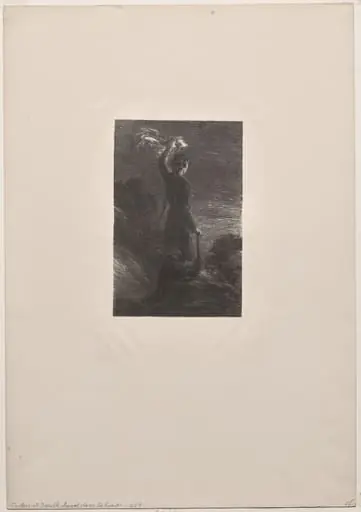 Tristan and Isolde, Act II: Signal in the Night
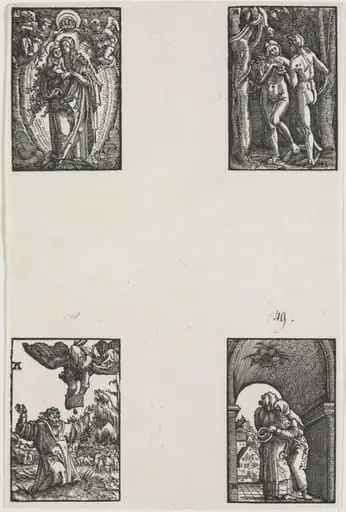 The Fall and Redemption of Man
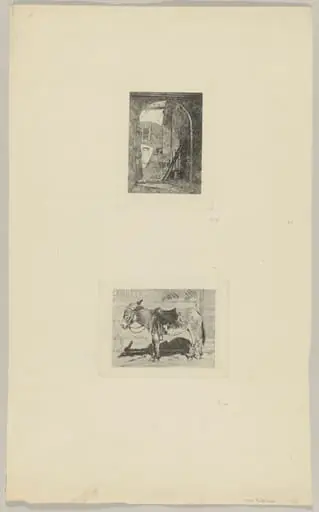 Lombard Farmhouse (above); Saddled Donkey Standing in Front of a Shop (below)
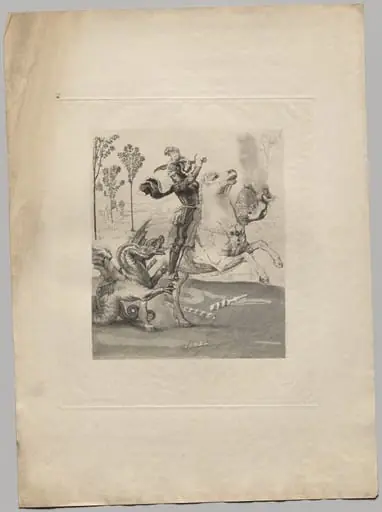 St. George and the Dragon (2)
 Untitled
 Fin de rêve
 Satan Smiting Job with Boils
 Untitled
 Improvisations sur cuivre