Artwork
Rape of Europa
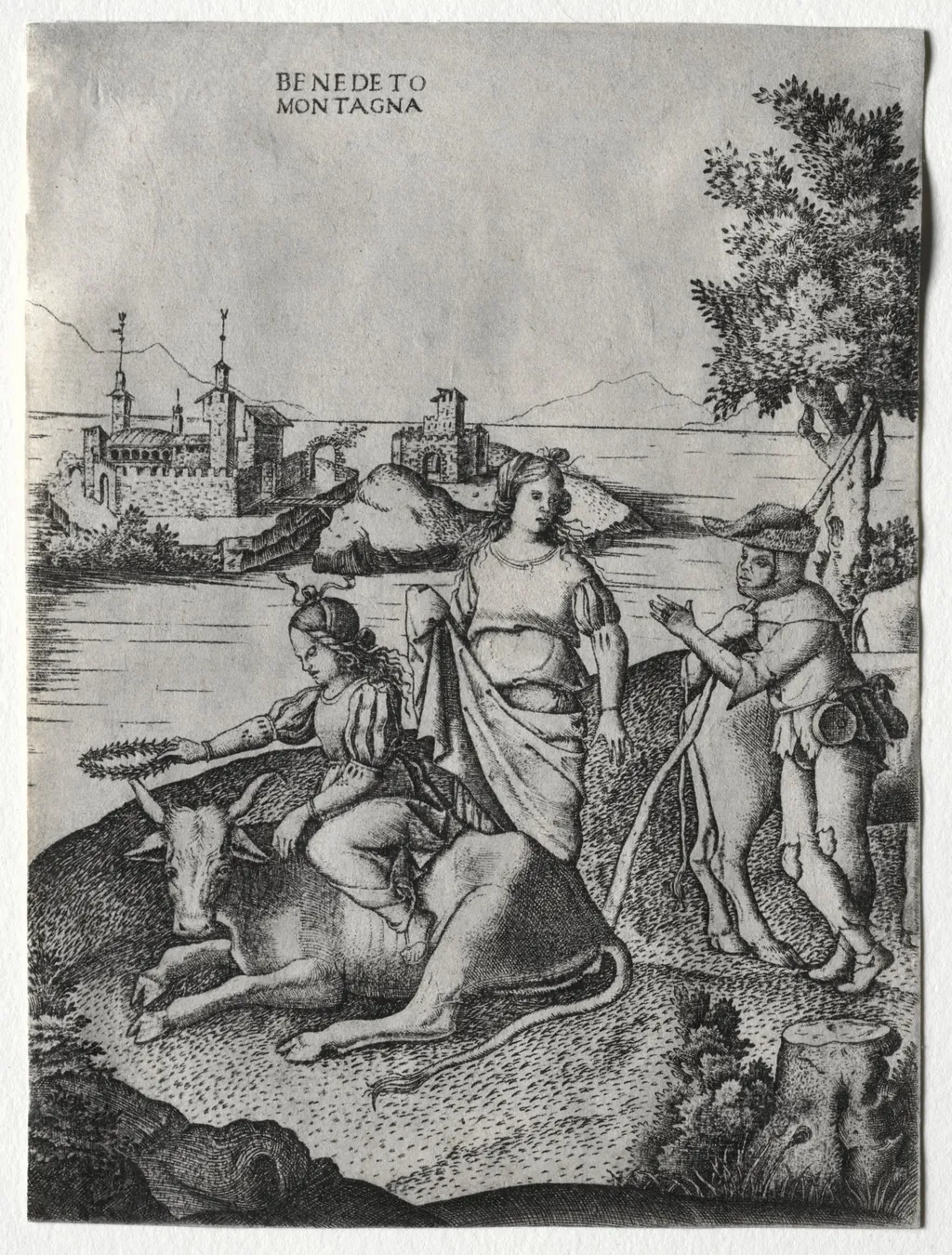
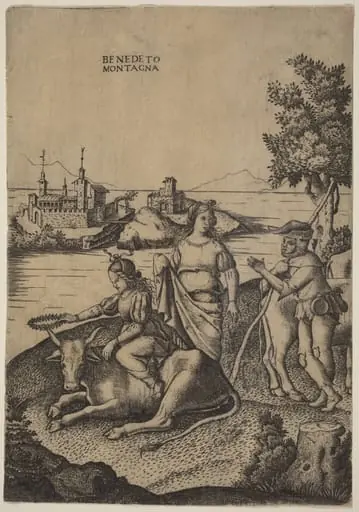
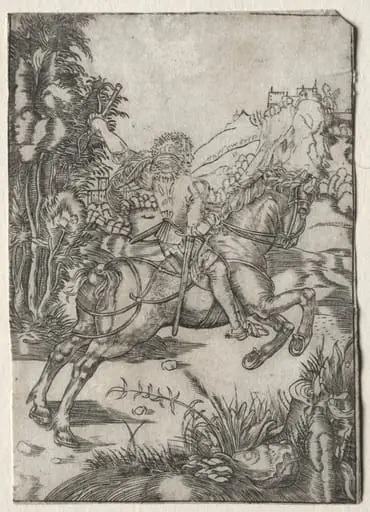
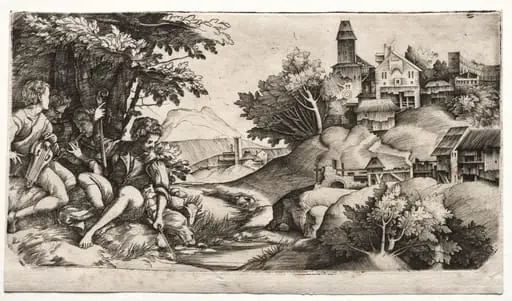
Rape of Europa is a print by the Renaissance artist Benedetto Montagna. It dates from 1518 and is held in the collection of the Cleveland Museum of Art.
About this work
Overview
It presents a narrative scene with three human figures and a bull, set against a landscape of water, distant mountains, and a fortified structure.
Created around 1518 by Benedetto Montagna, this print captures the mythological moment of Europa’s abduction by Zeus in the form of a bull. Executed in engraving, the work is part of the collection at The Cleveland Museum of Art. It presents a narrative scene with three human figures and a bull, set against a landscape of water, distant mountains, and a fortified structure. The composition balances movement and stillness, emphasizing the tension between divine intervention and human observation.
Subject & Meaning
The scene illustrates the myth in which Zeus, disguised as a gentle bull, carries off Europa, a Phoenician princess, to Crete. Europa sits atop the animal, her posture passive yet composed, while two attendants watch from the shore—one holding a rope, suggesting a prior attempt to restrain the creature. The calm demeanor of the bull contrasts with the gravity of the act, underscoring the inevitability of divine will in classical narratives.
Technique & Style
Montagna employed fine-line engraving to render texture and form with precision. Delicate hatching and cross-contour lines model the figures’ drapery and the bull’s musculature, while subtle gradations of tone create chiaroscuro effects. The background elements—water, cliffs, and architecture—are rendered with restrained detail, directing focus to the central group. The print’s clarity and controlled line work reflect the Northern Italian tradition of reproductive engraving.
History & Provenance
The print was produced in the early 16th century, likely as part of a broader interest in classical mythology among Italian printmakers. It entered The Cleveland Museum of Art’s collection through established acquisition channels, though its earlier ownership history remains undocumented. As a work by Montagna, it reflects the dissemination of mythological themes through prints, which circulated widely among collectors and artists of the period.
Context
Montagna worked in Vicenza during a time when engraving flourished as a medium for reproducing compositions by major painters. His prints often drew from classical sources and contemporary designs, serving both educational and decorative purposes. The Rape of Europa was a popular subject in Renaissance art, symbolizing the intersection of human vulnerability and divine power, and was frequently depicted in both painting and print.
Legacy
Though not widely known today, Montagna’s engraving contributes to the broader tradition of Northern Italian printmaking that helped standardize mythological imagery across Europe. Its technical refinement and narrative clarity influenced later engravers who sought to translate painterly compositions into graphic form. The work remains a quiet but significant example of how classical stories were visually codified in the early 1500s.
Artist & collection

Artist
Benedetto Montagna (c. 1480–1555/58) was an Italian engraver and painter. Montagna was born in Vicenza, the son of the leading painter of the city, Bartolomeo Montagna, with whom he trained and perhaps continued to…