Artwork
The Lady Riding and the Landsknecht
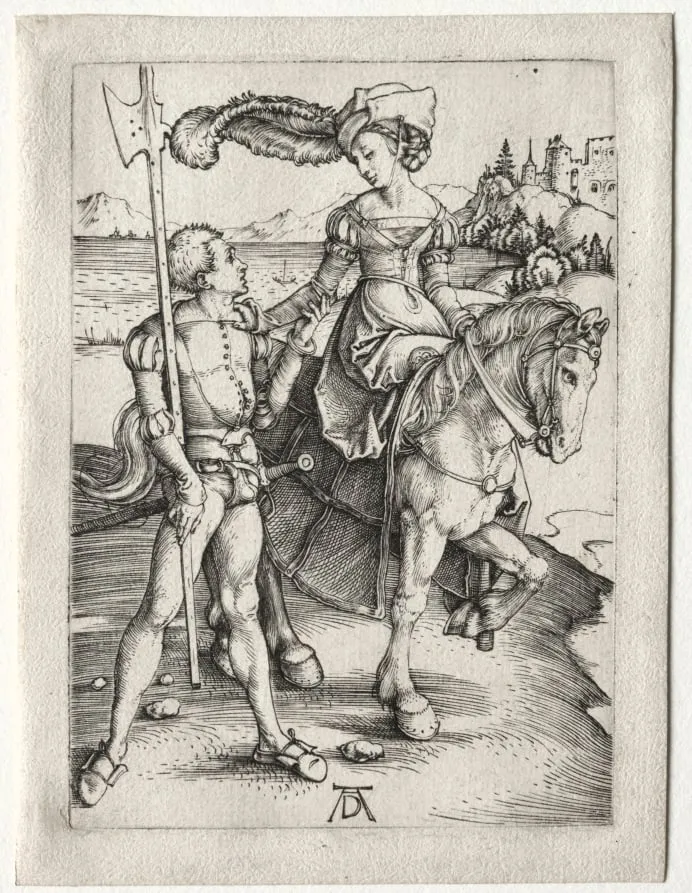
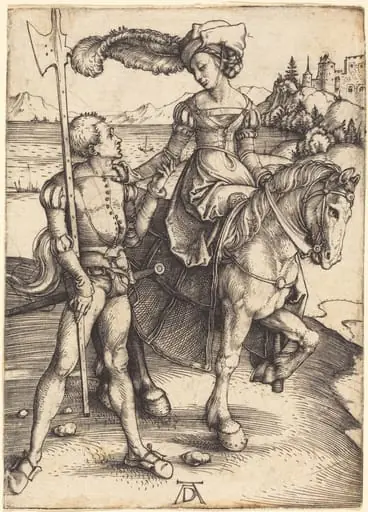
The Lady Riding and the Landsknecht is a print by the Renaissance artist Albrecht Dürer. It dates from 1497 and is held in the collection of the Cleveland Museum of Art. This small engraving depicts a noblewoman on horseback sharing a quiet farewell with a landsknecht soldier.
About this work
Overview
The woman’s elevated position and attire contrast with the soldier’s deferential posture, suggesting a power imbalance that favors her.
This small engraving depicts a noblewoman on horseback sharing a quiet farewell with a landsknecht soldier. Though framed as a romantic moment, the composition subtly inverts expected gendered dynamics. The woman’s elevated position and attire contrast with the soldier’s deferential posture, suggesting a power imbalance that favors her. The image invites closer scrutiny beyond surface-level courtly themes.
Subject & Meaning
The scene presents a farewell between two figures of differing social ranks, but its significance lies in the reversal of conventional authority. The woman, mounted and dressed in fine garments, occupies the dominant spatial and symbolic position. The soldier’s lowered gaze and offered hat signal submission, while her wearing his hat—a male military accessory—further destabilizes traditional gender roles within the relationship.
Technique & Style
Executed in fine, precise lines typical of early 16th-century engraving, the work demonstrates meticulous attention to texture and detail. The armor’s metallic sheen, the horse’s musculature, and the folds of the woman’s clothing are rendered with controlled precision. The composition uses vertical alignment to emphasize her dominance, while the soldier’s horizontal posture reinforces his subordinate stance.
History & Provenance
The print is attributed to Albrecht Dürer’s circle, likely produced in Nuremberg during the 1510s. It circulated among educated patrons familiar with humanist themes and visual satire. Its survival in multiple impressions suggests it was valued not merely as a decorative object but as a commentary on social and gendered hierarchies.
Context
In early 16th-century Germany, landsknechts were popular military figures, often romanticized in art and literature. Meanwhile, noblewomen occasionally exercised influence through patronage and marriage alliances. This print reflects contemporary anxieties and curiosities about shifting power structures, using visual irony to question who truly holds control in intimate relationships.
Legacy
The engraving stands as an early example of visual subversion in Northern Renaissance art, where social norms are examined through subtle symbolic gestures. It influenced later prints that explored gender roles through costume and posture. Its enduring interest lies in its quiet challenge to assumptions about authority, rendered without overt satire or moralizing.
Artist & collection
Artist
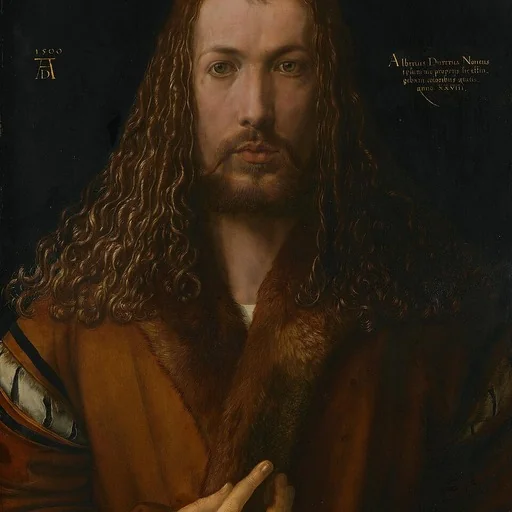
Albrecht Dürer spent his life in Nuremberg, a busy German city where artists traded prints like currency.

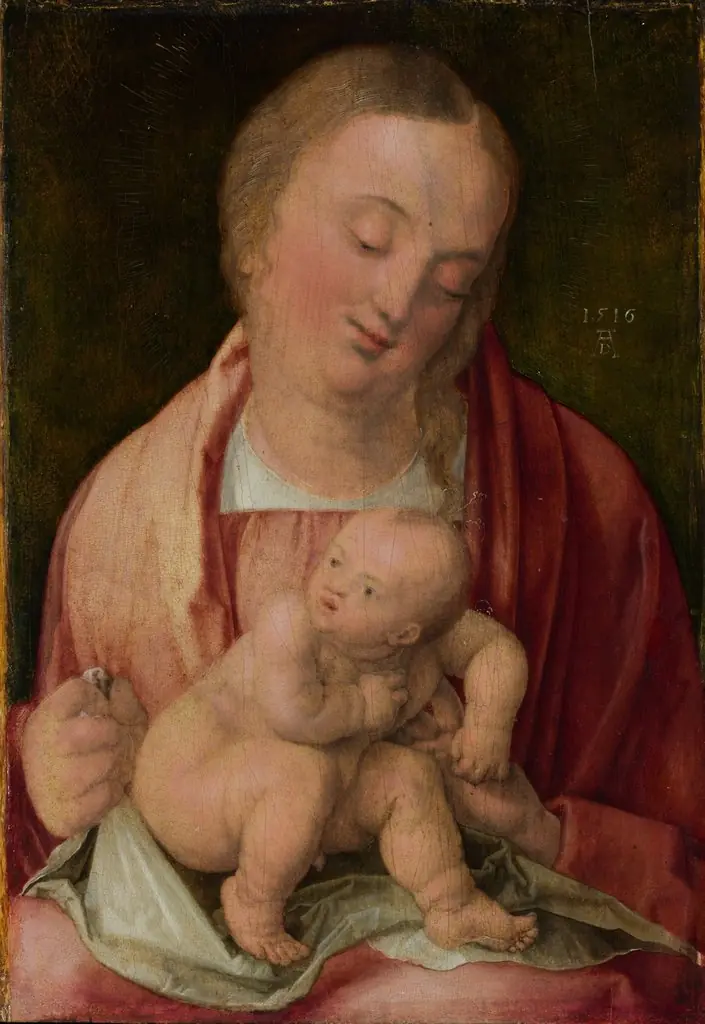
![Madonna and Child [obverse], by Albrecht Dürer](https://artifactworldgallery.com/img/albrecht-durer--madonna-and-child-obverse--d7b8ebf05d22ebe5-w320.webp)
![Lot and His Daughters [reverse], by Albrecht Dürer](https://artifactworldgallery.com/img/albrecht-durer--lot-and-his-daughters-reverse--b4ebf9b282faa17a-w320.webp)