Artwork
Satyr Family
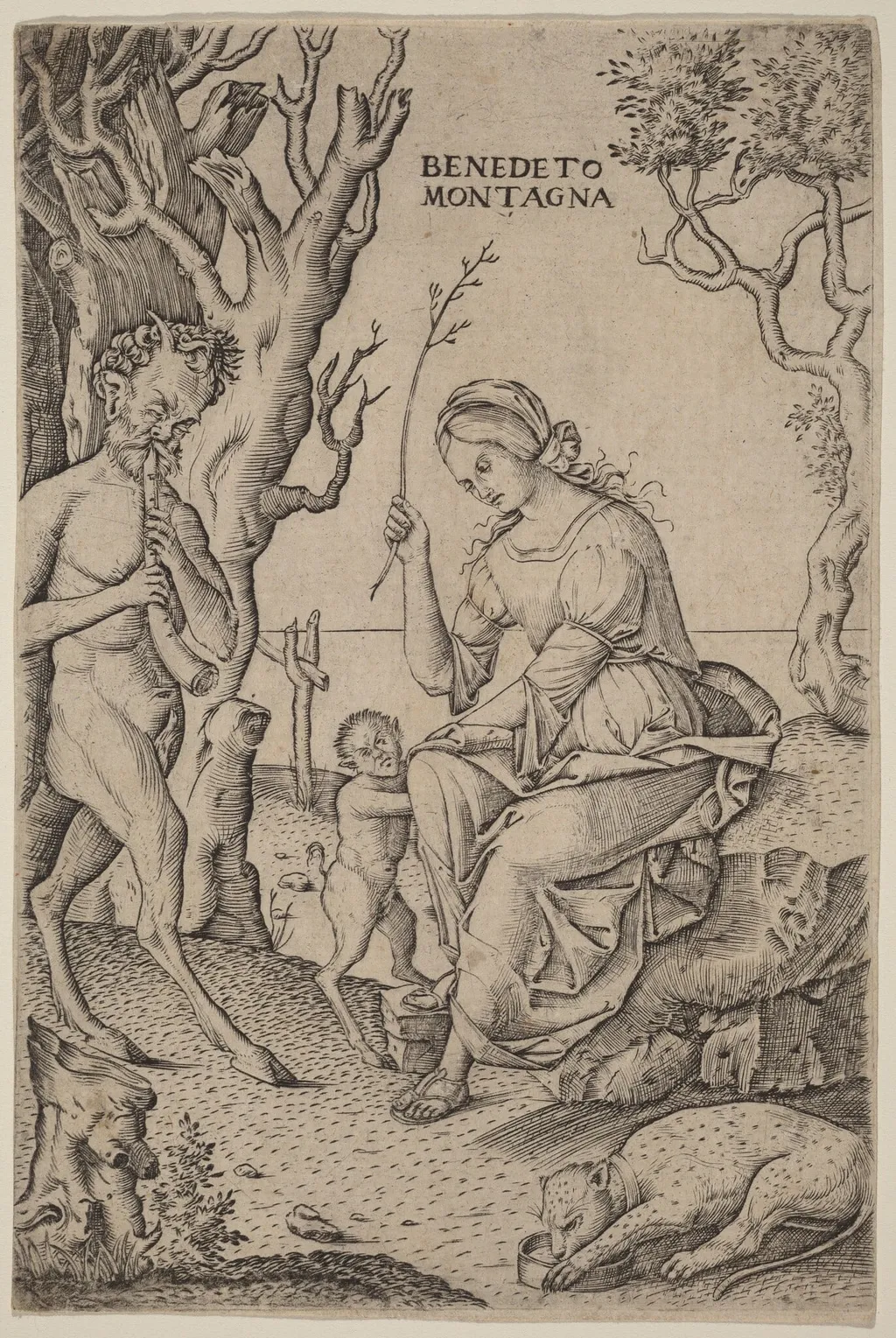
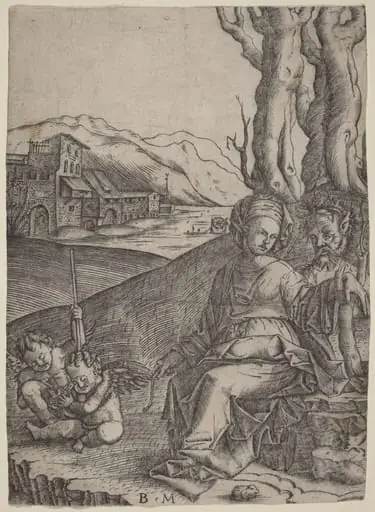
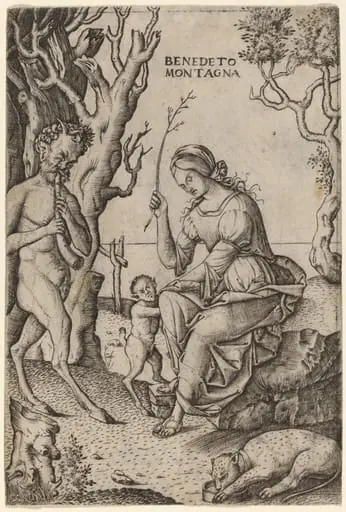
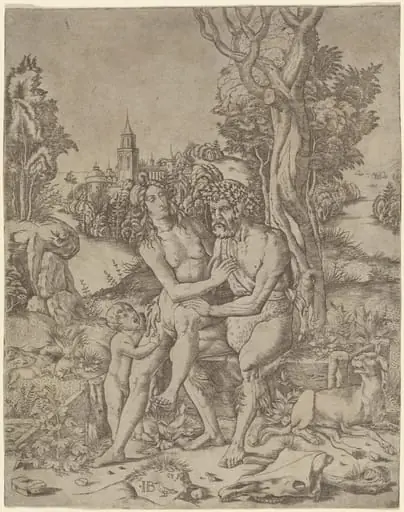
Satyr Family is an ink print by the Renaissance artist Benedetto Montagna. It dates from 1516 and is held in the collection of the National Gallery of Art.
About this work
Overview
Benedetto Montagna’s print *Satyr Family* is an early 16th‑century engraving, dated to around 1516. Executed on a metal plate, the image depicts a seated woman with a child, a horned male figure, and a goat amid a rocky, vegetated landscape. The work bears the artist’s full signature, confirming his authorship.
Subject & Meaning
The composition presents a mythological scene: a woman cradling an infant, a satyr leaning against a twisted tree, and a goat nearby. The inclusion of the horned figure and pastoral elements suggests a reference to classical tales of rustic deities and fertility, typical of Renaissance interest in antiquity.
Technique & Style
Montagna employed the traditional engraving process, incising lines into a copper plate with a burin. The fine hatching and cross‑hatching render texture in the rock, foliage, and drapery, while the crisp outlines define the figures. The style reflects the detailed, linear approach characteristic of Venetian printmaking in the early 1500s.
History & Provenance
Born and trained in Vicenza under his father, painter Bartolomeo Montagna, Benedetto produced roughly fifty‑three engravings between 1500 and 1523. *Satyr Family* belongs to the middle of this productive period, before he assumed control of his father’s workshop in 1523. Contemporary records indicate the print circulated widely in northern Italy during his lifetime.
Context
The print emerges from a Venetian artistic environment that favored mythological subjects and meticulous print techniques. Engravings served both as artistic expressions and as means of disseminating popular classical themes to a broader audience, complementing the era’s painted works.
Artist & collection

Artist
Benedetto Montagna (c. 1480–1555/58) was an Italian engraver and painter. Montagna was born in Vicenza, the son of the leading painter of the city, Bartolomeo Montagna, with whom he trained and perhaps continued to…