Artwork
Untitled
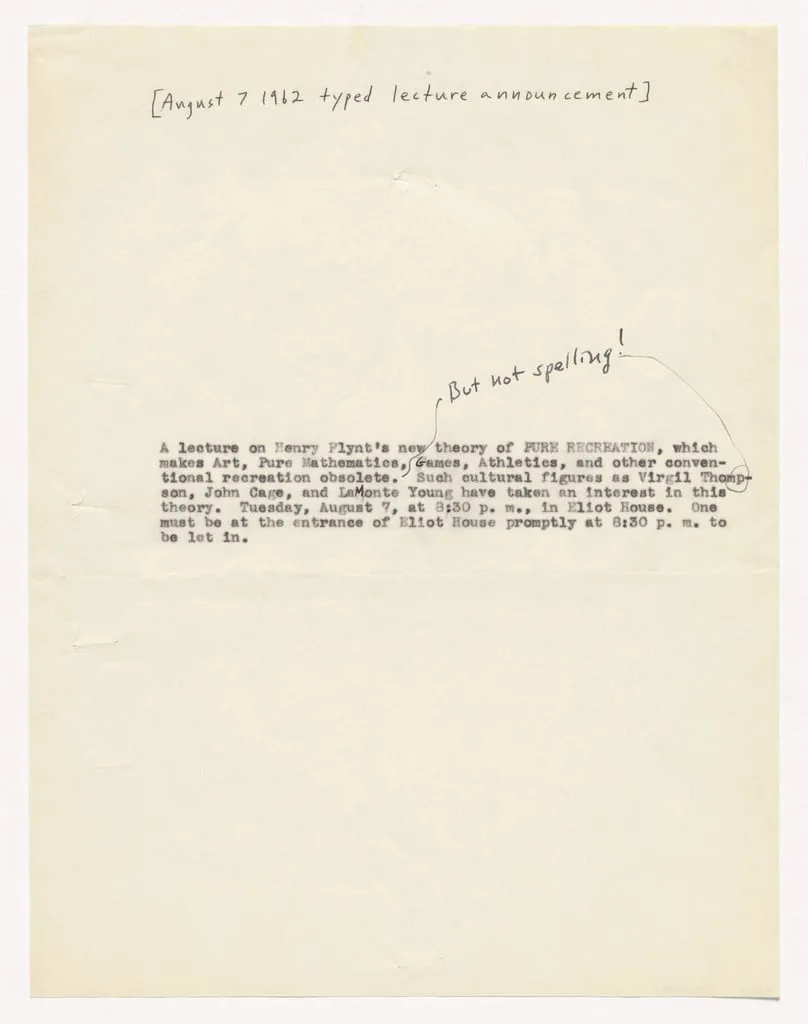
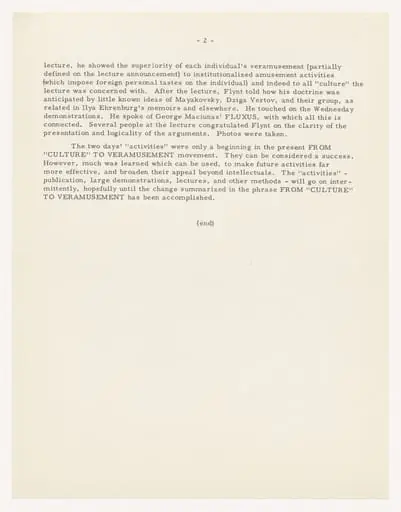
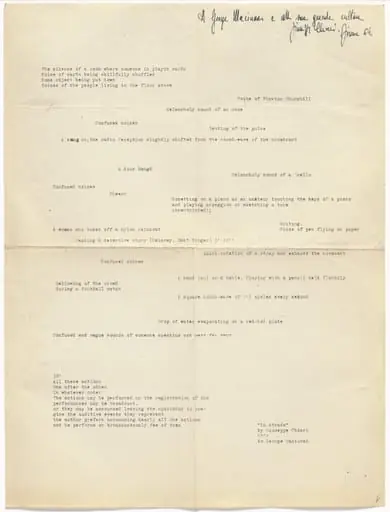
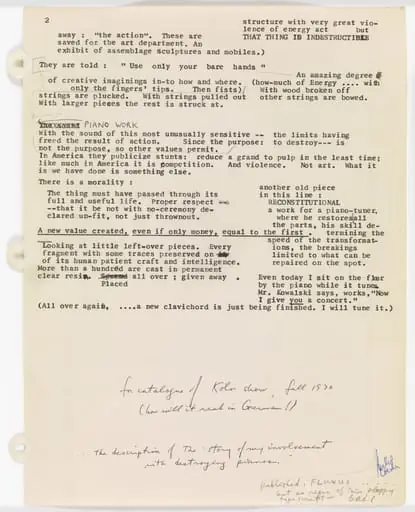
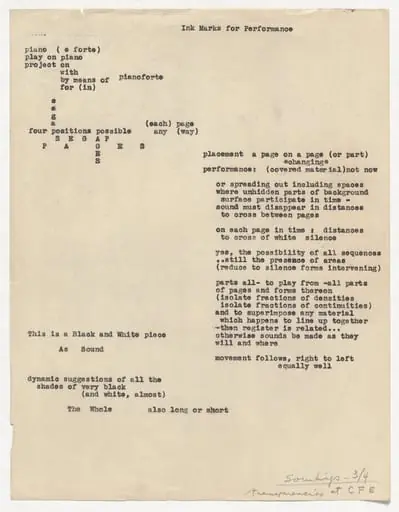
Untitled is an ink drawing by Henry Flynt. It dates from 1962 and is held in the collection of the Museum of Modern Art.
About this work
The main text is a lecture announcement for something called "PURE RECREATION," dated August 7, 1962.
This is a typed sheet of paper with handwritten notes. The main text is a lecture announcement for something called "PURE RECREATION," dated August 7, 1962. The handwriting adds a note: *"But not spelling!"* with a circle around it.
The lecture sounds like it challenges how we think about art, math, and games. The handwritten note might hint at a playful or deliberate mistake.
Look up Henry Flynt to see how his ideas shaped art in unexpected ways.
Overview
Created in 1962, this drawing by Henry Flynt combines typed text with handwritten annotations on paper. It uses typewriting, ink, and ballpoint pen to layer institutional formality with personal intervention. The work is held in the collection of The Museum of Modern Art and exemplifies Flynt’s interest in disrupting conventional modes of communication within art and intellectual discourse.
Subject & Meaning
The typed portion announces a lecture titled 'PURE RECREATION,' scheduled for August 7, 1962, suggesting an exploration of art, mathematics, and play as interconnected systems. The handwritten addition—'But not spelling!'—encircled for emphasis—introduces a deliberate deviation from linguistic norms. This gesture questions authority in language and implies that meaning can be destabilized through intentional error.
Technique & Style
Flynt juxtaposes the mechanical precision of typewriting with the irregularity of handwritten marks. The carbon and ink layers create visual texture, while the ballpoint pen adds immediacy. The contrast between standardized typography and spontaneous annotation reflects a conceptual interest in the tension between institutional structure and individual expression.
History & Provenance
The work was produced during Flynt’s early period in New York, when he was developing ideas that would later influence conceptual and avant-garde practices. It entered The Museum of Modern Art’s collection as part of a broader recognition of his role in challenging artistic boundaries. Its preservation underscores its significance as a document of experimental thought in the early 1960s.
Context
Emerging alongside Fluxus and early conceptual art, Flynt’s work responded to a cultural moment eager to dissolve hierarchies between art, philosophy, and everyday life. 'PURE RECREATION' aligns with contemporaneous efforts to redefine creativity beyond traditional aesthetics, positioning language and logic as malleable systems open to subversion.
Legacy
Flynt’s use of textual disruption anticipated later conceptual practices that treated language as material. The handwritten correction, seemingly minor, became a model for questioning institutional authority in art. His work, though less widely known, contributed to a lineage of artists who treated the page as a site for intellectual play and critical inquiry.
Artist & collection