Artwork
Disembarkation of the Royalists of Toulon at Southampton, 1794
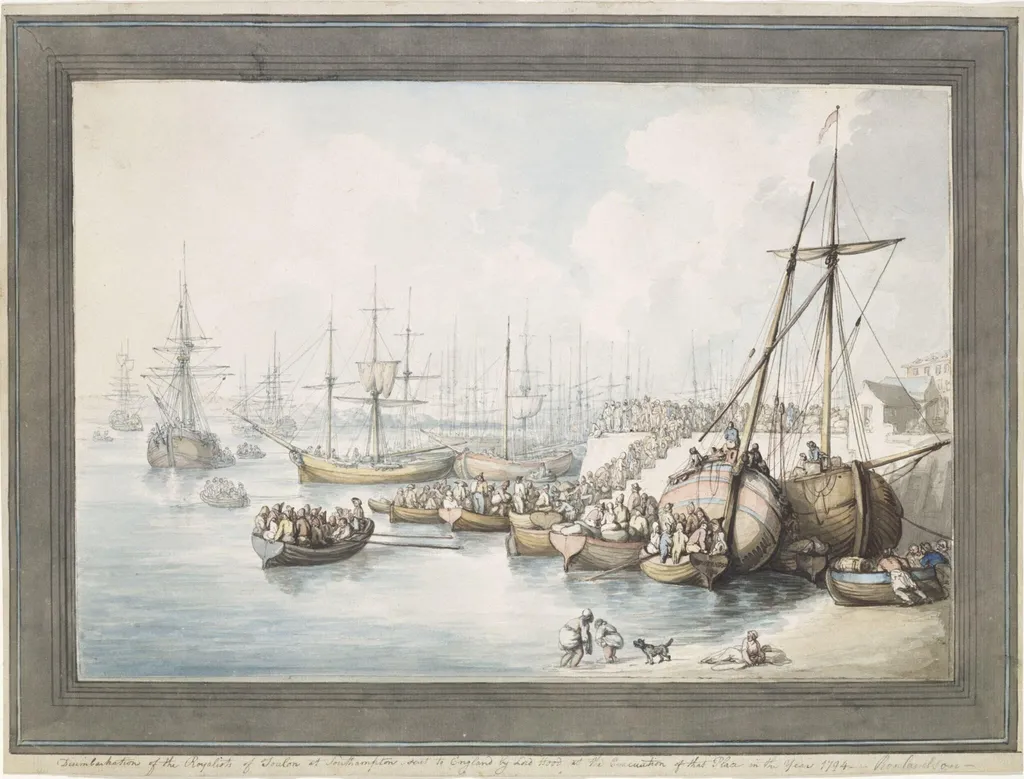
Disembarkation of the Royalists of Toulon at Southampton, 1794 is a watercolor work on paper by the Romanticist artist Thomas Rowlandson. It dates from 1794 and is held in the collection of the Victoria and Albert Museum.
About this work
Overview
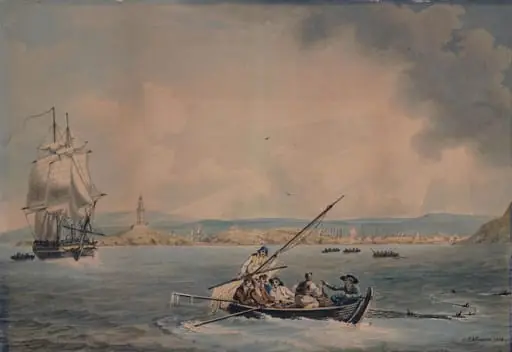
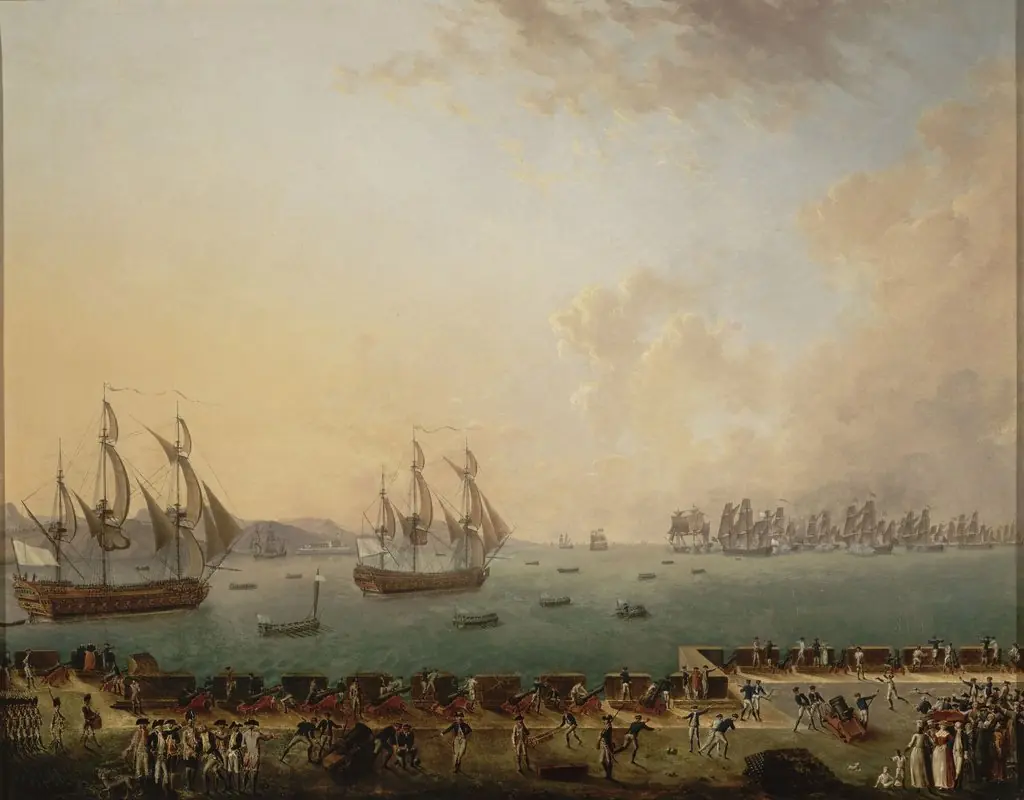
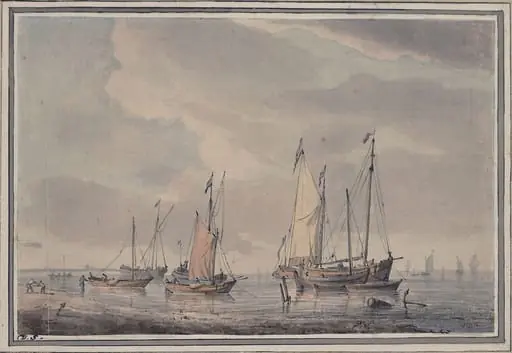
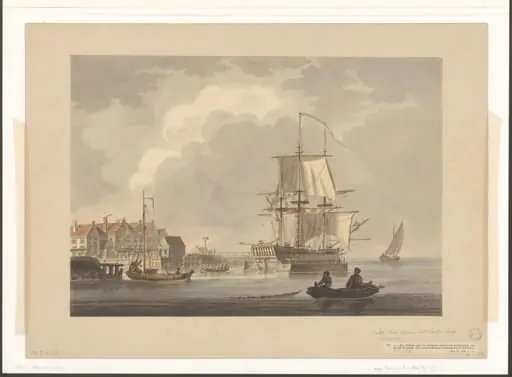
Painted in 1794 by Thomas Rowlandson, this watercolour captures the arrival of Royalist refugees from Toulon at Southampton Harbour. Signed and dated by the artist, the work is a precise record of a moment during the French Revolutionary Wars. Its small scale and delicate medium contrast with the density of its composition, conveying both intimacy and historical weight.
Subject & Meaning
Figures in rowboats and on shore suggest exhaustion and uncertainty, their expressions subtly rendered to reflect personal turmoil amid mass migration.
The scene illustrates the displacement of French Royalists who fled Toulon after its recapture by Republican forces. Figures in rowboats and on shore suggest exhaustion and uncertainty, their expressions subtly rendered to reflect personal turmoil amid mass migration. The presence of a dog and a figure aiding another introduces quiet human gestures, grounding the political event in private vulnerability.
Technique & Style
Rowlandson employed fine brushwork and translucent washes to render the harbor’s activity with clarity and nuance. The watercolour’s lightness allows layered details—faces in boats, folds of clothing, ripple patterns—to emerge without heaviness. His attention to scale and crowd dynamics creates a sense of lived space, balancing documentary precision with observational empathy.
History & Provenance
Created shortly after the event, the work likely served as a contemporary record for British audiences familiar with the Royalist cause. Its survival with the artist’s signature and inscribed title suggests it was intended as a finished piece, not a sketch. No record of early ownership is known, but its preservation indicates recognition of its historical value.
Context
The painting reflects Britain’s role as a haven for French émigrés during the Revolution. Southampton, a key port, became a point of entry for thousands fleeing political violence. Rowlandson’s depiction aligns with broader British public interest in the plight of Royalists, though it avoids overt propaganda, focusing instead on the human condition of displacement.
Legacy
Though not widely exhibited today, the work remains a significant example of Rowlandson’s ability to merge social observation with topographical detail. It contributes to the understanding of how British artists documented refugee movements during the Revolutionary era, offering a quiet counterpoint to more dramatic historical narratives of the time.
Artist & collection
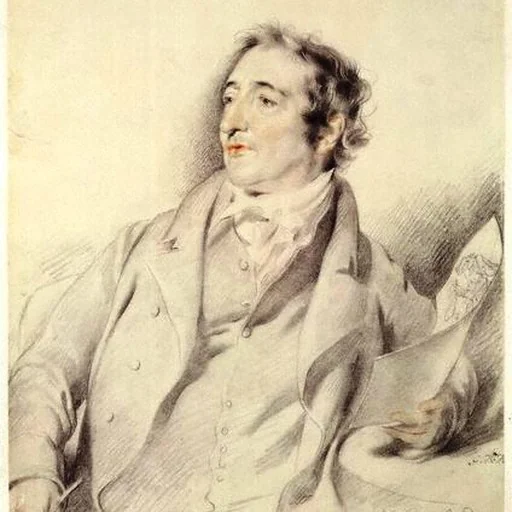
Artist
Thomas Rowlandson (; 13 July 1757 – 21 April 1827) was an English artist and caricaturist of the Georgian Era, noted for his political satire and social observation.