Artwork
Faust
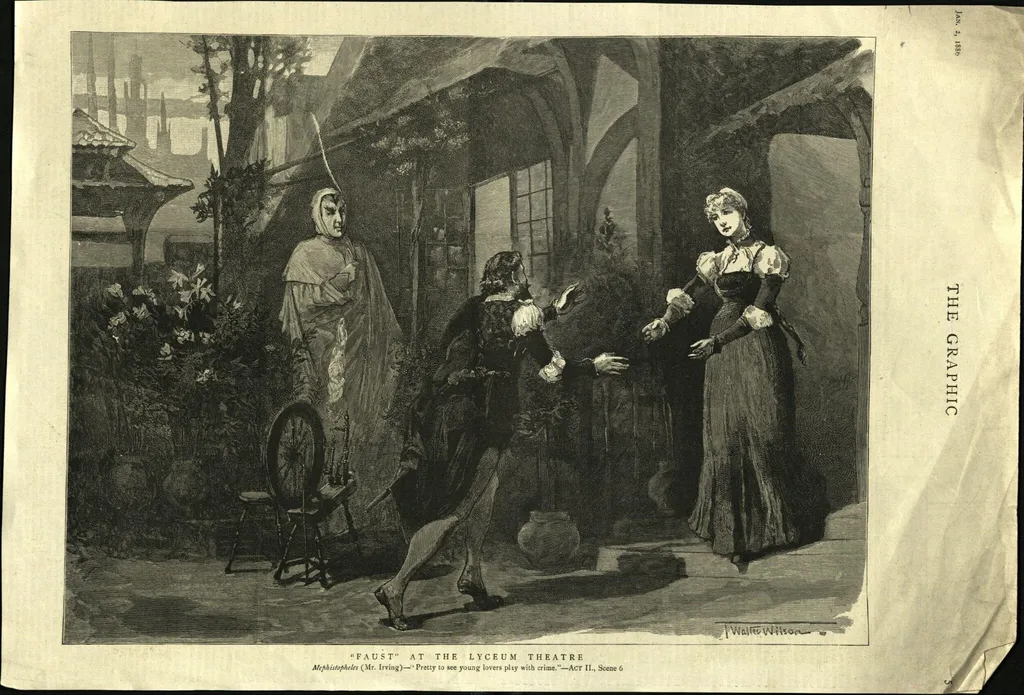
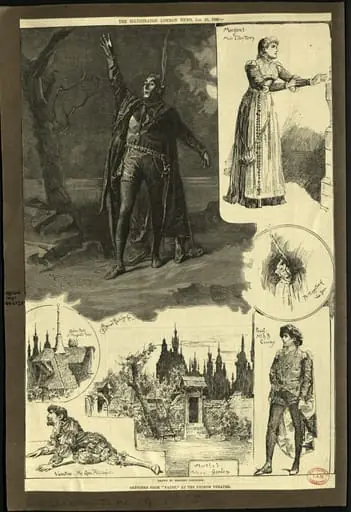
Faust is a print by the Impressionist artist Walter Wilson. It dates from 1886 and is held in the collection of the Victoria and Albert Museum.
About this work
Overview
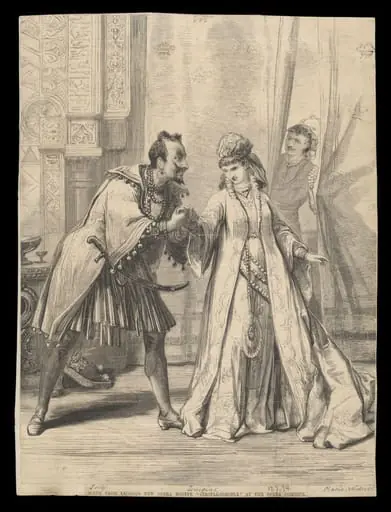
Walter Wilson’s print depicts a scene from Act II, Scene 6 of Goethe’s *Faust* as it was staged at London’s Lyceum Theatre in the mid‑1880s. The image records a moment on the footlights, with the principal actors positioned in their roles, offering a visual record of a celebrated Victorian theatrical production.
Subject & Meaning
The tableau captures the dramatic confrontation between Margaret and Mephistopheles, central figures in the tragic narrative of *Faust*. By freezing this exchange, the print emphasizes the moral tension and emotional intensity that defined the play’s climax, reflecting contemporary Victorian interest in moral conflict and supernatural intrigue.
Technique & Style
Executed as a black‑and‑white print, Wilson employed line work and shading to convey depth on the stage and the distinct costumes of the performers. The composition balances foreground figures with architectural elements of the Lyceum set, creating a sense of theatrical space while preserving the immediacy of a live performance.
History & Provenance
The print was produced between 1885 and 1888, coinciding with the three‑year run of the production at the Lyceum. It entered the collection of the Victoria and Albert Museum, where it remains part of the museum’s holdings on 19th‑century theatre ephemera.
Context
The Lyceum staging featured Ellen Terry as Margaret, Henry Irving as Mephistopheles, and George Alexander as Faust. Irving’s portrayal contributed to his reputation as an actor‑manager, while Alexander’s involvement marked his emergence into mainstream theatrical circles. The production’s popularity kept the Lyceum consistently full during its multi‑year engagement.
Artist & collection
Artist
Walter Wilson made prints in the 1880s. In 1885–1888 he turned Goethe’s *Faust* into a series of etchings—dark, scratchy images that follow the scholar’s bargain with Mephistopheles. His lines feel rough, almost like…

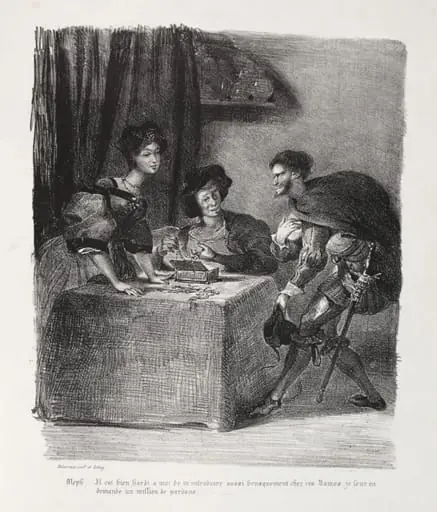
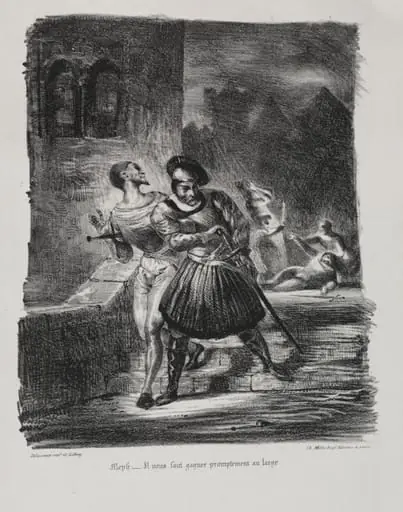 Illustrations for Faust: Méphistophélés and Faust flee after the duel
 H Beard Print Collection
 H Beard Print Collection
 H Beard Print Collection
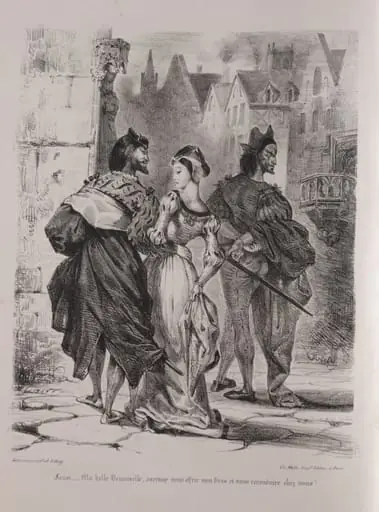 Illustrations for Faust: Faust seeks to allure Marguerite
 H Beard Print Collection
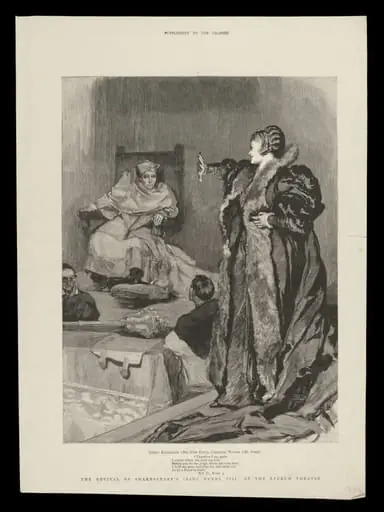
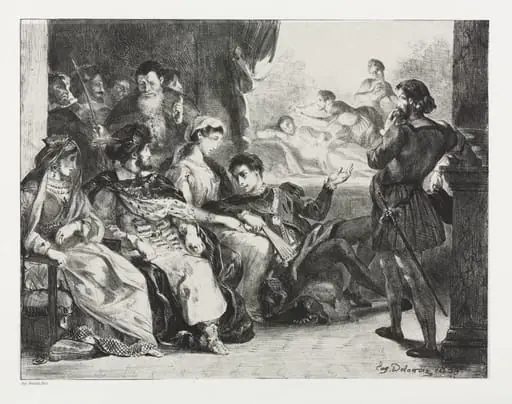 Hamlet: Hamlet Commands the Actors to do a Scene from the Poisoning of his Father