Artwork
Saint Jerome
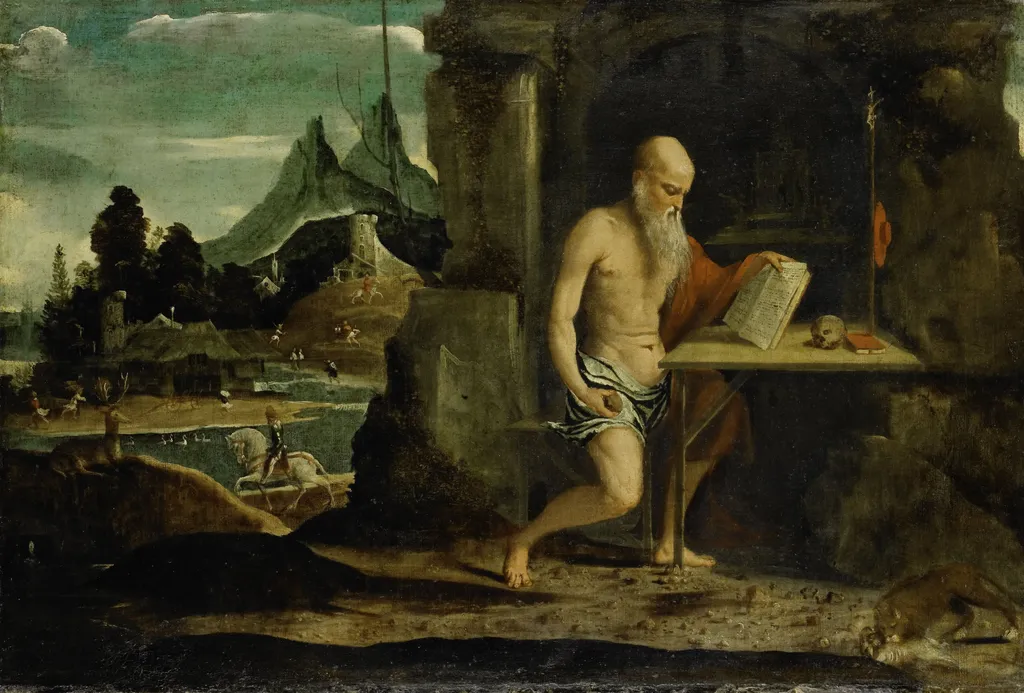
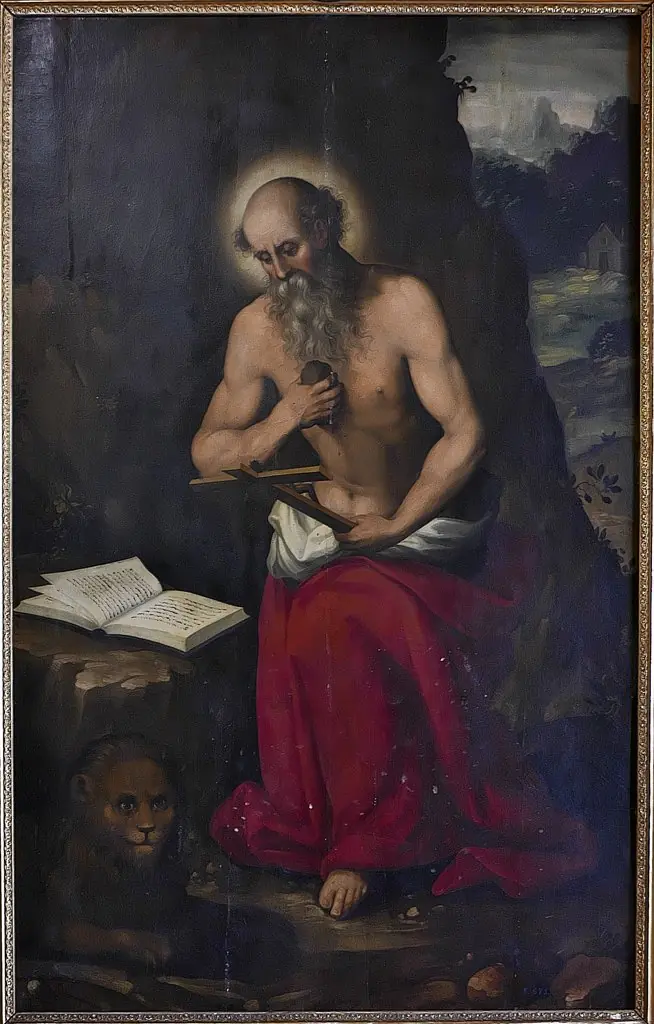
Saint Jerome is an oil painting by Bernardino da Asola. It dates from 1510 and is held in the collection of the Rijksmuseum.
About this work
Overview
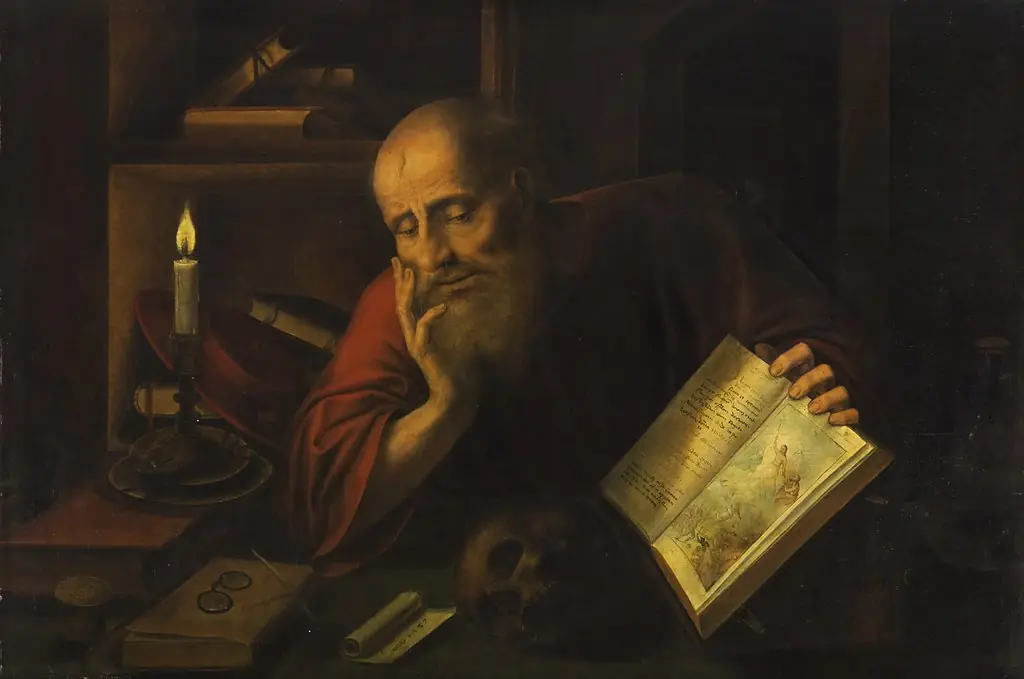
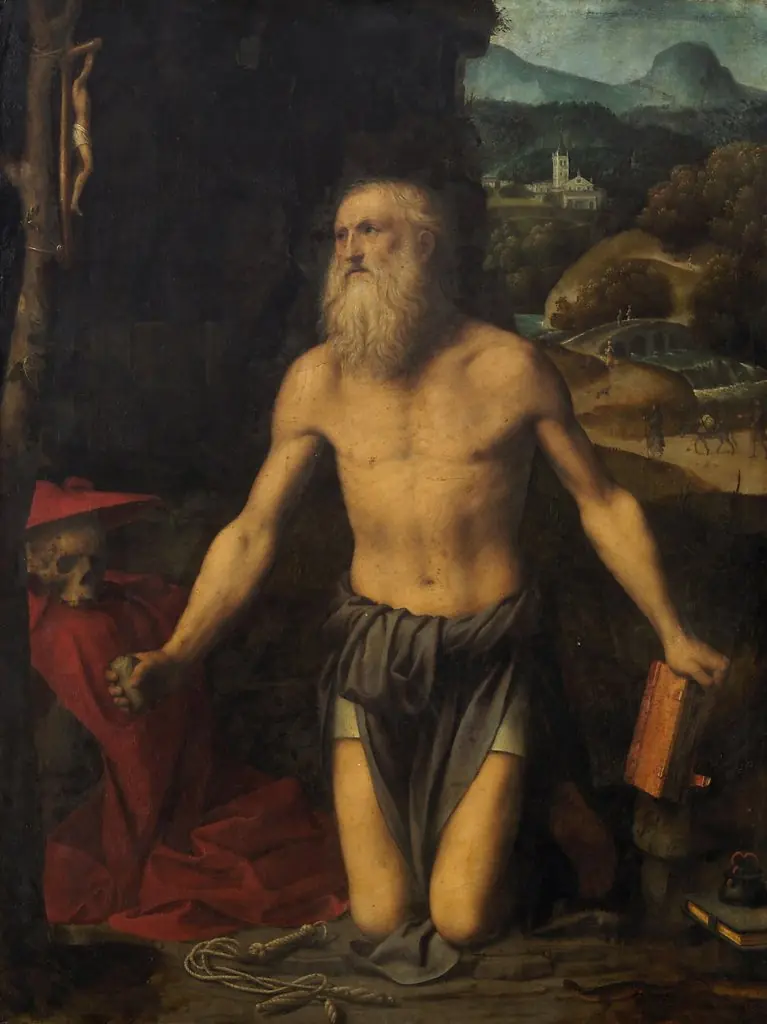
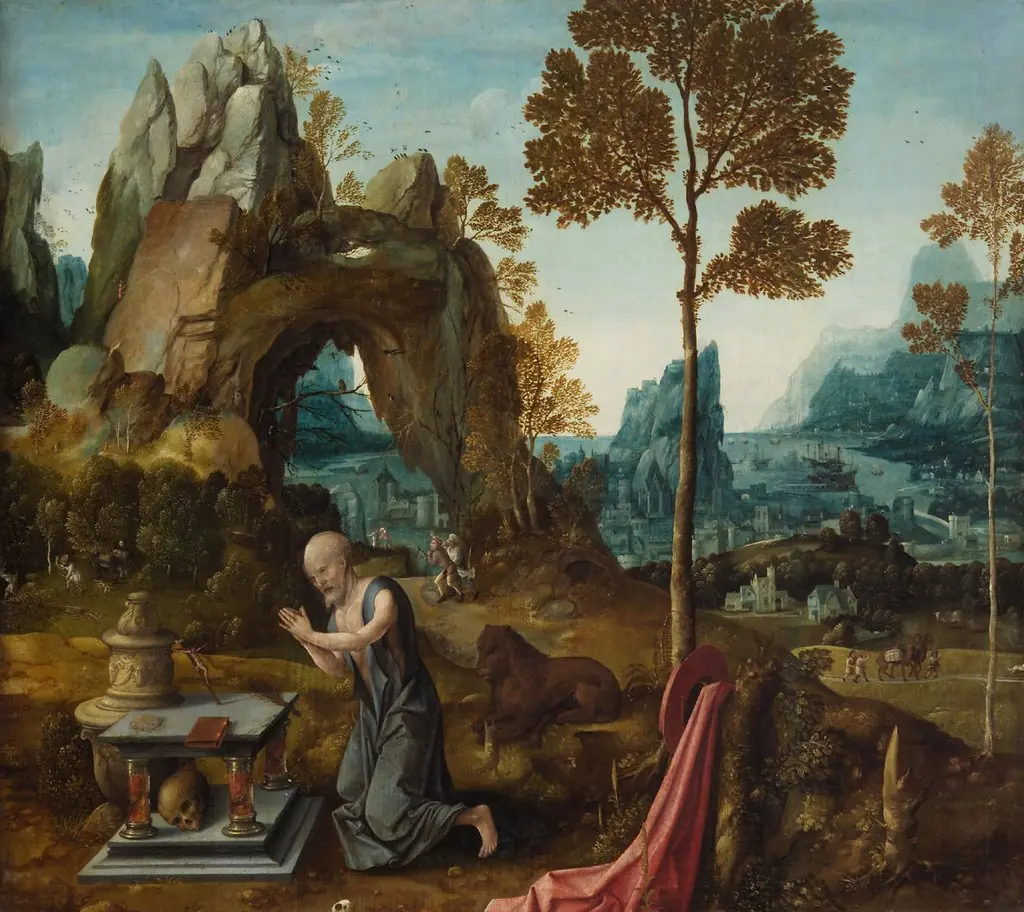
Bernardino da Asola’s oil painting Saint Jerome, executed around 1510, presents the venerable Church Father in a modest interior. The work is part of the Rijksmuseum’s collection and measures a modest size, allowing close inspection of its detailed composition and subdued palette.
Subject & Meaning
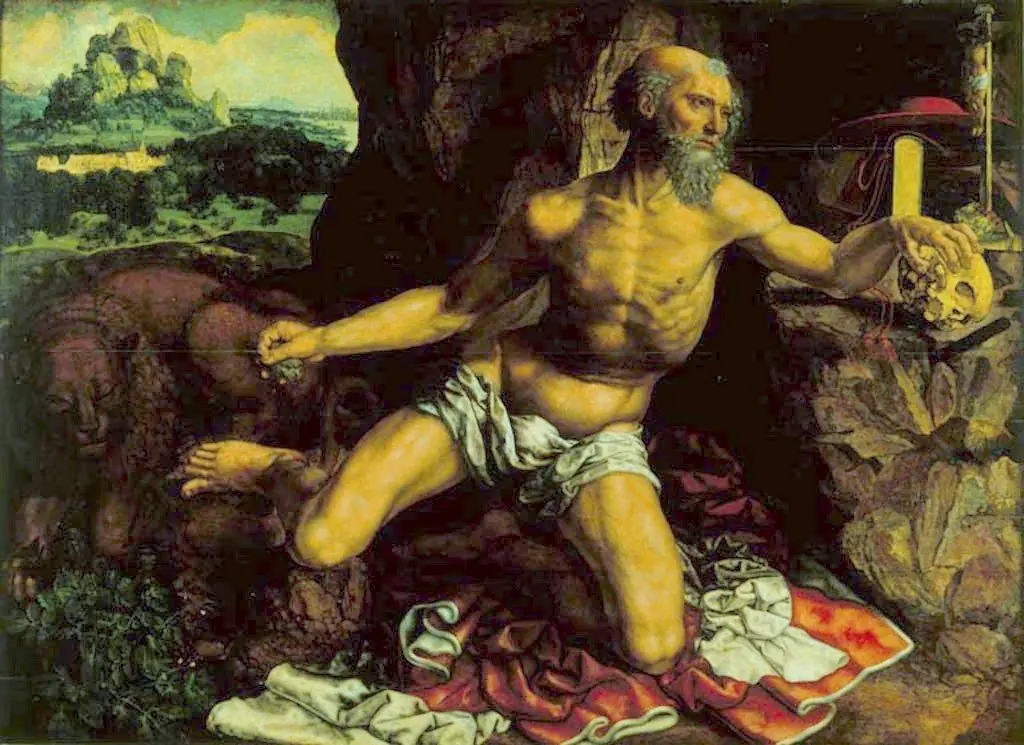
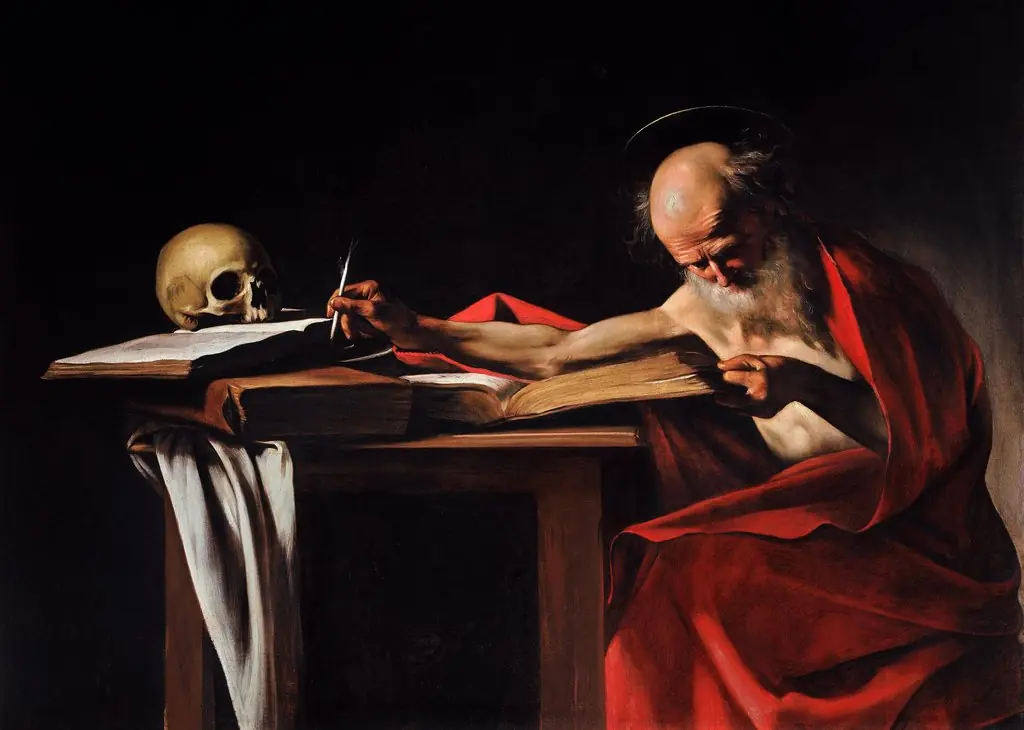
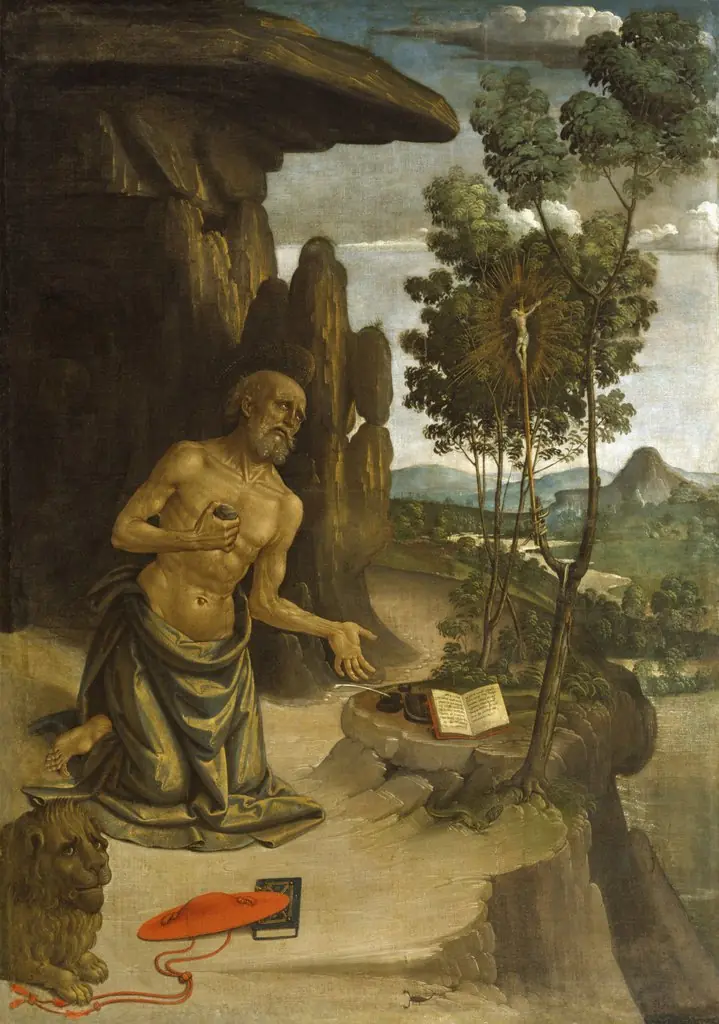
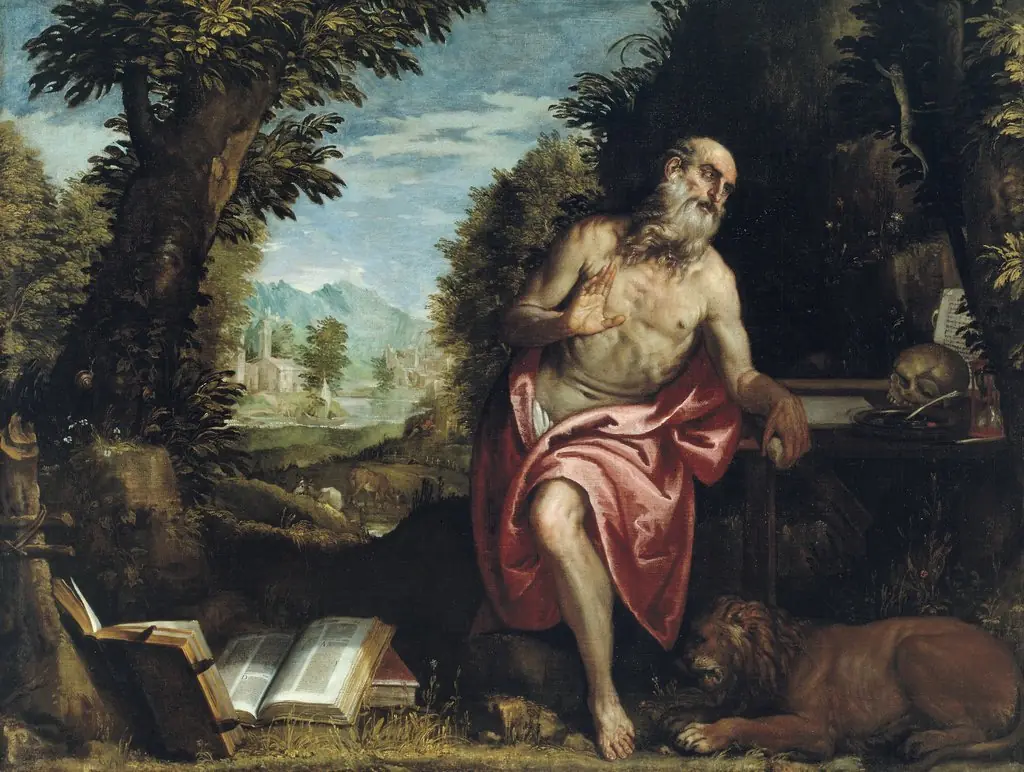
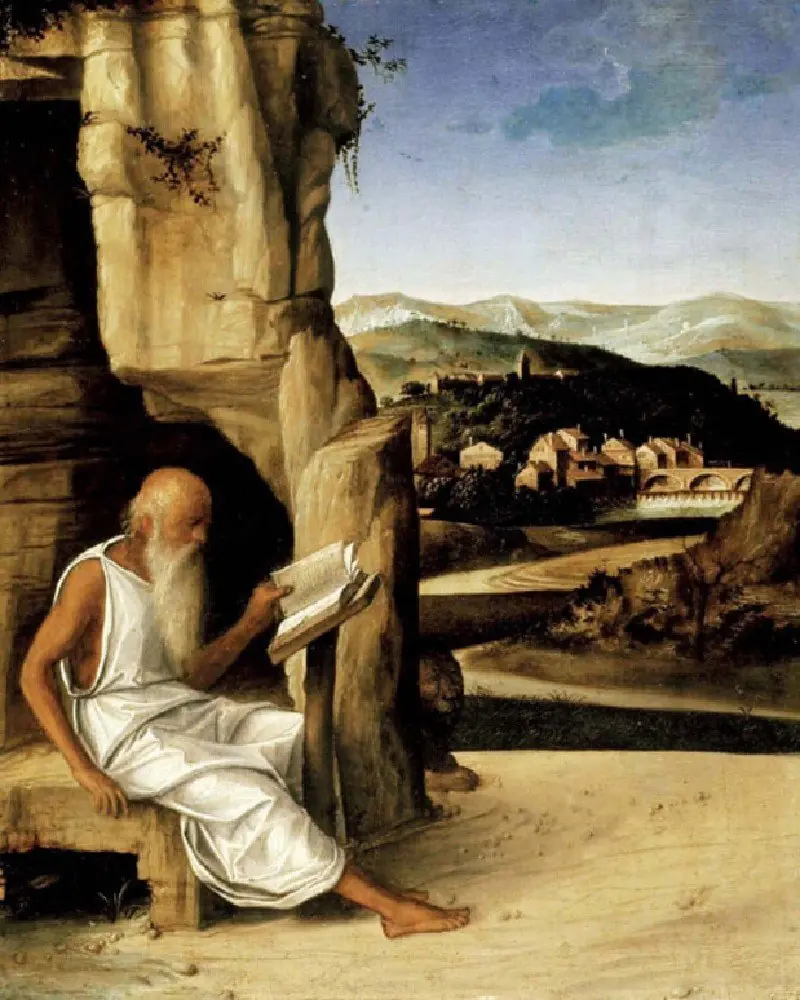
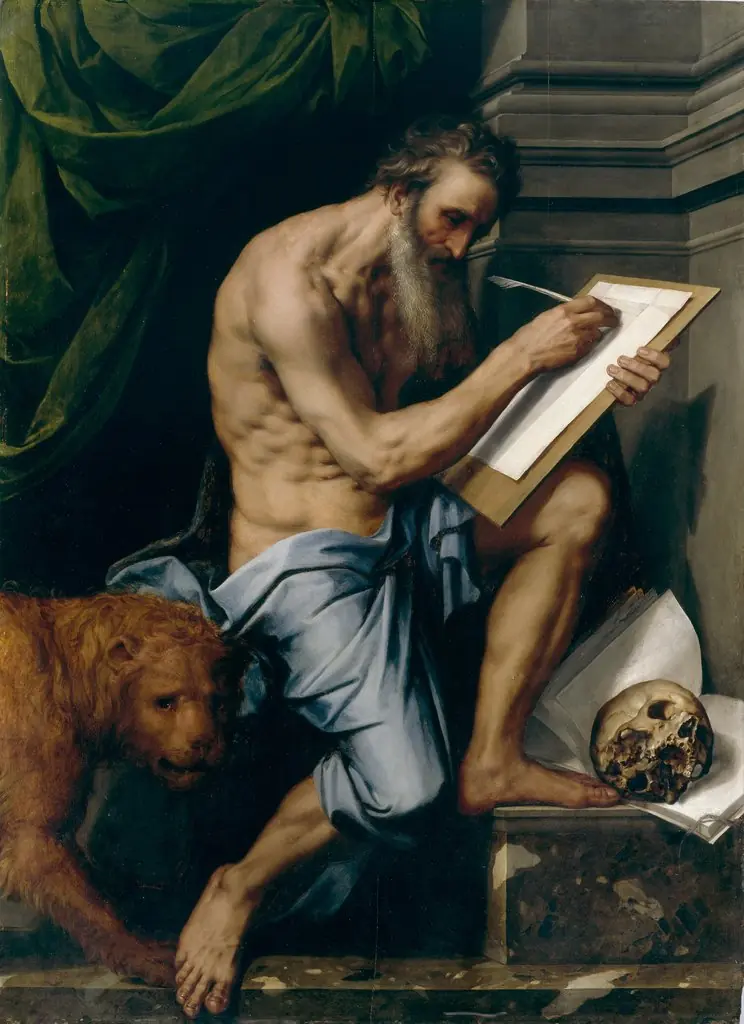
The figure is an aged man with a flowing white beard, seated barefoot on a stone floor, absorbed in a book. A skull rests on the nearby table, a traditional memento mori reminding viewers of mortality, while the surrounding objects suggest scholarly contemplation and ascetic devotion.
Technique & Style
Da Asola employs chiaroscuro, contrasting illuminated surfaces with deep shadows to give the scene a tangible three‑dimensionality. The red robe and muted background are rendered with careful modeling, and the subtle gradations of light enhance the texture of the stone floor and the reflective quality of the skull.
History & Provenance
Created in the early sixteenth century, the painting entered the Rijksmuseum’s holdings through acquisition in the twentieth century, though earlier ownership records remain sparse. Its attribution to Bernardino da Asola has been affirmed by stylistic comparison with his documented works.
Context
The composition reflects the Renaissance interest in combining devotional portraiture with symbolic elements. By placing Saint Jerome in a domestic setting with a view of a distant village, ships, and rolling hills, the artist links the hermit’s scholarly pursuits to the broader world beyond the cloister.
Own this work as a print
Artist & collection