Artwork
Saint Jerome
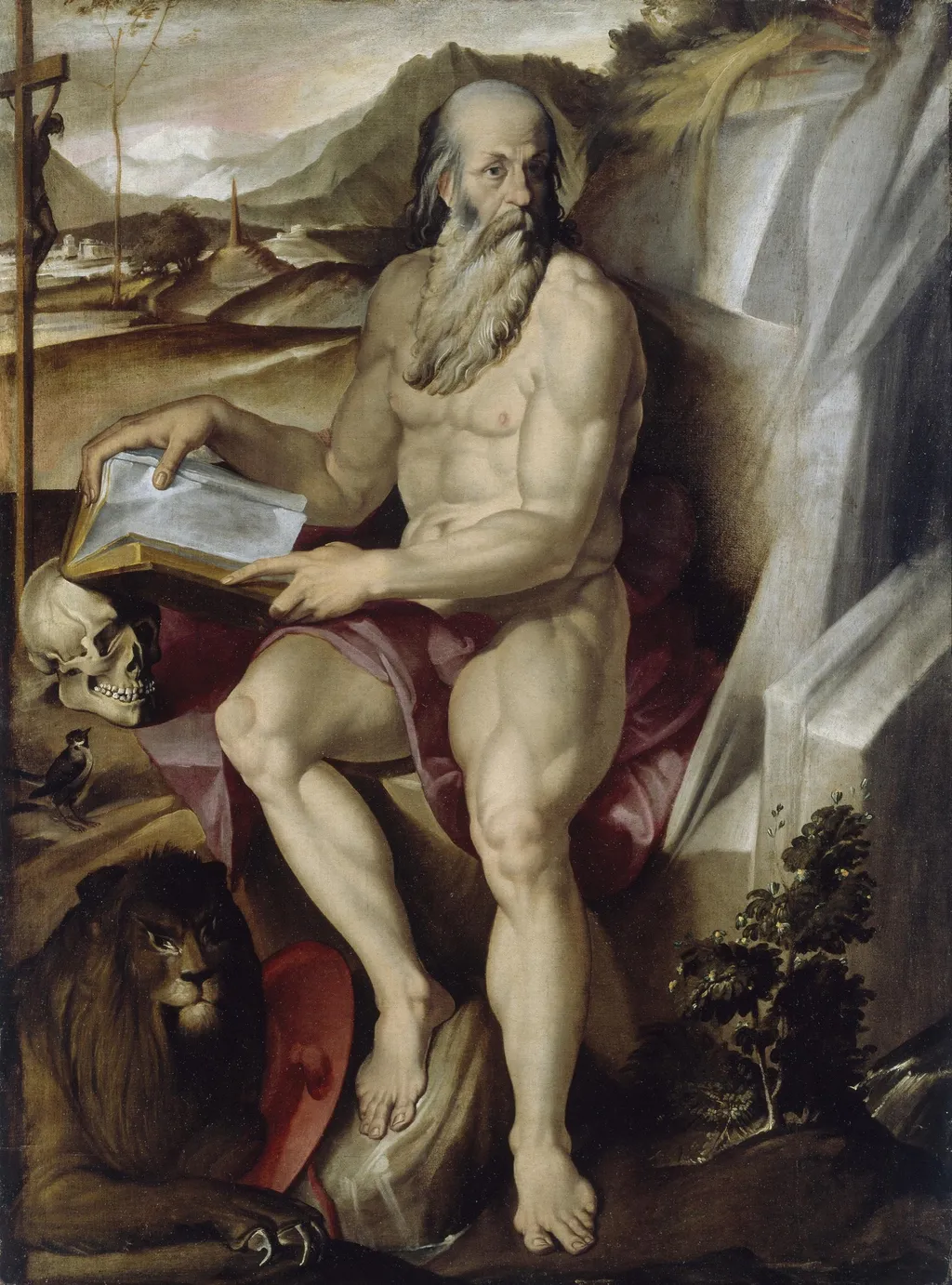
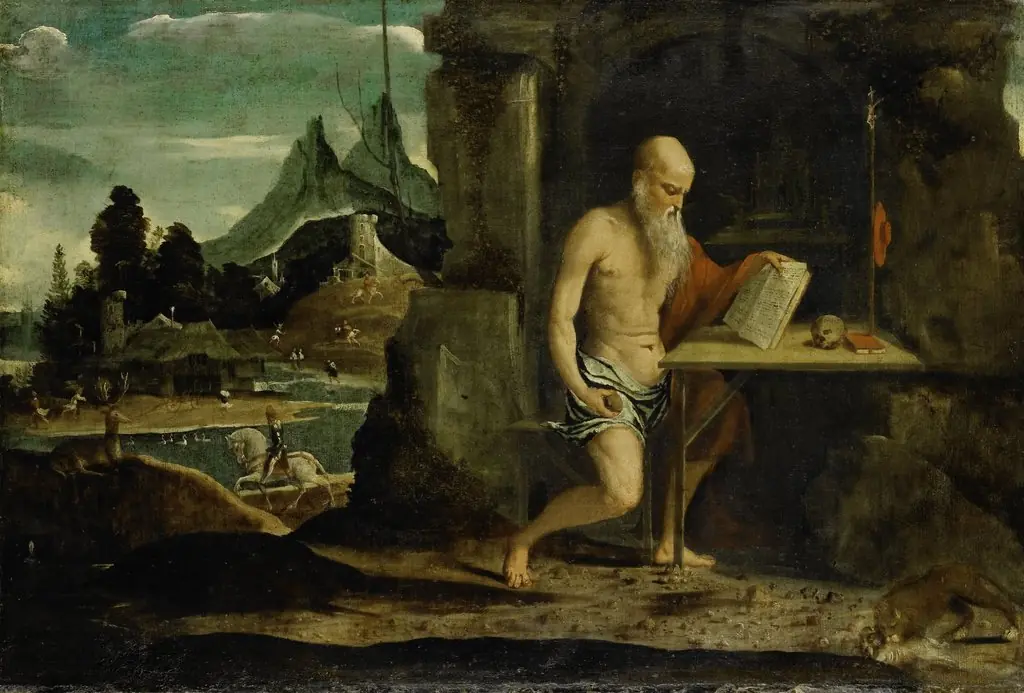
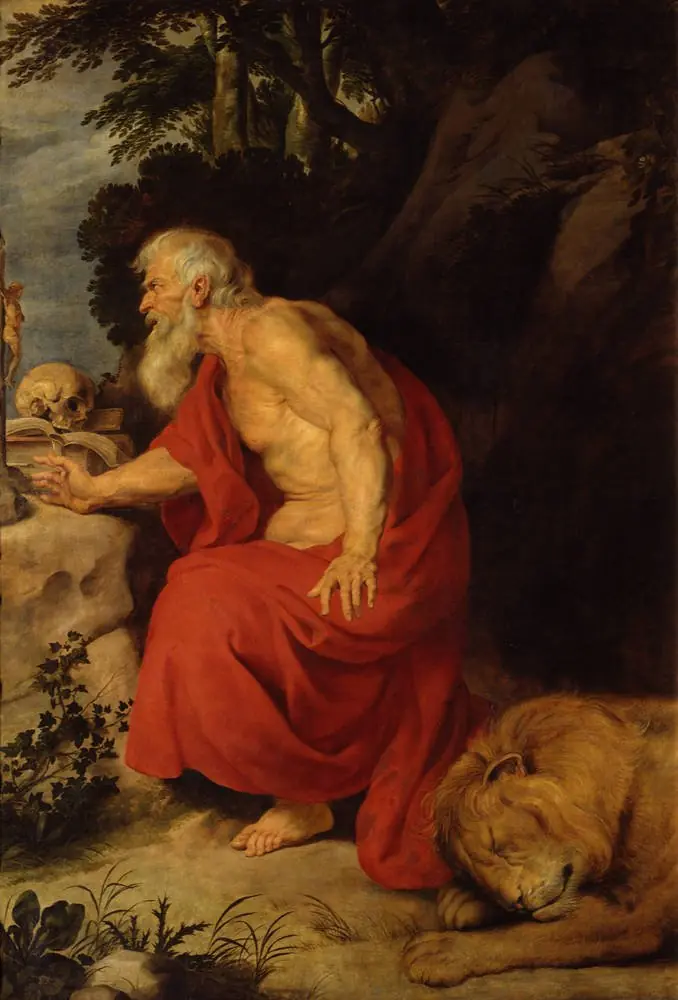
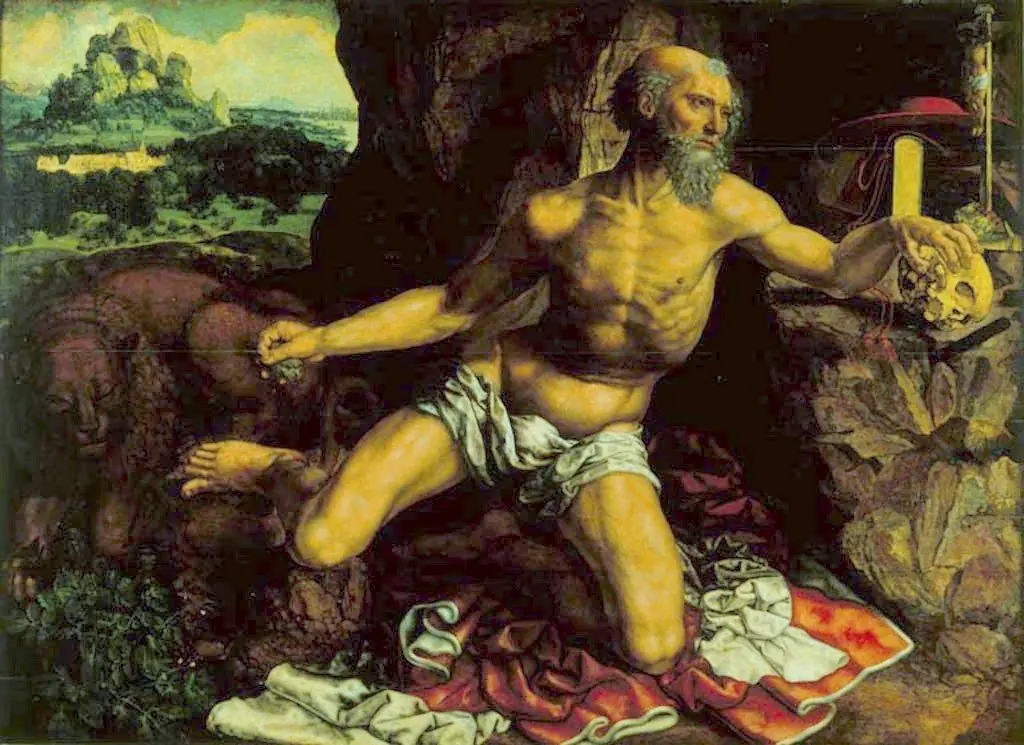
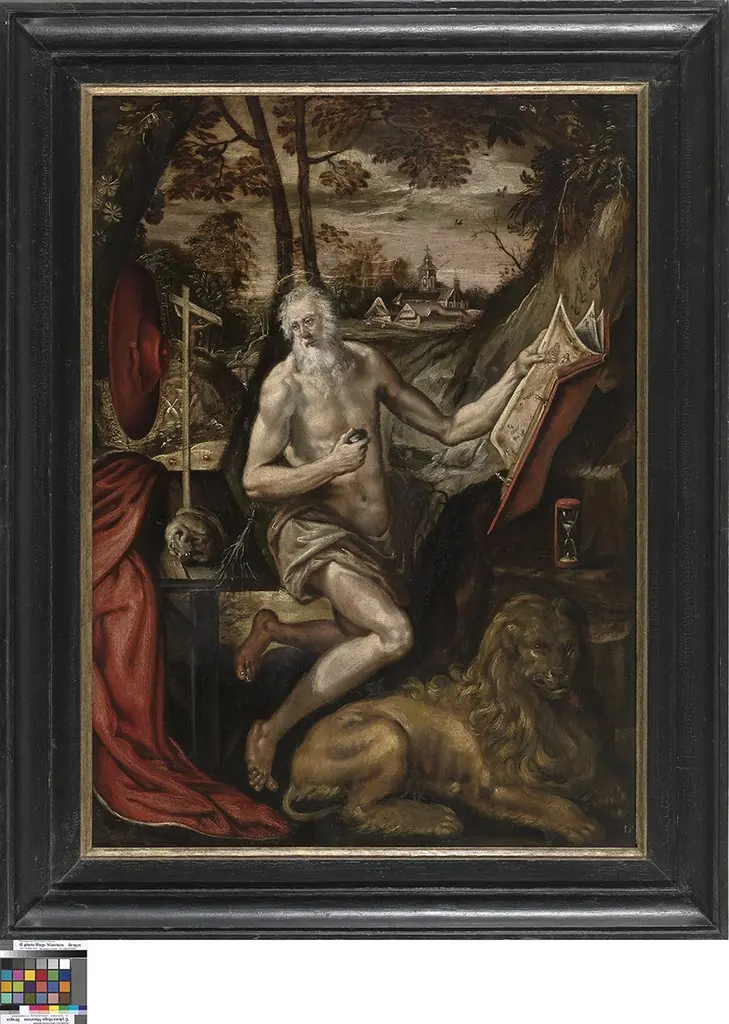
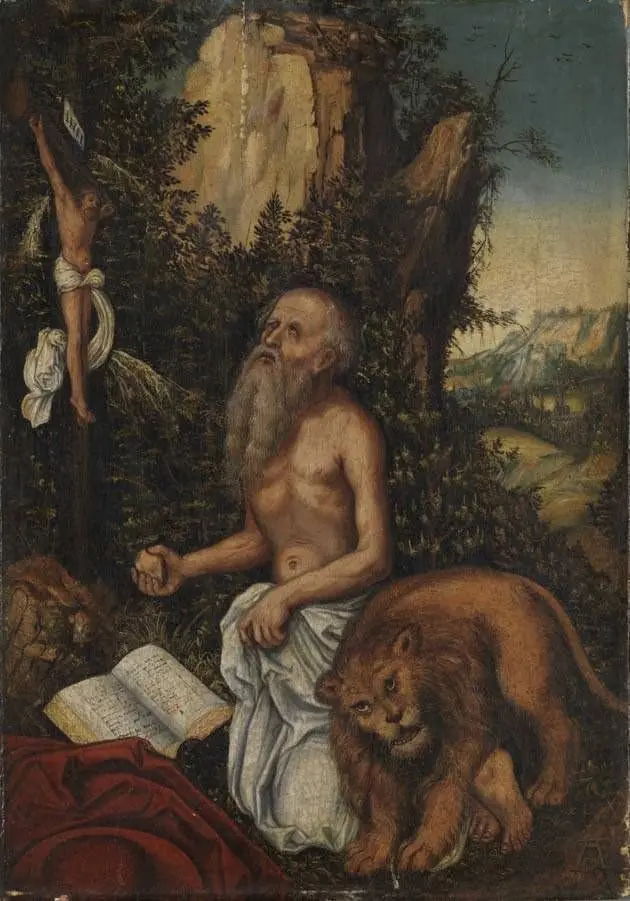
Saint Jerome is an oil painting by the Mannerist artist Bartolomeo Passarotti. It dates from 1550 and is held in the collection of the National Gallery of Ireland. Created circa 1550, this oil painting portrays a solitary, elderly figure seated on a rocky ledge.
About this work
Overview
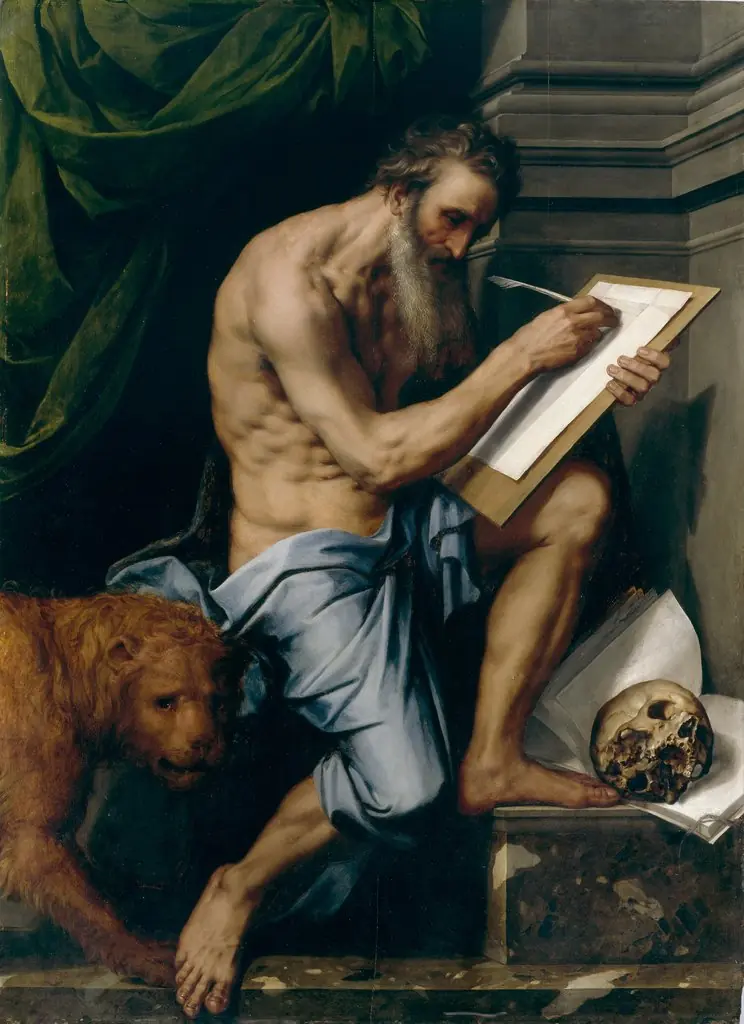
Created circa 1550, this oil painting portrays a solitary, elderly figure seated on a rocky ledge. The man, rendered with a bare torso, a red cloth girdle, and flowing white hair, holds an open book while a skull rests at his feet and a lion lingers nearby. A distant ship and a few birds complete the landscape, giving the work a contemplative, outdoor atmosphere.
Subject & Meaning
The central figure is identified as Saint Jerome, the 4th‑century scholar famed for translating the Bible into Latin. Traditional attributes accompany him: the skull symbolizes mortality, the lion recalls the legend of his taming of a wild beast, and the book alludes to his biblical scholarship. Together these elements underscore themes of penitence, learning, and the transience of life.
Technique & Style
Passarotti employs a subtle chiaroscuro, modeling the figure with gradations of light and shadow that enhance its three‑dimensional presence.
Executed in oil on canvas, the composition displays the elongated forms and complex poses characteristic of mid‑16th‑century Mannerism. Passarotti employs a subtle chiaroscuro, modeling the figure with gradations of light and shadow that enhance its three‑dimensional presence. The landscape background is rendered with fine detail, while the color palette balances warm earth tones with the vivid red of the cloth.
History & Provenance
The work originates from Bologna, where Bartolomeo Passarotti (1529–1592) spent most of his career. After changing hands among private collectors, the painting entered the National Gallery of Ireland’s collection, where it remains on display. Its documented provenance traces back to the artist’s workshop and later to European aristocratic inventories before arriving in Dublin.
Context
Passarotti worked during a period when Italian artists were exploring heightened emotional expression and artificial elegance beyond High Renaissance ideals. His depiction of Saint Jerome reflects both devotional intent and the era’s fascination with scholarly saints as moral exemplars. The inclusion of maritime elements hints at the growing importance of trade and exploration in 16th‑century Italy.
Own this work as a print
Artist & collection
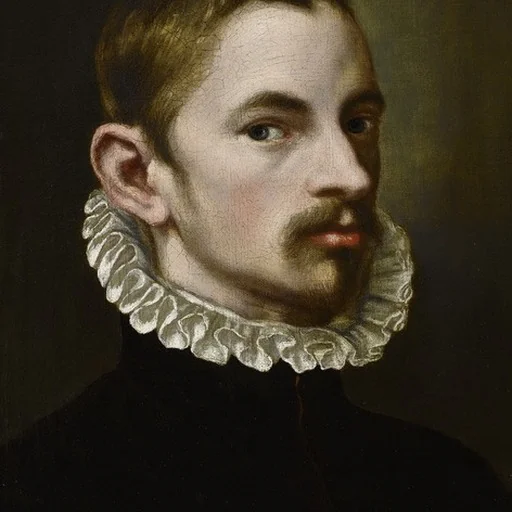
Artist
Bartolomeo Passarotti or Passerotti (1529–1592) was an Italian painter of the mannerist period, who worked mainly in his native Bologna. His family name is also spelled Passerotti or Passarotto.