Artwork
Saint Jerome
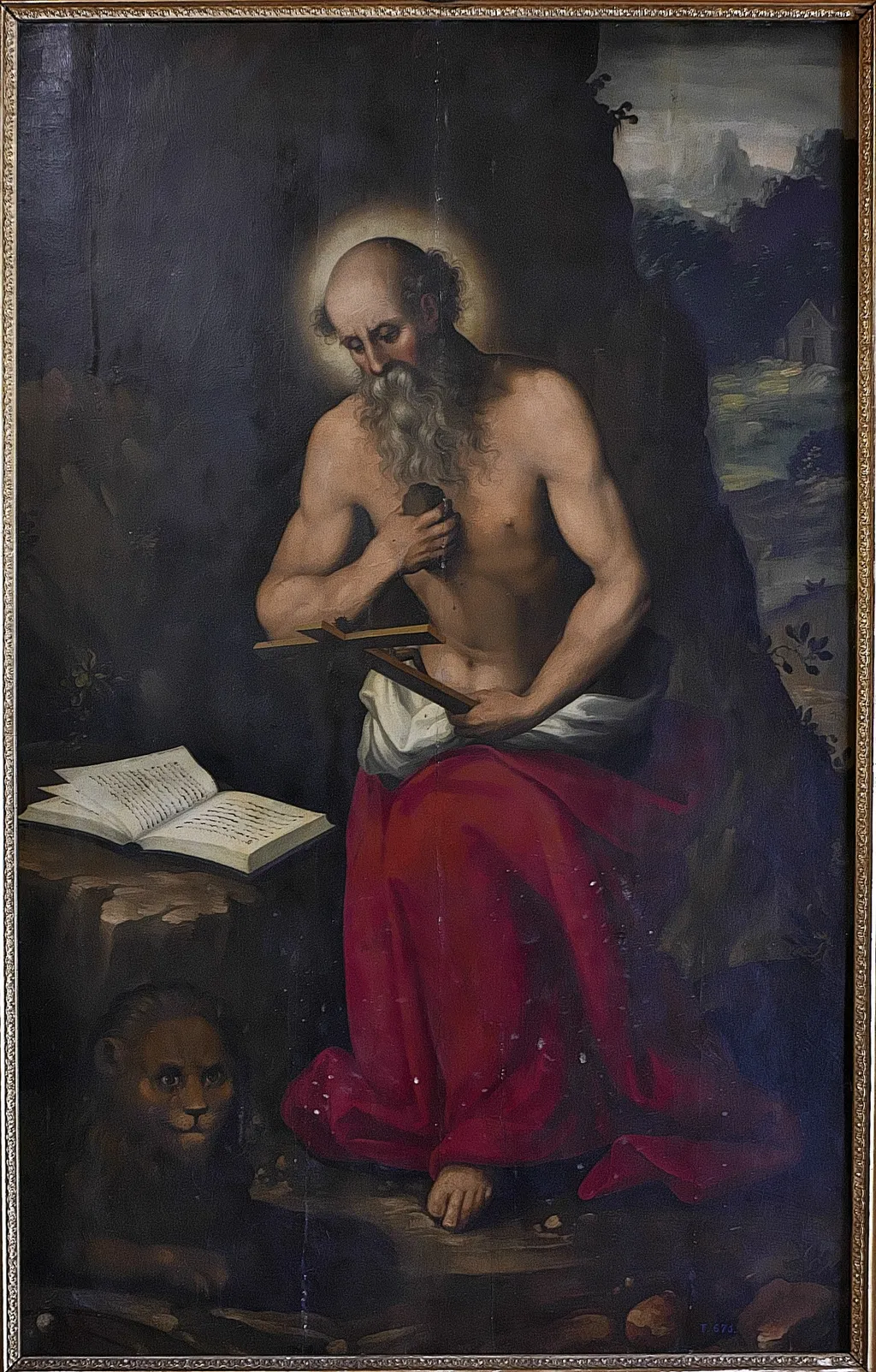
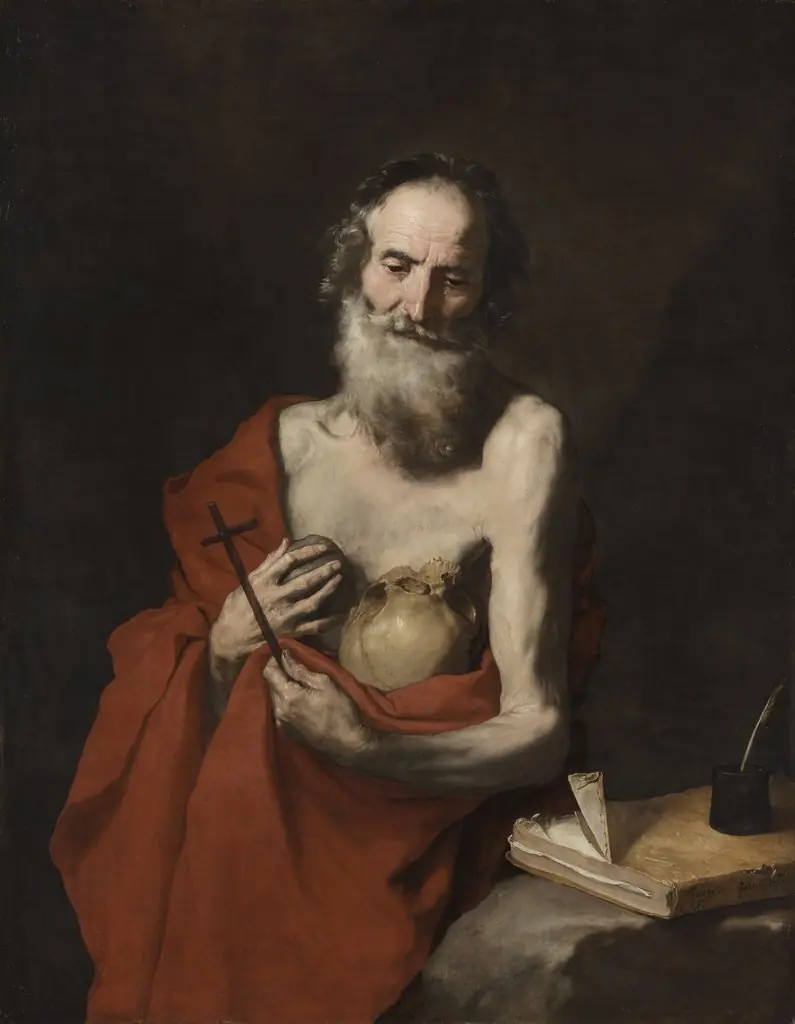
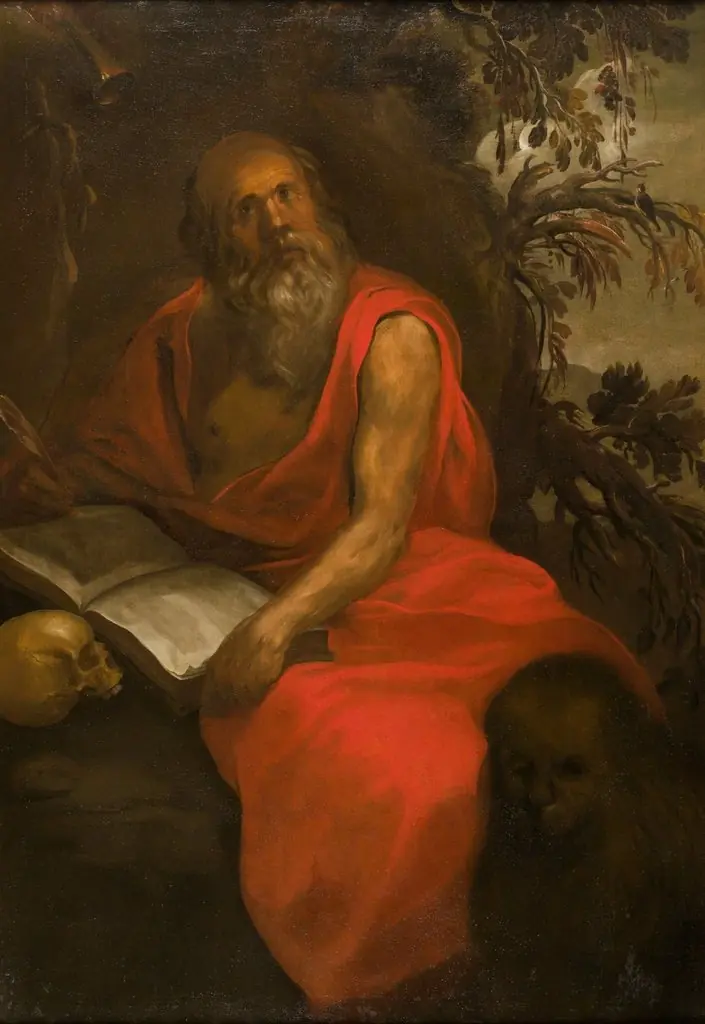
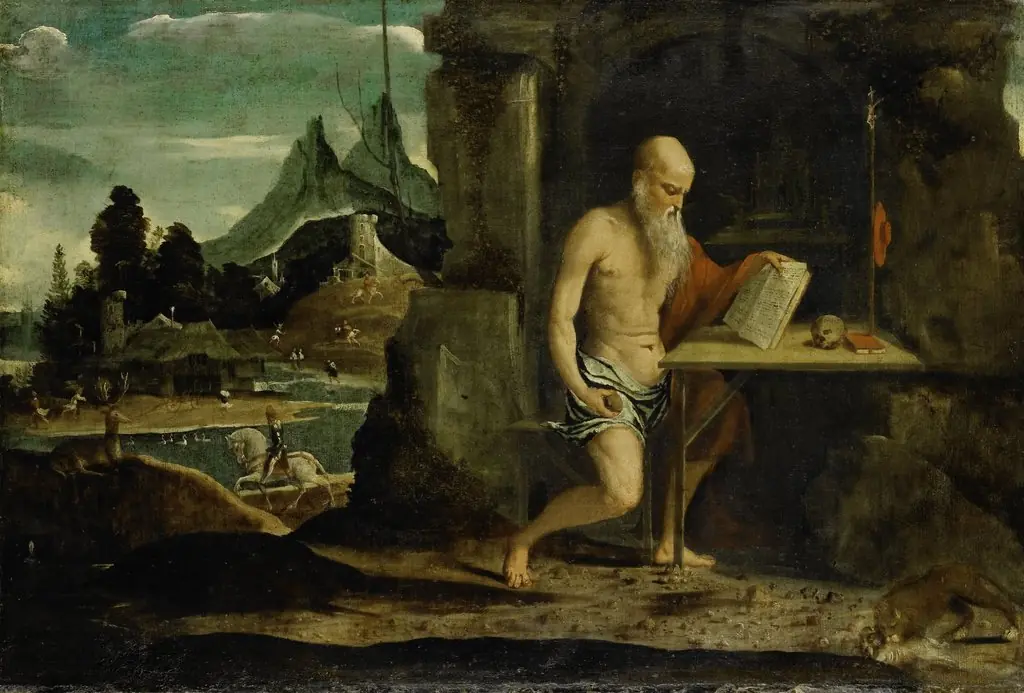
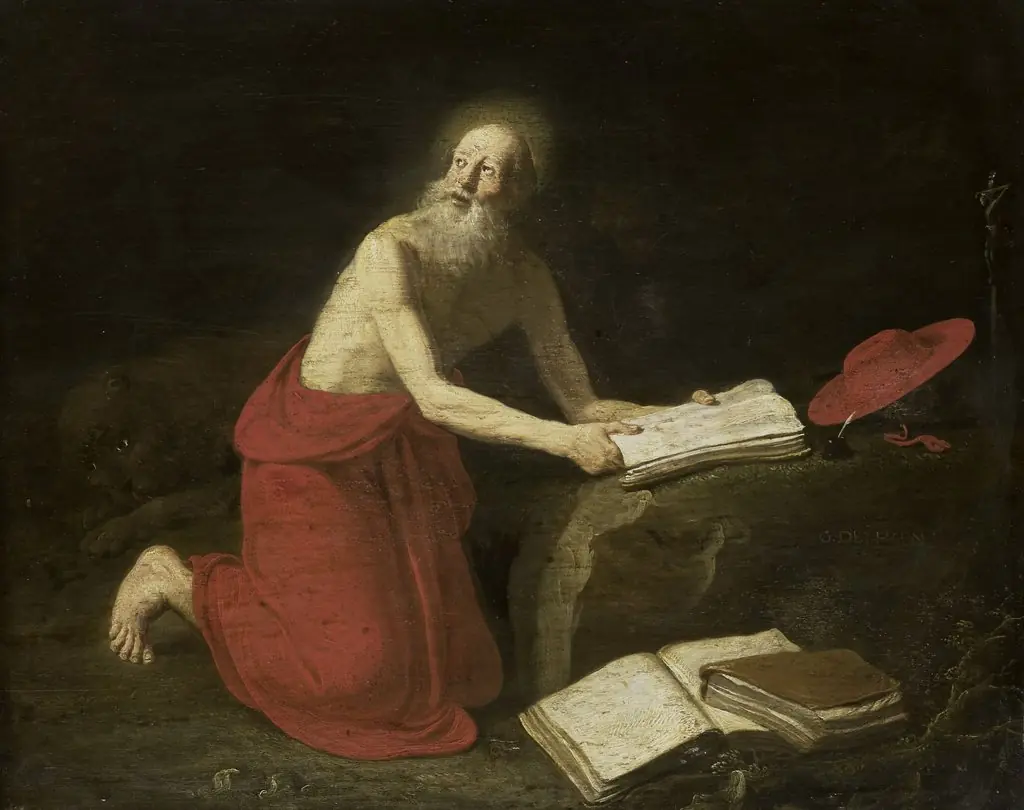
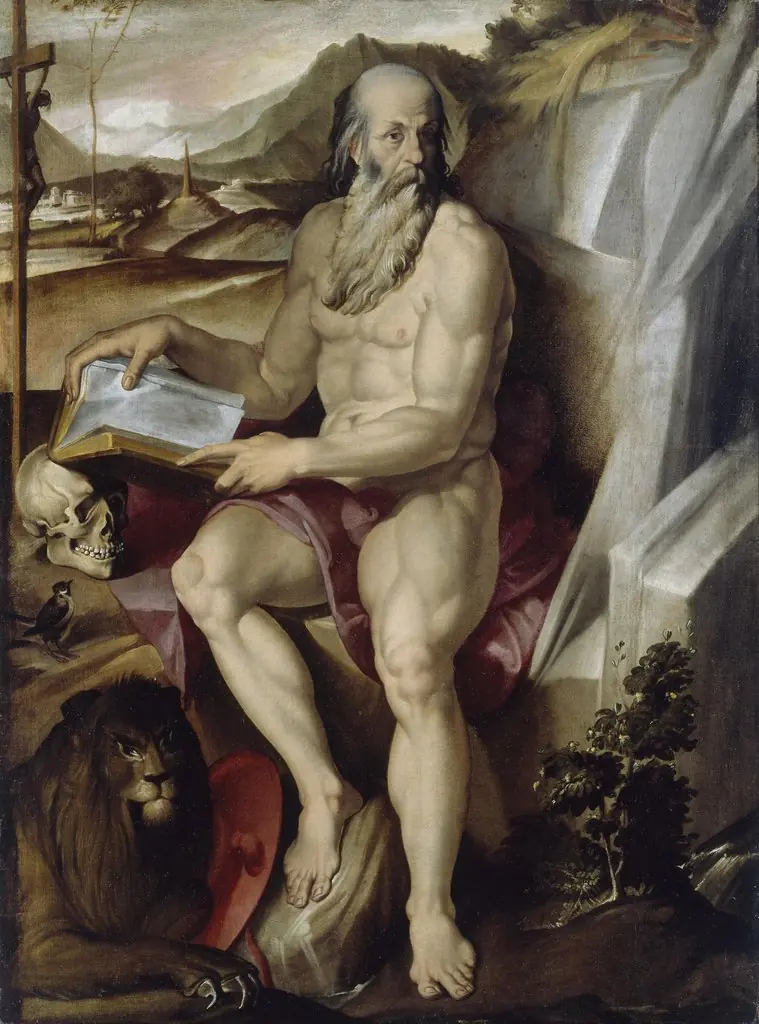
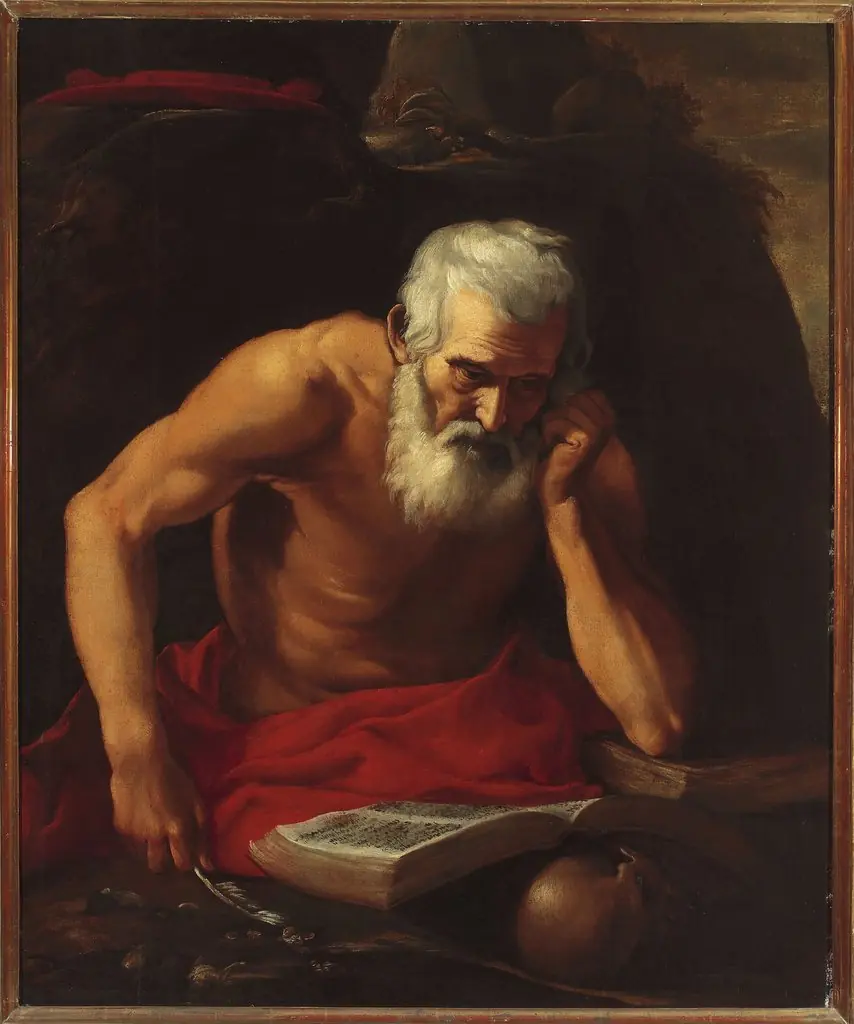
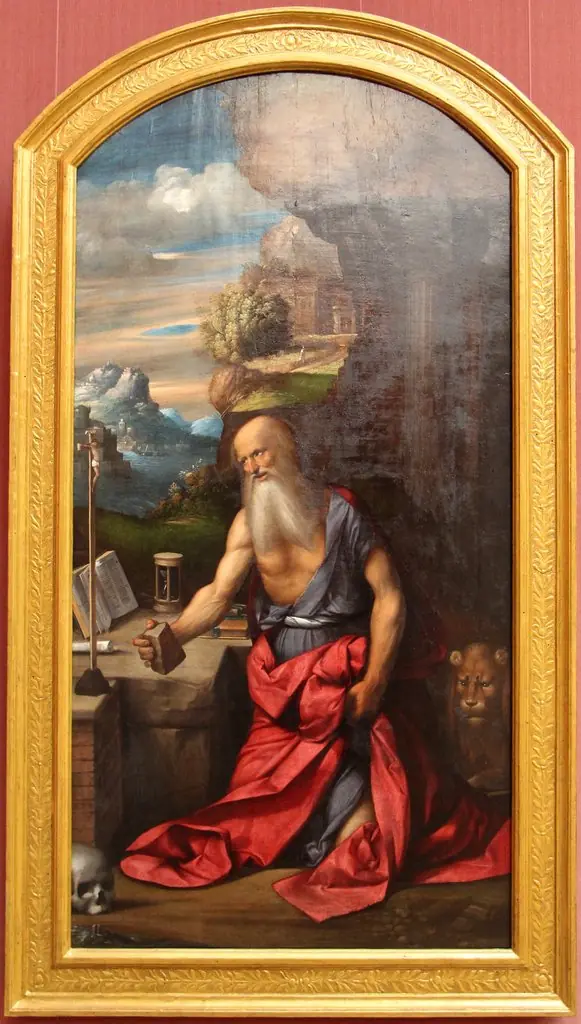
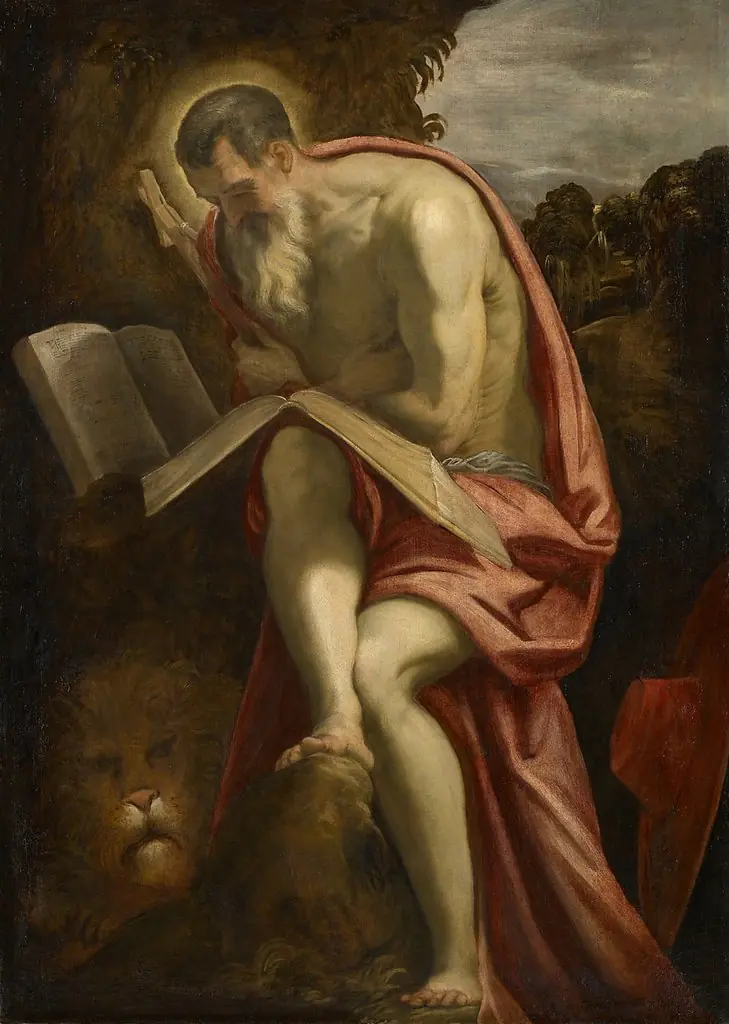
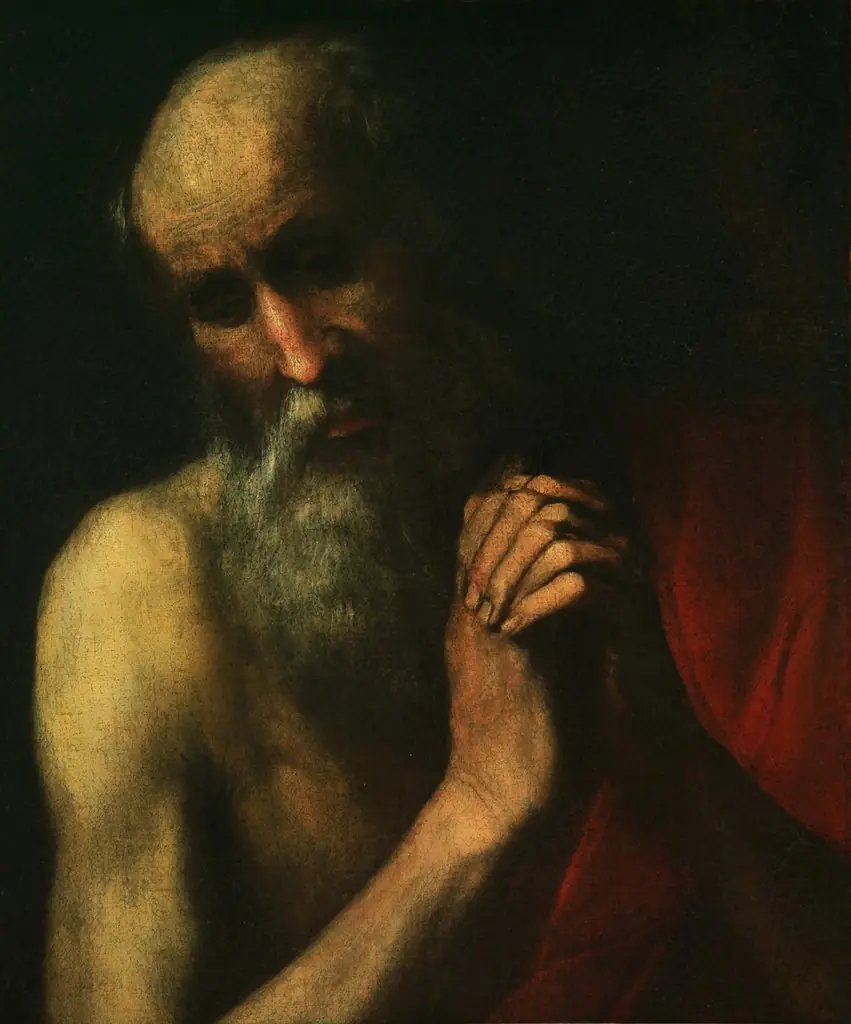
Saint Jerome is an oil painting by the Early Baroque Italian artist Unknown. It dates from 1600 and is held in the collection of the Museo del Prado. The oil painting portrays a solitary figure seated on a rock, accompanied by a lion at his feet.
About this work
Overview
The oil painting portrays a solitary figure seated on a rock, accompanied by a lion at his feet. He is depicted without a shirt, his waist wrapped in a red cloth, and his long gray hair and beard frame a contemplative expression. A small dark object rests in his right hand, while his left hand rests on an open book placed on a nearby table.
Subject & Meaning
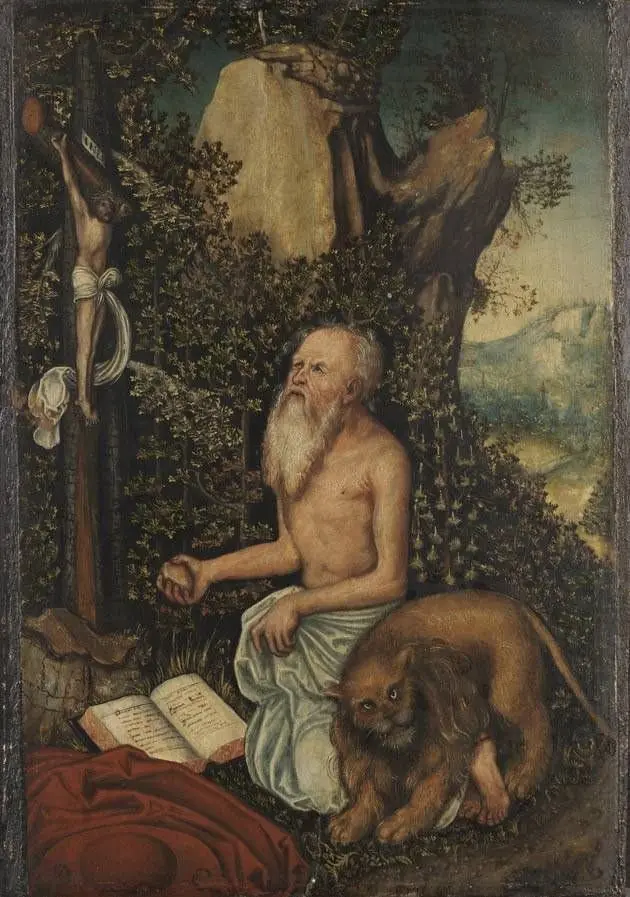
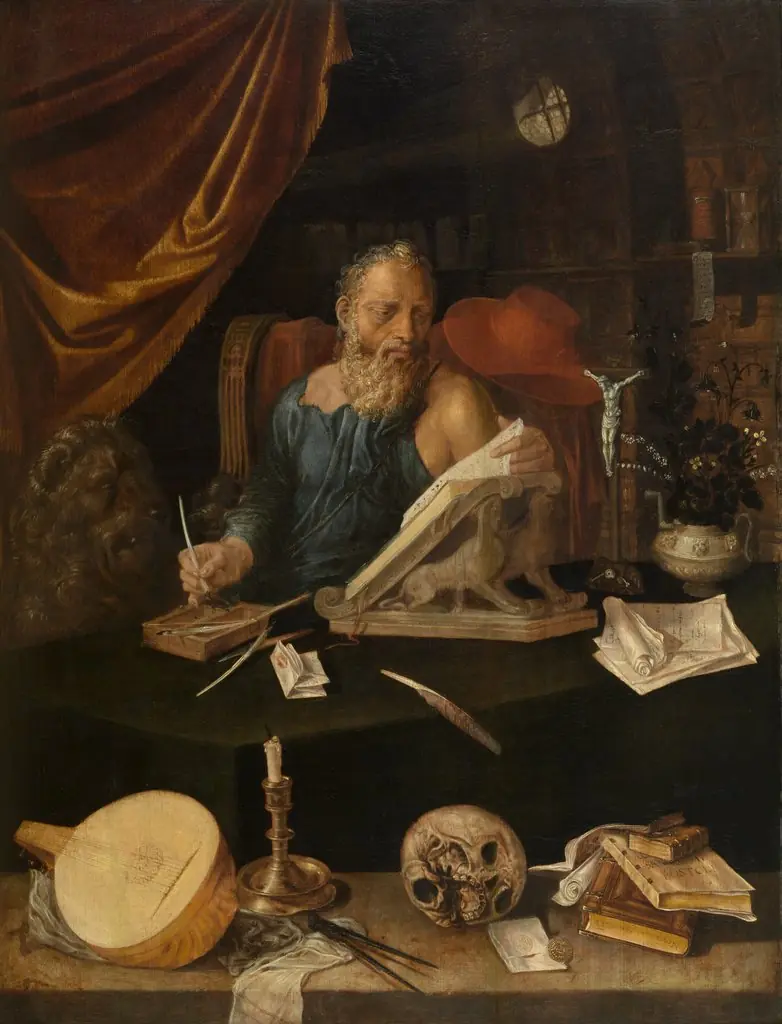
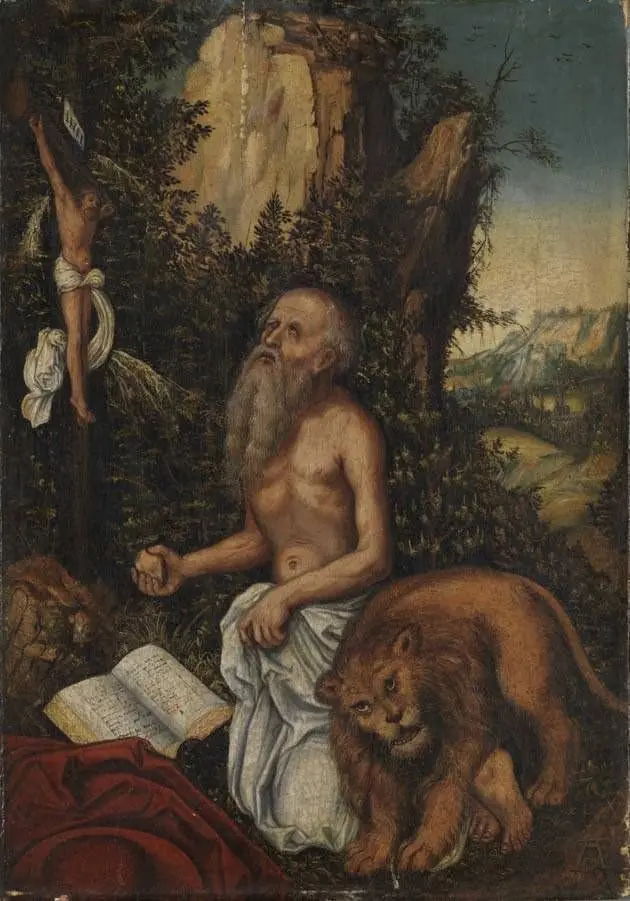
The central figure is traditionally identified as Saint Jerome, a scholar known for his translation of biblical texts. The presence of the lion references the legend of Jerome’s taming of a wild beast, while the skull‑like object and the open book suggest meditation on mortality and scriptural study.
Technique & Style
The artist employs chiaroscuro, contrasting deep shadows with illuminated areas to model the figure’s form and convey a sense of three‑dimensionality. Soft, atmospheric lighting highlights the textures of the rock, the fur of the lion, and the folds of the red cloth, guiding the viewer’s focus toward the contemplative pose.
Context
Set against a distant landscape featuring trees and a modest building, the background situates the saint in a hermitic environment, typical of Renaissance depictions that blend natural scenery with spiritual narrative to emphasize isolation and devotion.
Legacy
The work exemplifies the enduring iconography of Saint Jerome in Western art, illustrating how artists combine symbolic elements—lion, skull, and book—to convey themes of scholarship, penitence, and the transience of life.
Artist & collection

 Domestic Scene
 Giacomo and Cardinal Marco, investing Andrea, Abbot of San Zeno, with his Benefice
 The Nymph of Fontainebleau
 Portrait of a Woman
 Madonna and Child with Saints in the Enclosed Garden
 Venus and Minerva
 Family Group of Four on Sofa
 Wall painting from Room H of the Villa of P. Fannius Synistor at Boscoreale