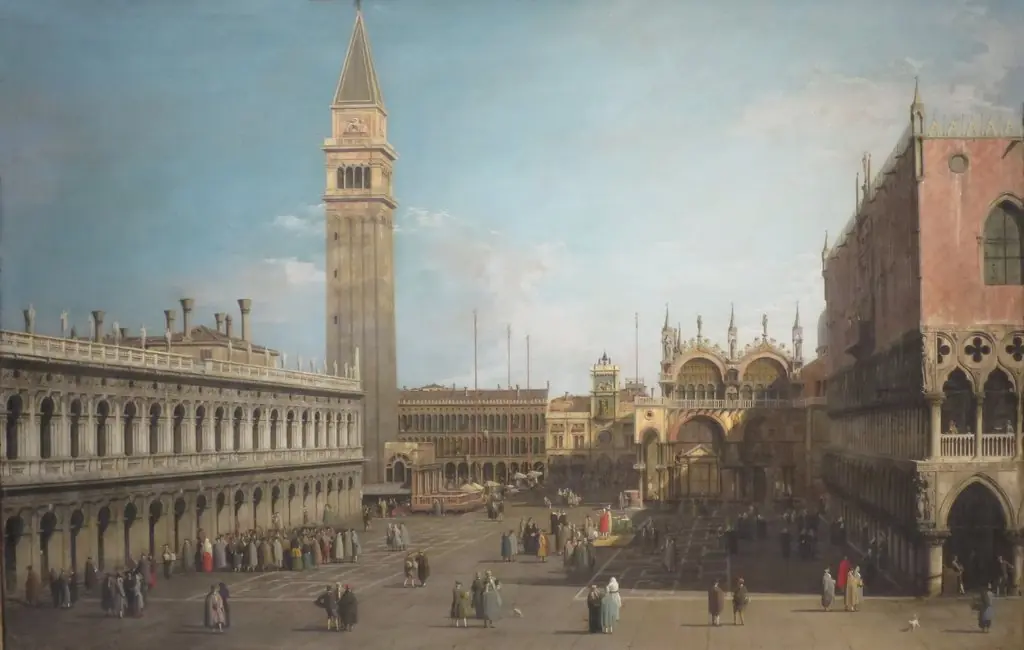
Artwork
Saint Mark's Square, Venice
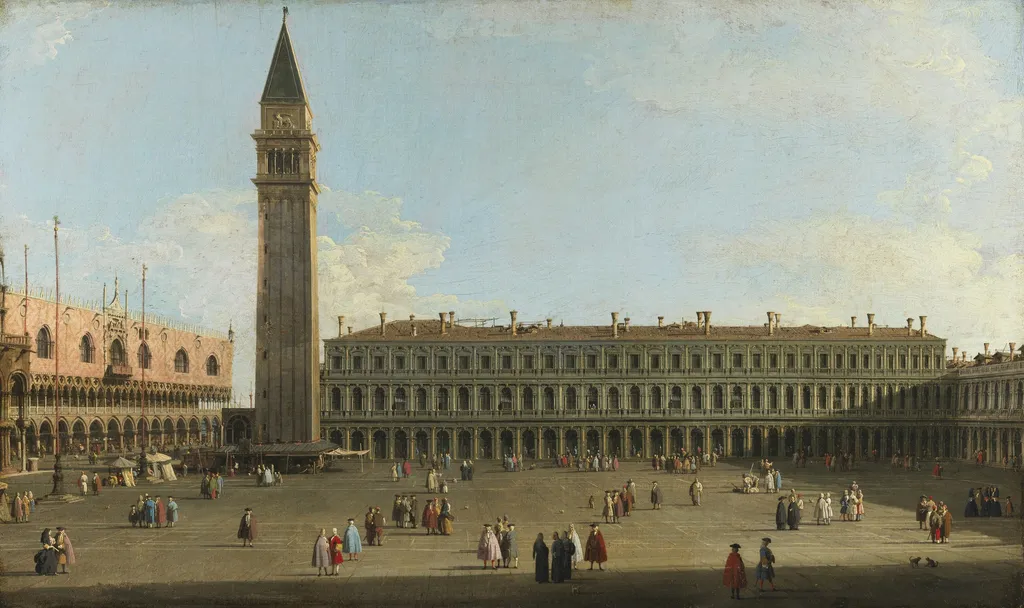
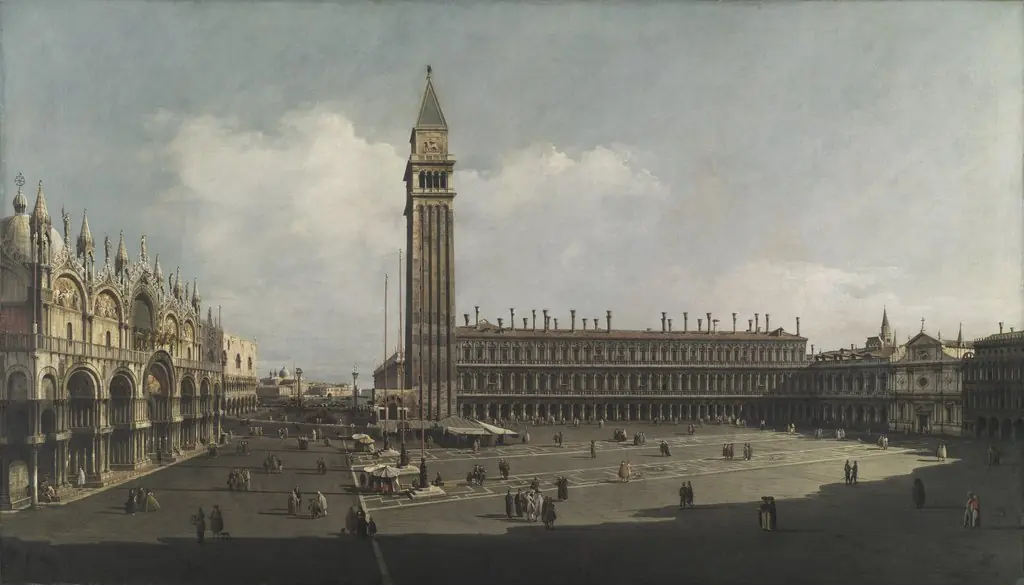
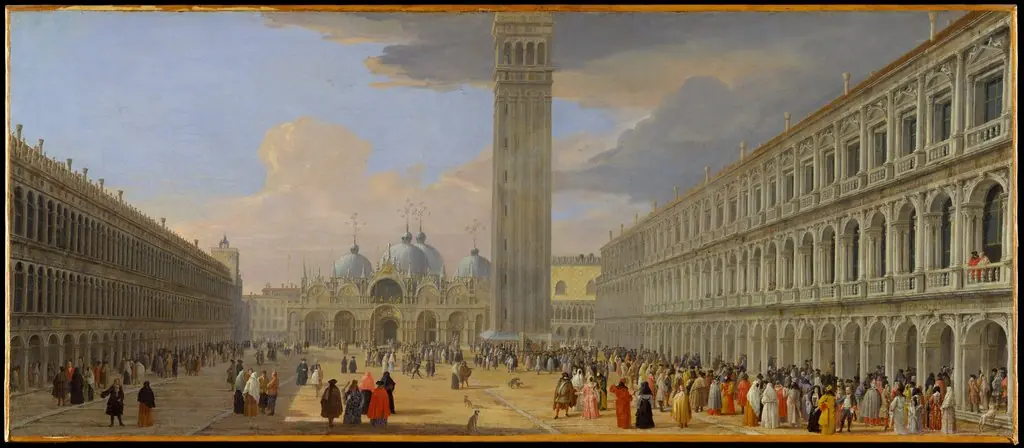
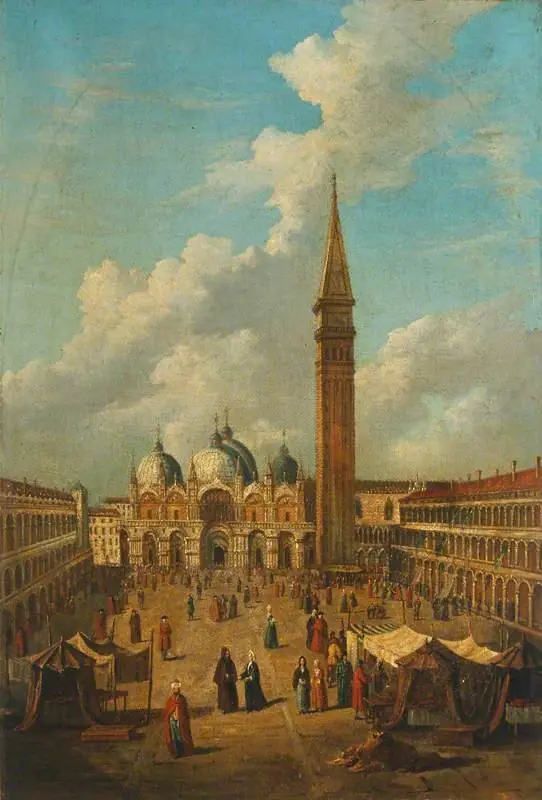
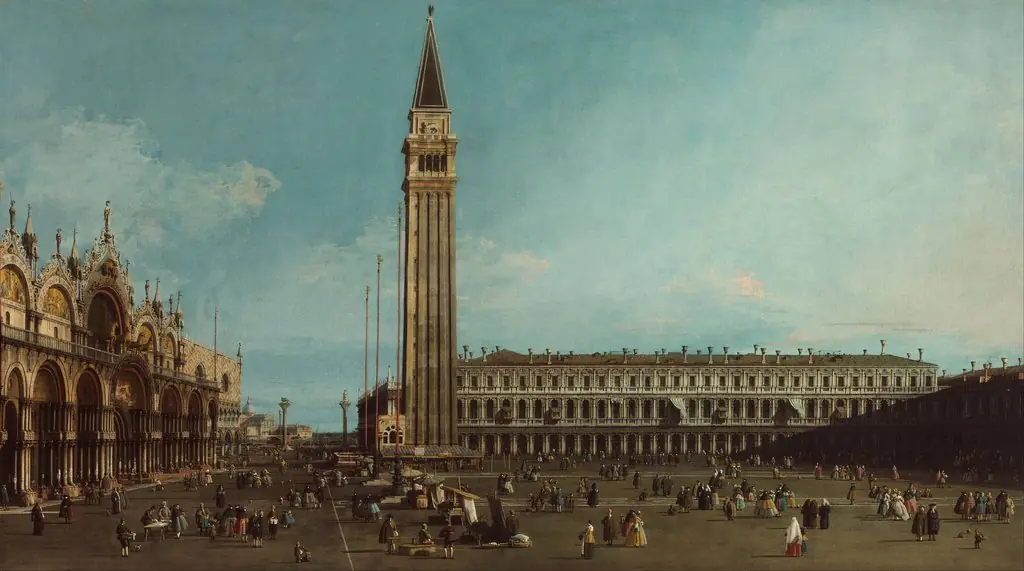
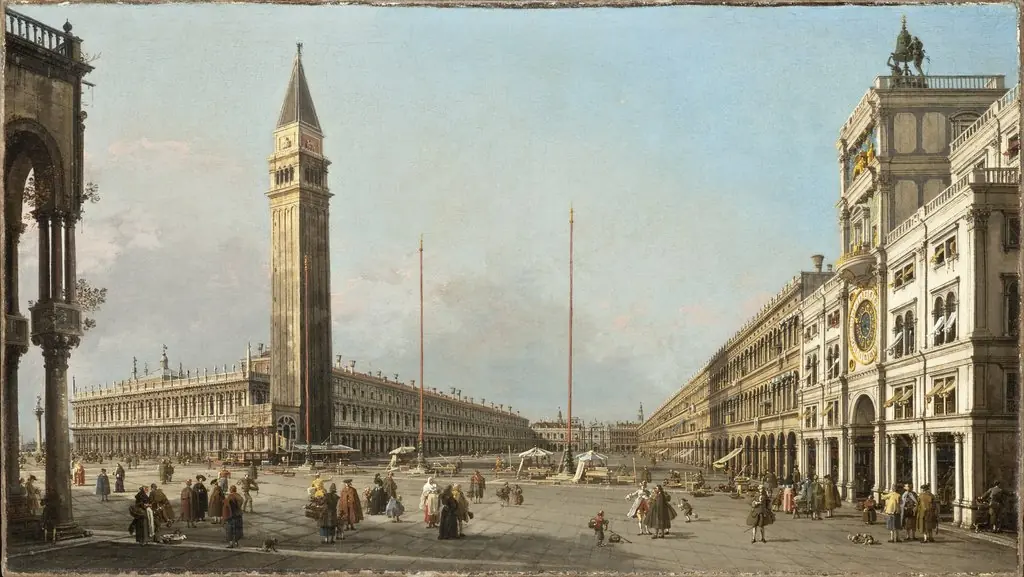
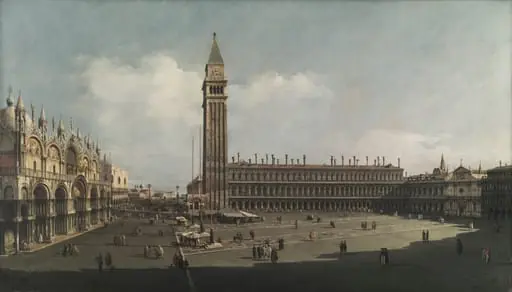
Saint Mark's Square, Venice is an oil painting by the Rococo painting artist Bernardo Bellotto. It dates from 1756 and is held in the collection of the National Gallery of Ireland. Painted in 1756, this oil on canvas depicts the open expanse of Piazza San Marco in Venice.
About this work
Overview
The painting is part of the National Gallery of Ireland’s collection, where it remains a key example of 18th-century topographical painting.
Painted in 1756, this oil on canvas depicts the open expanse of Piazza San Marco in Venice. The work is attributed to Bernardo Bellotto, known for his precise urban views. It captures the square’s architectural grandeur with careful attention to spatial depth and atmospheric light. The painting is part of the National Gallery of Ireland’s collection, where it remains a key example of 18th-century topographical painting.
Subject & Meaning
The scene presents Venice’s central public square, framed by the Campanile, the Procuratie Vecchie, and the Procuratie Nuove. These structures symbolize civic and religious authority in the Venetian Republic. The presence of modestly dressed figures suggests daily life unfolding within this monumental setting, reinforcing the square’s role as both a political center and a space of public interaction.
Technique & Style
Bellotto employed fine brushwork to render architectural details with geometric clarity, contrasting the solidity of stone facades with the softness of the sky. Perspective is meticulously controlled, drawing the eye toward the tower’s vertical rise. Figures are rendered in miniature scale but remain legible, enhancing the sense of depth without disrupting the composition’s order or realism.
History & Provenance
Created during Bellotto’s time in Venice, the painting likely served as a record of the city’s appearance for patrons interested in its urban fabric. It entered the National Gallery of Ireland’s collection in the 20th century, having passed through private hands in Europe. Its preservation reflects its value as a documentary and artistic record of mid-18th-century Venice.
Context
Bellotto worked in a tradition of veduta painting popular among European travelers and collectors. His works often documented cities with scientific accuracy, appealing to Enlightenment-era interests in observation and order. Unlike romanticized views, this painting emphasizes structural integrity and spatial logic, aligning with the era’s preference for empirical representation.
Legacy
The painting contributes to a broader corpus of Venetian cityscapes that informed later topographical art. Its fidelity to architectural detail has made it a reference for historians studying the evolution of Piazza San Marco. While not widely exhibited, it remains a quiet testament to the precision and restraint characteristic of Bellotto’s approach to urban representation.
Own this work as a print
Artist & collection

Artist
Bernardo Bellotto, was an Italian urban landscape painter or vedutista, and printmaker in etching famous for his vedute of European cities – Dresden, Vienna, Turin, and Warsaw.