Artwork
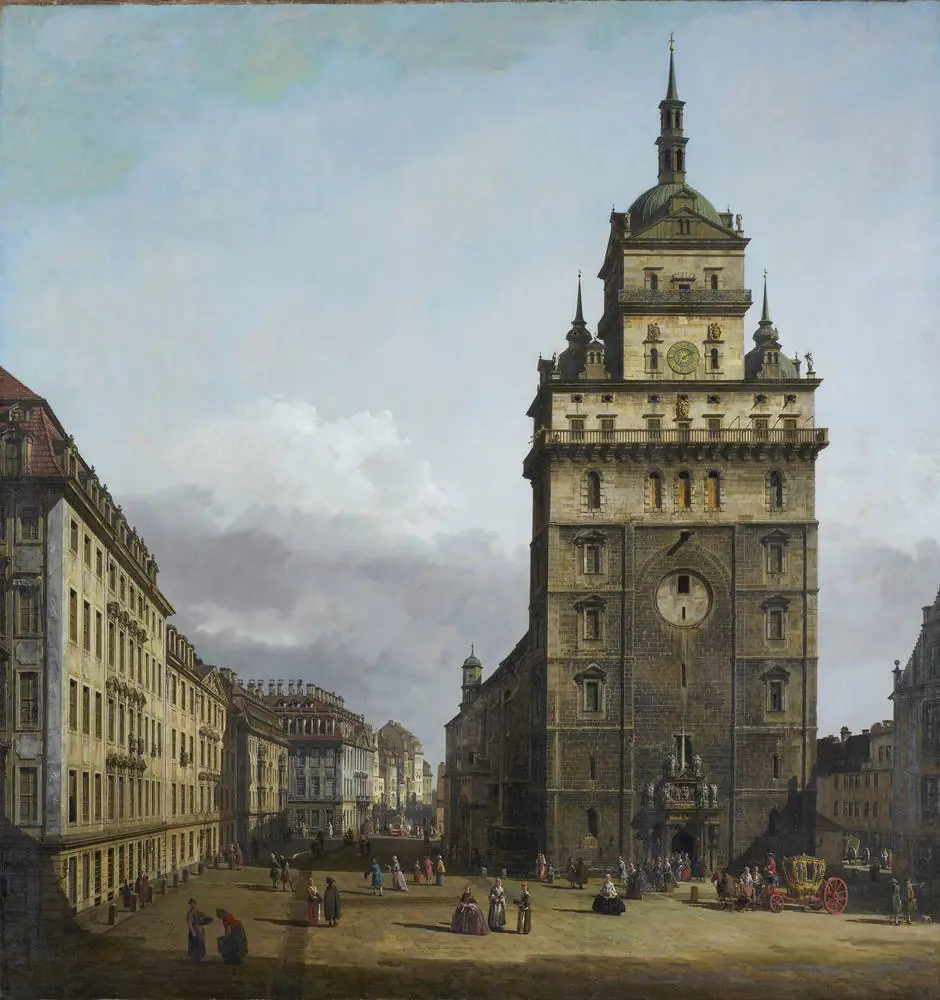
Square with the Kreuzkirche in Dresden
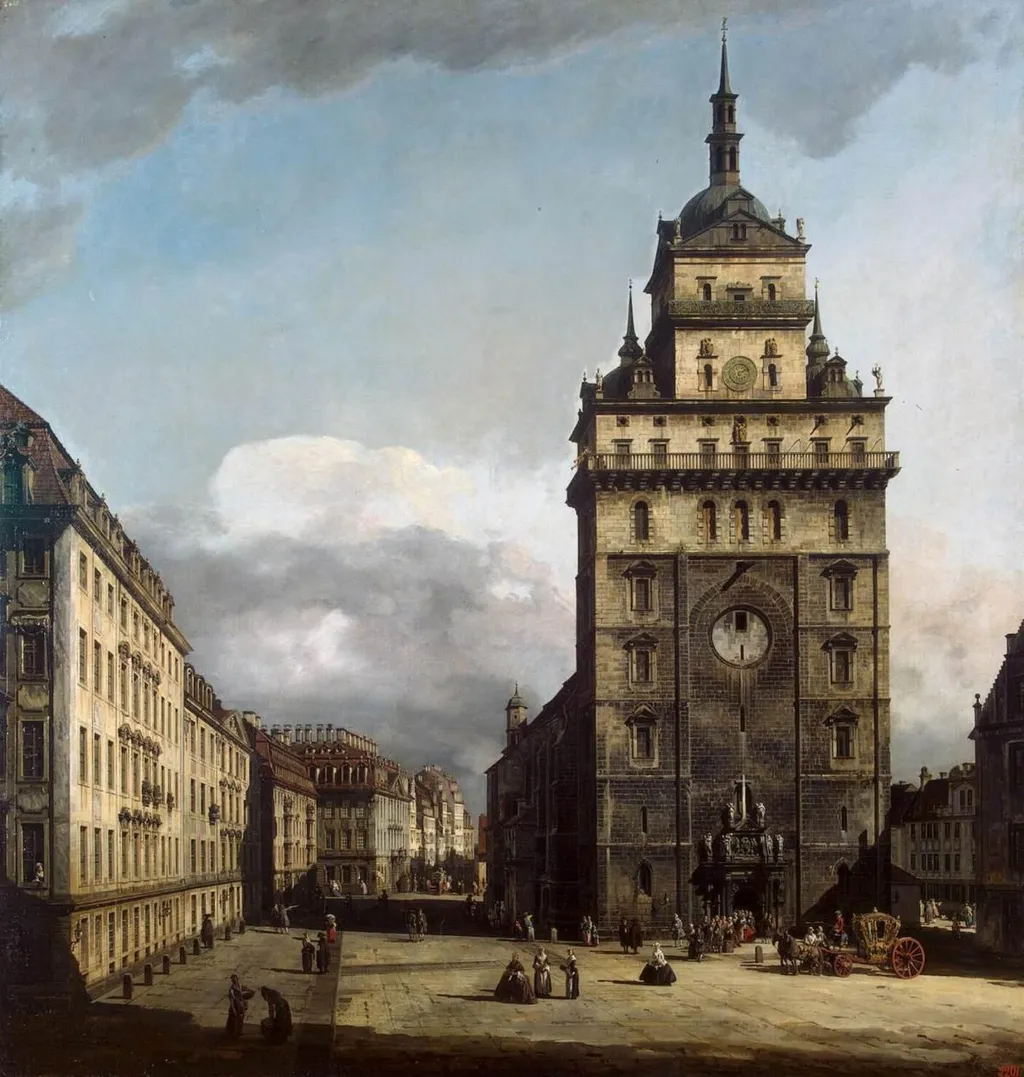
Square with the Kreuzkirche in Dresden is an oil painting by the Rococo painting artist Bernardo Bellotto. It dates from 1751 and is held in the collection of the Hermitage Museum.
About this work
Overview
Painted in 1751, this oil work by Bernardo Bellotto captures a view of Dresden’s central square, dominated by the Kreuzkirche. The composition presents an urban scene rendered with precise architectural detail and atmospheric depth. The painting is part of the State Hermitage Museum’s collection, where it remains a key example of 18th-century topographical painting.
Subject & Meaning
The scene portrays everyday life in a thriving Saxon city, with figures moving through the square beneath the church’s imposing structure. The Kreuzkirche, both spiritual and civic landmark, anchors the composition, suggesting the interplay between religious authority and urban activity. No overt narrative is present; instead, the painting offers a quiet documentation of place and routine.
Technique & Style
Light falls with directional clarity, modeling forms through subtle gradations rather than stark contrasts.
Bellotto employs a controlled palette of warm stone tones and cool sky blues to define spatial depth. Light falls with directional clarity, modeling forms through subtle gradations rather than stark contrasts. The rendering of architectural surfaces—carvings, windows, rooflines—demonstrates meticulous observation, aligning with the tradition of veduta painting that valued accuracy over embellishment.
History & Provenance
Commissioned during Bellotto’s time in Dresden as court painter to Augustus III, the work reflects his role in documenting the city’s architecture. It entered the Hermitage collection in the late 18th century, likely through imperial acquisition, and has remained there since, preserving its original condition and provenance without significant alteration.
Context
Bellotto’s Dresden views were part of a broader European trend in topographical art, favored by monarchs seeking to record urban grandeur. Unlike romanticized landscapes, these works served as visual inventories, valued for their fidelity. His technique, influenced by his uncle Canaletto, emphasized perspective and structural clarity, aligning with Enlightenment ideals of order and observation.
Legacy
The painting exemplifies the precision and restraint characteristic of Bellotto’s mature style. While not widely exhibited outside the Hermitage, it continues to inform scholarly study of 18th-century urban representation. Its enduring value lies in its unembellished record of a city’s physical and social fabric at a moment of relative peace before the Seven Years’ War.
Artist & collection
Artist
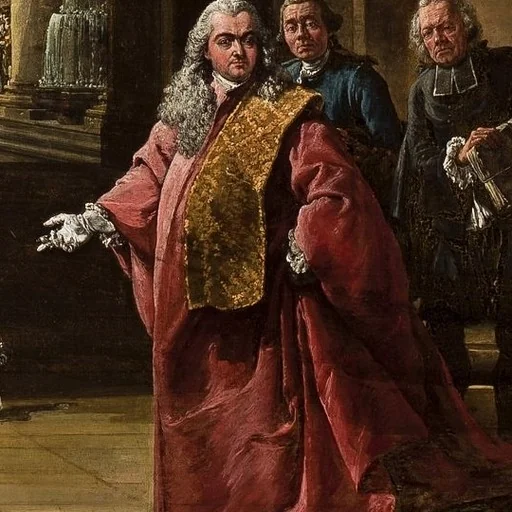
Bernardo Bellotto, was an Italian urban landscape painter or vedutista, and printmaker in etching famous for his vedute of European cities – Dresden, Vienna, Turin, and Warsaw.

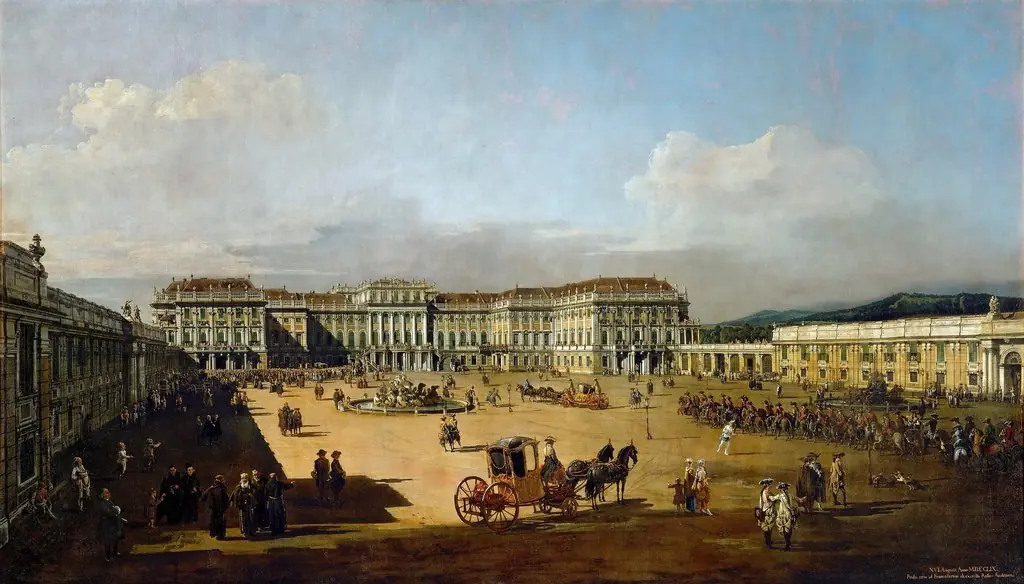
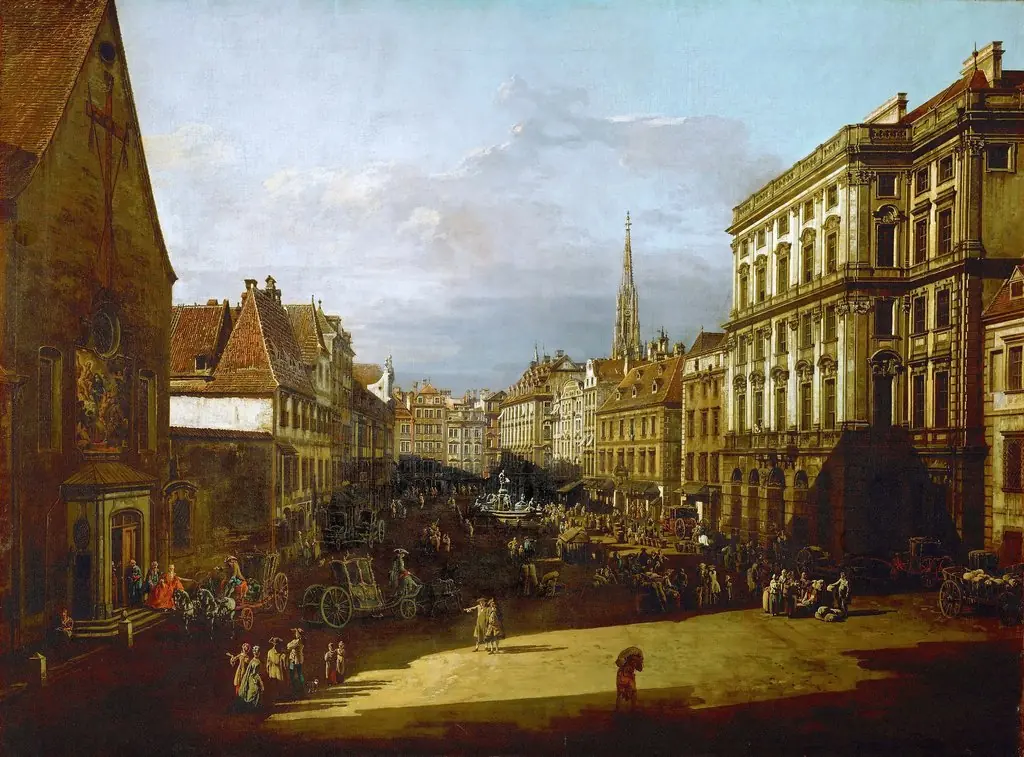
 The Kreuzkirche in Dresden
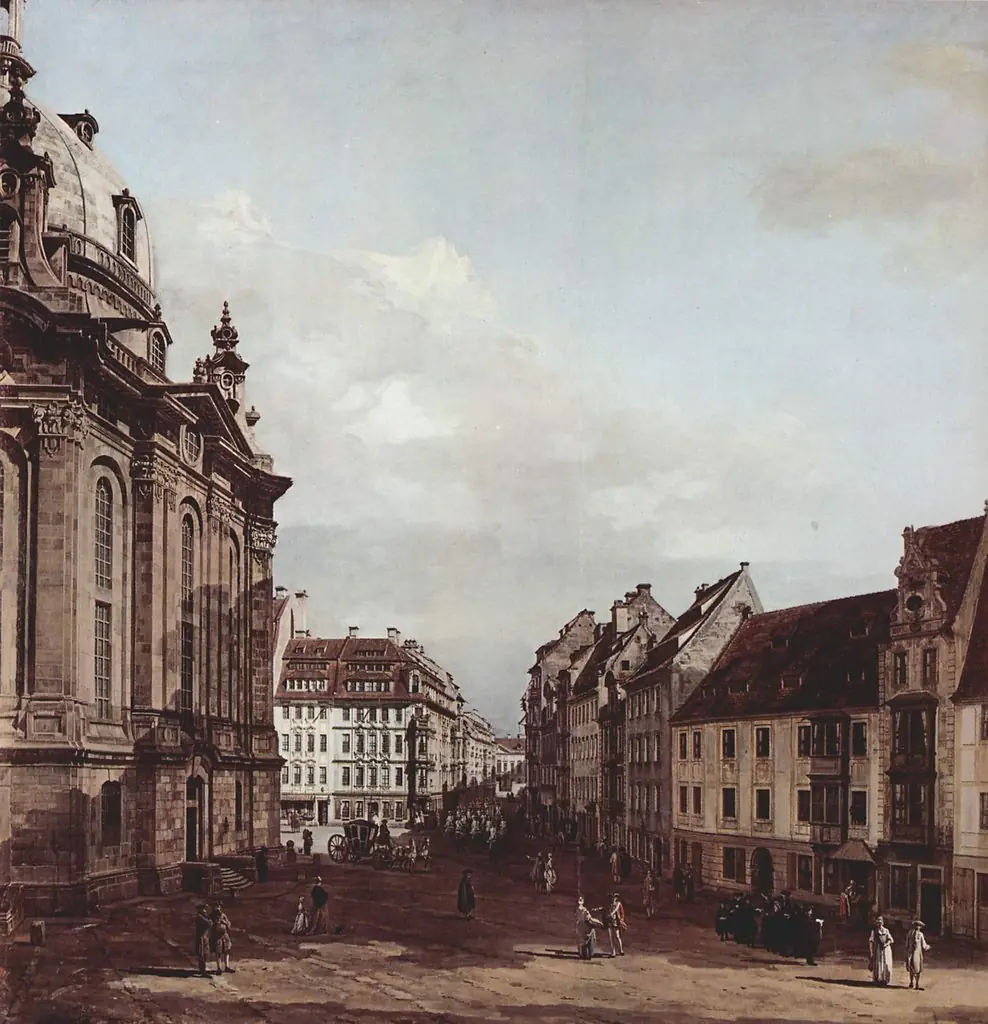 The Frauenkirche in Dresden
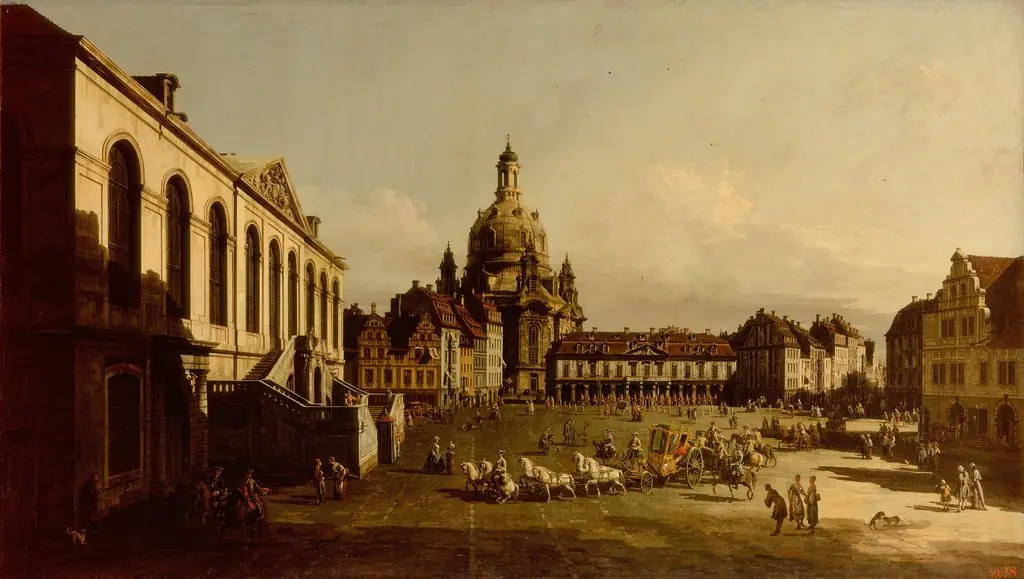 New Market Place in Dresden
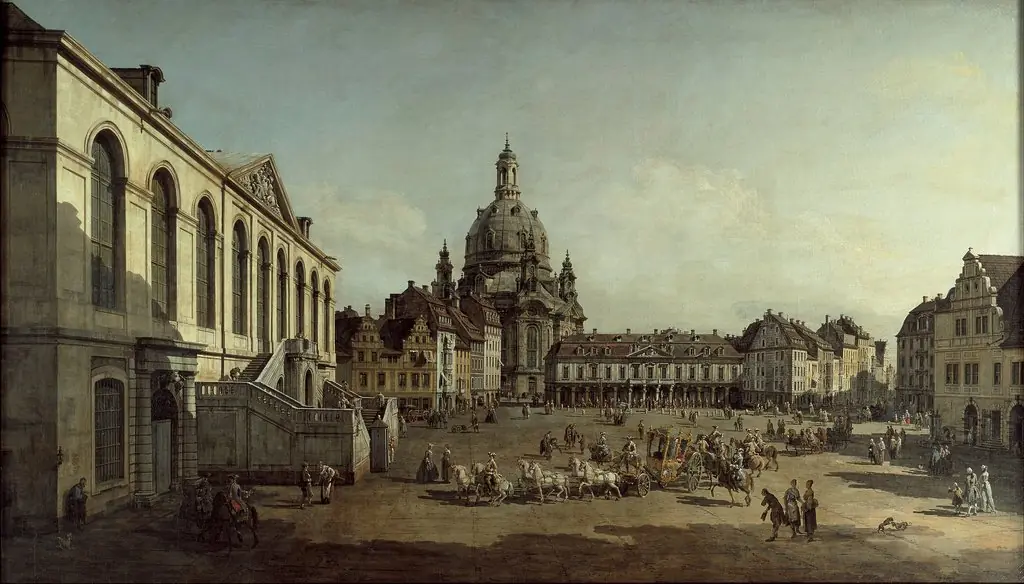 View of the Neumarkt in Dresden from the Jüdenhofe
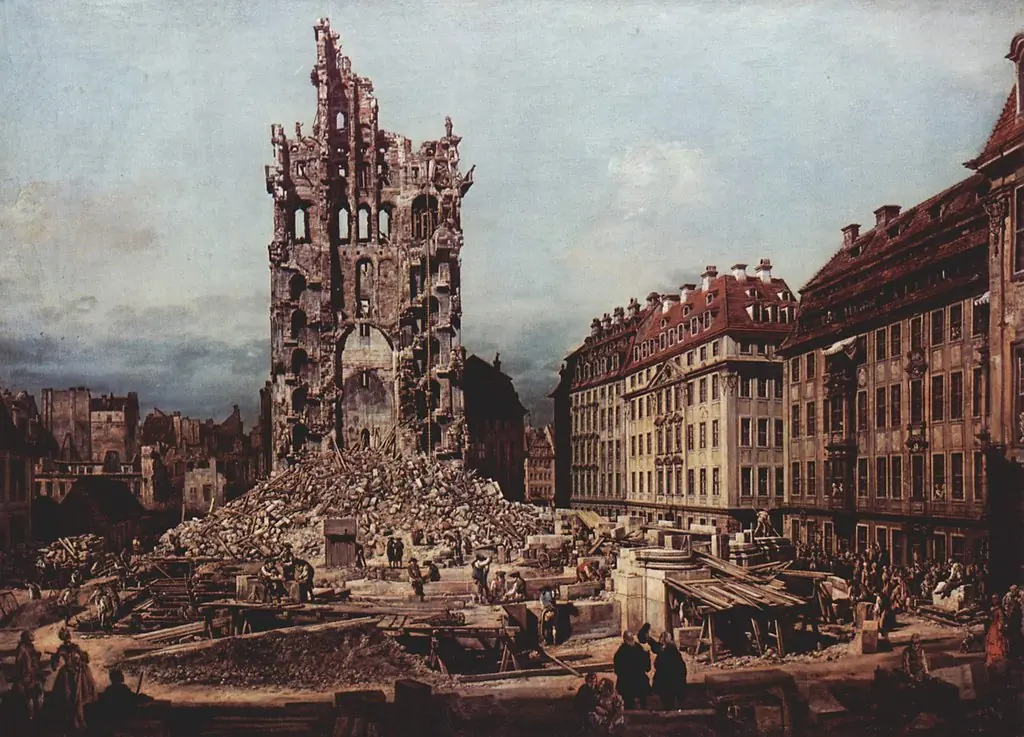 The Ruins of the old Kreuzkirche, Dresden
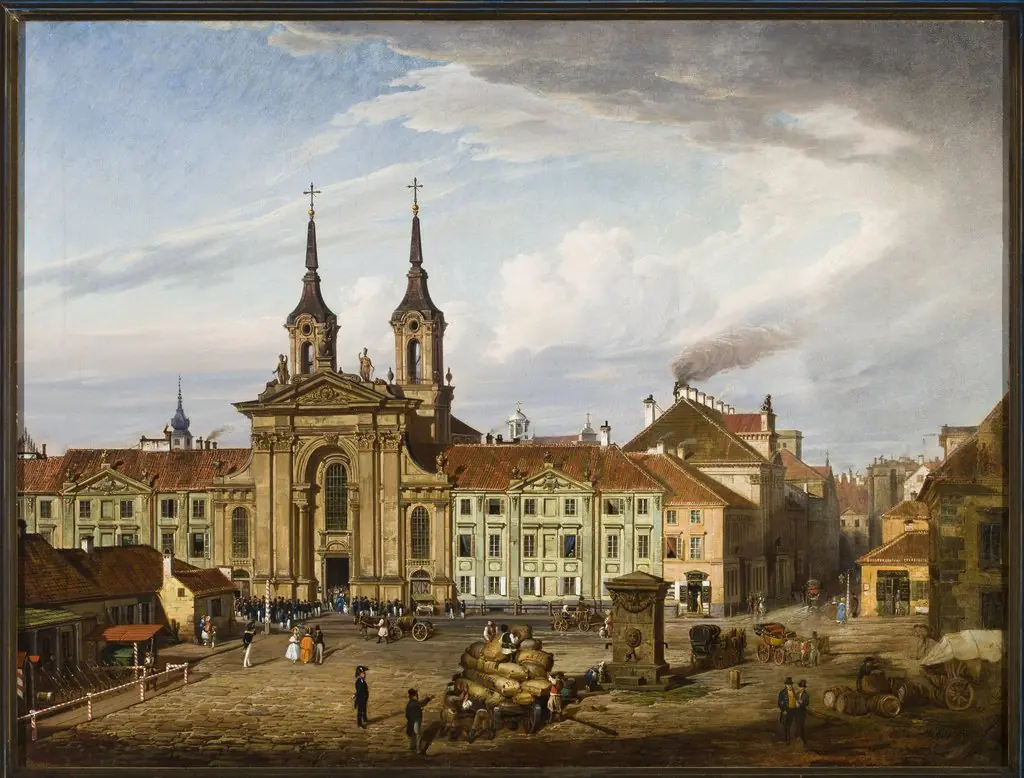 Krasiński Square and the Piarist church
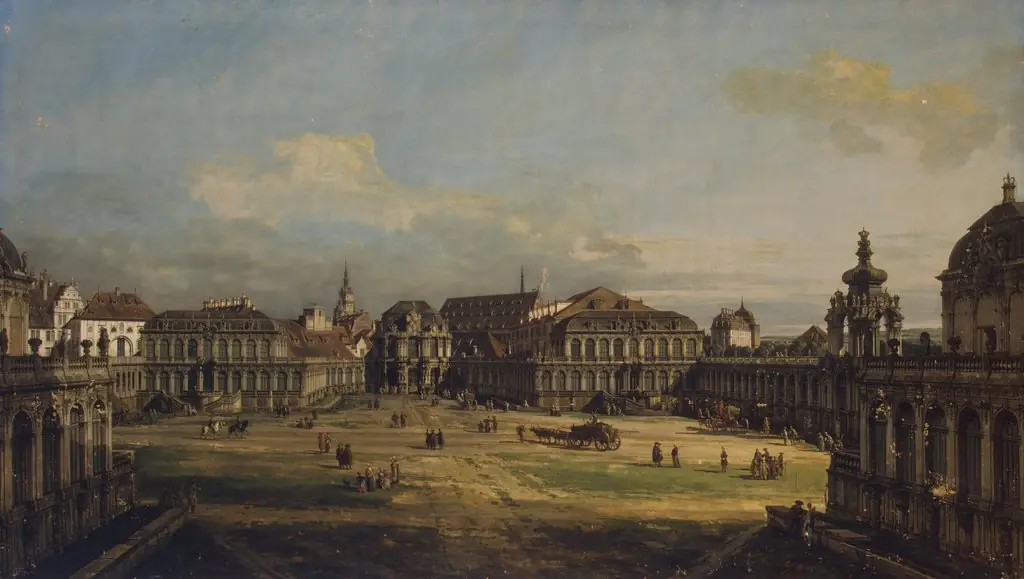 Zwinger in Dresden
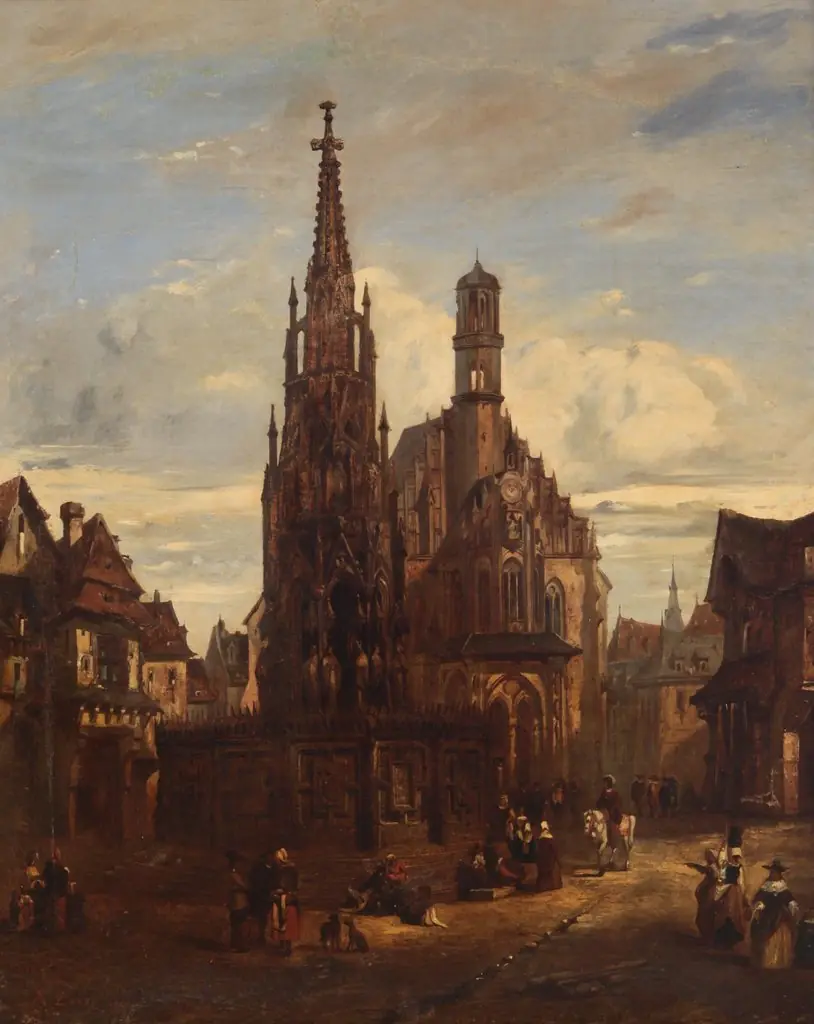 Square in the city of Nuremberg
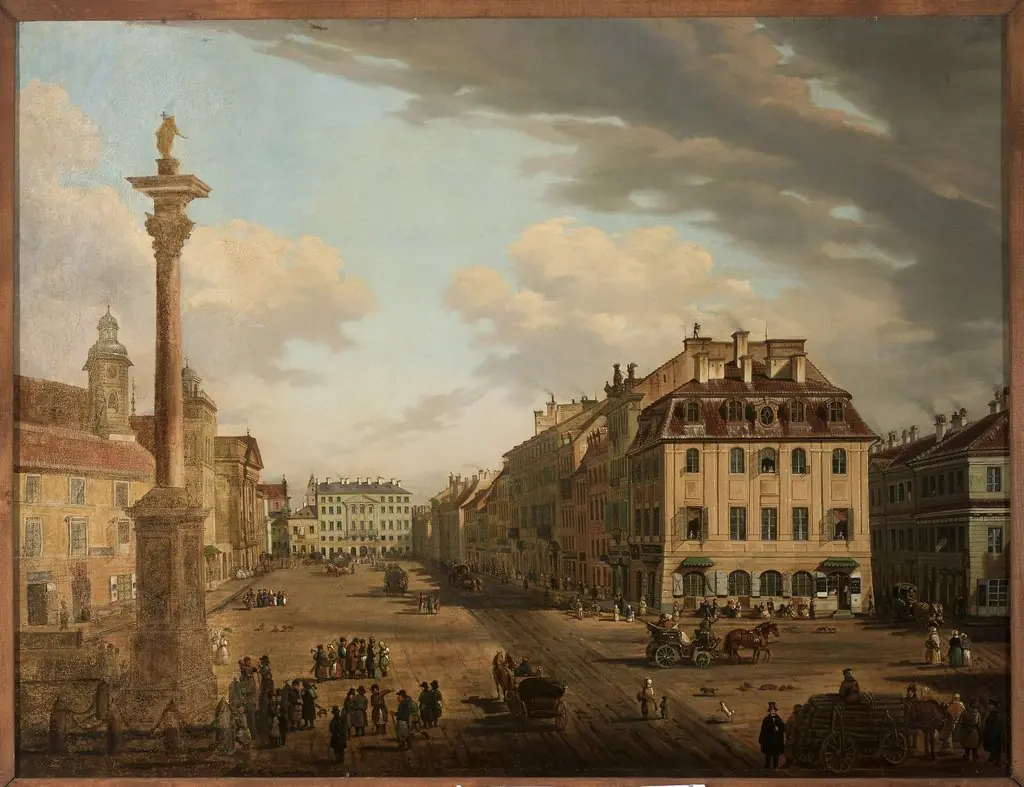 View from the Castle Square towards Krakowskie Przedmieście
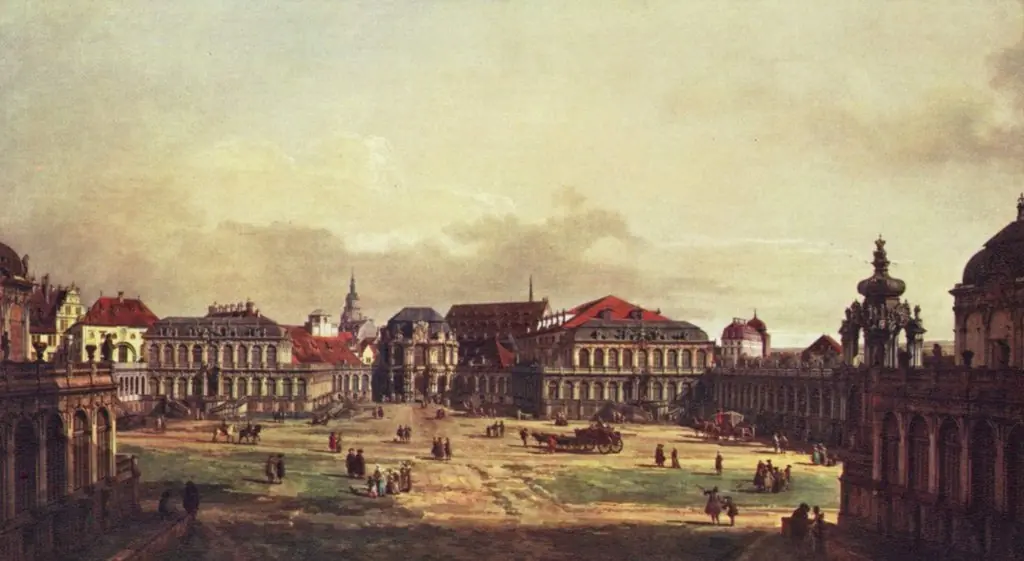 The Zwinger in Dresden