Artwork
Peter and John heal a lame man in the temple
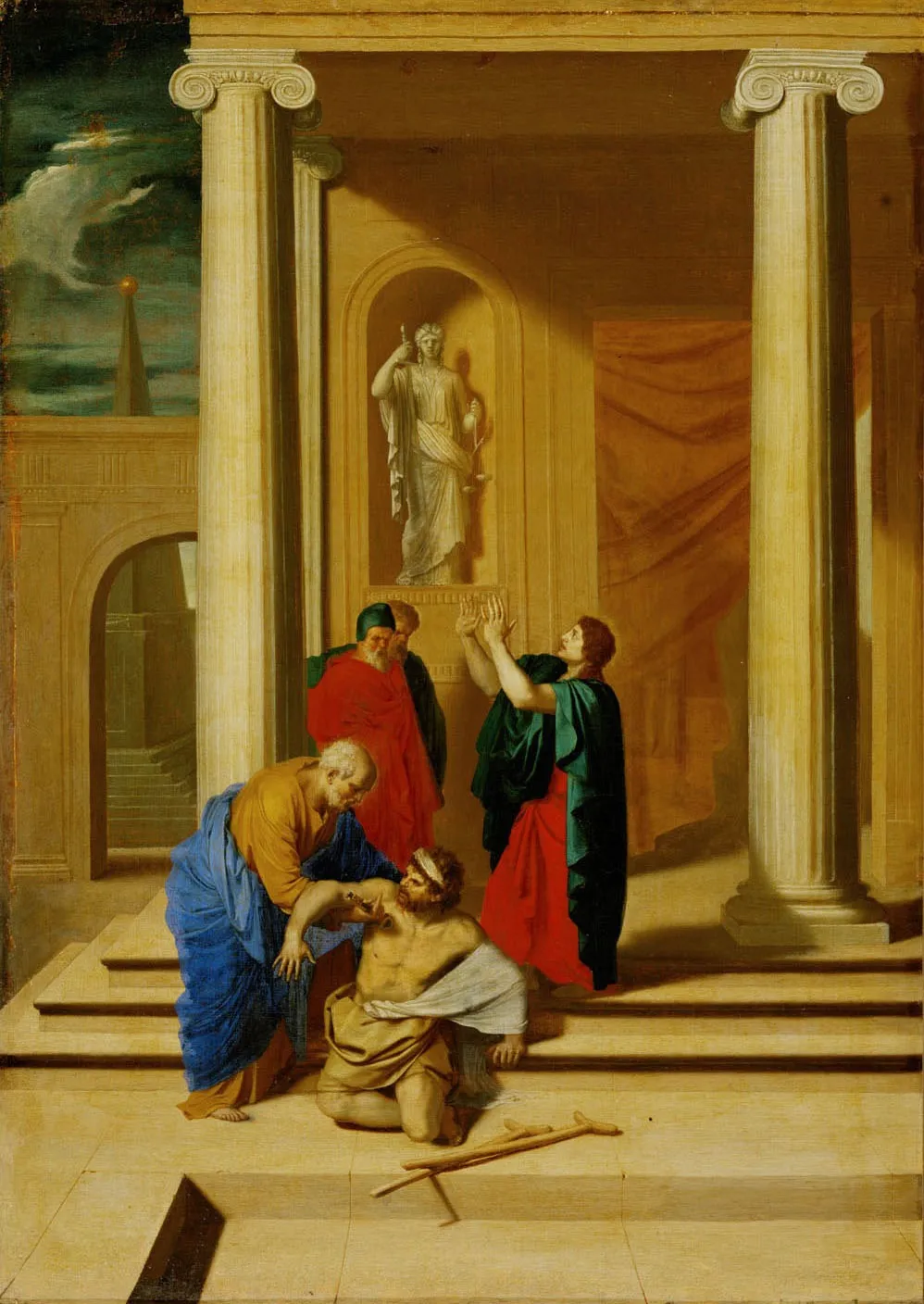
Peter and John heal a lame man in the temple is an oil painting by the Flemish Baroque painting artist Bertholet Flémal. It dates from 1650 and is held in the collection of the Kunsthistorisches Museum.
About this work
Overview
This work reflects his mature style, characterized by dynamic figure placement and a clear narrative focus typical of mid-seventeenth-century religious art.
Created in 1650, Bertholet Flémal's oil painting 'Peter and John Heal a Lame Man in the Temple' illustrates the biblical account from Acts 3:1–10. The composition centers on the miraculous moment at the Beautiful Gate of the Jerusalem Temple, where the apostles Peter and John encounter a man lame from birth. Flémal arranges the figures to emphasize the divine intervention: the lame man sits on the ground looking upward, while Peter stands close, physically touching the man's shoulder to initiate the cure, and John raises his hands in a gesture of prayer and authority. The artist employs a Baroque sensibility, utilizing dramatic lighting to highlight the central group against a background of classical architecture that evokes the grandeur of the Temple. Flémal, a prominent Flemish painter who spent significant time in Rome, integrates Italianate architectural elements with a Flemish attention to detail and texture. This work reflects his mature style, characterized by dynamic figure placement and a clear narrative focus typical of mid-seventeenth-century religious art. The painting serves as a testament to Flémal's ability to synthesize the dramatic intensity of the Counter-Reformation with the structural clarity of classical tradition.
Subject & Meaning
The composition captures the moment of miraculous healing: the lame figure sits on the temple floor while Peter places a hand on his shoulder and John lifts his hands in a gesture of divine intervention. The scene conveys themes of faith, compassion, and the apostolic authority to perform miracles.
Technique & Style
Flémal employs a warm palette of browns and beiges, rendering the figures with a classical realism that emphasizes anatomical accuracy. Strong chiaroscuro creates a pronounced contrast between illuminated bodies and shadowed surroundings, giving the scene depth and a three‑dimensional presence.
Context
The background features a temple interior defined by columns and a statuary niche, including a female figure that anchors the space in a classical architectural language. This setting situates the miracle within a sacred, ordered environment, reinforcing the narrative's religious context.
History & Provenance
Since its creation in the mid‑17th century, the painting has remained in European collections and is now displayed at Vienna’s Kunsthistorisches Museum, where it contributes to the museum’s holdings of Baroque religious art.
Artist & collection

 Última comunión de san Jerónimo o El viático de san Jerónimo
 Jesus Washing Peter's Feet
 Esther before Ahasuerus
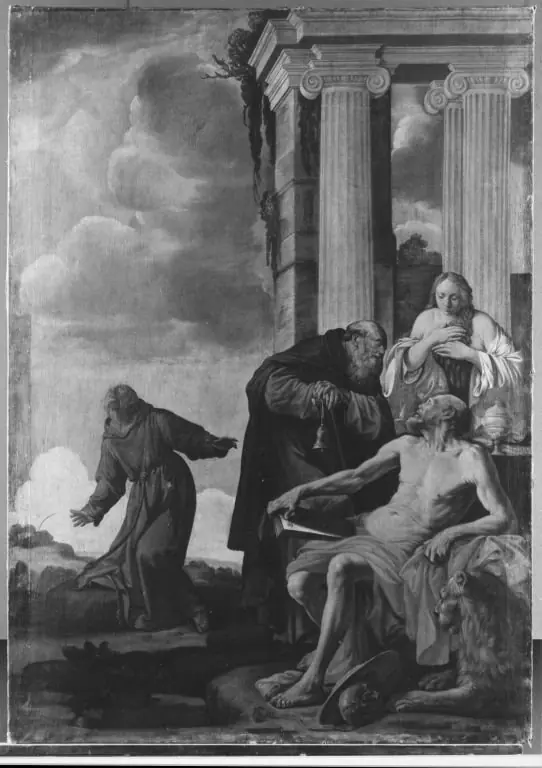 Die hll. Hieronymus, Maria Magdalena, Antonius und Franziskus (Kopie nach)
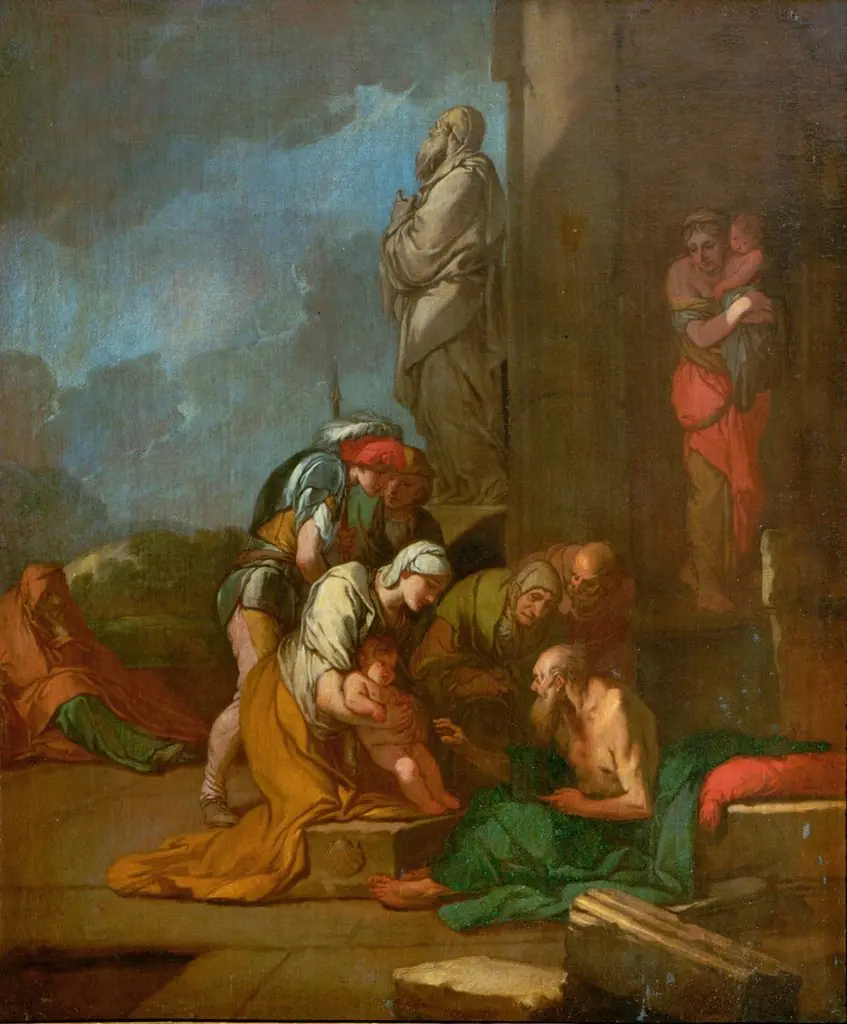 Nymphe Liriope bringt ihren Sohn Narcissus zu Tiresias
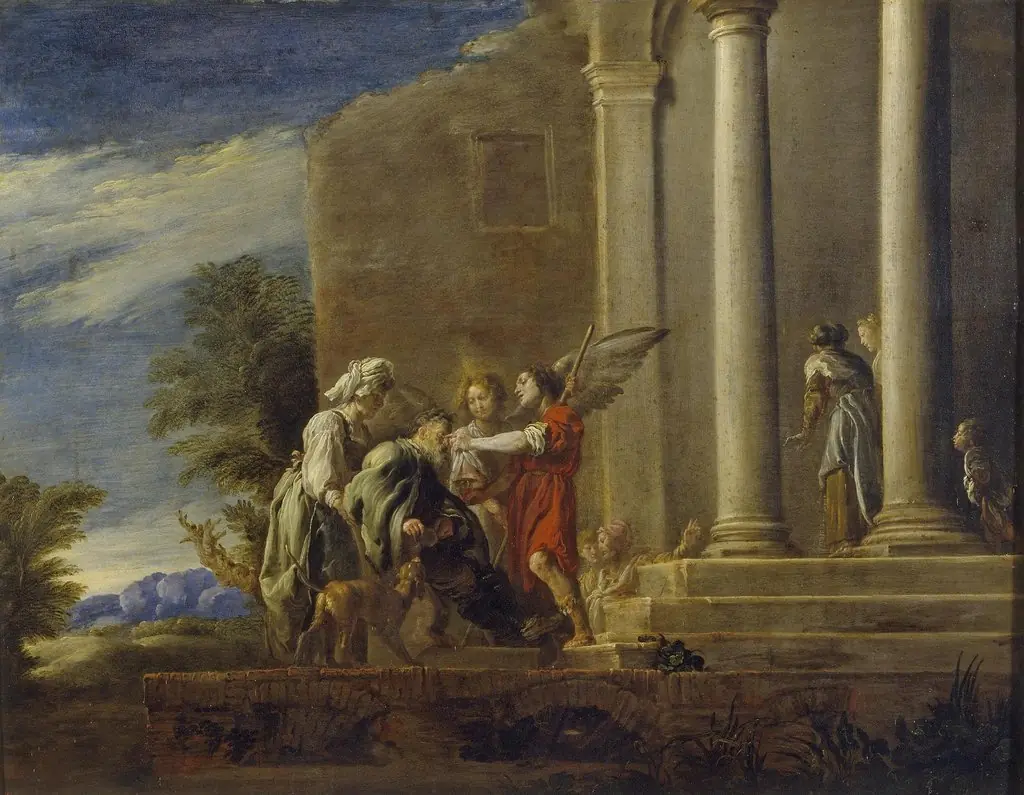 Healing of Tobit
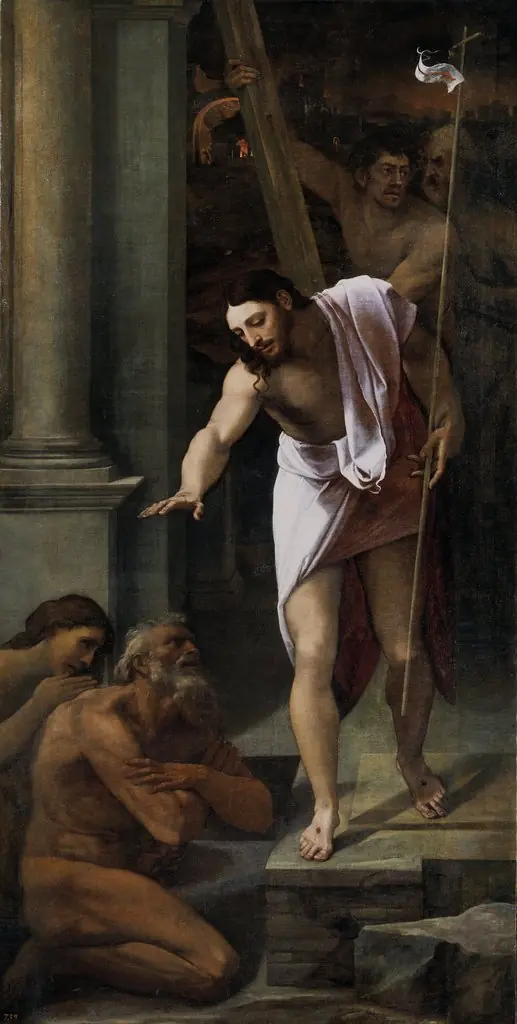 Christ’s Descent into Limbo
 Devout Men Taking the Body of Saint Stephen
 Lazarus' opvækkelse