Artwork
The sacrifice of Polyxena
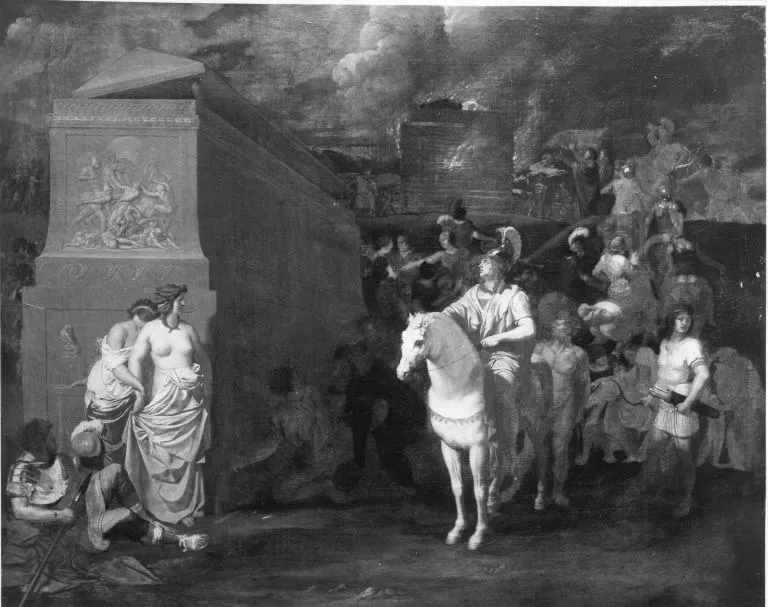
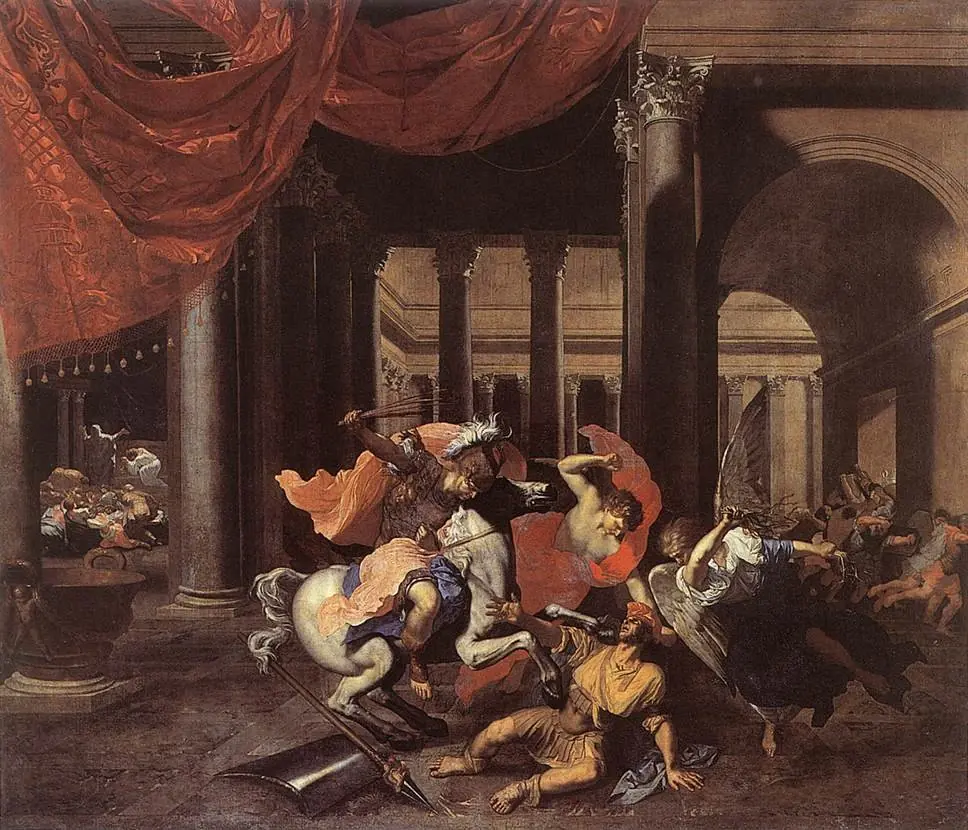
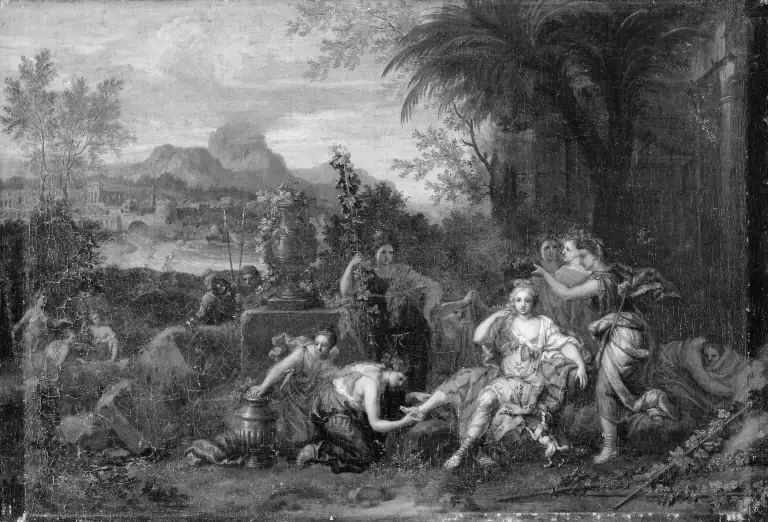
The sacrifice of Polyxena is an unspecified painting by the Flemish Baroque painting artist Bertholet Flémal. It dates from 1644 and is held in the collection of the Bavarian State Painting Collections.
About this work
Overview
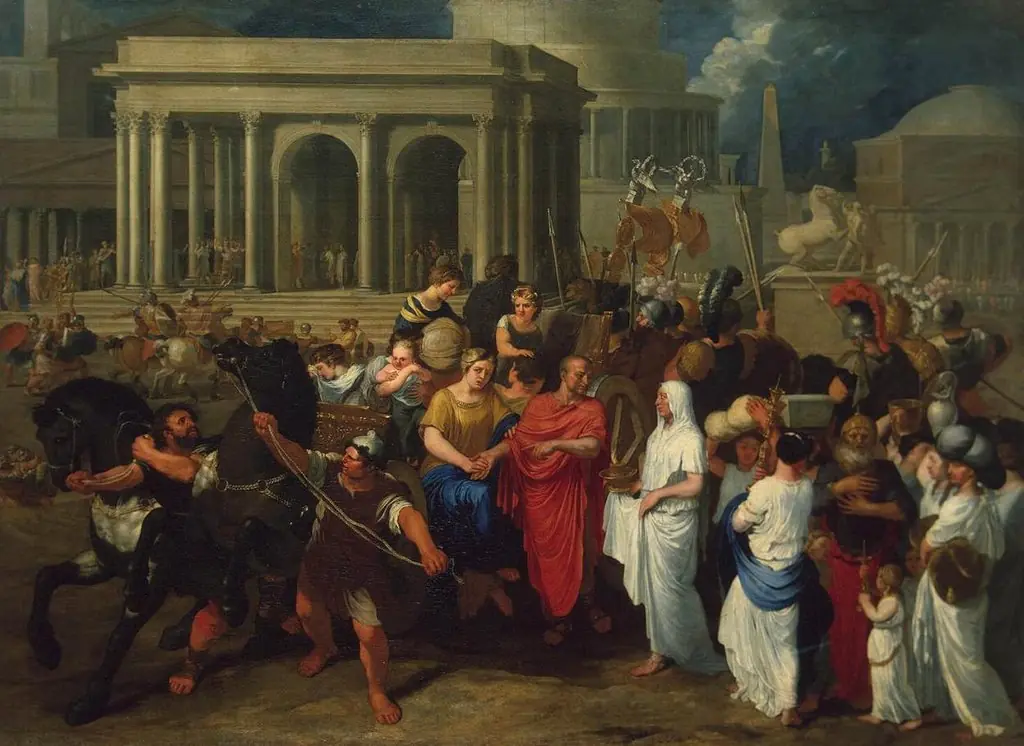
Bertholet Flémal’s 1644 oil painting, titled The Sacrifice of Polyxena, is part of the collection at Munich’s Alte Pinakothek. The canvas presents a nocturnal tableau populated by several figures, among them a woman in a white garment and a mounted rider. The composition is dominated by deep shadows, punctuated by limited illumination that suggests an architectural backdrop.
Subject & Meaning
The work visualises the mythological episode in which Polyxena, daughter of King Priam, is offered as a sacrificial victim after the fall of Troy. The central female figure, clasping another person, conveys the ritual’s solemnity, while the horseman’s upward gaze hints at divine or fatal forces overseeing the act. The overall tone underscores tragedy and piety.
Technique & Style
Flémal employs chiaroscuro to heighten the drama, juxtaposing stark darkness with bright highlights that model the figures and suggest spatial depth. The limited palette and controlled brushwork create a somber atmosphere, while the careful rendering of light on the white robe draws the viewer’s eye to the focal point of the sacrifice.
History & Provenance
Completed in 1644, The Sacrifice of Polyxena entered the Alte Pinakothek’s holdings during the museum’s early acquisitions of Baroque works. The painting has remained in the German collection since the 19th century, providing scholars with an example of mid‑17th‑century French‑influenced narrative painting.
Artist & collection

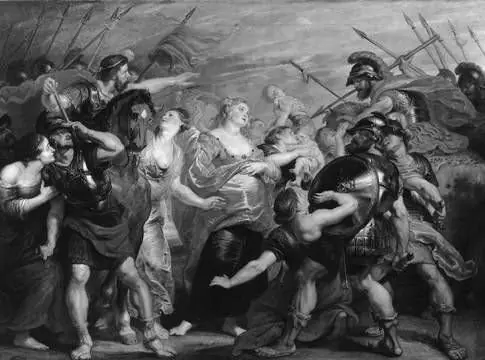 The Reconciliation of Romans and Sabines, before or up to 1620s
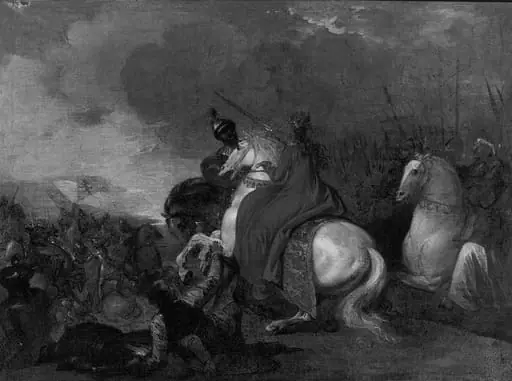 Queen Philippa at the Battle of Neville's Cross
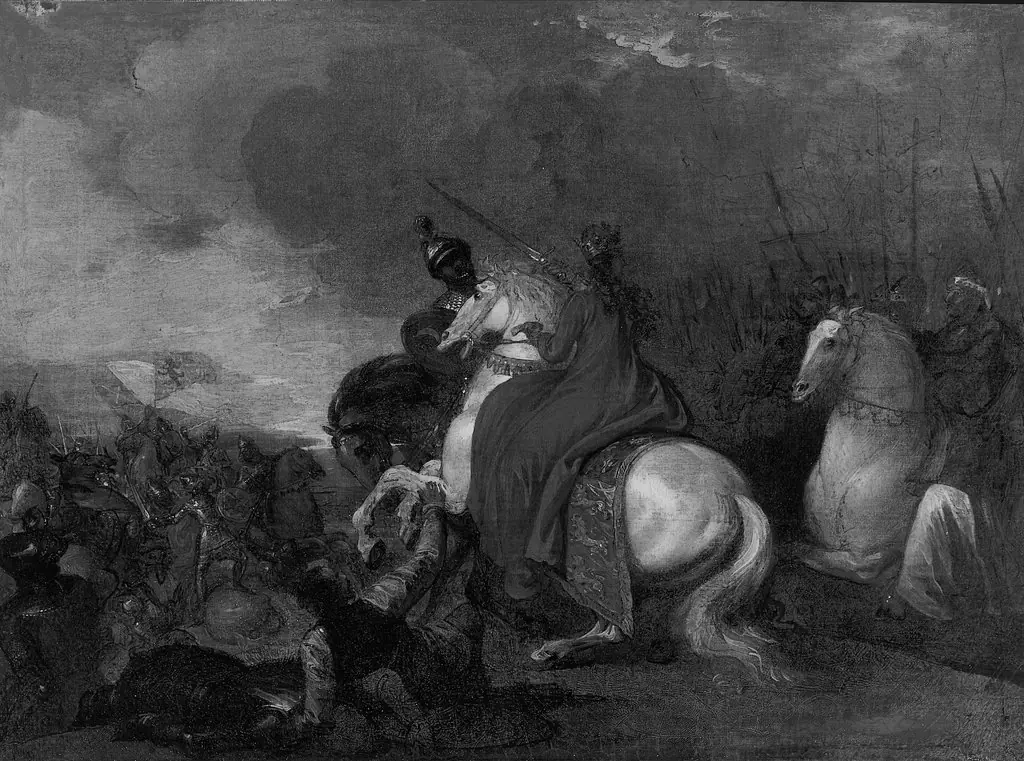 Queen Philippa at the Battle of Neville's Cross
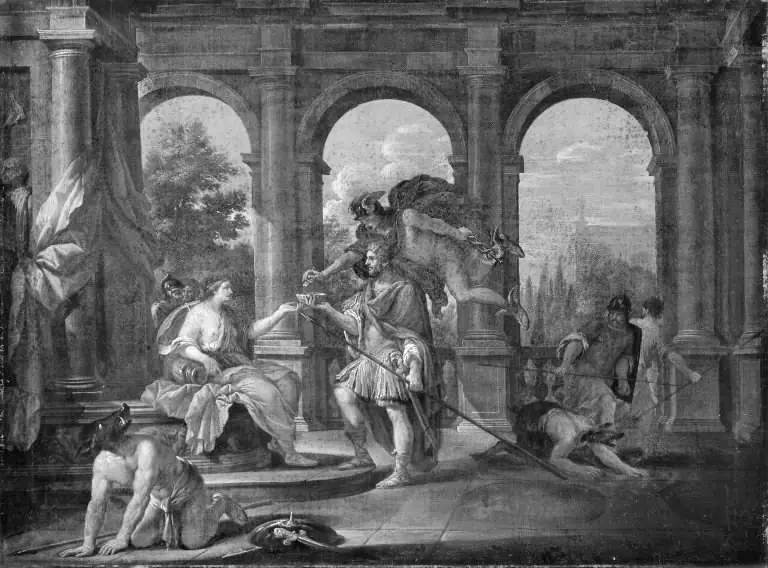 Circe and Ulysses
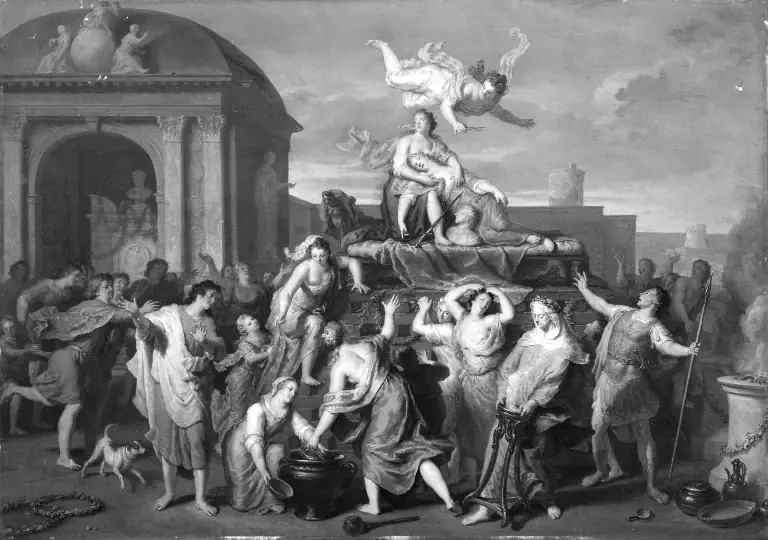 Death of Dido
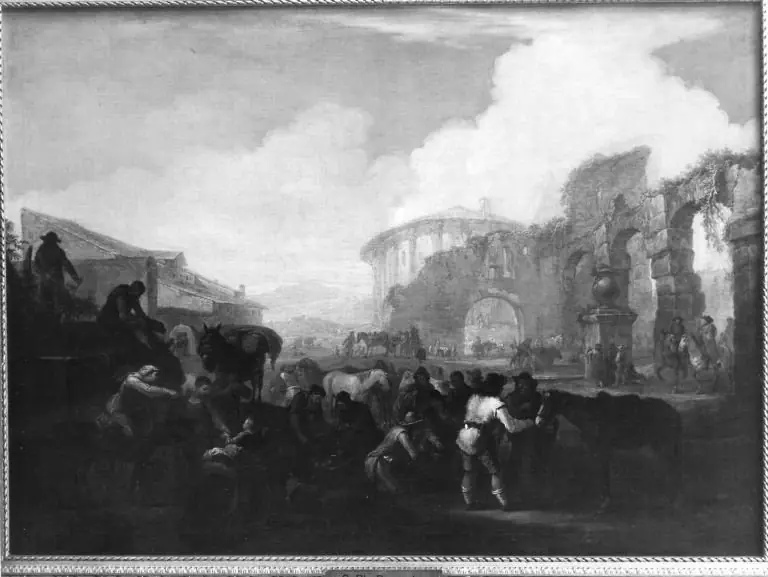 Travelers at a stopping place with ruins in the background
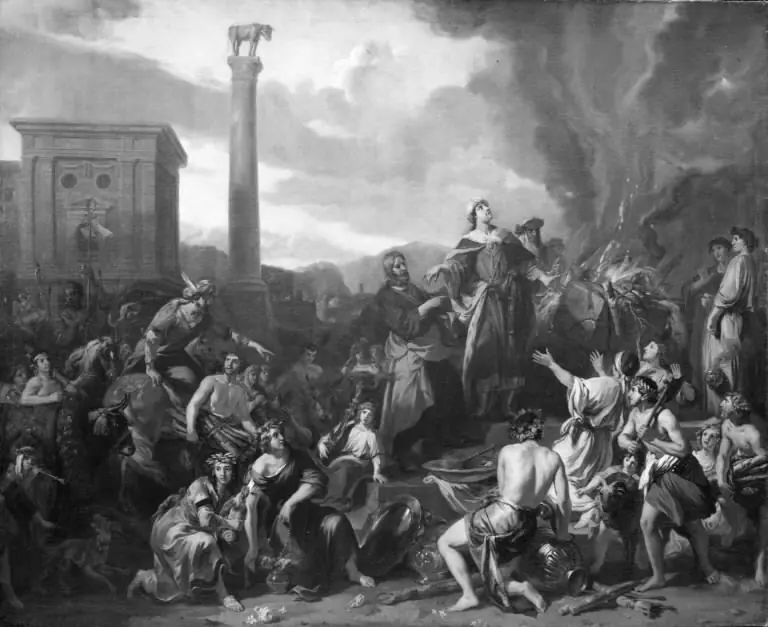 King Jeroboam Making Sacrifice to the Golden Calf (Jeroboam's Sin)
 Allegory on the Crowning of Charles II
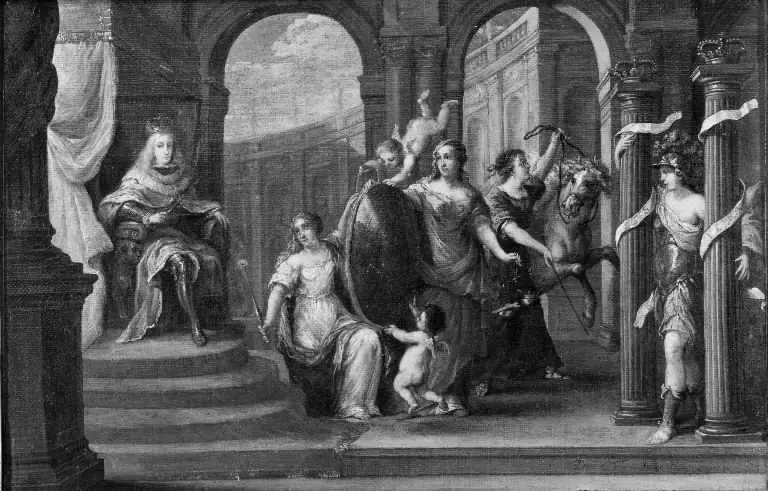 Allegory on the Crowning of Charles II
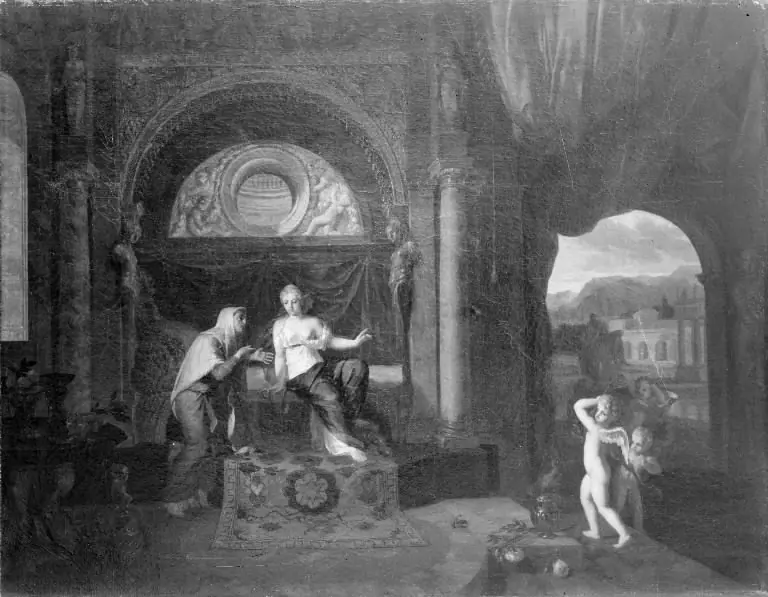 Semele and Juno
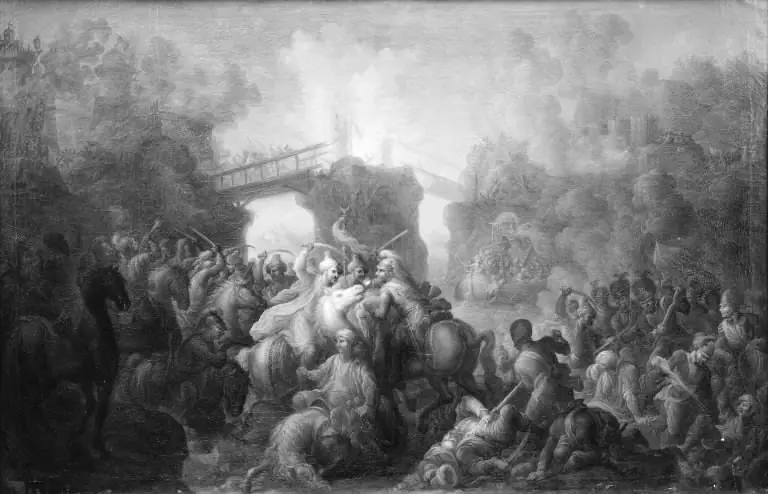 Bataljestykke
 Landscape with Messalina's Wedding