Artwork
Heliodorus driven from the Temple
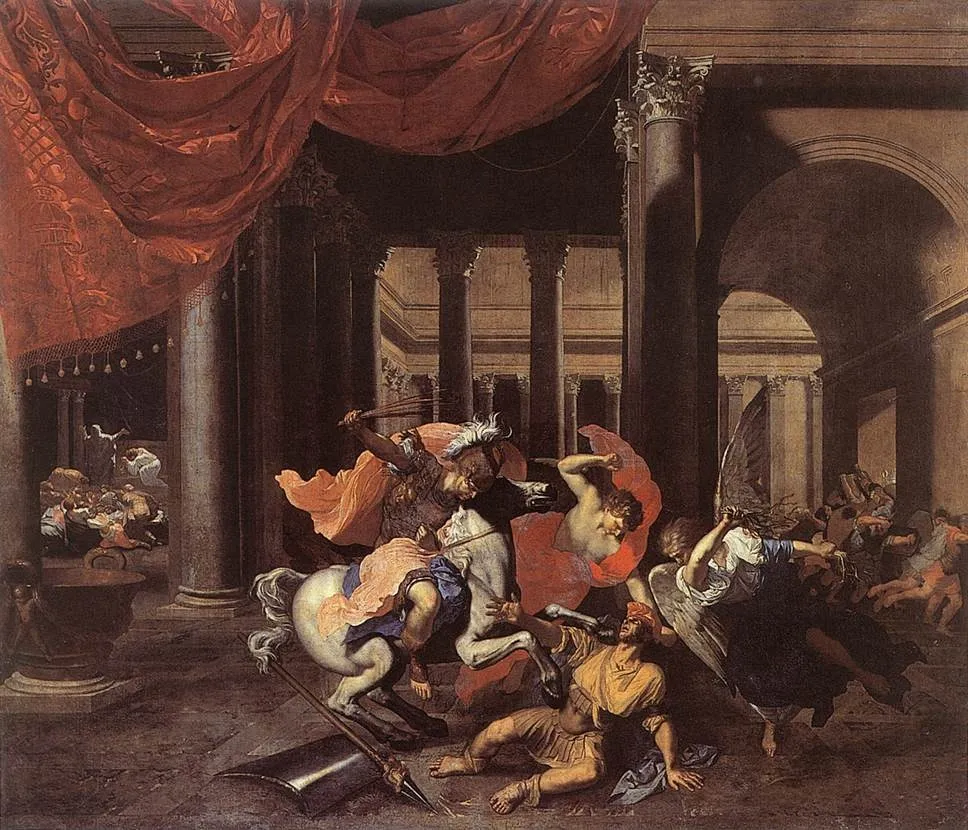
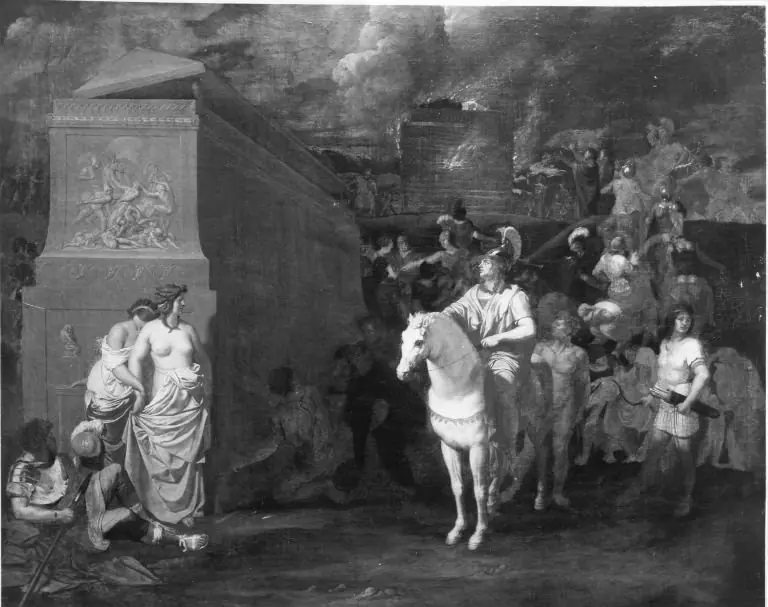
Heliodorus driven from the Temple is an oil painting by the French Classical Baroque artist Bertholet Flémal. It dates from 1660 and is held in the collection of the Royal Museums of Fine Arts of Belgium.
About this work
Overview
A rider on a white horse, armed with sword and spear, thrusts forward while surrounding figures recoil in alarm, scrambling to escape the upheaval.
Bertholet Flémal’s oil on canvas, dated 1660, portrays a tumultuous episode within an expansive, columned interior. A rider on a white horse, armed with sword and spear, thrusts forward while surrounding figures recoil in alarm, scrambling to escape the upheaval. A vivid red drapery dominates the upper background, and a series of archways frame the chaotic action, heightening the sense of urgency.
Subject & Meaning
The composition captures the moment of Heliodorus’s expulsion from the temple, a narrative drawn from biblical accounts where the high priest’s servant is driven away while attempting to seize sacred funds. The frantic gestures and defensive postures of the onlookers underscore themes of divine protection and the violent disruption of sacrilegious intent.
Technique & Style
Flémal employs strong chiaroscuro, contrasting deep shadows with illuminated figures to model volume and intensify drama. The painter’s handling of light accentuates the gleam of the rider’s armor and the crimson curtain, while the layered brushwork suggests the texture of marble columns and the movement of fleeing bodies, characteristic of mid‑seventeenth‑century Baroque dynamism.
History & Provenance
Created in 1660, the work entered the collection of the Royal Museums of Fine Arts of Belgium, where it remains on display. Documentation traces its acquisition to the museum’s early 19th‑century efforts to assemble a representative corpus of Flemish Baroque painting, reflecting the institution’s commitment to preserving national artistic heritage.
Context
The painting belongs to a broader tradition of religious narrative scenes that flourished in the Southern Netherlands during the Counter‑Reformation. Artists of the period frequently dramatized scriptural events to convey moral lessons, employing theatrical compositions and vivid color schemes to engage viewers emotionally and reinforce ecclesiastical authority.
Artist & collection

Museum
Royal Museums of Fine Arts of Belgium
Continue through works from the same source collection.
 Rape of the Sabine Women
 Judith Displays the Head of Holofernes
 The Conquest of Jerusalem by Emperor Titus
 Perseo affronta Fineo con la testa di Medusa
 Roman Gladiators with Wooden Swords
 Perseus Confronting Phineus with the Head of Medusa
 Massacre of the Innocents
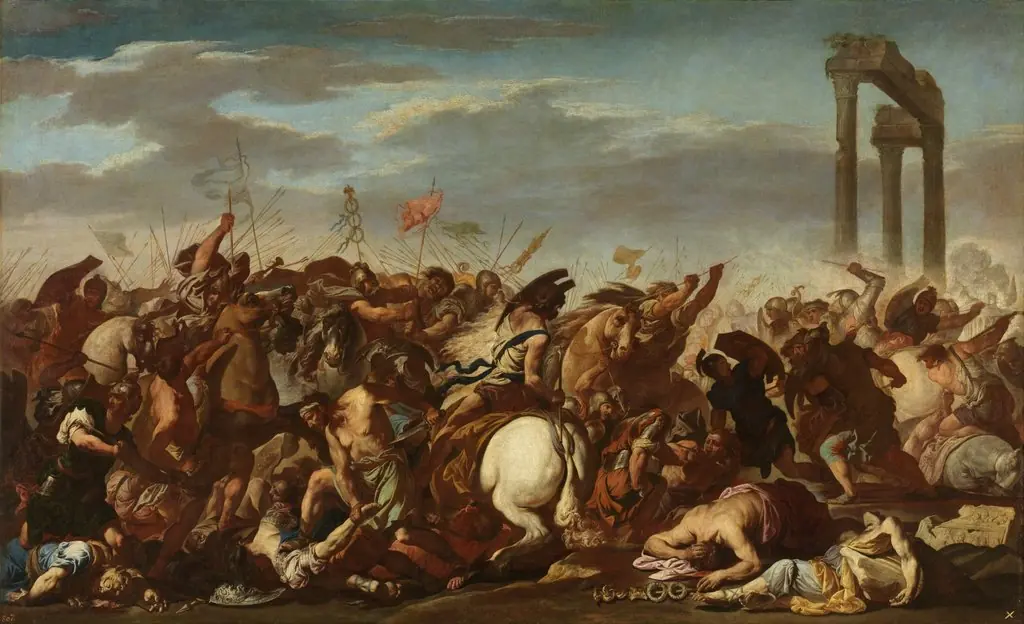 Batalla
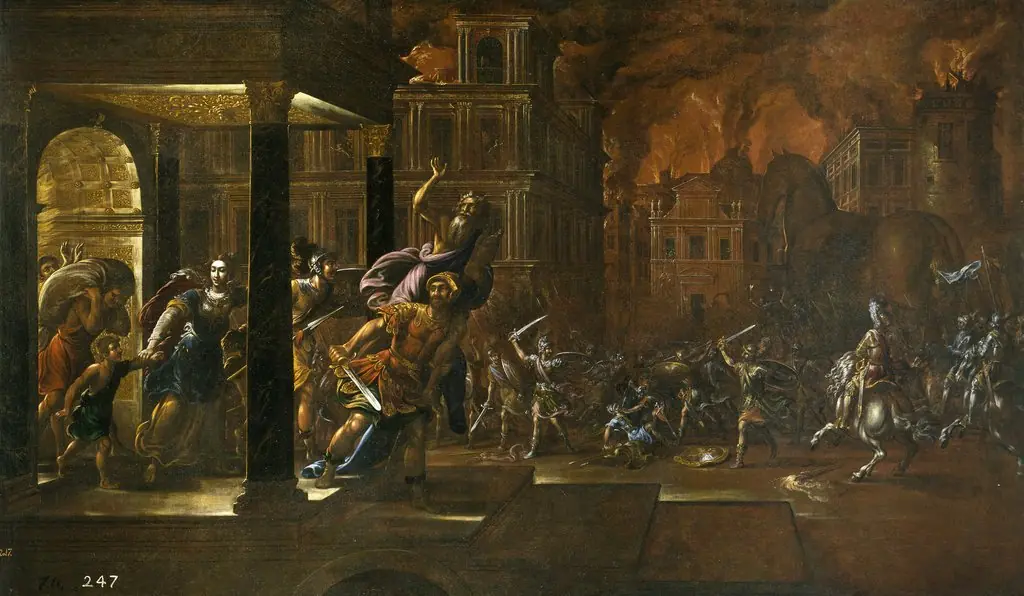 Aeneas flees the burning Troy with his family
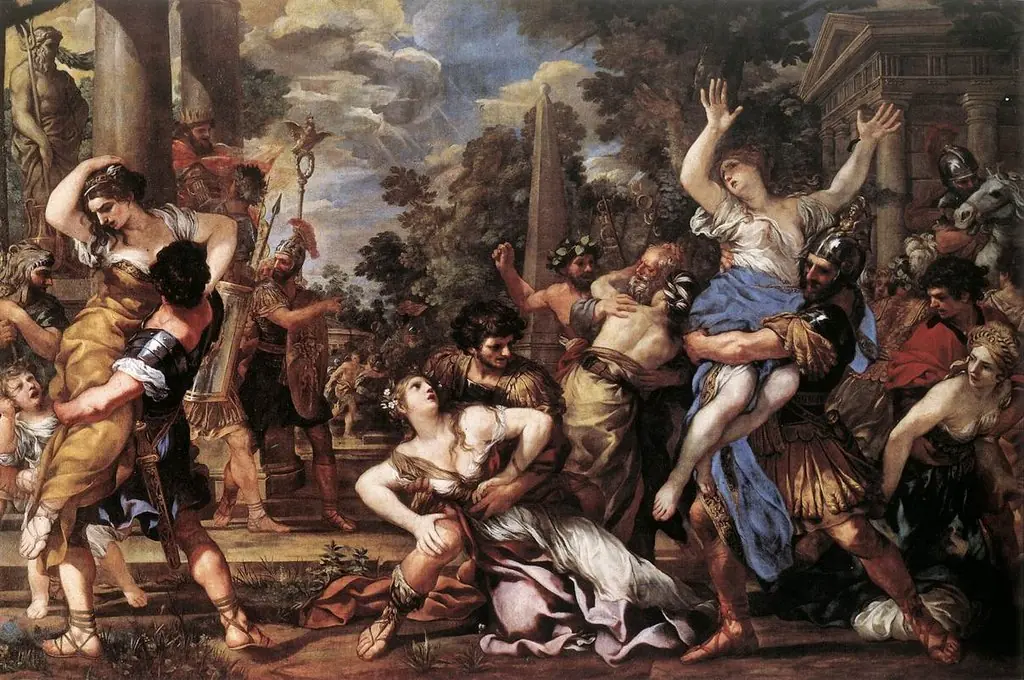 Rape of the Sabine Women
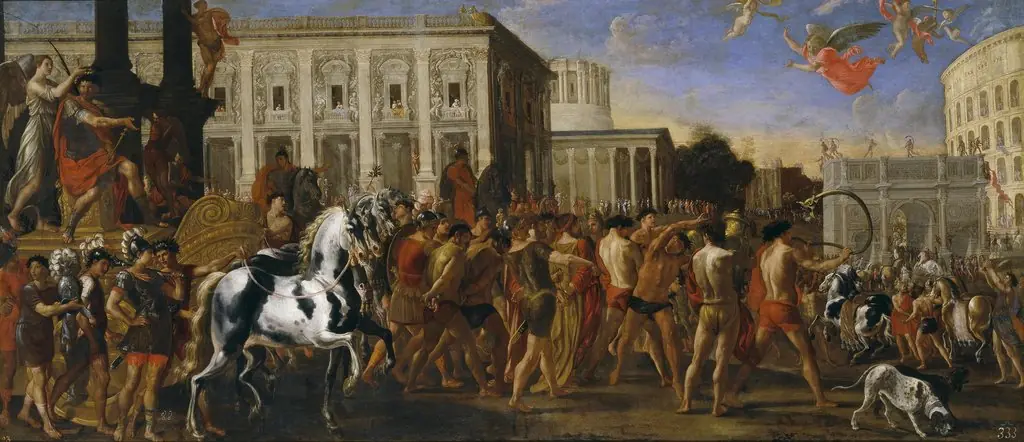 Triumphal Entry of Constantine in Rome