Artwork
Bathing at Talloires (La baignade à Talloires)
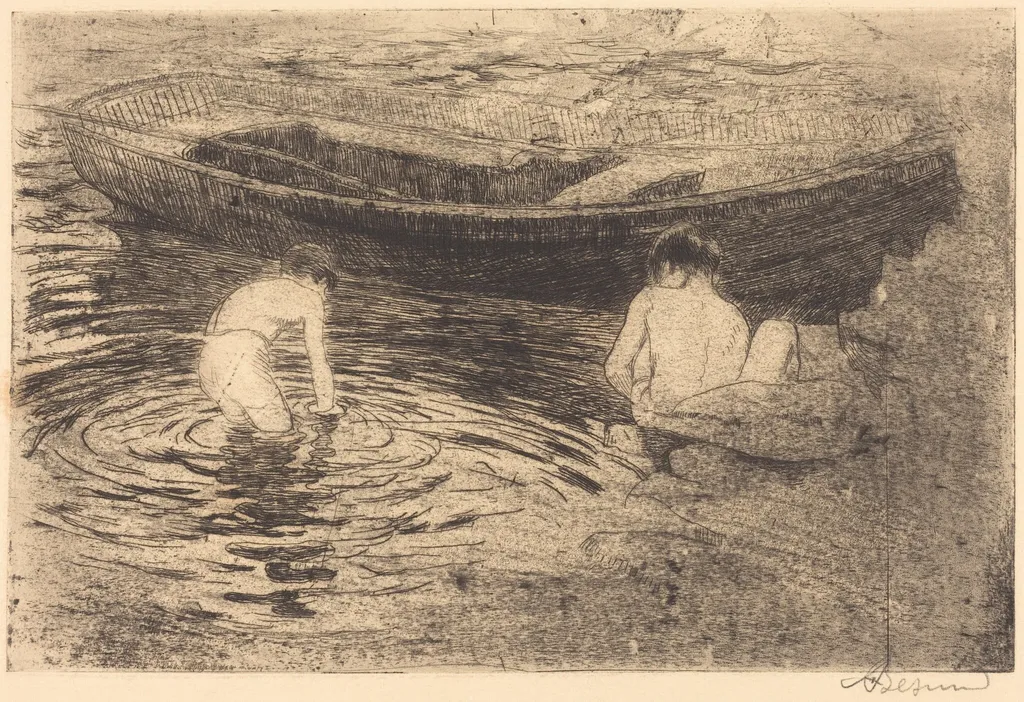
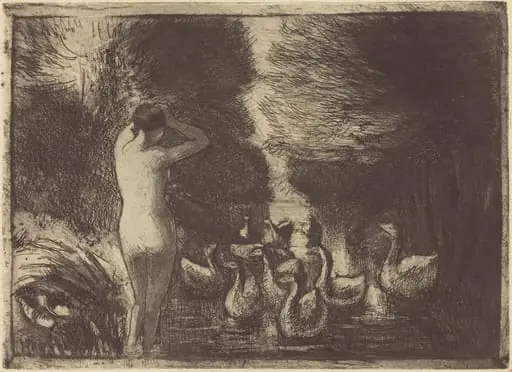
Bathing at Talloires (La baignade à Talloires) is an ink print by the Impressionist artist Paul-Albert Besnard. It dates from 1888 and is held in the collection of the National Gallery of Art. Albert Besnard created Bathing at Talloires in 1888 as an etching and drypoint on wove paper, not a painting.
About this work
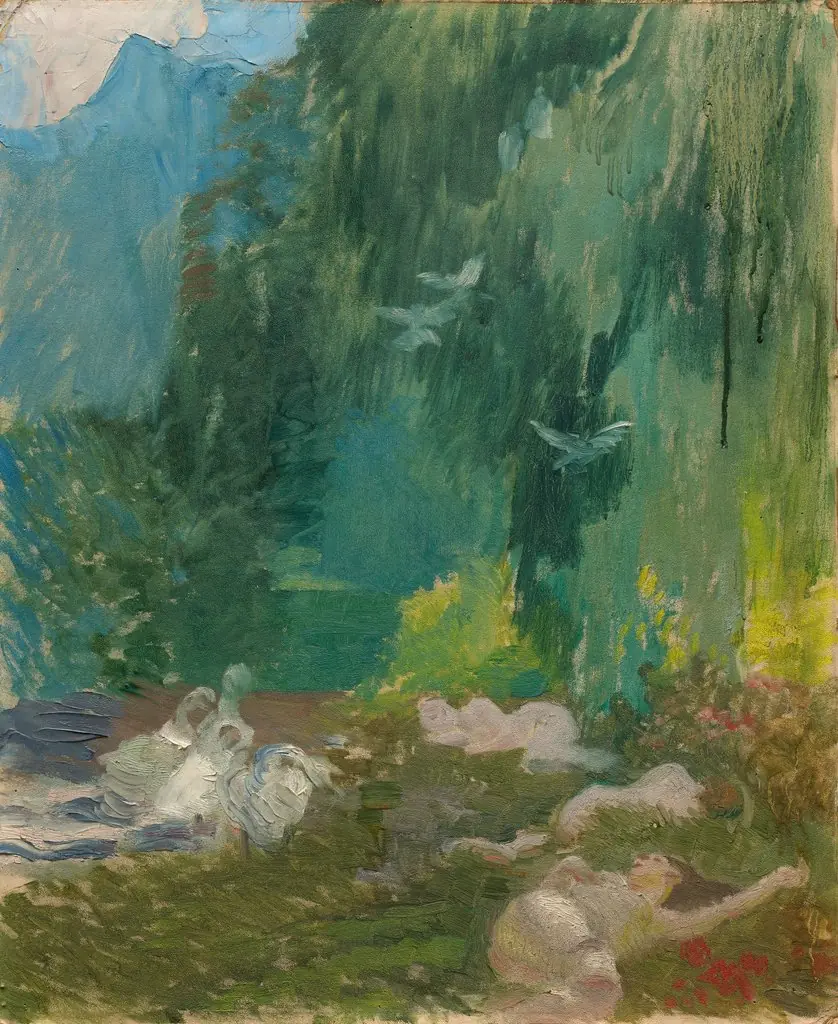
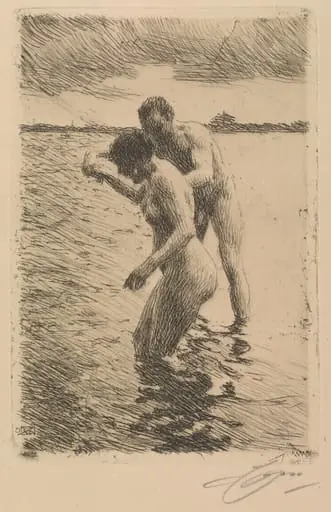
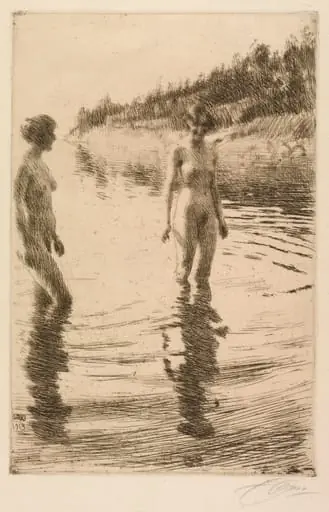
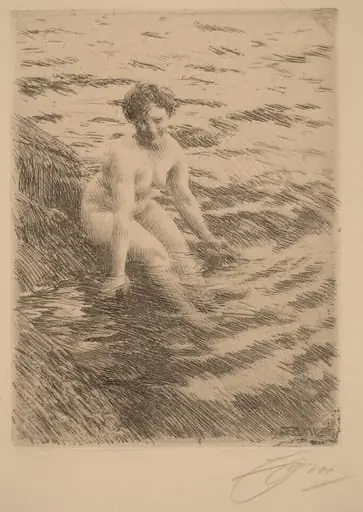
This etching shows people bathing in a lake near tall wooden buildings. The light dances on the water. Dark lines make the scene feel alive.
Besnard made this in 1888. It’s not a painting—it’s an etching with drypoint. You scratch the metal plate yourself, then ink it. The scratches catch light in a special way.
Look up Besnard, Albert next.
Overview
The work captures a lakeside scene near the village of Talloires in the French Alps, rendered through incised lines and textured surface manipulation.
Albert Besnard created Bathing at Talloires in 1888 as an etching and drypoint on wove paper, not a painting. The work captures a lakeside scene near the village of Talloires in the French Alps, rendered through incised lines and textured surface manipulation. The medium allowed for subtle tonal gradations and a tactile quality distinct from painted equivalents, reflecting Besnard’s interest in printmaking’s expressive potential.
Subject & Meaning
The scene depicts figures bathing in a natural lake, surrounded by tall wooden structures along the shore. There is no narrative or moralizing tone; instead, the focus lies in the quiet, unposed interaction between bodies and environment. The composition suggests a moment of ordinary leisure, emphasizing atmosphere over drama, and invites contemplation of human presence within a tranquil landscape.
Technique & Style
Besnard employed etching and drypoint to achieve a rich interplay of light and shadow. The drypoint’s burr, created by scratching directly into the metal plate, holds ink to produce soft, velvety lines that enhance the shimmer of water and the density of foliage. Etched contours define forms with precision, while the paper’s texture absorbs ink unevenly, lending the image a spontaneous, luminous quality.
History & Provenance
The print was made during Besnard’s period of active engagement with printmaking, following his success in painting. It was likely produced for private collectors and art societies rather than public exhibition. Early impressions circulated among French and international print connoisseurs, though its exact provenance before the 20th century remains sparsely documented.
Context
Created in the late 1880s, the work reflects a broader European interest in naturalism and intimate outdoor scenes, influenced by Impressionist sensibilities yet grounded in traditional print techniques. Besnard’s choice of a provincial lakeside location aligns with contemporaries seeking refuge from urban life, while his technical rigor distinguishes the piece from more casual sketches of the era.
Legacy
Bathing at Talloires is recognized as one of Besnard’s most accomplished prints, illustrating his mastery of etching’s expressive range. Though less widely known than his paintings, the work influenced later printmakers interested in combining tonal subtlety with direct, hand-drawn mark-making. It remains a key example of French graphic art from the fin de siècle.
Own this work as a print
Artist & collection
Artist
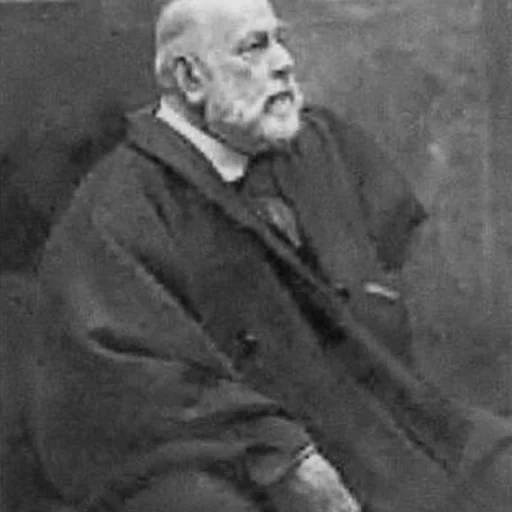
Paul-Albert Besnard (1849–1934) was a French artist, born in 7th arrondissement of Paris.