Artwork
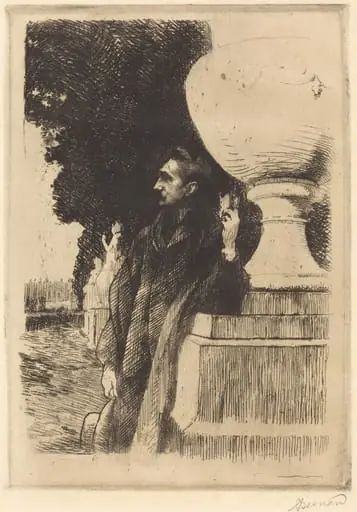
Frontispiece for "L'Affaire Clémenceau"
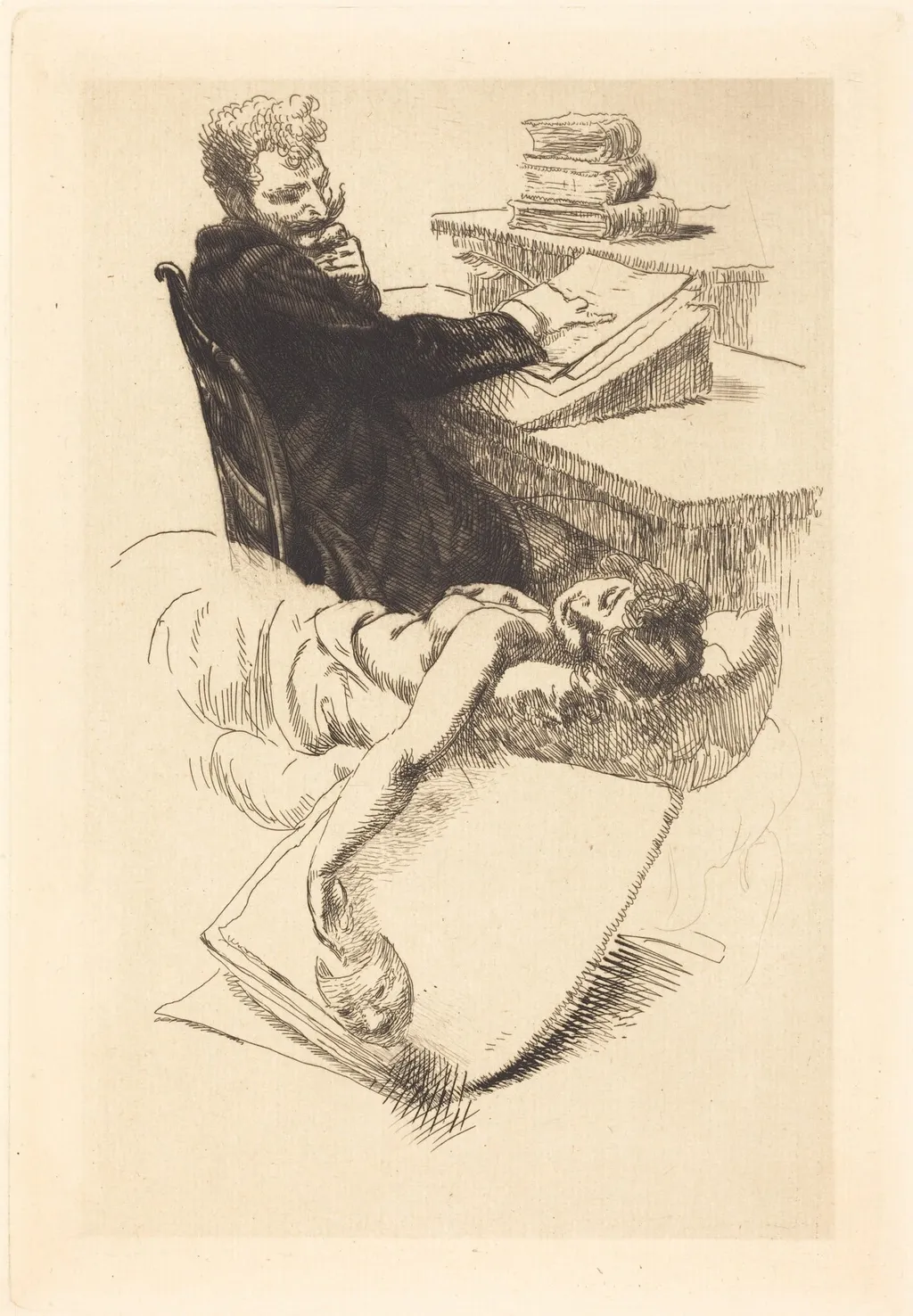
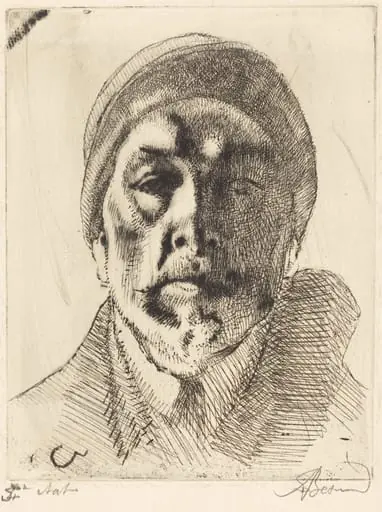
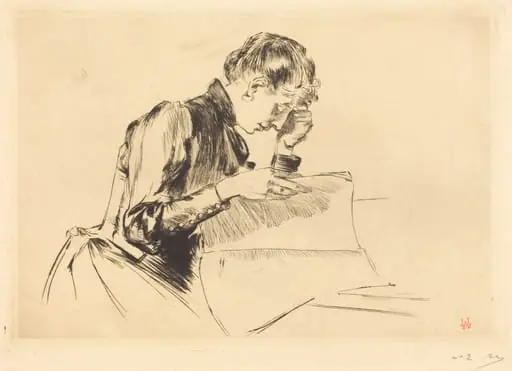
Frontispiece for "L'Affaire Clémenceau" is an ink print by Paul-Albert Besnard. It dates from 1905 and is held in the collection of the National Gallery of Art.
About this work
Overview
Created in 1905, this etching serves as the frontispiece for L'Affaire Clémenceau, a publication addressing political tensions surrounding Georges Clémenceau.
Created in 1905, this etching serves as the frontispiece for L'Affaire Clémenceau, a publication addressing political tensions surrounding Georges Clémenceau. Executed in black ink on cream laid paper, the work captures a quiet domestic moment with minimal detail, emphasizing atmosphere over narrative. The artist, Albert Besnard, employed the etching technique to achieve a sense of immediacy and spontaneity, characteristic of his later graphic work.
Subject & Meaning
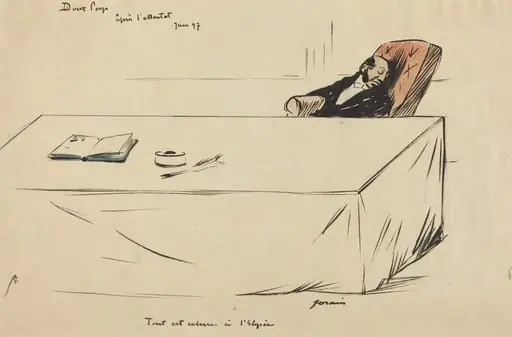
The figure, seated in a chair with a pipe and open book, suggests a contemplative intellectual—possibly Clémenceau himself—engaged in private thought amid the chaos of public life. A dog at his feet, gazing upward, adds a note of quiet companionship. The cluttered desk behind him, strewn with papers and books, implies the weight of correspondence and labor, hinting at the tension between personal solitude and political responsibility.
Technique & Style
Besnard used etching to scratch lines directly into a metal plate, allowing for fluid, expressive marks that mimic rapid sketching. The loose, uneven strokes create texture and shadow without smooth gradations, rejecting polished finish in favor of raw energy. The contrast between the soft, dark areas and the untouched paper enhances depth, while the absence of fine detail invites interpretation rather than literal representation.
History & Provenance
The print was produced specifically for the 1905 publication L'Affaire Clémenceau, a political commentary on the French statesman’s controversial role in the Dreyfus Affair and other reforms. As a frontispiece, it functioned as a visual introduction to the volume’s themes. Its survival in institutional and private collections reflects its role as a document of early 20th-century political culture and printmaking practice.
Context
In early 1900s France, etching experienced a revival among artists seeking alternatives to academic painting. Besnard, known for his portraits and murals, turned increasingly to graphic media to explore psychological depth. This work aligns with contemporaneous interest in intimate, unidealized depictions of public figures, reflecting broader cultural shifts toward realism and introspection in the face of political upheaval.
Legacy
The etching stands as a modest but significant example of Besnard’s graphic output, illustrating his ability to convey complex character through minimal means. While not widely exhibited, it remains a reference point in studies of French printmaking and the intersection of art and political discourse. Its unembellished style influenced later artists who valued expressive line over decorative finish.
Artist & collection
Artist
Paul-Albert Besnard (1849–1934) was a French artist, born in 7th arrondissement of Paris.