Artwork
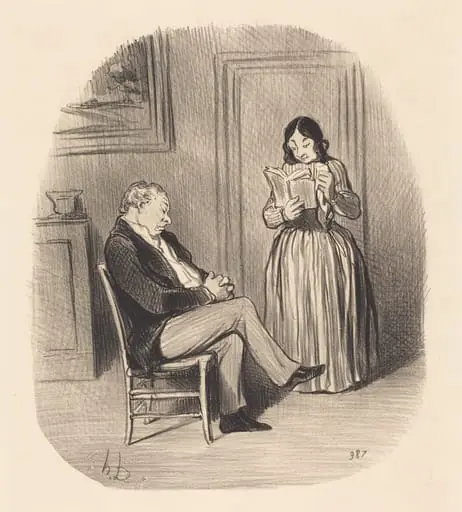
La veuve
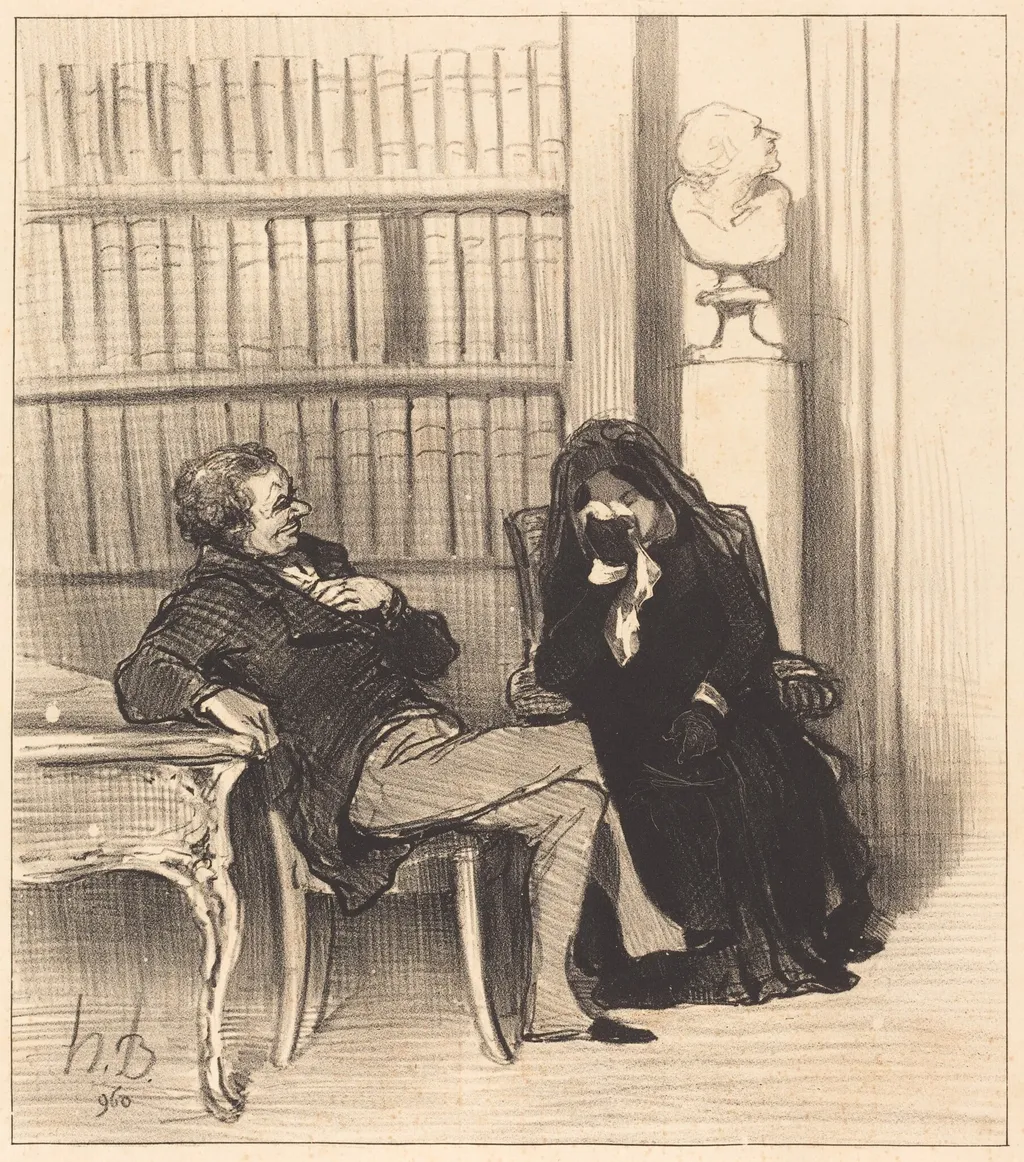
La veuve is an ink print by the Romanticist artist Honoré Daumier. It dates from 1846 and is held in the collection of the National Gallery of Art.
About this work
Overview
La veuve is a lithograph created by Honoré Daumier around 1846. The print depicts a woman in mourning, conveying a sense of grief and loss.
Subject & Meaning
The work portrays a widow, a figure associated with both emotional pain and economic hardship, reflecting Daumier's commentary on social class and power dynamics during his time.
Technique & Style
Daumier's use of chiaroscuro creates depth and contrast, highlighting the woman's face and hands against a darker background. The image's somber mood is characteristic of the Romanticism movement, which emphasized emotion.
Context
La veuve is part of Daumier's satirical engagement with French society during the July Monarchy and early Second Republic, critiquing social hierarchies and cultural norms through his work in publications like La Caricature and Le Charivari.
Artist & collection
Artist
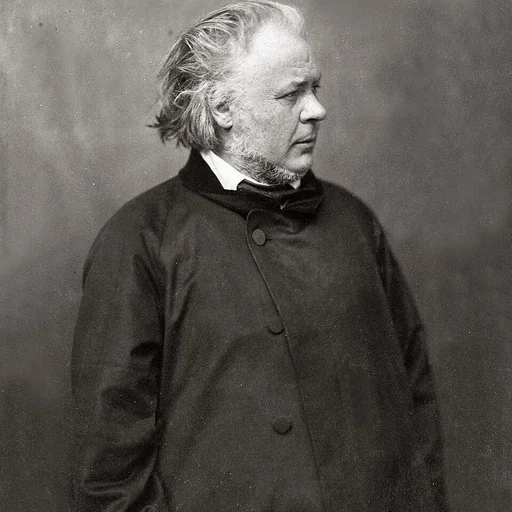
Honoré-Victorin Daumier was a French painter, sculptor, and printmaker, whose many works offer commentary on the social and political life in France, from the Revolution of 1830 to the fall of the Second French Empire in 1870.









 Discussion of Budget
 Le Compte est-il bien exact?...
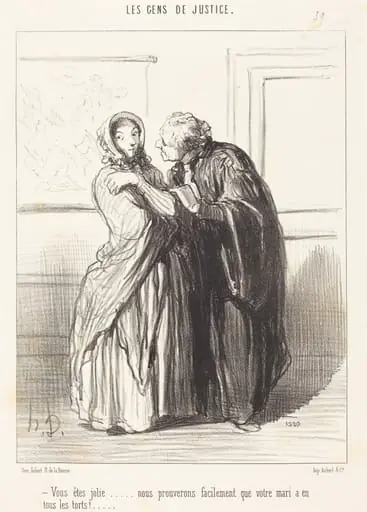 Vous êtes jolie...
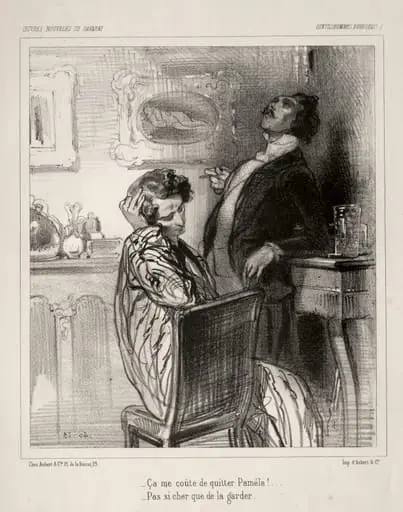 Gentils Hommes Bourgeois
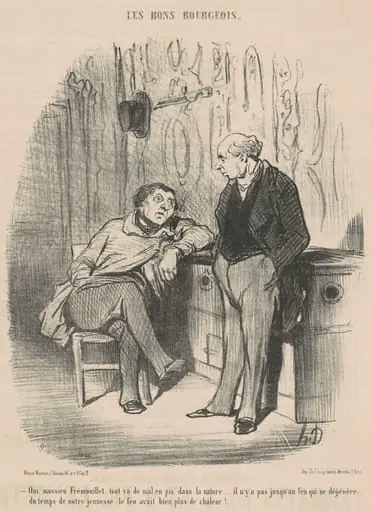 Oui, Mossieu Fremouillet, tout va de mal en pis ...
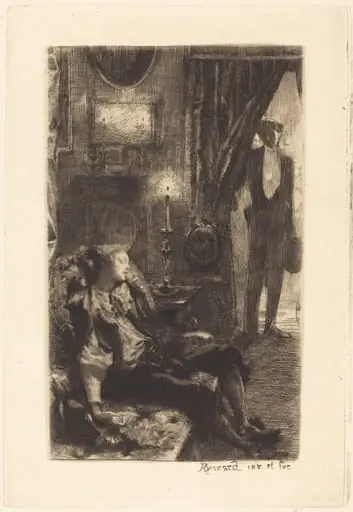 Iza Sleeping (Le Sommeil d'Iza)
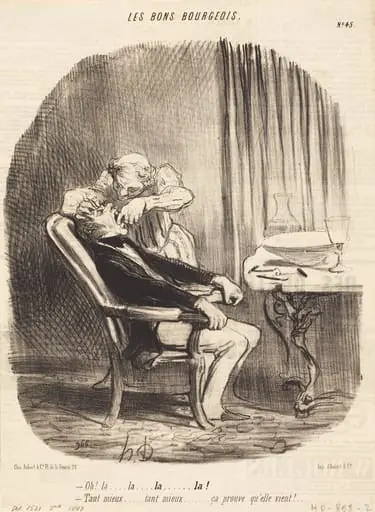 Oh! la... tant mieux... ça prouve qu'elle vient!
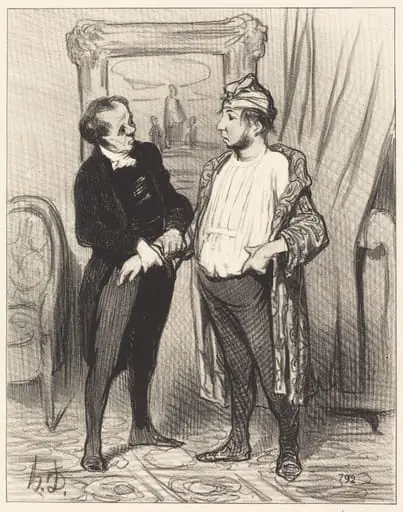 Mon cher je t'assure que je te...
![Indian Summer [L'estate di San Martino], by Eleuterio Pagliano](https://artifactworldgallery.com/img/eleuterio-pagliano--indian-summer-l-estate-di-san-martino--c18fa1d8e52f5b86-w320.webp) Indian Summer [L'estate di San Martino]
Indian Summer [L'estate di San Martino]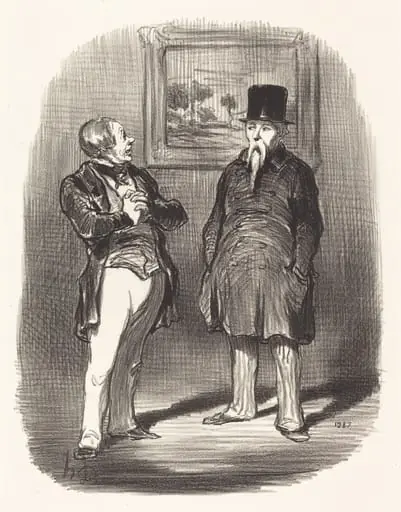 Tiens... je ne te reconnaissais pas...
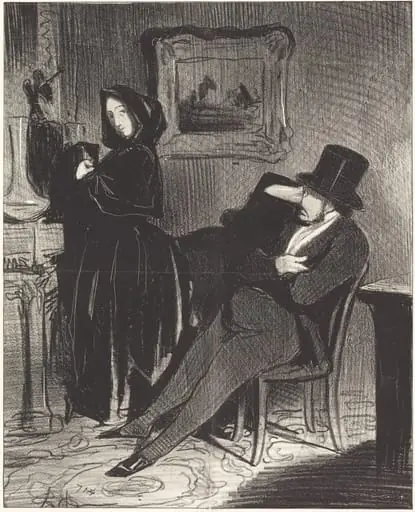 Plus souvent que je te conduirai... au bal...
 Bourgeois se fesant lire, après diner, quelques chapitres...